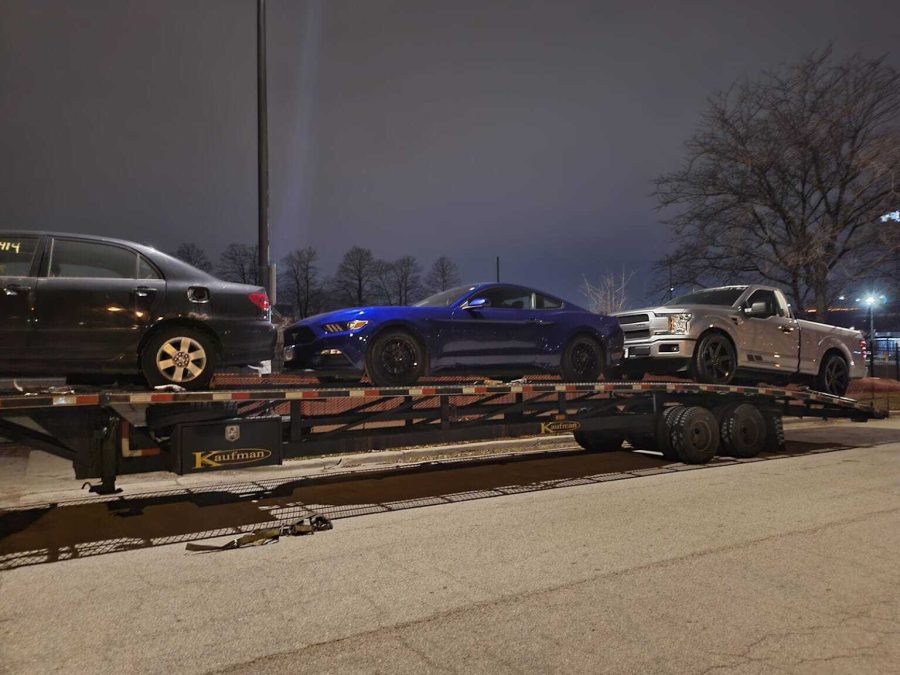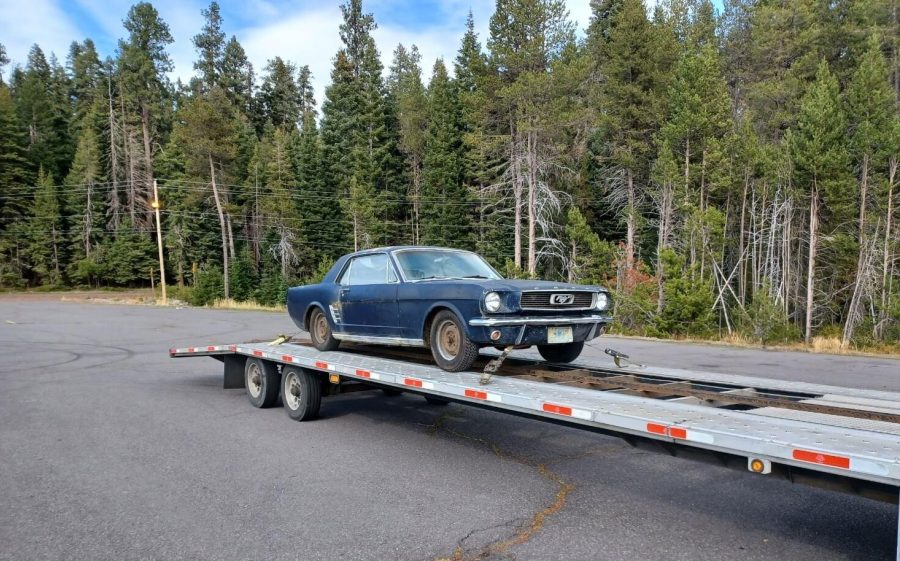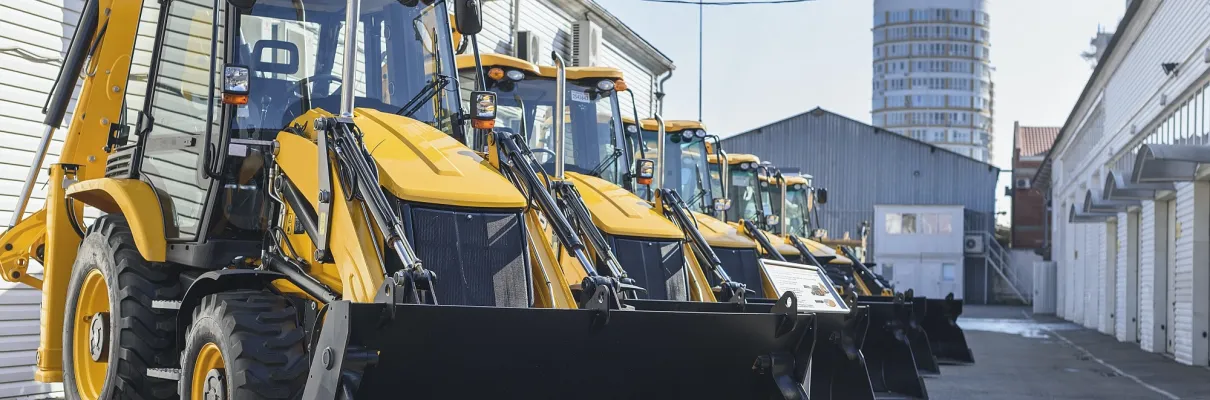

Heavy equipment is a niche field in the transportation industry that relies on trained personnel and specialty equipment to get the job done. Moving an excavator to a new job site, taking a combine harvester to a different county, or hauling an industrial generator to a building site all involve moving sizable and heavy machinery from point A to point B.
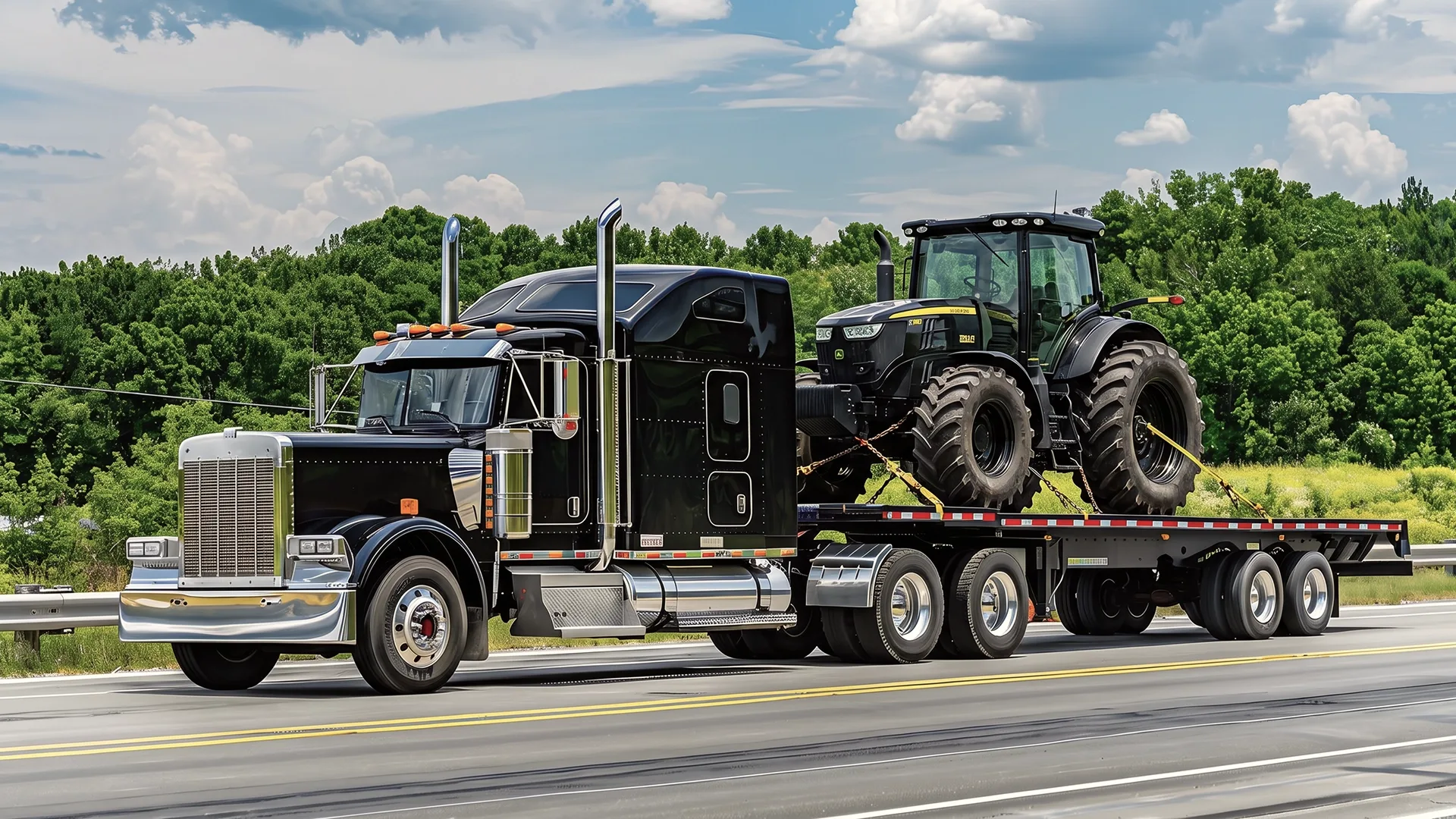
The process requires specialized carriers, regulatory permits, and careful planning, so let’s look at the heavy equipment transport process, focusing on its costs and primary cost drivers.
The Basics of Heavy Equipment Transport
Heavy equipment shipping, or heavy haul, involves transporting machinery or cargo that sometimes exceeds the legal thresholds for weight, height, width, or length. Federal law treats cargo as oversize or overweight when the combination of the vehicle and cargo exceeds:
80,000 pounds gross vehicle weight (GVW),
8.5 feet in width,
13.5 feet in height, or
53 feet in length
To operate in the heavy equipment industry, carriers need to coordinate with state departments of transportation, obtain route surveys, and have law enforcement escorts or pilot vehicles for some moves. Moves that cross multiple states require permits from each one, adding time and cost to the process.
What Does Heavy Equipment Transport Cost?
Heavy equipment transport pricing is highly variable, but broad market benchmarks help to understand the cost to move heavy machinery. Generally, they range from $1.50 to $5.00 per mile, with the rate per mile decreasing for longer distances. When you include permits, escort vehicles, and fuel surcharges, the cost range for hauling different distances includes:
Regional haul (< 200 miles): $800 to $1,800
Medium distance (200 to 500 miles): $1,400 to $2,800
Long distance (500 to 1,000 miles): $2,500 to $5,000+
Cross-country (1,000+): $5,000 to $10,000+
Besides the distance traveled, other key cost drivers are:
Equipment size and weight: Heavy, tall, or wide loads need more capable trailers. They also require more planning and permitting.
Route complexity: Routes in mountainous areas, urban areas, or locations with bridge weight restrictions and low clearances, can require detours, leading to longer routes.
Seasonal demand: Demand for heavy equipment transport increases in spring and summer, so carrier rates increase.
Permits: State permits range from $50 to $300 apiece, so traveling in multiple states increases costs. Submitting permit applications in advance avoids expedited processing fees.
Pilot cars/escort vehicles: Loads exceeding certain height or width thresholds need an escort vehicle, which costs $1.00 to $1.25 per mile per vehicle. Some states require one in front and one behind.
The size of the equipment being transported is critical, especially since many equipment classes come in different sizes. An estimated excavator transport cost differs when dealing with a mini-excavator versus a large, oversize excavator that requires a larger trailer, permitting, and escort vehicles.
Trailers Used for Heavy Equipment Shipping
Choosing the right trailer type is not a matter of convenience. The choice has a direct impact on the cost to move heavy machinery, as well as whether the move is legal and safe. We’ll cover four trailer types that differ based on the size, height, and nature of the equipment they haul:
Towing trailer
Standard flatbed trailer
Step Deck Trailer (Drop Deck)
Removable Gooseneck (RGN) Trailer
Towing Trailer
The towing trailer, also called a tag-along, bumper pull, or pintle-hitch trailer, is the base-level trailer for heavy equipment transport. They can be pulled by a heavy-duty pickup truck or a medium-duty service vehicle, and are most often used for smaller, lighter machinery, such as compact track loaders, small excavators, landscaping equipment, skid steers, and utility vehicles. Since these machines are used by companies large and small, so are towing trailers.
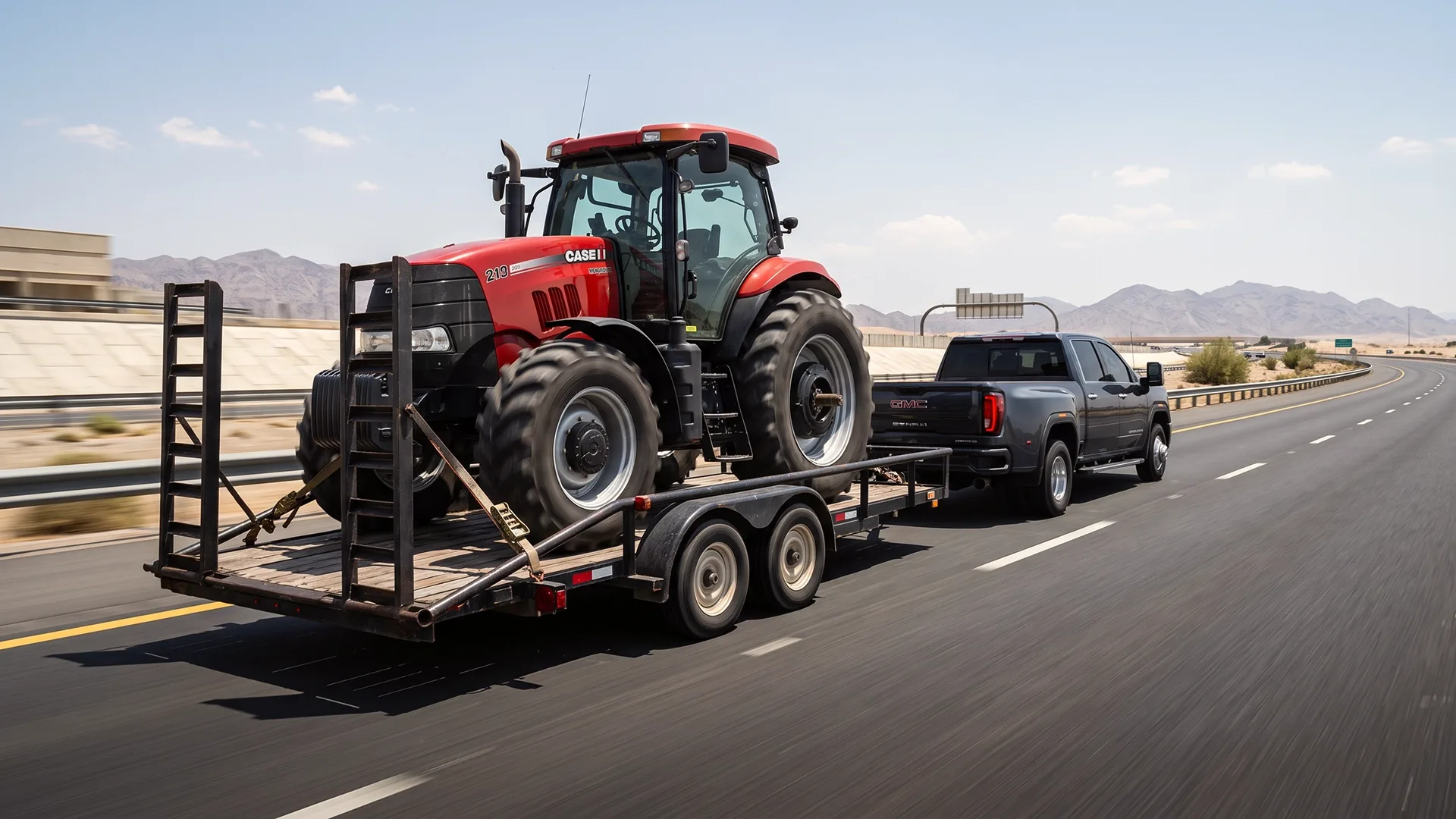
The tow vehicle's towing capacity, the trailer's GVWR, and state regulations determine is used for specific applications:
Bumper-pull tow trailers: 10,000 to 15,000 pounds
Heavy-duty gooseneck tow trailers: 30,000 to 40,000 pounds
Towing trailers are affordable, with short hauls of 50 to 150 miles costing $300 to $800, depending on load weight and fuel. Costs increase with longer distances, but the equipment's size and weight generally mean it does not require oversize or overweight permits, allowing quick moves from site to site. Of course, many jobs require machines with more power and capacity than a skid steer loader, so there is a need for larger machines and more capable trailers.
Standard Flatbed Trailer
Standard flatbed trailers are the foundation of heavy equipment transport given that they are generally:
Open-sided, allowing them to be loaded with a crane, a forklift, or from a ramp
With a 53-foot flatbed sitting five feet off the ground
Can carry about 48,000 pounds of cargo (80,000-lbs. federal GVW limit, less the tractor and trailer weights.)
Flatbeds work well for heavy equipment shipping that falls within standard height limits. With the deck sitting 60 inches off the ground, they can handle cargo 8.5 feet in height before oversize permits are required. As a result, flatbeds work well for hauling backhoes, small bulldozers, forklifts, road graders, and agricultural attachments that sit low to the ground.
Flatbed rates for heavy equipment generally run $2.00 to $3.50 per mile.
Step Deck Trailer (Drop Deck)
Step deck trailers, also called drop decks, handle cargo that is too tall for a standard flatbed but does not require the ultra-low clearance of an RGN. Their step deck name reflects their having two deck levels:
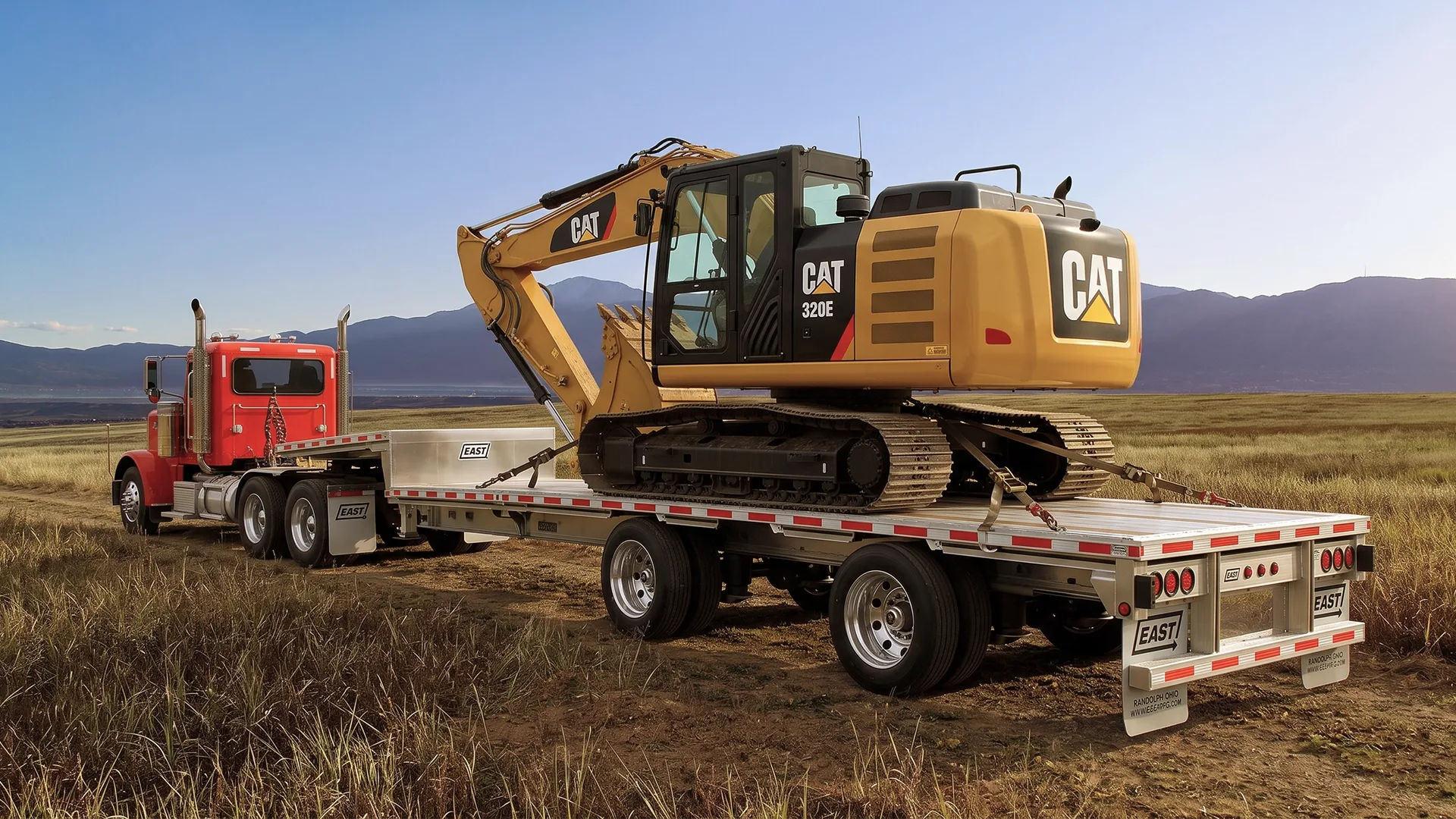
Short upper deck near the cab is 10 to 13 feet long and sits about 5 feet off the ground
Longer, lower deck is 38 to 42 inches off the ground
With the lower main deck, step decks can legally transport cargo up to 10 to 11 feet tall in most states without triggering oversize height permits or encountering low-clearance issues, giving it an advantage over flatbeds. Step decks are heavier than flatbeds and often have two axles to haul up to 48,000 pounds of cargo, comparable to a standard flatbed.
Step decks are widely used for hauling mid-sized construction equipment: 10- to 20-ton excavators, large skid steer loaders, telehandlers, and small bulldozers. They also see frequent use for large vehicles, agricultural equipment, and prefabricated structures.
Pricing for step deck transport runs $2.50 to $4.00 per mile for heavy equipment moves.
Removable Gooseneck (RGN) Trailer
RGNs handle the largest, heaviest, and tallest loads in the heavy haul industry. Their signature feature is a detachable front section, aka the "gooseneck," that disconnects from the main deck. When disconnected, the main deck forms a ground-level ramp, allowing machinery to drive onto the trailer under their own power. When reconnected, the deck is hydraulically raised to give the deck adequate ground clearance.
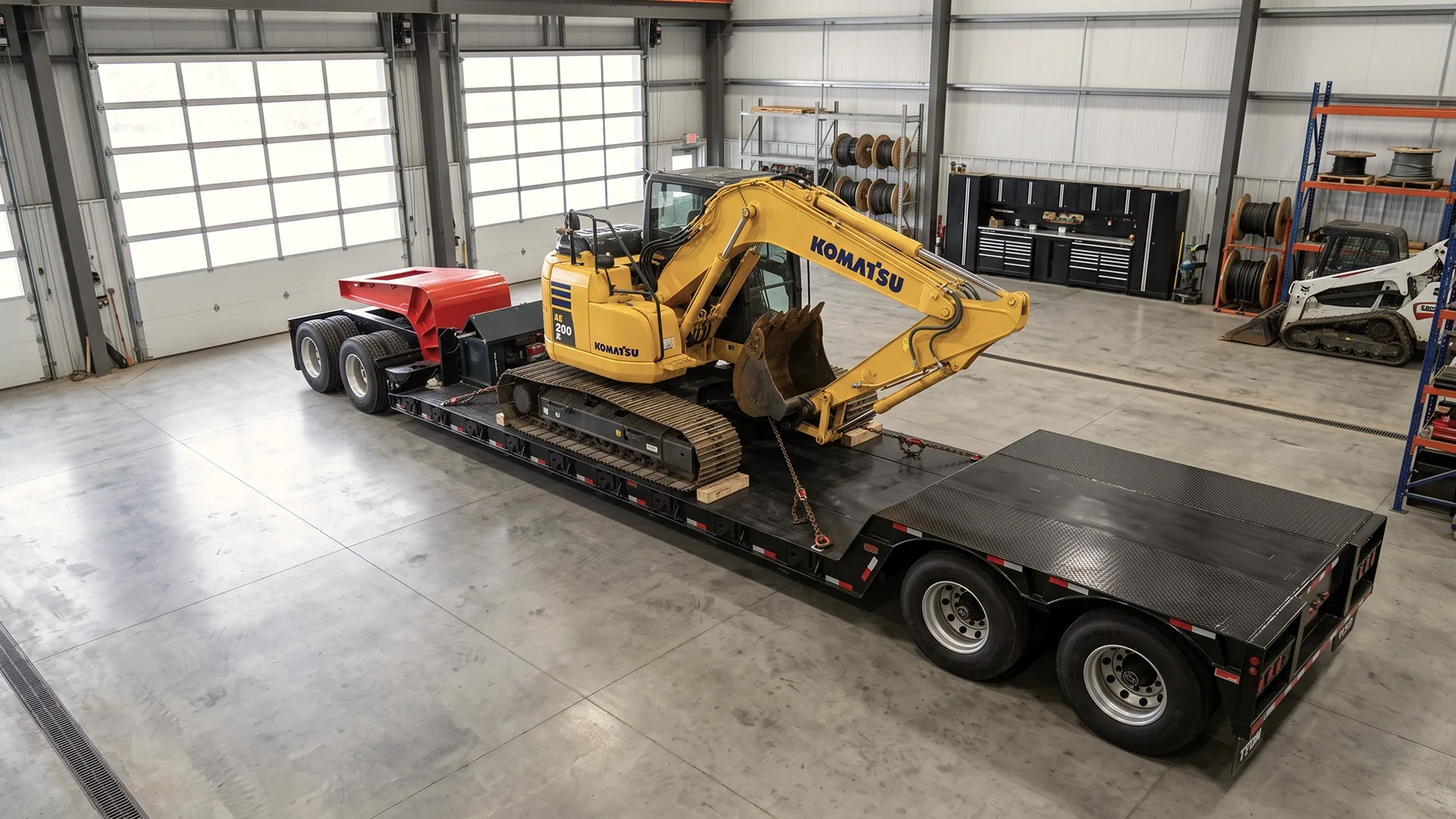
Standard RGN trailers:
Handle 40,000 to 50,000 lbs. loads. Stretch configurations can carry loads exceeding 150,000 lbs.
Have a low-deck height of 18 to 24 inches, allowing taller equipment to be transported while clearing bridge overpasses.
RGN trailers are used for large, heavy loads such as excavators, construction cranes, and industrial boilers. Given the equipment on RGN trailers, they often require pilot cars and can face time-of-day travel restrictions in some jurisdictions.
RGN transport rates typically run $3.50 to $5.00 per mile or more.
Choosing the Right Option
Clearly, matching the right trailer to the job allows equipment to be transported efficiently and safely, while also complying with the rules of the road. Like the auto transport industry, you can often reduce your cost to move a bulldozer by obtaining quotes from multiple carriers or brokers to get the best combination of price and service.
Submitting permit applications in advance with accurate dimensions and weight also helps to control costs and avoid delays in one of the more complex logistics challenges in the transportation industry.
While Nexus Auto Transport does not handle heavy equipment, we handle motorcycles, classic and luxury vehicles, sports cars, travel trailers, boats, and even golf carts.
Contact us now for more information on moving those goods. We offer free, no-obligation quotes!
Instant Quote: https://nexusautotransport.com/car-shipping-calculator/
Heavy Machinery Trailer Specifications
Trailer Type | Maximum Weight Limit | Best Suited Equipment | Extra Operational Fees |
Towing Trailer | 15,000 lbs. | backhoes, forklifts | None |
Standard Flatbed | 48,000 lbs. | small dozers, road graders | Permits, as needed |
Step Deck Trailer | 48,000 lbs. | 10- to 20-ton excavators, large SSLs | Permits, as needed |
Removable Gooseneck RGN | 50,000 to 150,000 lbs. | large excavators, haul trucks, construction cranes | Permits, pilot cars |
FAQs
Do I need to secure special state permits for oversize machinery transport?
Yes. State permits are needed for all moves involving oversize equipment. Often, you need escort vehicles for the trip, and some jurisdictions restrict travel at night, during rush hour, or have other restrictions. As mentioned earlier regarding excavators, your excavator transport cost will depend on the requirements in each state your machine travels through.
How can I track my heavy equipment during cross-country transit?
You can track your equipment during a cross-country haul using the tracking capabilities offered by the broker or carrier, which are increasingly common in the industry. Alternatively, you can place your own GPS-tracking device on the equipment so you can track its location independently. Although the tracker and its subscription fee increase the cost to move a bulldozer, excavator, or other equipment, many consider them important investments.
Are escort vehicles or pilot cars included in the initial shipping quote?
No. The general industry practice is not to include contingency fees in the initial quote. Difference in requirements from state to state and different routing options makes it difficult to determine in advance when escort vehicles will be needed and for how long.
What happens if my delivery destination lacks a commercial loading dock?
The responsibility for removing equipment from the carrier is the recipient's responsibility, not the driver's, so you need to confirm arrangements in advance. Additional fees apply if the recipient does not remove the cargo from the trailer promptly.
Self-propelled equipment commonly used in the construction and similar industries does not need a dock since their operators can drive them off the carrier. In other cases, the cargo can be removed from the carrier using a forklift or crane,