Service members experiencing a Permanent Change of Station (PCS) enter a process with its own vocabulary that resembles corporate relocations in the civilian world. However, the PCS process changed in 2026 after the Transportation Command terminated the Global Household Goods Contract with HomeSafe Alliance and returned the process to local transportation offices.
By terminating the HomeSafe Alliance program, PCS moves have essentially returned to the old way of doing things, which offers a choice between a government-managed HHG (Household Goods move) and a PPM (Personally Procured Move).
This article focuses on PPMs, with particular focus on issues related to military car shipping or transporting POVs (Privately-Owned Vehicles).
A PCS Overview
PCS payment arrives as a stack of separate entitlements:
- Dislocation Allowance (up 3.8% for 2026)
- MALT mileage for driving a POV
- Per diem for authorized travel days
- Temporary Lodging Expense for hotel nights at either end.
Each of these has its own cap and paperwork.
The PPM: Where the Money Is
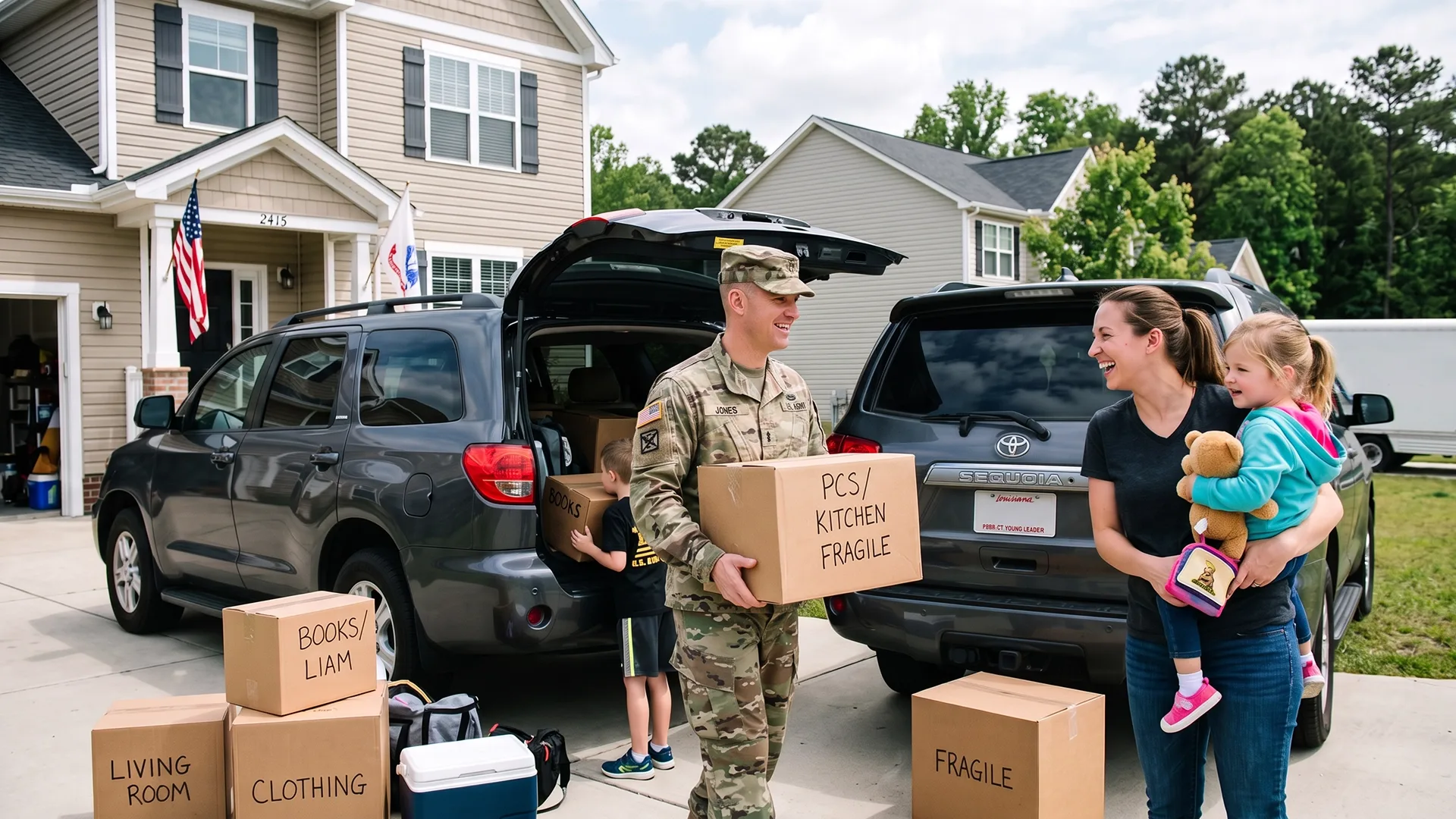
A Personally Procured Move (PPM, still called a DITY) lets the member arrange the move, whether you choose a rental truck, portable container, or commercial mover, and collect reimbursement. For 2026, the incentive is 100% of the Government Constructed Cost. That is, the DoD pays what it would have paid a carrier to move your property. So, if you can arrange a move for less than the DoD would pay, you pocket the difference. If not, you absorb the additional costs.
The DoD pays up to 100% of their standard cost, but you must follow specific guidelines to recover those costs:
- Weight tickets are non-negotiable. The Air Force's PPM guidance says: "NO WEIGHT TICKETS, NO INCENTIVE, NO EXCEPTIONS." You need certified empty and full tickets for every move segment.
- Weight allowance is the ceiling. Reimbursement is based on the government's cost for weight moved, with your weight allowing varying by rank and dependents.
- The profit is taxable. If your documented expenses fall below the total payments, the difference is treated as income. Insurance isn't reimbursable, but you can deduct it at tax time.
Moving POVs
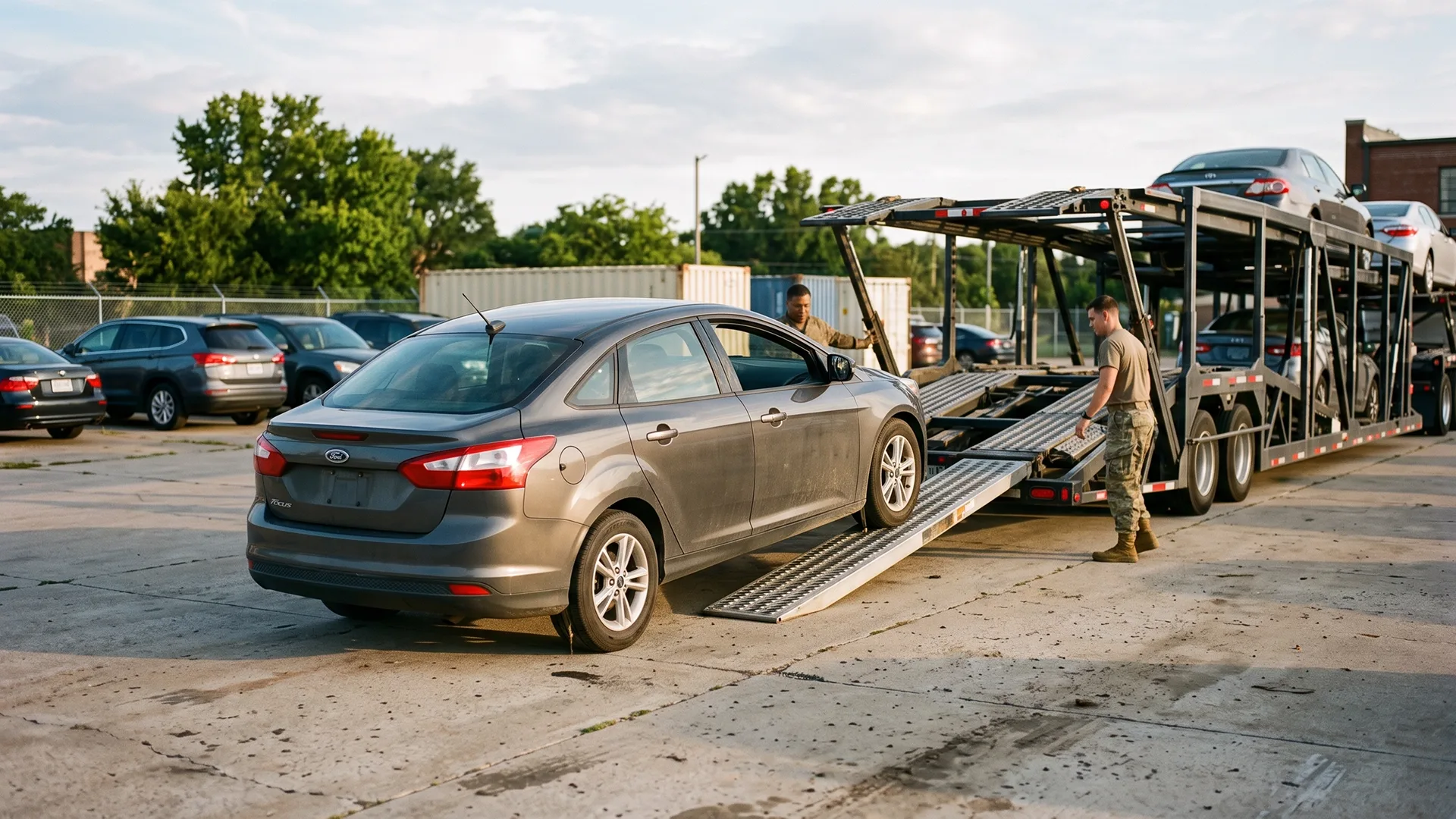
Vehicles follow separate rules from household goods, and families can be surprised by how many cars the military will move. For OCONUS (Outside the Continental US) moves, overseas orders generally cover one privately owned vehicle per service member at government expense. A second vehicle is the family's expense, so you can choose to ship it commercially, store it, or sell it.
The DoD generally does not reimburse vehicle shipping for CONUS (inside the Continental US) moves. You're expected to drive to your new station and collect MALT plus per diem for one or two vehicles.
However, the Joint Travel Regulations include a provision for the government to reimburse part of the shipping cost when military movers drive one POV and ship a second. The reimbursement is capped at the difference between what it would have cost the government for the family to travel in two separate vehicles versus traveling together in one. This is worth asking about, and you should get advance approval from the Personal Property Office for two-vehicle households.
When Service Members Ship Vehicle
When changing stations, military movers often ship vehicles when:
- More vehicles than drivers. This is the single most common scenario. A two-car household with one spouse deployed, one licensed driver, or young children can't caravan 1,800 miles, no matter how the math works out. A vehicle must ride on a truck.
- A vehicle that shouldn't make the trip. High-mileage commuters needing $1,200 of pre-trip work, project cars, classics, and anything with a questionable transmission.
- Motorcycles, almost always. Bikes qualify as POVs when registered for road use, but riding one across the country during a PCS means weather exposure, no cargo capacity, and an exhausted rider.
- Compressed timelines. Short-fused orders, a member flying back from deployment or TDY directly into the move, or a working spouse who must be on the ground at the new location immediately.
Ship It or Drive It? The Accurate Math on Moving Vehicles During a PCS
Military families often assume that driving is the cheaper option, because the government pays the MALT allowance and shipping requires an out-of-pocket payment. On single-car and short-distance moves, that instinct is often right, but in most other situations the gap between the two options is small, or shipping is less expensive, especially when you account for the true cost of driving.
MALT pays $0.235 (as of July 1, 2026). MALT is sometimes viewed as profit, but the IRS considers the true cost of operating a vehicle, including fuel, tires, maintenance, and depreciation, at 76 cents per mile. That means that driving 2,800 miles across the country has a true cost of $2,128 and you collect $658 in MALT. Shipping a standard car for $1,500 to $2,100 is slightly cheaper, and your vehicle arrives without 2,800 additional miles of wear.
Overall, when you have one car and one driver traveling a short distance, you are best off driving it. When you have two vehicles, a motorcycle, a car that isn't road-trip healthy, or are moving 1,500 miles or more, shipping is generally the better alternative.
What Nexus Auto Transport Offers Military Members
Nexus Auto Transport works to be the favored military moving company for vehicles, providing several discounts and exceptional service to military personnel:
- A standing military discount for active duty, retirees, veterans, Reserve and National Guard members, and dependents, on single-car and multi-car shipments. Because rates change by route and season, a transport specialist applies it at quote time, so call 224-218-2949 to get a price.
- Door-to-door with one point of contact. Each order gets a dedicated specialist, and drivers call 24 to 48 hours before delivery, which is useful when a family is still in temporary lodging without a fixed address.
- Open or enclosed, matched to the vehicle. Open transport is recommended and appropriate for most shipments. It is the fastest and most affordable option, whereas enclosed transport is generally used only for high-value vehicles.
We'll Help Get You Where You're Going
Nexus Auto Transport is proud to be a trusted military moving company for vehicles owned by active and retired service members. As a leading broker, Nexus Auto Transport has a nationwide network of vetted carriers experienced in all aspects of vehicle transfers. Contact us for a quote and see how our 3-step process makes it easy for you from start to finish.
Get a military car quote in seconds! https://nexusautotransport.com/military-car-shipping/
PCS Move Support Options for Military Families
PCS Situation |
Main Moving Need |
Military-Covered Option |
When Nexus Support May Help |
|---|---|---|---|
Standard PCS with one POV |
Get the family's only vehicle to the new duty station on or before the report date |
Drive it and claim MALT plus per diem for authorized travel days. Government-funded vehicle shipment applies to OCONUS orders (one POV) and rare approved CONUS orders |
When the member is flying, has a medical restriction, or has no time to drive. |
PCS with a second vehicle |
Move a car that no one in the household is available to drive |
The JTR "drive one, ship one" provision reimburses part of the cost. Must be authorized in advance by the Personal Property Office |
Covers the balance the entitlement leaves behind. Military discount applies to multi-car shipments, and both vehicles can move on one open carrier |
PPM/DITY move |
Move household goods personally while keeping the shipment under the weight allowance |
Reimbursement is 100% of the Government Constructed Cost. Towed vehicles, RVs, campers, and fifth wheels are not household goods under the JTR and weight cannot be claimed |
Shipping the car separately keeps unclaimable weight off the rental truck and frees the hitch. PPM incentive is calculated on goods that count |
Delayed housing access |
Location for vehicles and belongings to wait while family is in temporary lodging |
Storage in Transit covers household goods up to 90 days at government expense, extendable to 180 with PPSO approval. Request during transportation counseling. SIT does not cover POVs. |
Driver calls 24–48 hours ahead so the vehicle arrives once you provide the address |
Short-notice relocation |
Get vehicle to new station faster than the family can drive it |
TLE covers lodging at either end and per diem covers authorized travel days, but the government does not expedite POV shipment within CONUS. |
Expedited shipping options; 24/7/365 dispatch support |
Move requiring storage or flexible delivery |
Bridge a gap between when the vehicle must leave and when it can be received |
SIT and Non-Temporary Storage apply to household goods. Government-funded POV storage is limited to specific OCONUS situations, such as a host country that prohibits POVs. |
Dedicated specialist coordinates pickup and delivery windows, adjusting timing when report dates or housing shifts; common in a PCS. |
FAQs
Can military families use private car shipping if military-covered transport is not available?
Yes. For most moves within the continental United States, it is the only option. The expectation is that you drive and collect MALT plus per diem, so you arrange anything beyond that first driven vehicle commercially.
Before booking, however, ask the installation Personal Property Office about the "drive one, ship one", which can reimburse a meaningful share of a second vehicle's transport.
How many cars will the military move during a PCS relocation?
As a rule, one. Overseas orders typically cover shipment of one privately owned vehicle per service member at government expense, processed through a Vehicle Processing Center. A second car, a motorcycle, or a spouse's commuter is the family's responsibility.
Within CONUS, there is generally no shipment entitlement. MALT pays for up to two POVs when both are driven to the new location.
What should military families do if PCS dates or housing access change?
Once you have your amended orders, notify the installation Personal Property Office immediately to update the move record. The Personal Property Activity call center (1-833-MIL-MOVE) is available around the clock during peak season.
If your household goods will arrive before your housing is ready, request Storage in Transit (SIT) during counseling rather than after the truck leaves. SIT runs up to 90 days at government expense and can be extended to 180 days with PPSO approval if the delay is beyond the member's control.
Tell any commercial carrier as early as possible. Date changes made well ahead of a scheduled pickup are far easier and cheaper to accommodate than changes made close to the scheduled dates.
What documents should service members keep ready when coordinating PCS vehicle shipping?
During military car shipping, keep a single folder, physical and digital, containing PCS orders with every amendment, a valid government or state photo ID, the vehicle's registration, title, or bill of sale, and current proof of insurance.
Add a lienholder or leaseholder authorization letter if the vehicle is financed or leased, and a notarized power of attorney if someone other than the member will hand over or receive the vehicle.
OCONUS shipments require more: proof that all safety recalls have been repaired, EPA and DOT compliance documentation, and the shipping forms submitted through the POV booking system.
Keep the Bill of Lading and condition report and photograph every panel before signing anything. On a PPM, keep the certified empty and full weight tickets since you will not receive incentive payment without them.