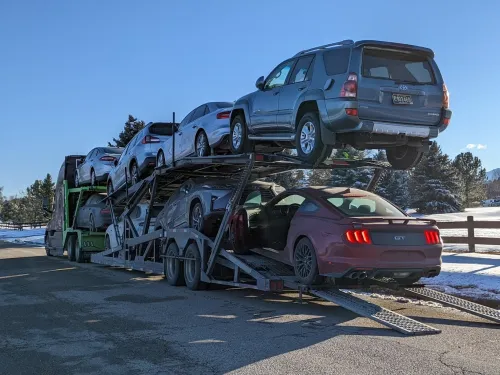

Door-to-door car shipping means the carrier picks up your vehicle as close as safely and legally possible to the location you provide and delivers it the same way at the other end. Sometimes that really is in front of your house. Other times, the driver may need to meet you nearby because a large car carrier can't safely enter your street, apartment complex or neighborhood.
That distinction matters. Door-to-door service doesn't promise that a tractor-trailer will pull into your driveway. It means you don't have to take the car to a shipping terminal. The pickup and delivery points are arranged around your requested addresses, with adjustments only when truck access, local restrictions or safety make them necessary.
For most customers, that's the practical door-to-door service meaning: the carrier comes to you, or as close to you as the truck can reasonably get.
What Is Door-to-Door Transport?
If you're asking, “What is door-to-door transport?” think of it as location-based vehicle pickup and delivery rather than terminal-based shipping. You provide the pickup address and destination when arranging the shipment. Nexus then coordinates the transport with an independent third-party carrier serving that route.
Before pickup, the driver or Nexus team coordinates the arrival time with you. Someone must be available to release the vehicle, although that person doesn't necessarily have to be the registered owner if you've made arrangements for someone else to handle the handoff.
At pickup, the driver inspects the vehicle and records its condition on the Bill of Lading, which is the shipment document used to record vehicle details and condition. You should look over that inspection before signing it. The vehicle is then loaded and secured for transport.
The process happens in reverse at the destination. You meet the driver, inspect the car again and compare its condition with the pickup report before signing the delivery paperwork.
That's the basic door to door transport meaning, without the misleading assumption that "door" always means the literal front door.
Does Door-to-Door Car Shipping Really Come to Your House?
Often, yes. A residential driveway or street can be a perfectly workable pickup point when the carrier has enough room to enter, maneuver, load the vehicle and leave safely. The driver also has to follow parking rules, truck restrictions and any other local limitations.
The challenge is the truck itself. A multi-vehicle car carrier is much larger than the passenger vehicles it carries. A street that feels spacious from behind the wheel of your SUV can look very different to a driver trying to move a loaded transport rig through it.
Low branches, sharp turns, parked cars, narrow residential streets, low bridges and restricted commercial-truck routes can all change the pickup point. Apartment complexes and gated communities can create similar problems.
That's why Nexus describes door-to-door car shipping as pickup and delivery as close as safely and legally possible to the requested locations. That wording is more useful than promising a truck will reach an address it may not be able to enter.
What Happens If the Carrier Can't Reach My Address?
This usually isn't a major problem. It just means you and the driver select a better meeting place nearby.
A large shopping center parking lot is often convenient because it offers room for the truck to turn and for the driver to load or unload the vehicle without blocking traffic. A truck stop may work well near a highway. A wide commercial street or another open public area can also be suitable.
The driver may suggest the location because they're in the best position to judge whether the truck can get in and out safely. You can also mention accessibility concerns before pickup. If you live on a narrow cul-de-sac, behind a low railroad bridge or in a community that prohibits large trucks, saying so early can save everyone a last-minute change of plans.
The goal isn't to move you miles away from your requested address. It's to find the nearest practical location where you, the vehicle and the carrier can meet safely.
Door-to-Door Car Transport: Direct or Workarounds
Pickup Scenario |
Carrier Access |
Meeting Point |
Customer Action |
|---|---|---|---|
Broad avenue with plenty of room for a truck |
The carrier may be able to come right to you |
Your address or a nearby spot on the street |
Have the keys ready and the car waiting for the driver. |
Tight dead end or narrow lane |
Turning a loaded trailer around can be difficult or dangerous |
A bigger street, shopping center or nearby parking lot |
You or the driver may suggest a better spot a few minutes away. |
Gated community, condo complex or apartment property |
Entrance rules or limited maneuvering space may keep the truck from coming inside |
Outside the complex or another open common area |
Meet the carrier where the truck can get in and out easily. |
Low trees, low bridge or another overhead obstruction |
Direct access could put the truck or loaded vehicles at risk |
A clear location nearby |
Tell Nexus or the driver about the obstruction before pickup. |
Why Door-to-Door Service Is Usually More Convenient
The biggest difference is what you don't have to do. With terminal-based shipping, the vehicle must be brought to and retrieved from designated facilities. Door-to-door service removes that extra trip.
That can matter when you're moving between states, flying to your destination or coordinating a vehicle for someone who won't arrive until later. You may still have to drive a few minutes to meet the carrier, but that's very different from arranging transportation to a distant terminal.
Those are some of the practical conveniences that make professional vehicle shipping more useful than moving the car yourself or using another towing method.
Door-to-door service also gives you more control over the handoff. You know where the vehicle is being picked up and where you expect to receive it. If either location presents a problem for the carrier, you can settle on an alternative instead of discovering the issue after the truck arrives.
How Pickup and Delivery Are Arranged
Once a carrier is assigned, communication becomes important because vehicle shipping operates around estimated arrival windows rather than appointment times down to the minute.
Traffic, weather, road closures, earlier pickups and mechanical problems can change when a carrier reaches you. Nexus's current company guidance says a driver usually calls about 24 hours in advance to arrange the meeting, with additional communication as the pickup or delivery gets closer.
You don't need to stand outside waiting for a truck all day. Keep your phone available and make sure the contact information on the order is accurate.
If somebody else will meet the driver, give that person the information needed to handle the vehicle inspection and paperwork. They should also know not to sign the delivery inspection without first checking the car.
What Should You Check Before Booking?
Start with accurate locations. A ZIP code is enough to generate an estimate, but the actual pickup and delivery addresses matter when the shipment is scheduled.
You should also provide the correct vehicle information. Size and condition can affect the equipment needed to move the car. An inoperable vehicle, for example, may require a carrier equipped to load a car that can't be driven onto the trailer.
For pricing, the instant online calculator lets you enter the route, vehicle and timing information before committing to a shipment.
The Federal Motor Carrier Safety Administration (FMCSA) separates auto transport brokers, which arrange transportation, from motor carriers that physically move the vehicle. A consumer advisory for automobile transporters explains that distinction and recommends checking registration before hiring a company. It's also worth understanding who is arranging and performing the move. That gives consumers a practical way to verify the company they’re dealing with before handing over the vehicle.
Consumers can also use FMCSA's Licensing and Insurance Carrier Search to look up interstate operating authority using a USDOT number, docket number or company name.
FAQs
Do I need to be present for door-to-door vehicle pickup and delivery?
You or another person you authorize needs to be available to release the vehicle at pickup and receive it at delivery. The person meeting the driver should be able to review the vehicle inspection and shipment paperwork.
Can I change my pickup or delivery location after booking?
Usually, a location can be adjusted if the new address still works with the carrier's route and schedule. Contact Nexus as soon as you know a change is needed rather than waiting until the driver is already headed to the original address.
How much notice will the driver give before pickup or delivery?
Nexus says drivers usually call about 24 hours in advance to arrange the meeting. Expect additional communication as the carrier gets closer because traffic, weather and other conditions can change an estimated arrival time.
Are there vehicle size or condition restrictions for door-to-door transport?
Cars, SUVs, pickups and many other vehicles can be shipped door to door, but size, modifications and operability need to be disclosed when booking. A vehicle that doesn't run may require special loading equipment, while unusually large or modified vehicles can affect trailer space and carrier selection.
Door-to-Door Shipping Should Make the Handoff Easier
Door-to-door service is straightforward once you understand what the term actually promises. You choose the pickup and delivery locations and the carrier gets as close to them as it can safely and legally operate. If your street won't accommodate the truck, you meet nearby instead.
That flexibility is a feature of the service, not a failure to provide door-to-door shipping. It keeps a large transport truck out of places where it shouldn't be while still saving you from making a separate trip to a shipping terminal.
If you're planning a vehicle move and want to discuss the pickup or delivery location before booking, Contact Us.