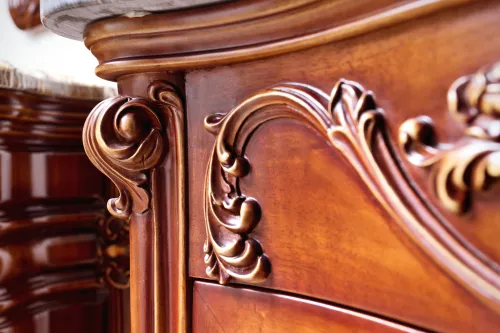

We use the word antique in many ways today. We use it informally to mean something old, and more precisely to mean an item of value that is at least 100 years. It is also worth pointing out that an item is not necessarily of financial value by virtue of being 100 years old, even if it is rare. Many 100-year-old items hold little monetary value, though they can hold sentimental value to their owners.
For this article about moving antique furniture, we'll discuss three options for moving antiques of both sentimental and monetary value, while distinguishing the moving processes and their financial impacts. Specifically, we will look at:
- Do It Yourself (DIY) moves
- Standard moving companies
- Specialist antique furniture moving companies
The Stakes Are Different with Antiques
Regardless of their value, moving antique furniture presents different challenges than most household items. Antique furniture is often easier to damage due to:
- Joints glued with animal-hide adhesives dry out and become brittle
- Veneers lifting or cracking with minimal stress
- Patina developed over generations can be destroyed by a single scratch.
- Antiques often are irregularly shaped, have uneven weight distributions, and may have detachable parts.
These and other differences mean many antiques cannot withstand the stresses that modern furniture easily absorbs during a move.
Some antiques have substantial financial value that is worth preserving, which adds another layer of complexity. Antique furniture can be appraised at thousands, tens of thousands, or hundreds of thousands of dollars per piece; value that is tied to its original finish and structural integrity.
For items with substantial value, obtaining an appraisal from a certified American Society of Appraisers member or an AQB appraiser is your first step. The appraisal will establish the replacement value for insurance purposes and document the item's condition with photographs. Without an appraisal, recovering full value after damage can be quite difficult.
Of course, only you can decide whether a possession has sufficient value to hire a specialist antique furniture moving company.
The DIY Approach to Moving Antique Furniture
The DIY approach is fine for many items we describe as antiques, though the “Don’t try this at home” warning applies to items with greater value. Moving a small writing table or an oak sideboard that belonged to your grandmother can be a viable DIY candidate. The appeal is obvious:
- A stranger doesn’t handle grandmother's sideboard
- Few scheduling issues
- Low or no out-of-pocket costs.
You can rent a truck for a local move for $50 to $150, and you can rent furniture pads, straps, and everything else you need.
The problem comes with fragile items, especially those that are valuable, because people underestimate the technical requirements of moving antiques safely. Professional antique movers know how to:
- Disassemble pieces before moving
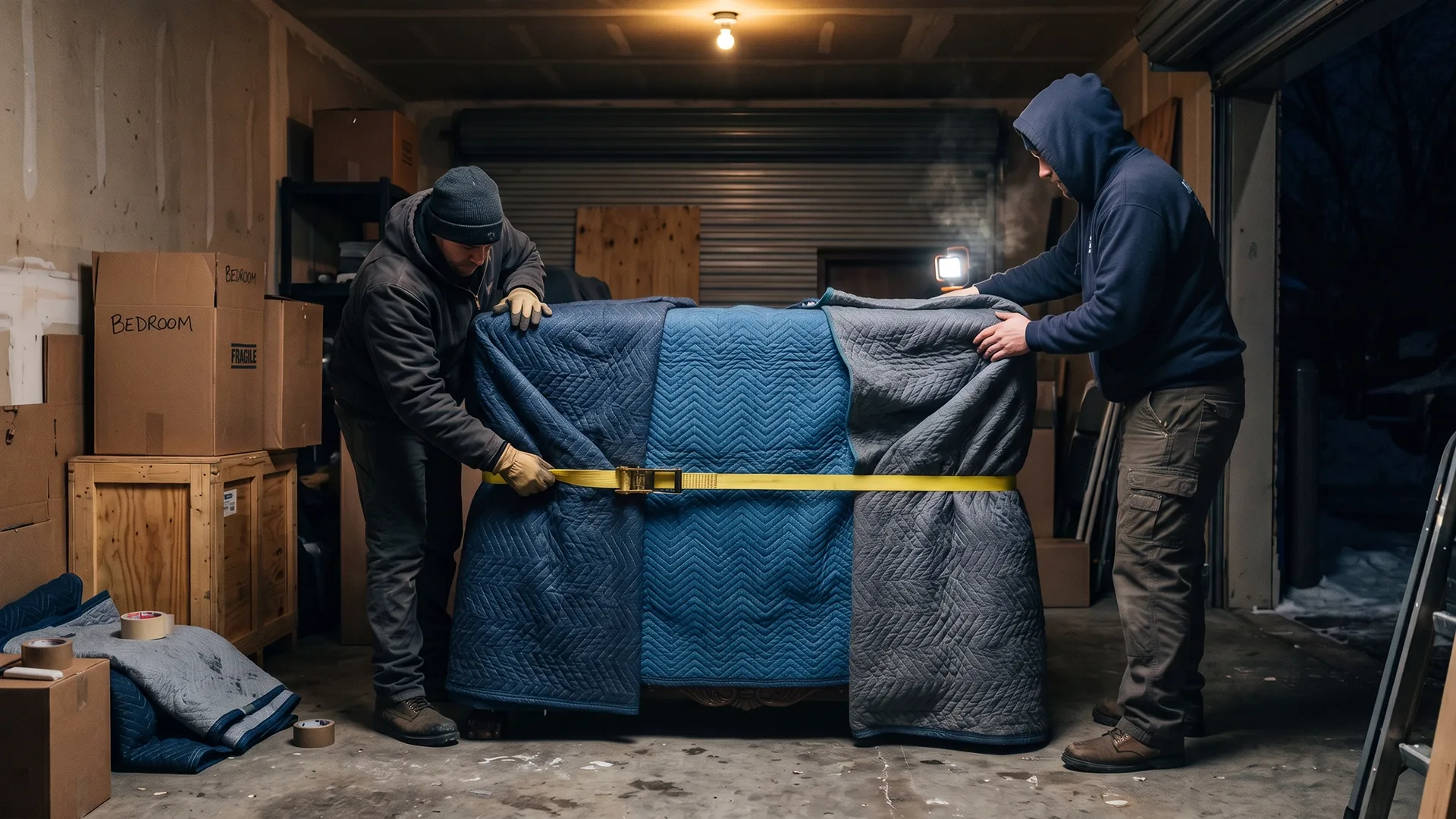
- Wrap legs and corners independently rather than bundling everything together
- Secure items in the truck so they do not shift in transit.
They also know that pieces with marble tops should be disassembled and the marble transported flat, wrapped to distribute the weight properly. If your antique is not properly secured, it can slide around the truck due to sudden braking, a pothole, or a tight turn. In addition, large antiques can be physically challenging to handle without proper equipment and a trained team, leading to personal injury concerns.
DIYers should understand that the typical homeowners’ policy may not cover damages during a DIY move. Most policies limit coverage at 10% for items located outside the home, and most exclude cover for damage that occurs due to handling. On the other hand, if you are moving items that have been appraised and you have added a rider or floater to your policy listing these items, then your item should be fully covered for up to its appraised value during a DIY move.
So, the DIY approach can make sense when moving a single small antique across town with experienced help, but the same does not apply for an entire collection or a long-distance move.
Moving Antique Furniture with a Standard Moving Company
Standard moving companies are at the middle ground for price and expertise. A local full-service move runs from $800 to $4,000, while a long-distance move can cost $5,000 or more. For most household items, a reputable, licensed moving company does the job well, but the picture is more complicated for antiques.
While most moving personnel are respectful of your belongings and do the best they can with their tools and training, they are not experts in moving fine furniture. They will take extra care with your antique, but it will be handled and packed much like most of your other items.
Besides the less skillful handling, the financial liability of a standard moving company is governed by federal rules that establish two valuation options:
- Released Value Protection: reimburses only $0.60 per pound per item regardless of actual value
- Full Value Protection: requires the mover to repair or replace damaged items at current market value.
Under Released Value Protection, an antique weighing 200 pounds would receive only a $120 reimbursement.
Also, major moving companies commonly exclude antiques, artwork, and other items of "extraordinary value" from their standard liability coverage. Like riders on your homeowners’ coverage, you must declare the items in advance, pay additional insurance fees, and you may be subject to special handling fees as well. Be sure to discuss these issues with your mover and insurance company in advance.
Some major movers have antique or specialty divisions, so some have expertise in handling high-value items. They can be an appropriate middle-ground choice for moves involving a mix of ordinary furniture and a few antique pieces.
Estimate Moving Cost: https://nexusautotransport.com/movers/
Antique Furniture Moving Companies
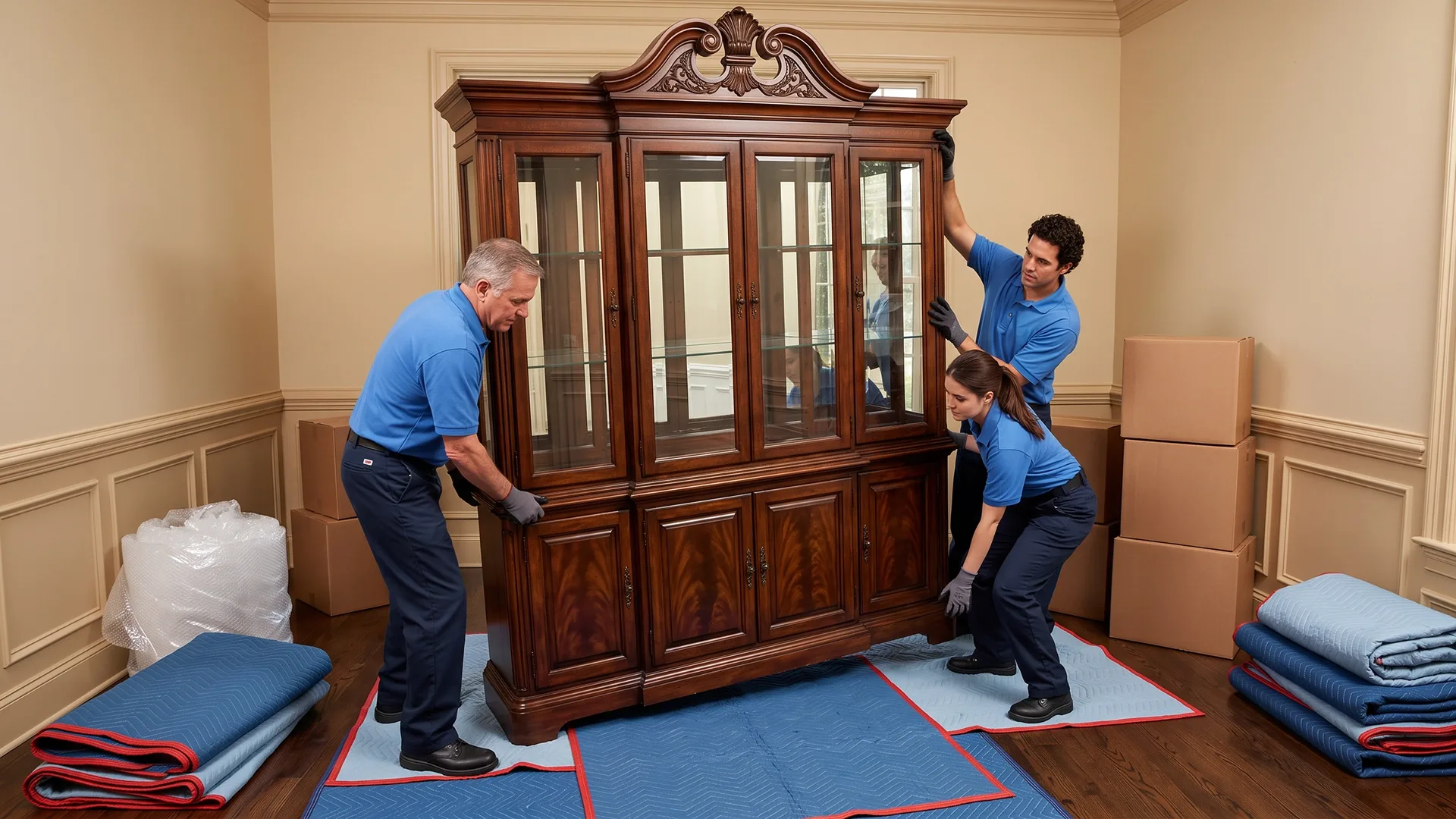
Dedicated antique and fine art movers are the safest option for collections of meaningful scope or value, and for individual items of significant value. Often called "white glove" movers, they employ trained specialists who consistently work with fragile, high-value, and irreplaceable items.
Specialist movers take a different approach to moving antique objects, including:
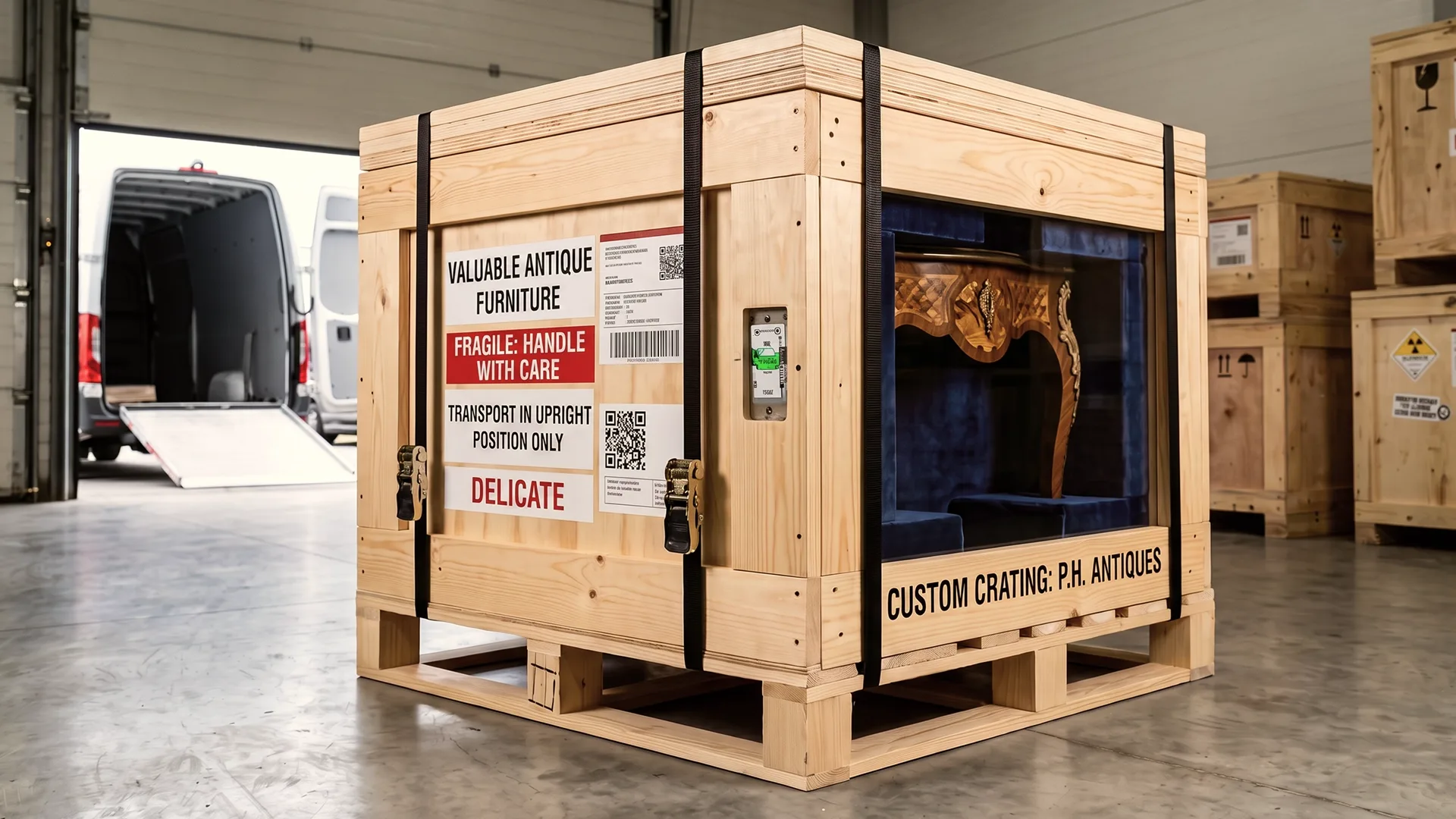
- Custom crating: The defining aspect of specialty care, they create custom crates with foam or archival padding molded to the item's contours.
- Climate-controlled vehicles: Available for pieces sensitive to temperature or humidity changes.
- Specialty equipment: Crews use specialized equipment like furniture dollies with pneumatic tires, air-ride suspension trucks, and lift-gate systems to eliminate the dangers of ramp loading.
- Dedicated point-of-contact: One person manages all aspects of your move, documents item condition at pickup and delivery, and provides clear accountability.
- Insurance coverage: Antique moving specialists offer blanket insurance covering your items at an agreed-upon replacement value (established by your appraisal).
White-glove moving services cost 30 to 50 percent more than standard moving rates, with additional charges for specialty services like custom crating and climate-controlled storage. Local white-glove movers can cost $1,500 to $4,000, while a long-distance move of a collection can reach $10,000 or higher. If your items have sufficient value, the higher premium may be the most sensible insurance policy available.
Making the Right Call
The decision on how to move your antiques comes down to the financial and sentimental value you attach to them. DIY moves make sense for moving simple, solid antiques over short distances. Standard movers can handle limited collections when you confirm specialty handling in writing, and purchase full value protection. For collections of genuine significance, or individual pieces considered irreplaceable, the antique specialist is not a luxury.
Before any move antiques, get your pieces appraised, photograph them thoroughly, confirm insurance coverage in writing, and ask potential movers for references from similar clients. Your antiques have survived at least 100 years, so you have a responsibility to help them through their next century.
Finding Antique Furniture Movers
Deciding which process to use when moving your antiques depends on the value you attach to them. You can pay for white-glove treatment for items you value for sentimental reasons, even those with limited insurance or replacement value. It’s your choice.
Of course, if you are relocating, you may also need to ship a vehicle or vehicles to your new home. Whether you want to ship your everyday car or an antique or vintage car in an enclosed shipping carrier, consider Nexus Auto Transport for those services.
Call us today at 224-276-8131 or use our online tool to obtain a quote to transport your vehicle safely.
Standard Movers vs. Specialized Antique Movers Comparison
Service Feature |
Standard Moving Companies |
Specialized Antique Movers |
|---|---|---|
Custom Crating Availability |
No, may be available as a specialty service |
Yes, for an extra charge |
Climate-Controlled Transport |
No, may be available as a specialty service |
Yes, for an extra charge |
Full-Value Valuation Coverage |
No |
Yes, based on appraised value |
Specialized Handling Equipment |
No |
Yes, special dollies, boxes, and other materials |
FAQs
Does standard moving insurance cover the full appraised value of antiques?
No. Moving companies must offer Released Value Protection (reimburses at $0.60 per pound per item) and Full Value Protection that covers items at their current market value. However, standard moving companies often exclude antiques, artwork, and other items of "extraordinary value" from their standard liability coverage, though you often can buy additional coverage for named items.
Are climate-controlled trucks necessary for transporting vintage wood furniture?
Wood furniture constantly exchanges moisture with its environment, so moves that lead to changes in humidity and temperature can cause problems. An antique piece that has been loaded on a moving truck that sits in the hot sun all day can be exposed to substantial temperature changes. Wrapping furniture in blankets reduces those swings, but the need for a climate-controlled truck ultimately depends on how you value the items relative to the additional cost of the move.
How long does cross-country antique shipping typically take?
If you are moving antiques along with the rest of your household goods, then standard cross-country timing applies. When using a white-glove service, the shipping time generally increases by a week or much more. This is because white-glove services need time to fabricate custom crates and will not send a truck across the country until they have enough items to fill a truck traveling along your general route.
Can I track my high-value items in real-time during transit?
Most moving companies provide milestone updates, not real-time tracking of the truck as it travels across the country. White-glove movers vary in their process, though you may need to contact your coordinator to obtain an update.
Another option is to pack Apple AirTags or mobile devices with your items to allow you to track their location independently.
Do I need a formal appraisal before handing over items to the carrier?
Yes and no. You need a formal appraisal only if you plan to declare the item and pay for additional insurance coverage. If you do not plan to declare the item, then you do not need an appraisal.