
Carvana is a used-car dealer with no showrooms. It buys cars, reconditions them, photographs them in 360 degrees, and sells them through a website, delivering to the driveway or to one of its glass vending machines. The company also buys cars outright from consumers who do not plan to buy anything from them. It writes its own financing, which accounts for a large share of its revenue.
Carvana sold 596,641 retail units in 2025, generating $20.3 billion in revenue and $1.9 billion in net income. In the second quarter of 2026, it moved 197,325 units and posted $513 million of net income on $7.4 billion in revenue. Management pegs the current run rate at roughly 800,000 units a year, which it says is about 1.5 percent of the U.S. auto market, and has set a target of three million units annually between 2030 and 2035.
Inventory comes from four places: wholesale auctions, trade-ins, partnered dealerships, and consumers selling direct. The 2022 purchase of ADESA’s U.S. auction business for roughly $2.2 billion gave Carvana both auction volume and physical sites it uses as inspection and reconditioning centers. That plumbing makes the direct-from-consumer channel work at volume.
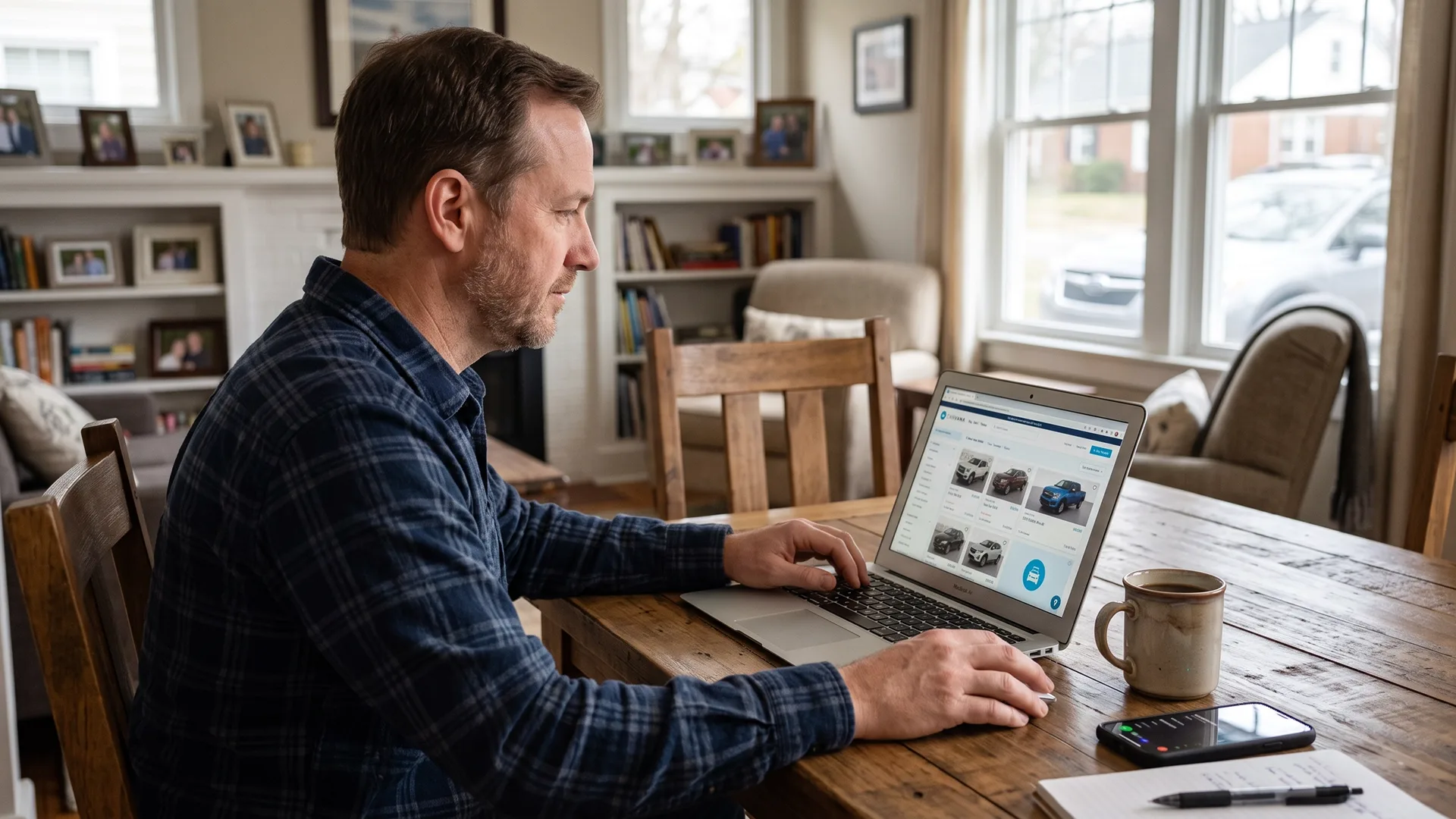
Buying from Carvana
You shop online, pick a payment method, upload documents, and take delivery. There is no test drive. Instead, there is a 7-Day Money Back Guarantee:
- Return the car for any reason within seven days of delivery and get a refund, less shipping fees
- A limited warranty covers mechanical assemblies for 100 days or 4,189 miles, whichever ends first
The quality tiers deserve attention, because they are easy to conflate. Every car in Carvana’s inventory has no reported fire, flood, or frame damage according to CARFAX and AutoCheck. Carvana Certified cars clear a higher bar, including a 150-point inspection plus no reported accidents. A car that is inspected but not Certified may carry a reported accident. Carvana notes that history reports reflect only what was reported, the same caveat that applies to every vehicle history product on the market.
What Carvana buyers gain
- Fixed pricing. No negotiation, no four-square worksheet, no finance-office upsell cycle.
- A real return window. Seven days beats the zero days a traditional dealer offers, and it is the only substitute for a test drive.
- Selection. National inventory, not whatever sits on a local lot.
- Trade-in and purchase settle in one transaction, including sales-tax credit where the state allows it.
What Carvana buyers give up
- Shipping charges are nonrefundable, even if you return the car. Delivery charges are refundable under the 7-day guarantee.
- No pre-purchase inspection by your own mechanic before you commit. You buy, then you inspect, then you decide within seven days.
- Title and registration are a recurring weak point. Illinois suspended Carvana’s dealer license in May 2022 and settled in January 2023 over late title transfers and out-of-state temporary permits, with Carvana surrendering a $250,000 bond. Connecticut’s attorney general settled for $1.5 million in January 2025, including $1 million in restitution, after hundreds of complaints about title and registration delays, repeated temporary tags, late trade-in payoffs, and misrepresented vehicle condition. Both matters are years old and ended in compliance agreements, but the pattern is why you should check that your paperwork arrives.
- Prices are not automatically low. Convenience is priced in, and a fixed price isn’t the same as a good one.
Selling to Carvana
Enter your license plate number or VIN, answer questions about mileage, features, and condition, and Carvana returns a firm number in about two minutes. The offer holds for seven days. You upload documents (photos of your ID, the title, and the odometer), then schedule a drop-off at a Carvana location or a pickup, which may carry a fee. Most sellers finish the process in three to ten days. Some markets allow same-day completion, and payment is by check or ACH at the appointment.
The appointment itself is short. Carvana describes a quick visual inspection, a simple diagnostic check, and a confirmation that the car is safe to drive, about fifteen minutes from start to finish. This is not a teardown. The heavy screening happened earlier, in the automated checks and the photos you uploaded.
What Carvana sellers gain
- Speed and certainty. A firm, non-negotiable number without listing the car, fielding tire-kickers, or handling strangers at your house.
- Negative equity is handled. Carvana collects payoff information, pays the lender, and rolls the shortfall into a purchase or collects the difference.
- No purchase required. Selling outright is a first-class path, not a trade-in afterthought.
- Expired registration is fine everywhere except California.
What Carvana sellers give up
- Money, usually. A wholesale-adjacent instant offer rarely matches a well-run private sale. The gap is the price of skipping the work of selling privately.
- No negotiation. Carvana does not price-match or negotiate trade offers.
- Finality. Once possession transfers, the sale is final and irrevocable under Carvana’s Terms of Use. There is no seller’s equivalent of the 7-day return.
- Volume limits. Sell three or more vehicles in twelve months, counting anyone in your household. Licensed dealers are barred from selling to Carvana.
Does Carvana Inspect Cars Before Buying?
When Carvana buys a car, the Carvana inspection process happens in three phases. First, the seller answers condition questions during the two-minute online appraisal. Carvana also runs automated checks and compares the photos you upload to those answers.
Second, at the handover, a Carvana advocate performs a quick visual inspection, a diagnostic scan, and a drivability confirmation, roughly fifteen minutes total. Carvana will change its offer after inspection if the findings contradict the previous appraisal. Carvana issues a revised offer instead of completing the sale at the original price.
Third, cars that Carvana plans to retail undergo a 150-point inspection and reconditioning process before being made available for sale.
So, while consumers sometimes ask, “How long does Carvana inspect cars before buying?” the answer varies depending on whether they retail or wholesale the car, but the pre-purchase physical inspection generally lasts only about 15 minutes.
Who Carvana Fits
Selling to Carvana makes sense when your time is worth more than the last few hundred dollars: an estate car that needs to go, a commuter replaced by a company vehicle, a household downsizing before a move, or anyone unwilling to meet strangers for a cash handoff.
It also fits sellers with a loan still outstanding, where the payoff mechanics are the hardest part of a private sale. Get a competing instant offer from CarMax or a franchise dealer first. The spread between them is your real negotiating information, even though neither will negotiate.
Buying from Carvana fits people who know precisely what they want, live far from good inventory, and value a return window more than a test drive. It fits poorly if you need the car registered by a hard date, want your own mechanic under it before money changes hands, or are shopping a narrow local market where you can drive three cars in an afternoon. The buyer most likely to be disappointed is the one who assumed online automatically meant cheaper.
How Nexus Helps Get You Where You're Going
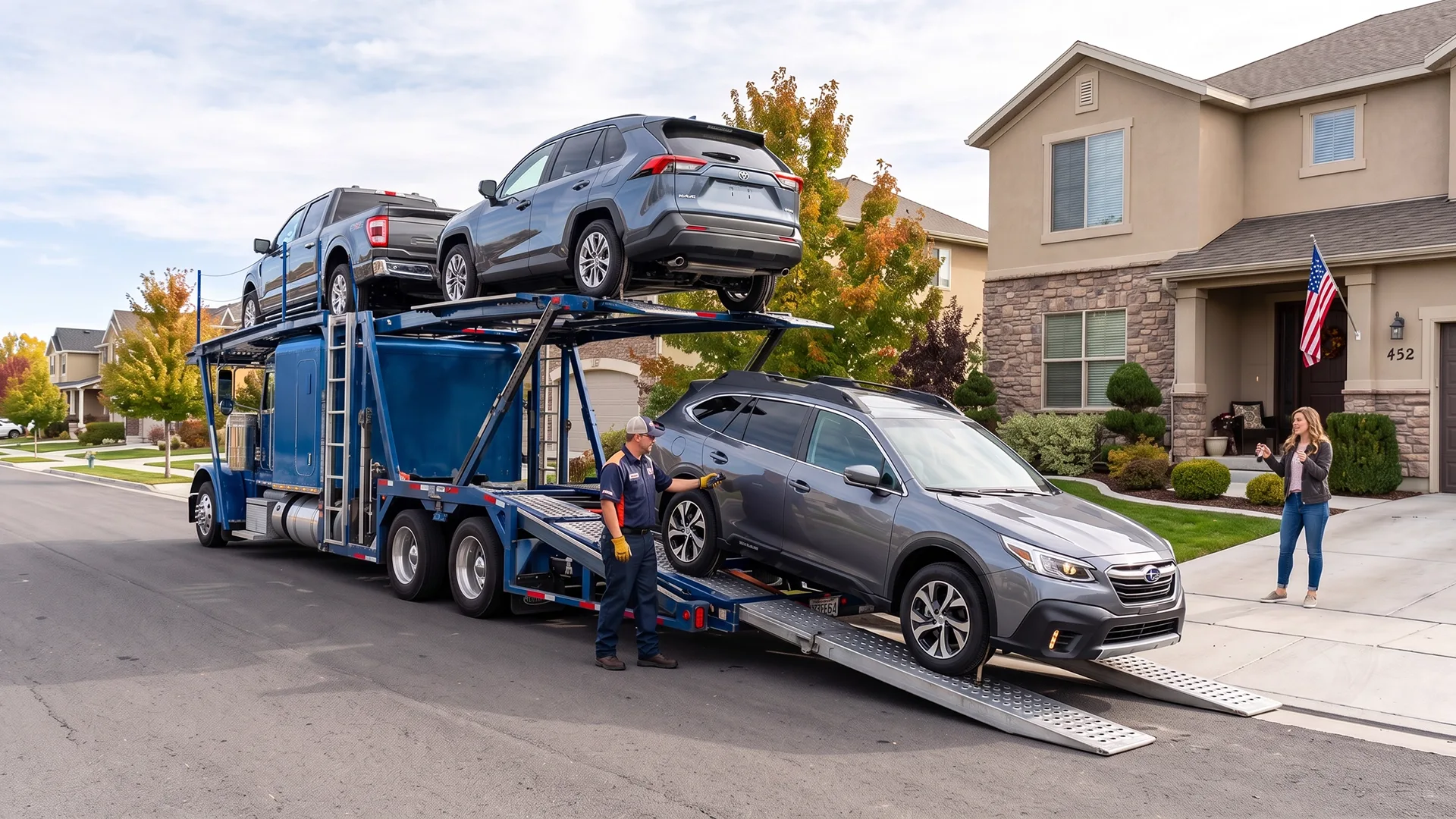
Carvana generally handles the transporting of its vehicles internally: it is a carrier and a broker. It will also pick up a vehicle from a selling customer as needed (for a fee), so auto transporters play a limited role when consumers buy from or sell to Carvana.
Of course, if you buy or sell through another channel, you can depend on Nexus Auto Transport to deliver. Nexus Auto Transport is a leading broker with a nationwide network of vetted carriers experienced in all aspects of vehicle transfers. Contact us for a quote and see how our 3-step process makes it easy for you from start to finish.
Use our car shipping calculator for a free quote: https://nexusautotransport.com/car-shipping-calculator/
Online Car Buying and Delivery Alternatives
Platform or Service |
Delivery Radius |
Trial Period |
Pricing Model |
|---|---|---|---|
Carvana |
Home delivery or customer pickup at a hub or vending machine in contiguous United States. 81% of the U.S. population lives its delivery area; 94.4% lives within 200 miles of a Carvana facility. A shipping charge applies to cars sourced from outside your market. |
7-Day Money Back Guarantee: return for any reason within seven days of delivery, refunded less shipping fees. No test drive before purchase; return window is substitute. Limited warranty on mechanical assemblies for 100 days or 4,189 miles, whichever ends first. |
Fixed online sales price. No price match or negotiation. Nonrefundable shipping charge (line-haul into your market); refundable delivery charge (last mile to your address) under the 7-day guarantee. |
CarMax |
Home or work delivery within a 60-mile radius of select stores; not available in all states. Express pickup at 240-plus store locations. Cars can be shipped store to store so you can see them locally, with no obligation to buy. Store-to-store shipping fees due in advance and separate from the sale. |
10-day money back guarantee. Every CarMax Certified car undergoes a 125-point inspection, an Experian AutoCheck history report, and a 30-day limited warranty (longer in some states), with no flood or frame damage and no salvage history. Test drives are available at the store before purchase. |
No-haggle pricing. Shipping fees are quoted and paid separately from the vehicle transaction. |
Nexus Auto Transport |
Door-to-door vehicle shipping in all 50 states. Pickup and delivery as close to the address as the truck can legally and safely reach. |
Not applicable, this is a transport service, not a vehicle seller. |
Instant quote driven by distance, vehicle size and condition, open versus enclosed carrier, season, and add-ons. Price combines broker fee with carrier’s transport fee. If market conditions push the carrier fee above the estimate, the customer may decline increase without penalty. |
Traditional Dealerships |
No industry-wide standard. Delivery is set store by store and is typically limited to the local market. Car sitting at another store may be moved by dealer trade or third-party transport, on terms that vary by dealer. |
None by default. A vehicle purchase carries no automatic right to cancel. California dealers must offer a paid three-day contract cancellation option on used cars under $50,000. The option costs from $75 to 1% of the purchase price. |
Negotiated. Vehicle price, trade allowance, financing, and add-ons are separate, and documentation or processing fees vary by state. |
FAQs
Can Carvana reject a vehicle after the inspection?
Yes. Carvana inspects cars before buying them, and their Terms of Use mean Carvana can change the offer after inspection. They can adjust the offer or rescind it at any time if the company reasonably determines that the:
- Vehicle’s condition is materially different from what was described during appraisal
- Condition deteriorated between the offer and the handover
- Seller committed fraud or misrepresented condition
- Seller lacks valid and marketable title
- Seller violated the agreement
A separate clause lets Carvana rescind if you or your household has sold it three or more vehicles to Carvana in the prior twelve months.
Outright refusal is less common than their proving a revised offer, and the published baseline is narrow: Carvana accepts vehicles newer than 1992 with a working odometer that it can safely drive. If a car fails one of those, it’s a refusal, not a repricing. Title defects and missing co-owners also stop an appointment cold, since every owner listed on the title must be present.
What happens if Carvana finds damage that was not disclosed beforehand?
The routine outcome is a new offer, not a cancellation. Carvana’s own language is that it relies on customers to report condition accurately, verifies through automated checks, photo review, and a final confirmation at pickup, and that “if we identify a mismatch, we’ll work with you to generate an updated offer.” You can decline the revised number and keep the car; nothing binds you until you take possession.
Two other issues are worth knowing.
- First, the appointment check is brief: a visual pass, a diagnostic scan, and a drivability confirmation, so a defect that isn’t visible, stored as a code, or reported to CARFAX may not surface.
- Second, once you hand over the keys and take payment, the sale is final and irrevocable.
What documents should I prepare for the Carvana inspection process?
- Photo ID, the title, and the odometer, uploaded in advance. These three are standard; Carvana tailors the rest to your situation.
- Bring the physical title to the appointment if you own the car outright. Carvana accepts electronic titles only in Florida, Arizona, and Ohio. Elsewhere, you must order a paper copy from your state before the appointment.
- Driver’s license and proof of insurance, particularly on a trade-in that arrives with a delivery.
- Lender name, account number, and a current payoff quote if there is a loan, or a lien release if you paid off the loan but the title still shows the lienholder.
- Every person listed on the title must be physically present.
- All keys, remotes, and accessories. Missing keys change the offer.
- Business documentation if the car is titled to a company: a business license, articles of organization, or articles of incorporation, with the signer listed on it as CEO, director, president, vice president, member, manager, officer, or (in Washington) governor.
Does Carvana inspect rebuilt-title or salvage-title vehicles differently?
Carvana publishes no separate inspection protocol for branded titles, and its stated acceptance criteria say nothing about title brands. That is a genuine gap in the public record, and the claims circulating on car-content sites that Carvana does not buy salvage are not traceable to anything Carvana has published online.
A branded title is handled as a title and valuation matter, not a different physical inspection: the seller warrants valid and marketable title, and a title defect is one of the enumerated grounds for adjusting or rescinding an offer.
On the retail side, Carvana’s inventory standard excludes cars with reported fire, flood, or frame damage, so any branded vehicle it acquires would go to wholesale rather than its own website, and a wholesale-destined car is appraised accordingly. Practical guidance for a seller is to disclose the brand during the online appraisal, expect an offer based on wholesale value or no offer at all, and treat any verbal assurance at the appointment as non-binding.