
Nine of ten vehicles shipped in the United States travel on open carriers, the stacked, exposed trailers seen on the interstate. Open carriers are fine for a three-year-old sedan used for a daily commute, but they aren't the right choice for vehicles whose value depends on age, paint condition, originality, or ride height. Exposure to the elements is problematic for those vehicles, so enclosed transport is the better bet when moving them from state to state.
Enclosed auto transport costs more than open transport, but the higher price is justified for high-value vehicles. Learn more about enclosed auto shipping, its benefits and drawbacks, and how to navigate shipping your car for your next vacation.
High-Value Car Transport Needs
Enclosed carriers are the best solution for transporting several types of high-value vehicles, including:
Luxury vehicles
Modern premium cars from Mercedes, BMW, Porsche, Audi, Cadillac, and Lexus in the $60,000 to $150,000 range are mechanically robust but cosmetically sensitive. One stone chip on a multi-stage metallic finish can require a full panel respray, and modern sensor-laden bumpers with calibrated ADAS cameras can turn minor cosmetic work into four-figure repairs. Enclosed transport eliminates road debris, hail, and other factors that could cause damage.
Collector and classic cars
Original paint, chrome, and seals degrade faster than modern finishes, so enclosed trailers with climate control and air-ride suspensions help protect them from road challenges. For documentation, enclosed operators often take extensive photographs at pickup and delivery, which matters when your car's condition determines its value.
Exotic cars
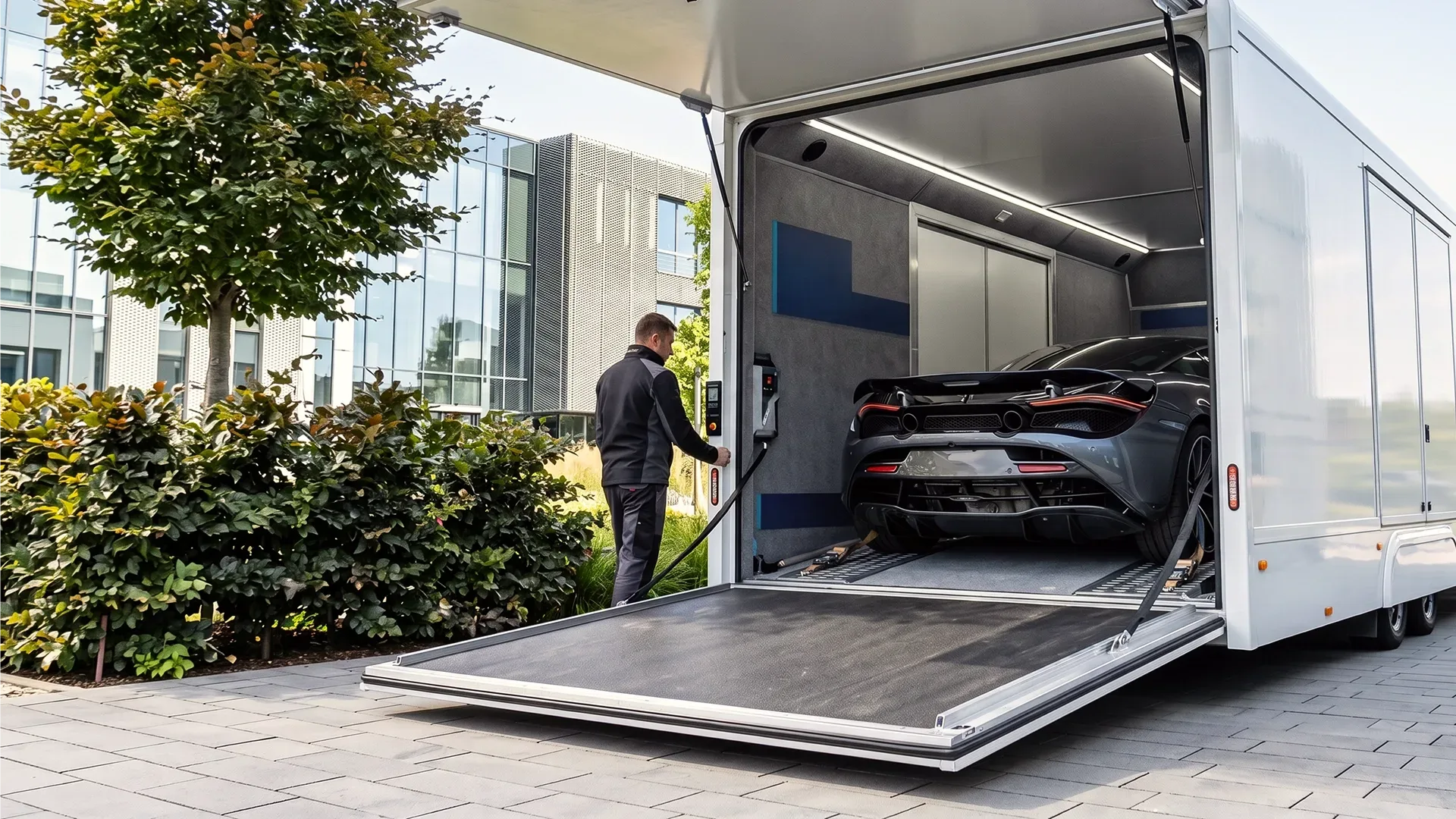
Enclosed transport for exotic cars is a virtual requirement. Ferrari, Lamborghini, McLaren, and Bugatti owners face insurance exposure. Open carriers typically carry $100,000 to $250,000 in cargo coverage for a nine-vehicle trailer, or $11,000 to $28,000 per car. Enclosed carriers typically have $250,000 to $1,000,000+ in coverage across two to six vehicles. If a serious accident occurs, each vehicle has more protection.
Low-clearance vehicles
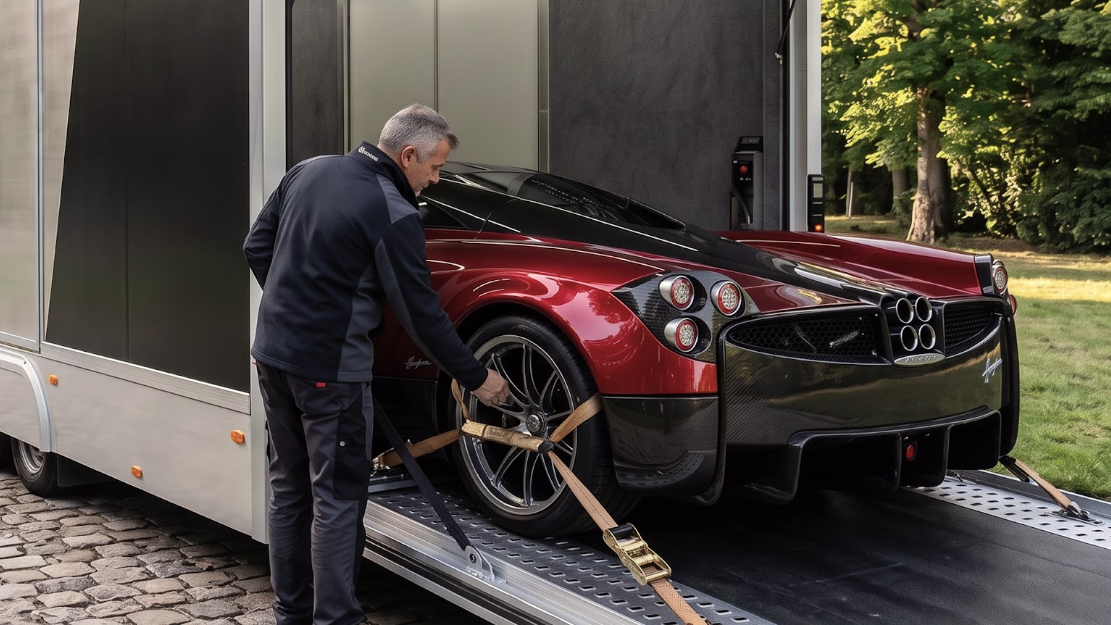
Standard open carrier ramps cannot handle vehicles with under four inches of clearance and will likely scrape the ramp. Enclosed carriers solve this with hydraulic lift gates that raise the car on a level platform, or extended aluminum ramps that reduce the loading angle to as low as 6 degrees. In addition, soft-tie wheel straps replace chains and frame hooks, so the suspension isn't compressed for a week, and the wheels don’t become marked.
Modified vehicles
Lift kits, wide-body kits, front splitters, oversized tires, roof racks, and protruding exhausts change a vehicle's footprint, and every car hauler's economics are based on maximizing the load within the carrier’s cubic space. Modifications that make a vehicle exceed the height, width, and length of a standard slot result in oversized rates. Enclosed carriers with taller interior clearance and adjustable decks can accommodate these vehicles.
Car Shipping Costs for Enclosed Transport
Enclosed transport generally costs 30 to 60 percent more than open on the same route. Multiple factors affect vehicle transport costs generally, and others are unique to enclosed transport.
- Distance and lane density. Short hauls cost more per mile because the carriers' fixed costs are spread across fewer miles. Popular corridors are cheaper than rural or one-directional routes because carriers haul fewer cars.
- Size, weight, and modifications. Carriers face an 80,000-pound GVW limit and have limited space. Heavy SUVs and oversized vehicles can reduce the number of vehicles per load.
- Operability. A non-running car needing a winch, liftgate, or forklift adds costs and narrows the pool of carriers who can take the job.
- Equipment. White-glove providers with liftgates, air-ride suspensions, climate control, and single-vehicle trailers can cost two or three times more than the standard enclosed rate.
- Season and lead time. Enclosed availability tightens during auction and concours season, and the snowbird migration in fall. Enclosed shipments often need five to ten business days lead time before pickup.
- Insurance level. Enclosed transporters haul more expensive vehicles, many of which carry declared-value insurance policies, so they carry higher-value insurance policies that cost more than those of open carriers.
Use these tips to get fair and accurate auto shipping quotes and to sort out which carrier will best serve you:
- Get and compare quotes. Get quotes from several companies with the same specifications, then choose the best one for you.
- Consistent, accurate information. Give each potential provider consistent, correct information about your vehicle specs, so they can match your vehicle with the right carrier, while avoiding last-minute mismatches that lead to higher fees or, worse, a refusal to transport.
Choosing a Premium Car Transport Provider
When choosing an enclosed transport provider for your high-value vehicle, evaluate the companies that provided quotes on key dimensions, including:
- Verify registration first. Every legitimate broker and carrier is registered with the FMCSA and DOT, and those numbers should be published on their website. Look up the company in the FMCSA Company Snapshot database to review its authority status and safety history.
- Reputation: Use reviews on Better Business Bureau (BBB), Forbes, and other third-party review sites to find companies with track records for transporting premium vehicles.
- Insurance coverage: Ask for copies of their insurance certificates and confirm their cargo insurance coverage handles all vehicles on a load.
- Customer service: Ask about their customer service standards and their willingness to discuss their process and answer questions.
- Cost vs. value: Don't decide on price alone. Enclosed trailer transport offers enhanced safety, protection, convenience, and peace of mind, which often makes the higher price worth it.
Ship Your Luxury Car
Whether you're relocating, heading to your winter home, or buying a new toy, shipping your special car using enclosed trailer shipping provides value and peace of mind. Contact us at Nexus Auto Transport to discuss your shipping options or get your free auto shipping quote today!
When Enclosed Auto Transport Is Worth It
Vehicle Type / Situation |
Why Enclosed Transport Helps |
Main Risk Reduced |
|---|---|---|
Luxury Vehicles |
A sealed trailer keeps multi-stage metallic paint, chrome trim, and sensor-laden bumpers away from highway hazards |
Cosmetic damage; a single stone chip can mean a full panel respray plus ADAS camera recalibration |
Exotic Cars |
Enclosed trailers haul 2 to 6 vehicles and typically carry $250,000–$1,000,000+ in cargo coverage |
Underinsurance and loading damage; per-vehicle coverage rises from roughly $11K to $28K (open) to $40K to $500K (enclosed) |
Collector Cars |
Climate-controlled, air-ride-suspension trailers protect single-stage paint, lacquer finishes, and other elements of classic cars |
Loss of condition grade; moisture, UV, temperature swing, and road vibration on finishes and parts that cannot be replaced |
Low-Clearance Vehicles |
Hydraulic lift gates raise the car on a level platform; extended aluminum ramps cut the loading angle |
Undercarriage contact; front splitters, undertrays, and exhausts scraping during load and unload. |
Modified Vehicles |
Taller interior clearance and adjustable decks accommodate lift kits, wide-body fenders, roof racks, oversized tires, and protruding exhausts that don’t fit a standard slot on an open trailer. |
Contact damage and oversize re-quotes; modified dimensions use extra space |
Long-Distance Shipping |
Over 2,000+ miles a vehicle crosses several weather and road-treatment zones; an enclosed trailer eliminates all of it |
Accumulated road grime and debris strikes over five to ten days in transit. |
Severe Weather Routes |
Solid walls and roof block hail, freezing rain, road-salt spray, and brine treatments common on northern winter lanes and storm-season corridors in the South and Midwest. |
Salt corrosion, hail dents, and finish etching; damage that is expensive to correct and, on original paint, effectively permanent |
FAQs
Does enclosed auto transport provide higher insurance coverage for luxury vehicles?
Open carriers typically carry $100,000 to $250,000 in cargo insurance covering 7 to 10 vehicles ($11,000 to $28,000 per car).
Enclosed carriers commonly have $250,000 to $1,000,000+ for 2 to 6 vehicles ($40,000 to $500,000 per car). The coverage amounts are not legal requirements, but industry norms that developed based on broker and customer requirements.
Can enclosed carriers accommodate very low-clearance or modified cars?
Yes, and this is one of the clearest reasons to use enclosed transport for low-clearance vehicles. Standard open carriers load over ramps with about a 20-degree incline. Enclosed specialists use hydraulic lift gates that raise the vehicle on a level platform, or extended aluminum ramps that reduce the loading angle to as little as 6 degrees. Any vehicle with less than 4 inches of ground clearance needs one of those two solutions.
How far in advance should I book enclosed transport for a luxury vehicle?
For routine enclosed transport, 7 to 14 days ahead gets you the best combination of rate and pickup window, with the truck arriving 2 to 5 days after booking. Enclosed carriers have tighter schedules than open haulers because there are far fewer of them.
Book two to four weeks out if you need a dedicated single-car trailer, climate-controlled carrier, or delivery by a fixed date. Give yourself additional margin during the three busiest periods for enclosed transporters: January auction season, Monterey Car Week in August, and the snowbird migration.
Does enclosed auto transport take longer than open car shipping?
Yes, though the difference is modest. The issue is the difference in supply between open and enclosed carriers, and it’s mostly about scheduling the pickup rather than driving.
Can I request specific loading equipment for an exotic or collector car?
Yes, when booking enclosed transport for exotic cars, you should consider your vehicle's specific requirements and put the request in writing. The requests worth making by name include:
- Hydraulic liftgate loading instead of ramps
- Soft-loop straps secured to the frame or wheels rather than chains or wheel clamps
- Air-ride suspension
- Climate control
- Dedicated single-vehicle trailer