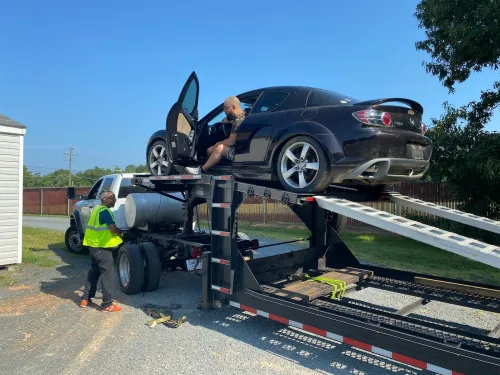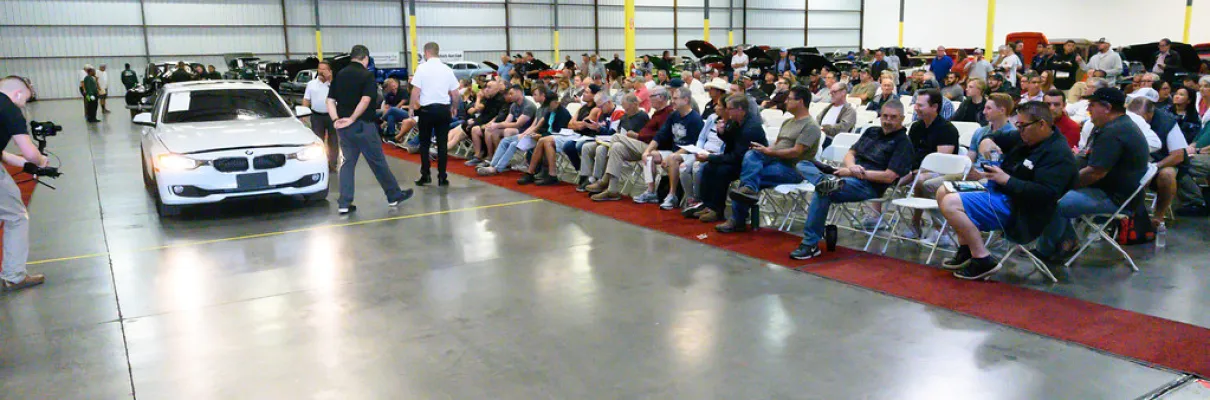

A professional auto transporter who understands auctions can reduce auction storage fees, improve your turn times, and keep your inventory moving by providing efficient, cost-effective dealers auto auction transport.
The Auction Landscape
The major wholesale auction platforms, such as Manheim, ADESA, Copart, and IAAI (Insurance Auto Auctions), collectively process millions of vehicles per year across hundreds of physical and digital locations.
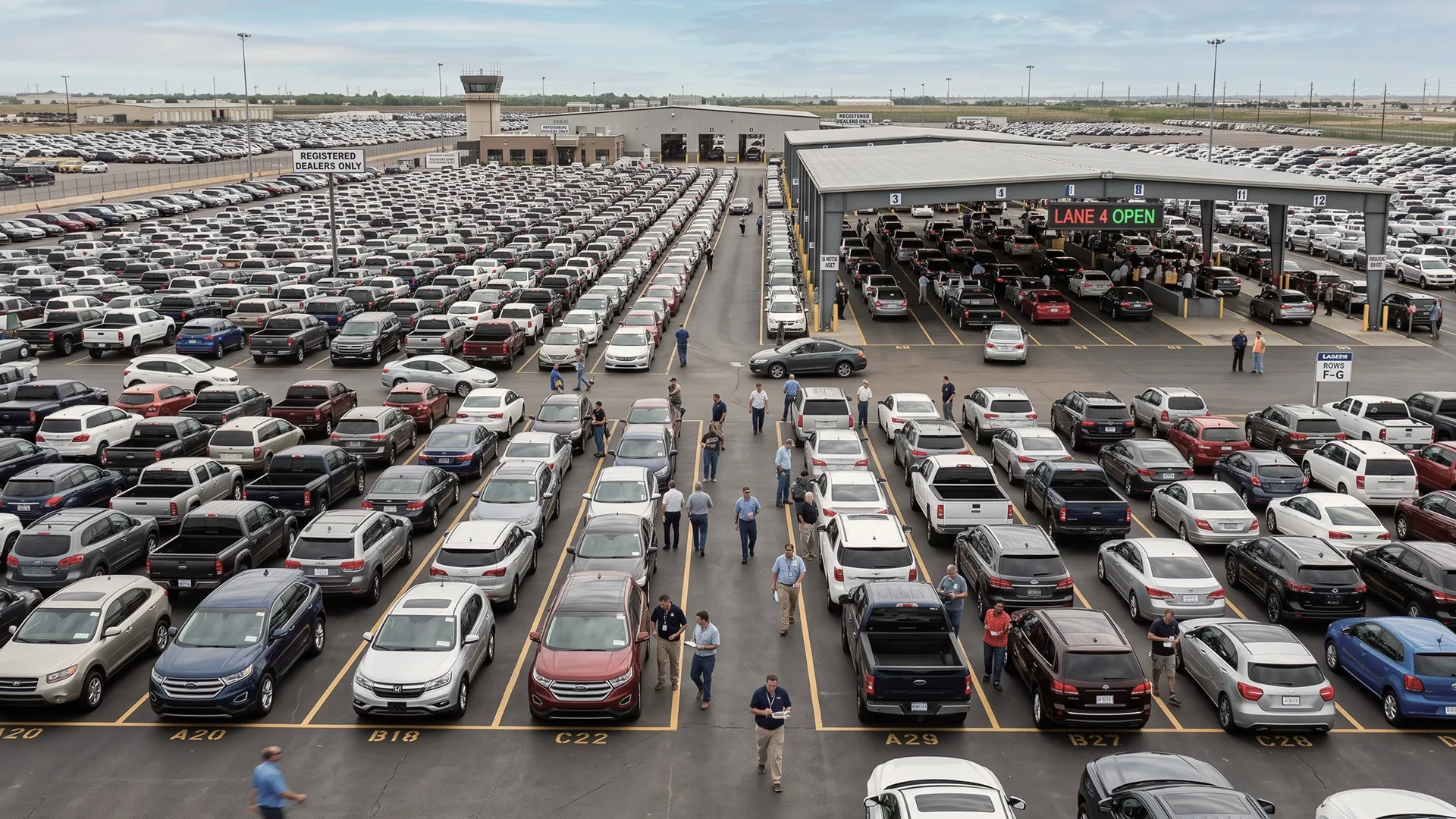
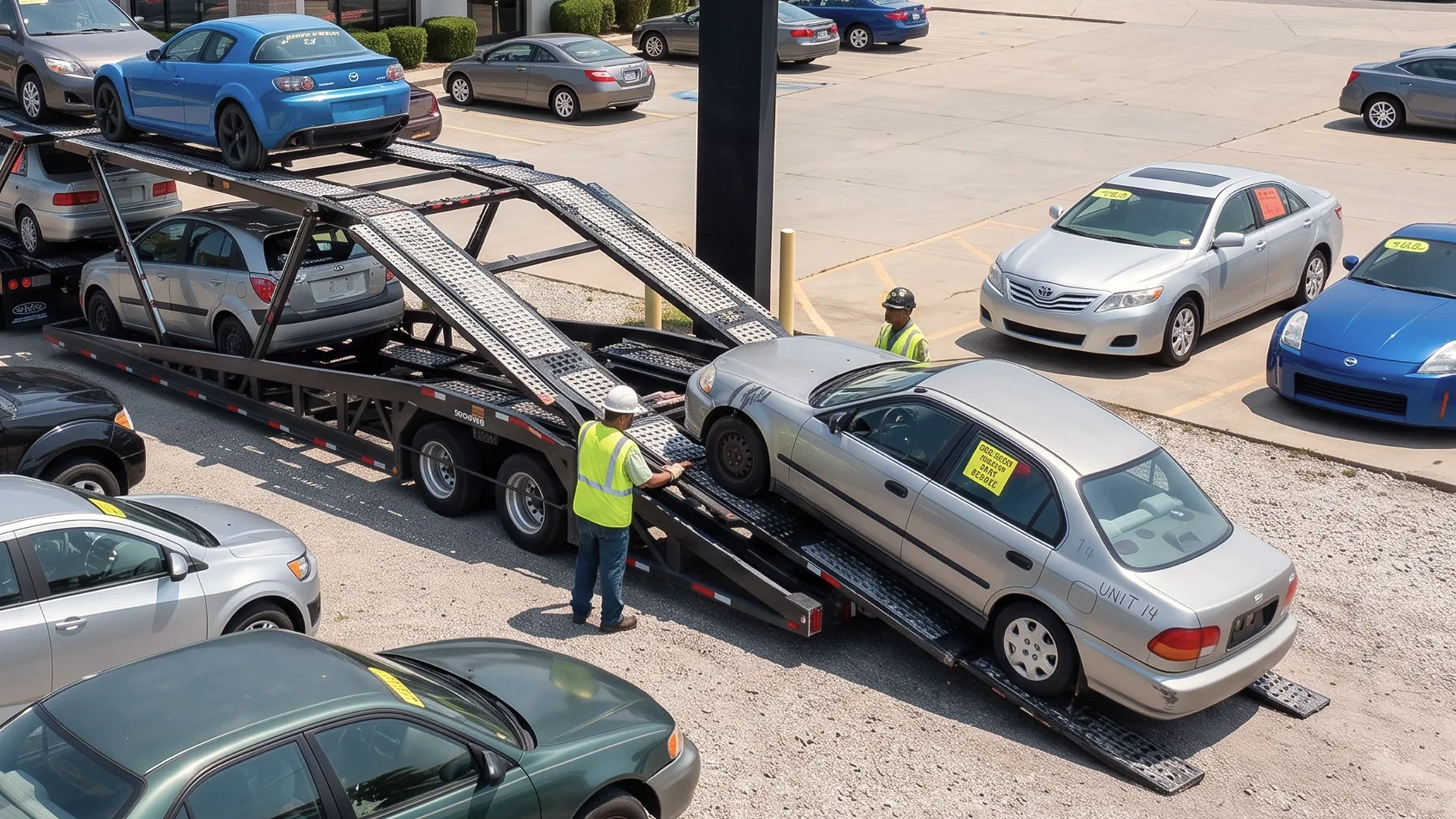
Of course, a vehicle purchased at a physical Manheim auction in Dallas or a Copart digital auction for a Michigan buyer doesn’t get to the dealership without the help of a dealers auto auction transport. That carrier, and their understanding of how specific auctions work, makes all the difference when moving cars between auctions and your dealership.
Gate Passes: The First Friction Point
Auctions have credentialing systems that require specific documentation before releasing a vehicle. Key documentation includes:
- The transporter's active MC number
- Proof of insurance meeting the auction's minimum
- Pre-approved vendor status
Carriers unfamiliar with an auction's intake process can spend hours at the gate verifying credentials or chasing down a missing release authorization.
Experienced auction-focused transporters maintain pre-approved carrier status at the major platforms. Some carriers work with the auctions' transportation desks or carrier portal to pre-clear pickups before the driver arrives on-site.
Storage Fees
Auction facilities are not storage yards. They charge storage fees starting a few days after a vehicle is designated for pickup. The best transporters understand the timing mechanics and schedule pickups accordingly. Rather than waiting for a full load to materialize at a single location, some will move a vehicle early and accept a partial load to help the dealer avoid storage fees.
A good transporter does that math on your behalf and doesn't just quote a lane rate when moving cars between auctions and your dealership.
Release Forms and Title Authorization
Auction houses need authorization before vehicles leave their facility. Copart and IAAI use gate passes and the buyer's title or a signed release form. Manheim requires the floor plan or purchase receipt, along with transport authorization handled online.
Transporters who've never worked with certain auctions can be caught off-guard by these requirements. Bringing the wrong release format or arriving before the auction has processed the payment leads to problems.
Bulk Shipping and Consolidated Loads
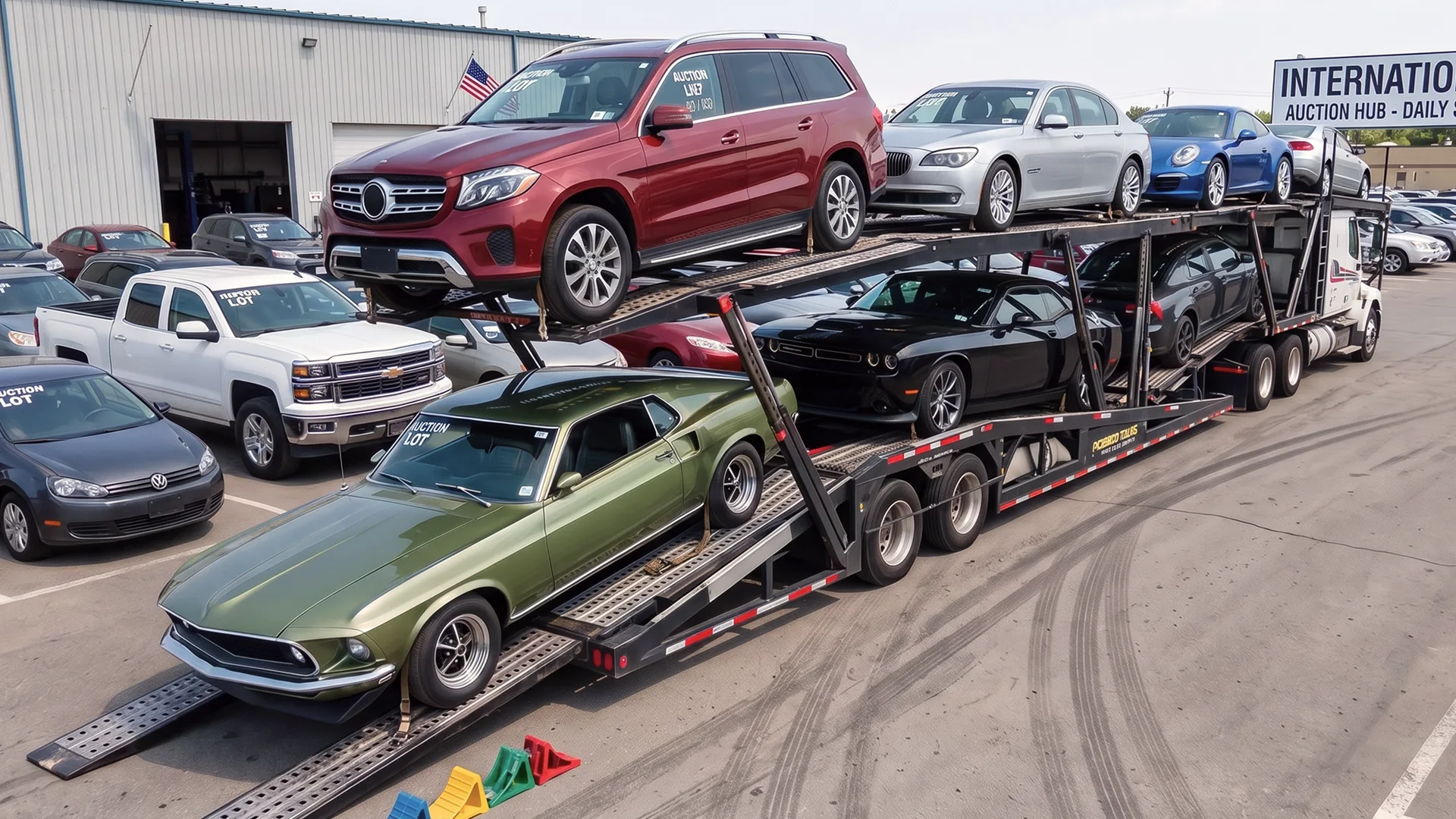
Dealers that acquire multiple units can save money with bulk or pooled loads. A dealer that pulls 10 to 15 units per week from a regional auction can negotiate rates that are better than the spot market, and consolidated loads make carriers more efficient, allowing them to pass on the savings in lower per-unit costs.
Consolidated or "load-board" shipping, where multiple buyers' vehicles share trailer space on a single run, makes sense for smaller dealers who can't fill a truck on their own but still want market-rate freight economics. The tradeoff is timing flexibility: consolidated runs move on the carrier's schedule, which can mean a 48- to 72-hour wait for the truck to fill. Dealers and remarketing managers weigh the wait time and storage fees against the urgency of getting the inventory on the lot.
Large-scale programs such as fleet disposals, rental car buybacks, and off-lease vehicles tend to have contracts with dedicated carriers that stipulate pickup frequency, turn times, and condition documentation processes.
Condition Reports and Damage Liability
Condition documentation is a critical aspect of auction transport. For example, Copart and IAAI vehicles may have pre-existing damage that gets missed during a casual inspection. Likewise, a carrier who doesn't photograph every aspect of the vehicle before loading may find themselves in damage claim disputes later.
The best auction-focused transporters have digital condition reporting built into their pickup workflow, with time-stamped photos. That documentation protects both the carrier and the dealer and becomes critical if there's a disagreement about a vehicle's condition on arrival.
The Broker's Role: Coordination, Vetting, and Problem Solving
Most dealers don't hire carriers directly. They work through brokers who hold an FMCSA property broker authority, meaning they can arrange transportation on behalf of shippers but do not operate trucks themselves. They provide value by:
- Having access to a wide carrier network
- Vetting carriers in the network
- Problem-solving when scheduled pickups fall through
Access to Wide Carrier Network
On the access side, a broker with strong auction relationships maintains relationships with dozens or hundreds of approved carriers on key routes. When a dealer wins units at a Copart auction in Phoenix and needs them delivered to three different destinations, a broker can often locate available capacity on each lane within hours, something a dealer trying to call carriers directly would spend days attempting.
Load boards like Central Dispatch are the underlying marketplace where much of this matching happens, and experienced brokers use them actively while supplementing with preferred carriers they've vetted personally.
Vetting the Network
Vetting the network is important in the auction world since not every carrier is pre-approved at Copart, IAAI, or Manheim. A broker who knows their network assigns only carriers with confirmed auction access.
A broker who doesn't track which carriers are pre-approved risks dispatching a driver who can't get past the gate, triggering the storage fee spiral the dealer tried to avoid.
Problem Solving
Brokers also serve as the operational point of contact when things go sideways. If a carrier breaks down while heading to a pickup, a good broker re-dispatches to a backup carrier and coordinates the change with the auction's transportation desk.
Similarly, the cargo insurance rides with the carrier, so the broker's carrier vetting process, including insurance verification, is consequential. Brokers should be able to provide the carrier's MC number, DOT number, and insurance certificate before a vehicle is loaded.
How We Help Dealers with Auto Auction Transport
Understanding and executing for dealers needing auto auction transport is a core part of our business, and we have a team of B2B specialists. As a leading broker, Nexus Auto Transport works with a nationwide network of vetted carriers who understand and are experienced working the processes at various auction houses. Contact us for a quote, as our 3-step process makes it easy for you from start to finish.
Instant Quote: https://nexusautotransport.com/car-shipping-calculator/
Auction Transport Options Comparison
Transport Type |
Transit Speed |
Protection Level |
Cost Efficiency, |
Ideal Dealership Inventory |
|---|---|---|---|---|
Open Transport |
Fast; 1 to 7 days |
Basic; exposed to elements and road debris |
Highest efficiency |
Standard used cars, off-lease returns, high-volume wholesale units |
Enclosed Transport |
Moderate; 5 to 10 days |
Maximum; sealed from weather and debris |
Moderate; 40–60% premium over open |
Luxury, exotic, classic, or high-value CPO vehicles |
Expedited Hauling |
Fastest; 1 to 3 days, dedicated run |
Variable; open or enclosed options available |
Lowest efficiency; premium price for speed |
Time-sensitive auction wins, dealer trades, or rapid customer deliveries |
Heavy-Duty Towing |
Moderate; 2 to 5 days |
Basic; flatbed or hook-and-chain transport |
Low efficiency; specialized equipment premium |
Non-runners, salvage/insurance units, inoperable auction purchases |
FAQs
How does a transport company help dealerships avoid gate fees and storage penalties at major auctions?
Effective transport companies:
- Pre-clear credentials
- Verify release status before dispatching, not on arrival
- Make storage fee vs. partial load tradeoffs that favor the dealer
- Handling re-dispatch without dealer involvement
The underlying principle is that the best auction-oriented transport partners act in terms of total landed cost (transport rate plus storage plus gate delay fees) rather than just the lane rate.
What documentation is required to authorize an auction-to-auction vehicle transfer?
Auction-to-auction transfers have a more complex documentation burden than an auction-to-dealer move because the vehicle is changing hands and location without a retail title transfer occurring in between. Auction-to-auction transfers typically need the following documentation.
- Proof of purchase/buyer receipt
- Transfer authorization or third-party release form
- Gate pass from the originating auction
- Carrier authority documentation
- Title or title-equivalent document.
- Condition report from the originating auction
Can a dealership schedule multi-car shipments from different auction yards simultaneously?
Yes. A dealer or broker can have pickups in motion simultaneously with different carriers, or have one carrier run a multi-stop route if the yards are close enough one another to make a consolidated sweep efficient. When auction yards are within 100 miles of each other, the carrier can build a single run that touches multiple locations. Brokers managing multi-stop loads need to confirm the release status at every yard before the driver departs.
Alternatively, the dealer or broker can run simultaneous pickups from multiple yards by posting each pickup individually to a load board.
How are vehicle condition reports handled at pickup to protect the dealership?
A dealer receiving a vehicle from an auction expects a completed Bill of Lading with condition notations and time-stamped photos from pickup. Some dealers require carriers to share photos in real time.
The Bill of Lading process is mirrored at delivery when the dealership conducts a physical inspection of the vehicle and compares it against the pickup condition record.
Carriers transporting inoperable vehicles should document whether the vehicle was loaded via winch, whether there was any resistance or mechanical interference during loading that could indicate additional damage, and the exact state of the vehicle's drivability at pickup.
The condition documentation at pickup is the dealership's primary tool to recover costs when something goes wrong in transit and to accurately account for pre-existing damage before a unit goes into reconditioning.