

Most moves go smoothly. The ones that don't usually go wrong at the hiring stage due to a quote that looked too good, a company that was never registered, or a contract signed without a close read. Federal rules give interstate customers substantial protection, but only if you choose a mover that follows their rules and you keep your paperwork in order.
These 12 tips explain how to choose a moving company and avoid a costly mistake, and they apply to companies that move household goods across state lines.
1. Verify Federal Registration
Companies that move household goods across state lines must register with the Federal Motor Carrier Safety Administration (FMCSA) and maintain a USDOT number. Early on, ask for their USDOT number and look up the company in FMCSA's Search for a Registered Mover tool.
Confirm their name, address, and complaint history. A federal registration doesn't guarantee they are a quality outfit, but the absence of a USDOT number is disqualifying.
2. Mover or Broker?
Movers own the trucks and employ crews that execute the move, while brokers act as matchmakers by finding movers to handle the work you need performed. Brokers are legal and provide valuable services because they know how to hire reliable movers.
Still, they must identify themselves as brokers in their advertising, provide a list of the movers they use, and base estimates on the actual carrier's tariff. Ask: "Will your trucks and employees move my belongings?"

3. Insist on a Survey of your Belongings
One of the top tips for hiring movers is to require an on-site or virtual survey before a written estimate, as federal rules require unless you waive it in writing. A company that quotes a price over the phone for a home no one at the company has seen is a red flag.
Insist on a visit and show the estimator every room, closet, attic, garage, and shed. If you don't show them everything, you may get a higher bill later.
4. Get 3 or More Written Quotes
Three quotes can help you see the market rate and spot outliers. Make sure each mover quotes the same household goods, packing services, and dates. A quote far below the rest may not be a bargain, since lowball estimates are a common setup for increasing the charges on moving day. By law, non-binding price estimates must be written and free.
Ask the estimators to show you how they determined the price, such as weight or volume, mileage, packing, and extra charges for stairs, long carries, or shuttle trucks. A tell of reliable movers is that they put their pricing assumptions in writing.
5. Choose your Estimate Type Deliberately
The moving industry offers three types of quotes:
- Binding estimates fix the price.
- Non-binding estimates cap what you pay at delivery at no more than 110 percent of the quote.
- Not-to-exceed estimates set a ceiling but also lower the price if your shipment weighs less than expected.
The table below compares the three estimate types. If you need budget certainty, get binding or not-to-exceed pricing in writing.
Moving Estimate Types: What Customers Should Know
Estimate Type |
Price Guarantee |
Inventory Requirement |
Best For |
|---|---|---|---|
Binding Estimate |
Yes. You pay 100% of the estimate at delivery, even if shipment weighs more or less than expected. Additional fees for added items or services |
Strict. Built on an on-site or virtual survey that lists every item and service |
Budget certainty; households with a stable, fully known inventory |
Non-Binding Estimate |
No. Final price based on actual weight and services. At delivery, you owe no more than 110% of the estimate |
Survey required; the estimate must be reasonably accurate, written, and free |
Lighter or smaller moves, or shippers who plan to downsize before moving day |
Non-Binding Not-To-Exceed Estimate |
Capped. You never pay more than the estimate; if the shipment weighs less, you pay less |
Detailed survey and inventory, as with a binding estimate. An accurate list protects the price ceiling |
Most interstate household moves. Considered the most consumer-friendly option when offered |
6. Watch for Red Flags
Besides issues already mentioned, the FMCSA's red-flag list includes:
- Demands for cash or a large deposit
- Requests to sign blank documents
- Phone answered only as "Movers,"
- No local address
- Rental truck showing up on moving day instead of a company-marked truck
- Sudden claim that you have more belongings than estimated.
One red flag deserves suspicion, and two is a reason to walk away.
7. Confirm You Received the Required Booklets
Interstate movers and brokers must provide you with Your Rights and Responsibilities When You Move and FMCSA's Ready to Move brochures, in print or by link. The brochures explain estimates, liability, and claims in plain language. A company that does not offer them right away is either cutting corners or counting on you not knowing your rights. This is a key signal when considering how to choose a moving company.
8. Understand Valuation Before You Sign
The free default, Released Value, limits the mover's liability to 60 cents per pound per article. That translates into $6 for a 10-pound stereo worth $1,000. Full Value Protection costs extra and obligates the mover to repair or replace lost or damaged items or pay for them. Also, you should declare anything worth more than $100 per pound in writing, or its coverage may be limited.
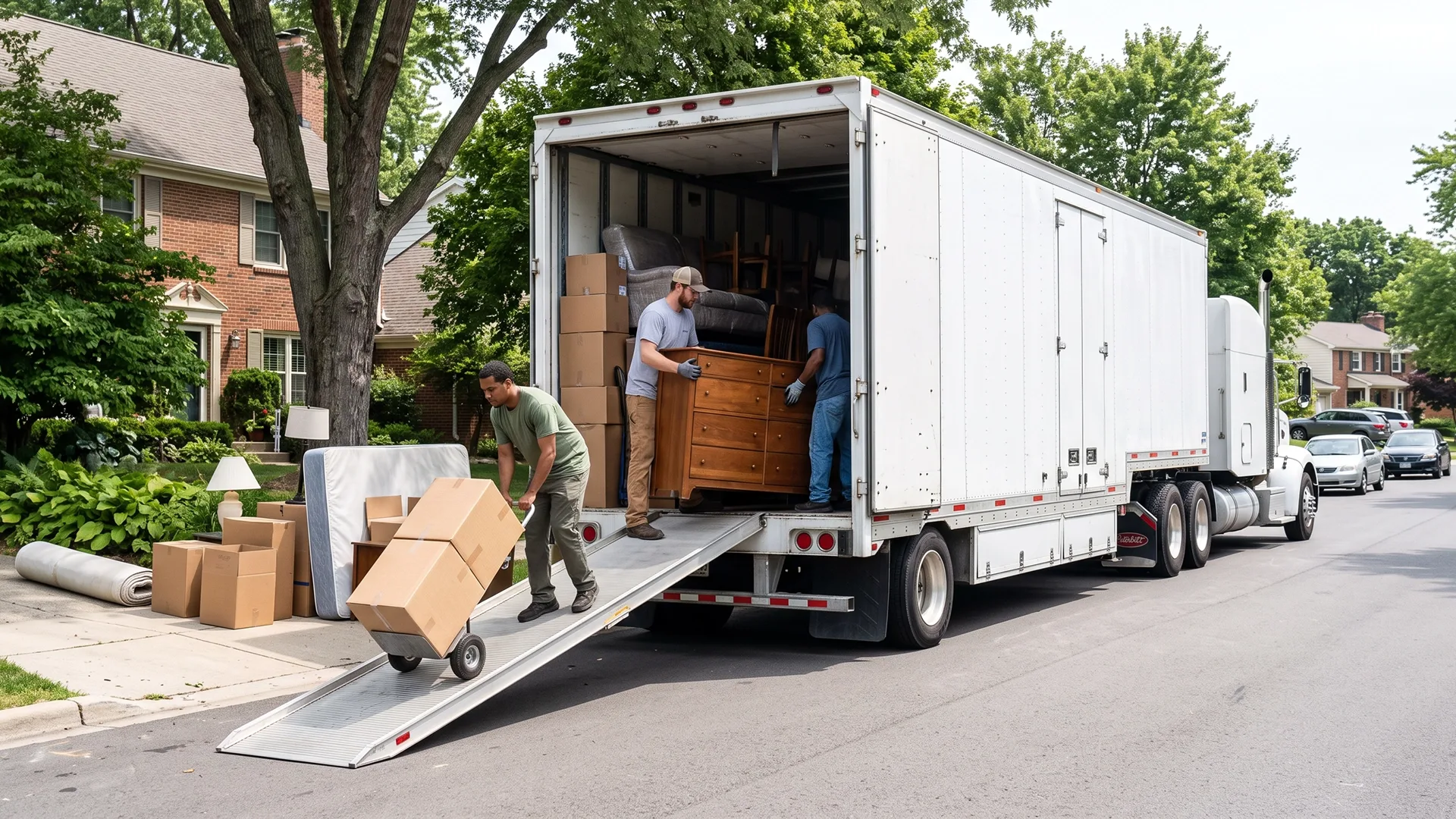
9. Review the Bill of Lading and Inventory Line by Line
The moving company provides you with a Bill of Lading (your contract and receipt).
- Make sure the dates, price, estimate type, valuation choice, and payment method match what you agreed.
- Review the inventory's condition notes and ensure the pre-existing damages noted are specific. ("Scratched" does not provide the detail needed to resolve a later claim.) Take pictures of items with pre-existing damage.
- Do not sign blank or incomplete documents.
- The mover must give you the Bill of Lading at least three days before pickup, so you have time to review it before the crew arrives.
10. Check Reviews and Complaint Records
Check out recent reviews on sites like the Better Business Bureau, not just the company's site. A mover with a longstanding record operating under one name should be reassuring. Frequent name changes are red flags, because rogue operators re-register under new names to shed bad reviews.
11. Confirm Delivery Window & Payment Terms
Long-distance shipments arrive sometime within a window of dates, not a specific day. Request the delivery window and what happens if the truck can't make it, in writing.
- Get the delivery window in writing and ask what happens if the truck misses it.
- Confirm which payment forms the mover accepts. Charges due at delivery are normally paid before unloading begins.
- Paying by credit card gives you an extra layer of dispute protection.
- Book early. Summer weekends and month-end dates fill first and cost more.
12. Know how to resolve problems
For interstate moves, you have nine months from delivery to file a written damage claim. Interstate movers must offer arbitration and must take part if you request it for claims of $10,000 or less. For fraud and hostage-goods complaints, contact FMCSA's National Consumer Complaint Database or 1-888-368-7238.
Movers that answer your questions clearly, put everything in writing, and show up in their own branded truck usually deliver on time and on budget. Spending a few hours on these twelve checks can spare you weeks of disputes down the road.
How Nexus Helps Transport Your Car
When moving to a different state, you may need help moving a vehicle to your new home and managing that process is our core business. Nexus Auto Transport is a leading broker with a nationwide network of vetted carriers experienced in all aspects of vehicle transfers. Contact us for a quote and see how our 3-step process makes it easy for you from start to finish.
Use our car shipping calculator for a free quote: https://nexusautotransport.com/car-shipping-calculator/
FAQs
What is the difference between a moving carrier and a moving broker?
A moving carrier is registered with FMCSA to transport household goods. It uses its own trucks and crews to pack, load, haul, and unload your shipment. A broker is registered to arrange transportation but doesn't haul anything: it books your move and assigns it to a carrier.
Brokers must:
- State their broker status and MC number in their advertising
- Provide a list of the movers they use
- Work only with registered movers
- Base their estimate on the tariff of the carrier that will do the hauling.
The practical difference is accountability: your transportation contract and any damage claim run to the carrier named on the Bill of Lading.
What should I do if a mover changes the price after pickup?
Your next step depends on your estimate type.
- On a binding estimate, you owe 100 percent of the estimate at delivery. The mover can’t increase the price after loading unless you add items or services, and those changes require a new written estimate that you sign.
- On a non-binding estimate, the mover must release your goods once you pay 110 percent of the estimate. It can't demand any remaining balance until 30 days after delivery, and that balance must match certified weight tickets.
Don't sign a new or revised estimate under pressure. Ask for the reason for any price change in writing, request the weight tickets, and ask for a reweigh if the numbers look wrong. Pay only the amount the law requires, by credit card if you can, and note the dispute in writing. Then file a complaint with FMCSA and your state attorney general.
Can a moving company refuse to deliver my belongings if there is a payment dispute?
Yes, within limits. If you don't pay the charges due at delivery, the mover may refuse to unload and can place your shipment in storage at your expense until you pay. The amount due is 100 percent of a binding estimate, or 110 percent of a non-binding estimate, plus any services you requested after the Bill of Lading was issued and impracticable-operation charges capped at 15 percent.
Once you offer that amount, the mover must release your goods. Refusing to deliver, or demanding more, amounts to holding your goods hostage, which violates federal law.
What documents should I keep after booking a moving company?
Keep a complete paper trail, in both print and digital form:
- Written estimate(s), including any revised versions you signed.
- Order for service, which confirms dates, services, and price.
- Bill of Lading, the contract, and receipt for your shipment.
- Inventory with the condition notes for every item.
- Certified weight tickets (required for non-binding moves).
- Valuation election and any written declaration of high-value items.
- Invoice and payment receipts, including deposits.
- FMCSA booklets and the mover's arbitration program summary.
- The mover's USDOT and MC numbers, plus a screenshot of its FMCSA registration. If you used a broker, keep its carrier list too.
- All emails, texts, and call notes, and your own dated photos or video of belongings before pickup and after delivery.
Keep everything until your nine-month claim window closes and every claim is settled.