For decades, moving to Florida was based on a few simple trades: winter weather for sunshine and state income taxes for a lower cost of living. The trade still exists, but the margin has narrowed enough to change who chooses to move there. Net migration into Florida fell to about 200,000 people in 2025, which is down from nearly 600,000 at the 2022 peak.
Meanwhile, Miami-Dade lost close to 73,000 residents, and Broward, Orange, Hillsborough and Pinellas also shed people. The counties that gained are inland and mid-sized (Polk, Pasco, Marion), where new construction kept pace with demand. The overall story is that coastal metros are losing people, largely because of cost.
Florida has no state income tax, which is a genuine advantage to the people who continue to relocate there, who are high earners and retirees taking large distributions.
There is also a new wrinkle up for a vote in November 2026: raising the homestead exemption to $150,000 in 2027 and $250,000 in 2028 for non-school taxes. In addition, households establishing homesteads after January 1, 2027, must maintain Florida residency for five years before receiving the full expanded exemption. Whether it passes or not, it points to a desire among current residents to increase taxes on newcomers.
Insurance Costs Surprises People
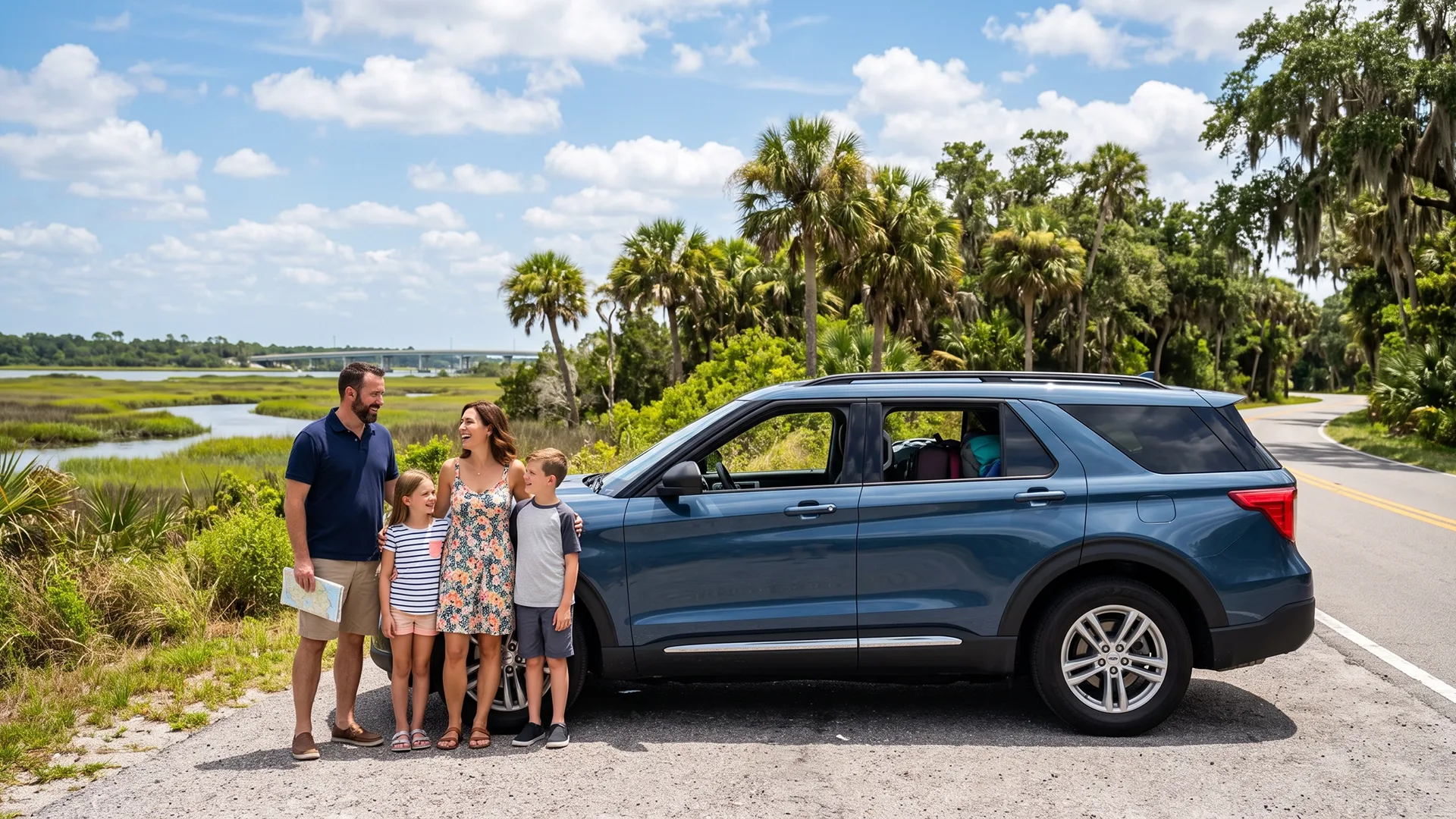
One thing to know before moving to Florida is that insurance costs are high. Homeowners insurance in Florida averages $6,400 per year for $300,000 in dwelling coverage, which is a multiple of the costs in most states, and policies carry a hurricane deductible that is a percentage of the dwelling's value, not a flat dollar amount. It also excludes flood damage. NFIP flood coverage adds an average of $1,360 statewide and carries a 30-day waiting period that keeps people from insuring their home only when named storms appear.
Auto insurance follows the same pattern. Full coverage averages $2,400 a year, second only to Louisiana. Florida is a no-fault state and requires $10,000 in personal injury protection and $10,000 in property damage liability, with no bodily injury liability required.
Condominiums bring another issue. Milestone structural inspections and funded structural integrity reserve studies are now required, and buildings with underfunded reserves must close those gaps through special assessments.
Vehicles and the Ticking Clock
Part of the things to know before moving to Florida is that new residents have less time to register their vehicles than most states and pay more.
- You must register your vehicle within 10 days of establishing residency, taking a job, or enrolling a child in public school, while converting your driver's license within 30 days.
- Registration requires a Florida-written insurance policy in force, VIN verification, and a one-time $225 initial registration fee per vehicle.
The decision to drive or ship a car is seasonal, unlike most locations, because Florida is the most directionally imbalanced auto transport market in the country. Southbound capacity tightens in October and November as snowbirds migrate, adding $150 to $300 per vehicle. Northbound capacity tightens in March and April. Open transport from the Northeast runs $900 to $1,300, and from the Midwest, $800 to $1,200. Book three to four weeks out and verify the carrier's authority and insurance through the FMCSA's SAFER system before paying a deposit.
Climate as a Budget Item
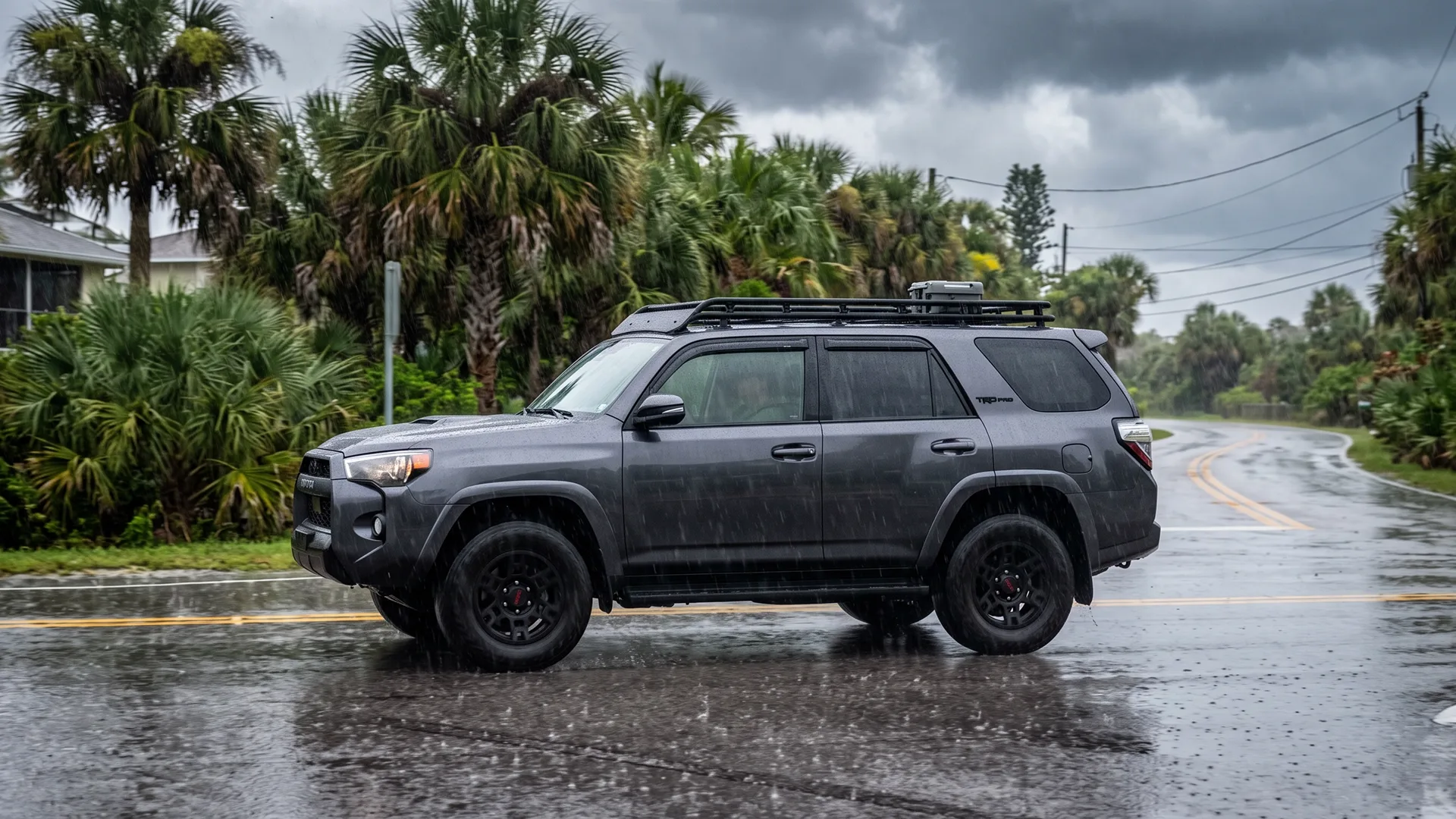
Hurricane season runs from June through November and drives insurance pricing, contractor availability, and repair costs. Beyond big storms, the climate adds slow, steady costs you should recognize:
- Relentless UV on paint and dashboards
- Salt air on brake and body components near the coast
- Five months of heat and humidity that push cooling bills and shorten battery life.
Vehicles arriving from cold climates need the reverse of winterizing, such as coolant and A/C checks, a battery load test, and sun protection. Households arriving from the North should expect their electric bill to peak in August rather than January, and to exceed the winter bill it replaced.
What to Know Before Moving to Florida
Most interstate moves are a change of address, and Florida is a change of cost structure. Income tax disappears, but insurance, cooling, and vehicle-carrying costs expand to fill the space. In the coastal metros, they now more than fill those costs. For some, those costs are not worth it, so they move inland or leave the state.
How We Help Get to and from Florida
When moving to Florida or migrating there for winter, you may need help moving a vehicle to your home. Managing that process is our core business. Nexus Auto Transport is a leading broker with a nationwide network of vetted carriers experienced in all aspects of vehicle transfers. Contact us for a quote and see how our 3-step process makes it easy for you from start to finish.
Use our car shipping calculator for a free quote: https://nexusautotransport.com/car-shipping-calculator/
Moving to Florida Checklist
Step |
What to Do |
When |
|---|---|---|
Research the Area | ||
Compare housing | Consider lower-cost counties where new construction has kept pace. Ask for the prior year's actual insurance premium, not an estimate | 3–6 months out |
Cost of living | Build a real budget, including all insurance costs, including deductibles | 3–6 months out |
Schools and commute | Check district and individual school grades on the FLDOE report card; Check your afternoon commute | 3–6 months out |
Check weather risks | Pull the property's FEMA flood zone, elevation and storm-surge zone, and evacuation zone from the county. Confirm roof age and wind-mitigation status | 3–6 months out |
Before Moving | ||
Review hurricane and flood exposure | Bind homeowners’ coverage early and buy flood separately; Your hurricane deductible is a percentage of dwelling value | 60–90 days out |
Arrange utilities | Line up the power, water and sewer, waste, internet, at once | 3–4 weeks out |
Set up electricity | Open the account for the day you close or take possession | 2–3 weeks out |
Water and internet | Water is normally county or city; Book the internet install the same week; fast-growing counties routinely take two to three weeks | 2–3 weeks out |
Arrange vehicle transport | Book 3–4 weeks ahead; verify carrier authority and insurance in FMCSA SAFER | 3–4 weeks out |
Before Arrival | ||
Update documents | Gather two proofs of Florida residency, proof of identity and Social Security number, out-of-state title, and a Florida-licensed insurance | Arrival week |
Driver’s license | Convert to a Florida license within 30 days of establishing residency. Book the appointment before you arrive | Within 30 days |
Vehicle registration and address | Register within 10 days; expect a one-time $225 initial registration fee per vehicle; file USPS change of address, homestead exemption, and voter registration. | Within 10 days |
FAQs
What are the biggest disadvantages of moving to Florida?
Insurance is the biggest disadvantage. Florida homeowners pay several times the national average for home insurance, not including flood coverage, which averages another $1,360 per year.
Full-coverage auto insurance is the second highest in the nation, and the state's $10,000 PIP / $10,000 property damage minimums leave drivers underinsured at the legal floor.
Hurricane season runs June through November and shapes insurance, travel, and repair costs. Summer heat and humidity make five months of the year genuinely demanding, and traffic in the I-4 and I-95 corridors has grown faster than the road network. Affordability is why net migration has fallen by about two-thirds since 2022.
What is the best time of year to move to Florida?
January to April is the best window for moving to Florida. The weather is mild, hurricane season is over, and you avoid the national moving peak.
The national moving market peaks from May through August, when van lines and truck rentals are most expensive and hardest to book. That is also the start of hurricane season, when a storm can freeze pickups statewide for days.
If you are shipping a car, move your household in late winter and book the vehicle well ahead. If your dates are fixed during peak season, lead time matters, so book four to six weeks out.
How much should I budget for a long-distance move to Florida?
For a two- to three-bedroom household, a full-service interstate move runs $4,600 to $11,600 at 1,000 to 1,500 miles and $5,800 to $15,300 beyond 1,500 miles. Vehicle shipping is $800 to $1,300 per car on open transport from the Northeast or Midwest or $1,100 to $1,800 enclosed.
A realistic all-in figure for a family relocating from the Northeast or Midwest with two vehicles is $9,000 to $18,000, before the first month's housing costs. For a more precise estimate, use the Nexus moving cost calculator for a current estimate based on your situation.
What should I know about homeowners and renters’ insurance before moving to Florida?
Buy it before you need it and be sure to understand the deductible. Florida homeowners policies carry a separate hurricane deductible expressed as a percentage of dwelling coverage, which is typically 2 to 5 percent. That means a $500,000 home can face a $25,000 out-of-pocket before the policy responds to a named storm. Standard policies exclude floods entirely, and floods cause most Florida storm loss.
Insurability now depends on the structure, not just the address. Roof age, roof shape, opening protection, and wind-mitigation documentation determine whether carriers will quote on your home. Get a wind-mitigation inspection, since the credits usually exceed the cost.
Renters get off lightly at about $152 a year, or about the national average. However, the same flood exclusion applies, and a ground-floor unit in a surge zone needs separate flood contents coverage.
How far in advance should I plan an interstate move to Florida?
Start three to six months out for the primary decisions:
- Where to live
- Whether to buy or rent
- Whether the property is insurable at a price you can pay.
Then work backward:
- Request moving estimates and lock a van line eight to twelve weeks out
- Obtain homeowners coverage 60 to 90 days out and buy flood at least 30 days before closing
- Book vehicle transport three to four weeks ahead, or four to six weeks if you are moving inside a peak
- Schedule utilities two to three weeks out.