
Selling a car yourself can mean the difference between receiving wholesale and retail value for your vehicle. Here's how to sell a car privately and capture that difference without inheriting the risk that comes with it.
Why Private Sales are Worth the Work
A dealer taking your car on trade must inspect, recondition, warranty, and re-market it, and their offer is discounted to cover those activities. Kelley Blue Book confirms this, saying trade-in value "will likely be less than" private party value. That’s because the reselling dealer absorbs the cost of safety inspections, reconditioning, and doing business. That spread, which can be several hundred or a few thousand dollars depending on the vehicle, is the economic reason for handling the sale yourself.
Price Based on Evidence
When selling a vehicle privately, start with the Kelley Blue Book private party value for your vehicle's trim, mileage, and condition, and compare that price with listings within a few hundred miles of your location, since those asking prices are your buyers' likely comparison set.
A good strategy is to price your car near the top of the realistic band, giving yourself about $500 of negotiating room. Treat the first ten days on the market as a test. If you get steady inquiries but no offers, your photos or description may be off. If you are not getting inquiries, your price is likely too high.
Prepare the Car and the Paperwork Before You List
Professionally detailing the vehicle is one of the most beneficial strategies in a private sale. Other solid steps include replacing cheap components such as worn wipers, a burned-out bulb, a low tire, or an overdue oil change.
Address the appearance and mechanical issues before assembling your documentation:
- Service records
- Current VIN history report you pay for and share
- A pre-purchase inspection from an independent shop to remove the most common reason a private-party buyer walks
- Locate the title before listing your vehicle. If a lender holds the title, call for a ten-day payoff quote and confirm the lender's release process.
Choose the Channel That Matches the Car
When looking at how to sell a car online privately, most sellers use established platforms. For example, Facebook Marketplace is free and carries the rawest local traffic, but often comes with lowball offers and "is this still available" messages. Craigslist costs $5 and moves inexpensive local cash cars quickly.
Autotrader, Cars.com and CarGurus reach mainstream retail buyers who are far along in their search. eBay Motors, Cars & Bids and Bring a Trailer are auction venues that reward enthusiast and collector vehicles with real documentation. Escrow-and-title platforms sit alongside the selling platforms and handle the payment and paperwork for a fee.
Write the Listing a Buyer Would Believe
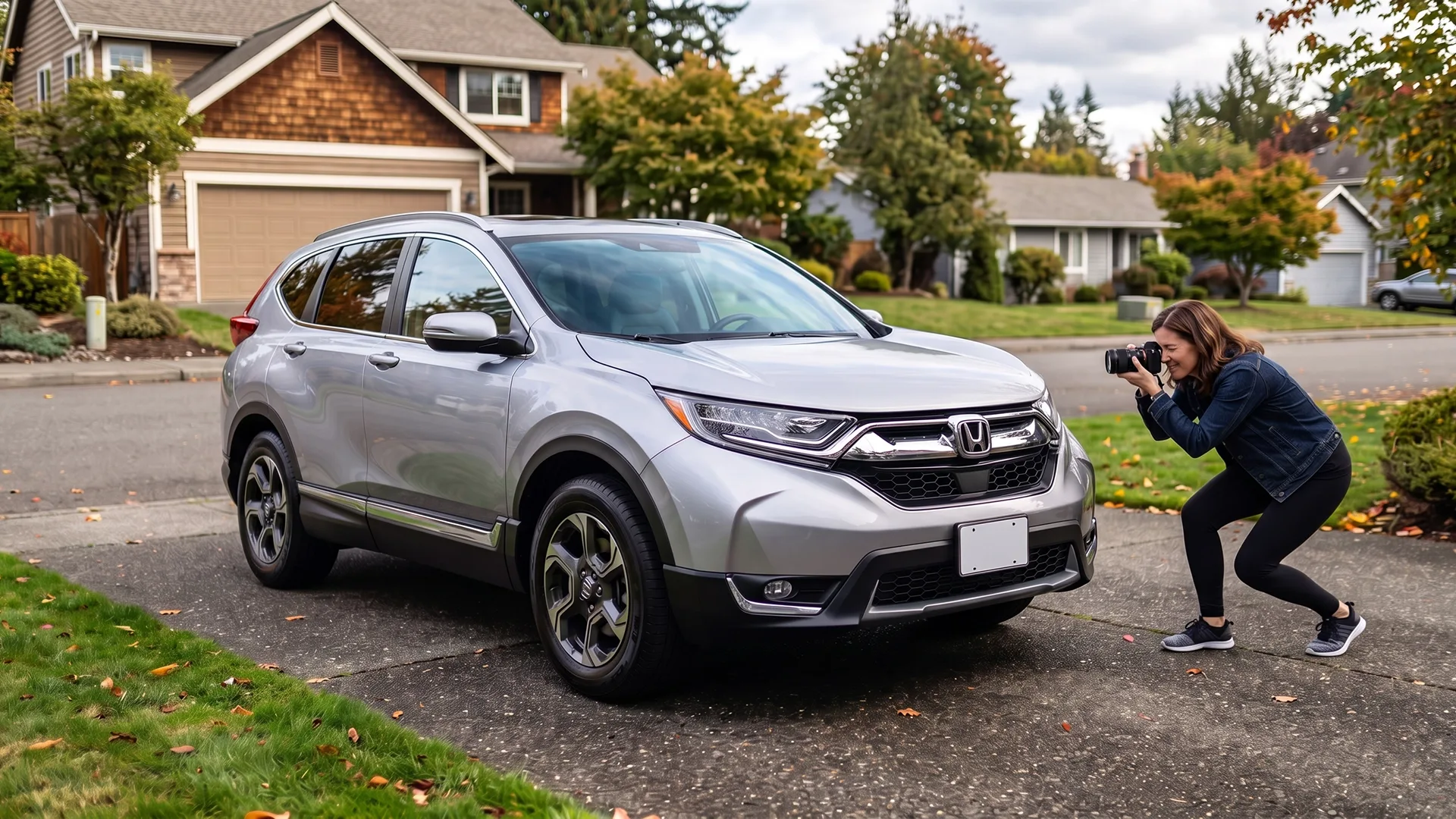
Shoot 30 to 40 photos in even daylight or open shade. Get images of:
- All four corners and the full interior
- The odometer, the engine bay, the tire tread
- The flaws.
Photographing the door ding is what makes the rest of the listing credible. The listing should include specifics feature rather than adjectives:
- Model year
- Trim level
- Exact mileage
- Ownership count
- Recent maintenance
- Known defects
- VIN
- The terms you will and will not accept.
Screen Buyers, Then Meet in a Safe Location
A five-minute phone call filters out most time-wasters and script-based scammers. Meet in daylight at a bank branch or a police department "safe exchange" lot. Photograph the potential buyer's driver's license before a test drive, confirm they carry insurance, and ride along.
Never let a stranger take the car alone, and never leave a signed title, a spare key, or your registration in the vehicle.
Get Paid Before Anything Changes Hands
One of the most important best practices when selling a car privately is to complete the transaction inside the buyer's bank during business hours so a teller issues the cashier's check in front of you, or the funds move bank-to-bank while you watch.
Chase's guidance is the industry consensus: wire transfers, verified cashier's checks and reputable escrow services are the safe instruments, while personal checks and peer-to-peer apps such as Zelle, Venmo and PayPal offer little to no seller protection on a purchase this size. Neither the title, the keys, nor the car leaves your hands until the money has settled in your account.
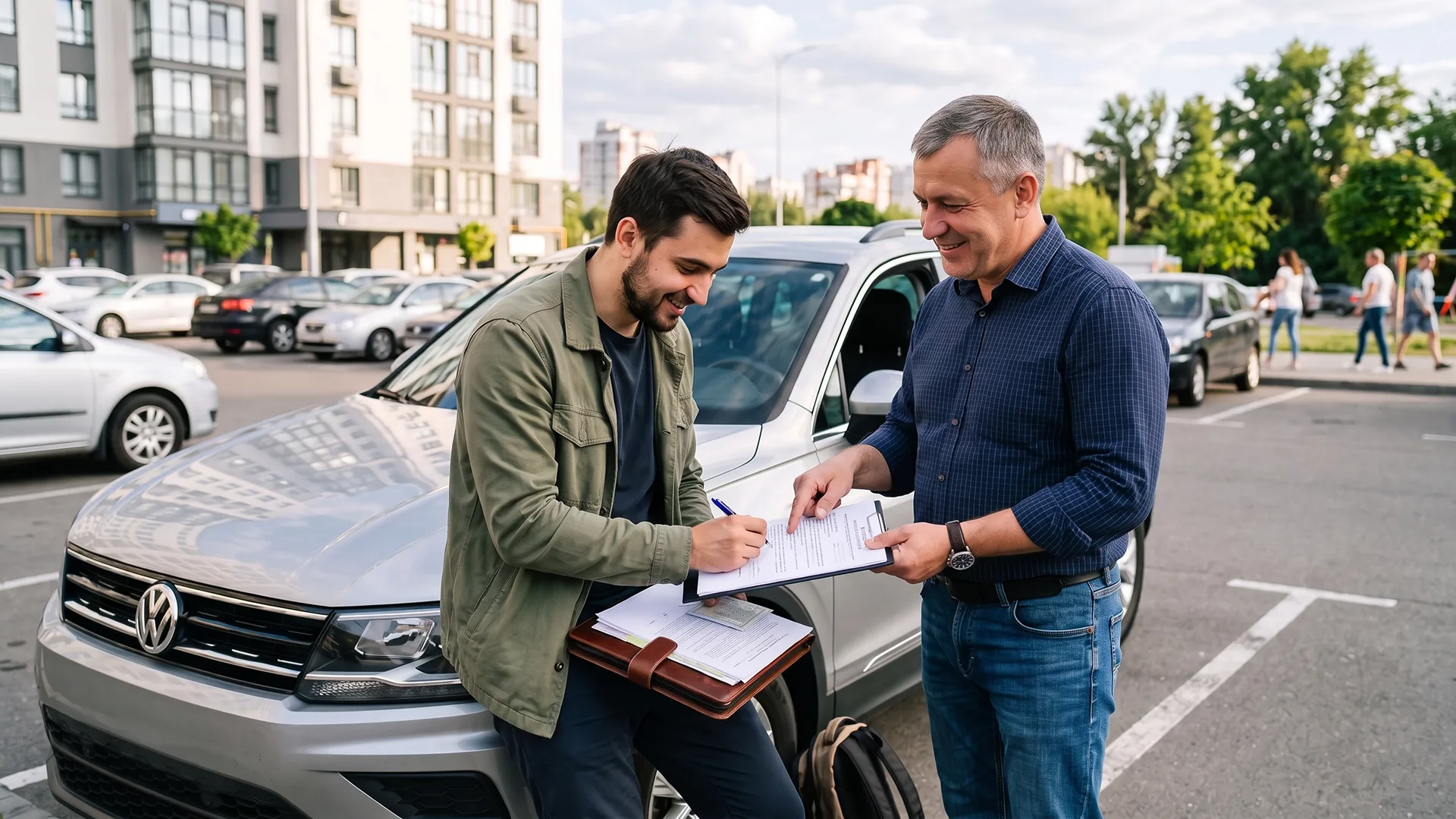
Close It Out the Same Day
To close the deal:
- Sign the title exactly as your name appears on it
- Complete the federal odometer disclosure
- Write a bill of sale for both parties that states the price, the VIN, the date, and the words "sold as-is, with no warranty."
Then:
- File your state's notice of transfer or release of liability
- Handle the plates according to your state's rules
- Cancel your insurance for the vehicle once the transfer is confirmed.
The sale is not finished when the car leaves the driveway. It is finished when the state recognizes the sale has occurred
When executed properly, a private sale takes ten to twenty hours of effort spread over two or three weeks, and it pays a premium no dealer will match. The sellers who receive that premium are not those selling the best cars. Instead, they are the sellers whose listings answer the buyer's questions before they are asked, and who don't improvise on paperwork or payment.
Comparison of Popular Private Car Listing Platforms
Many platforms let you sell a car privately online. The table below summarizes four popular options:
Platform |
Average Listing Fee |
Audience Reach |
Key Advantage |
|---|---|---|---|
All-inclusive: $34 for vehicles priced at $15,000 or less, $79 above that. No final value fee; 2.8% on any buyer deposit |
National, with meaningful international traffic. eBay’s marketplace reports roughly 135 million active buyers overall |
True auction pricing with binding bids, plus 40 photos, an included AutoCheck report and Secure Purchase protection on the transaction |
|
$49 to list, plus a completion fee of $99 or 0.99% of the sale price, whichever is greater |
National in-market shoppers, with syndication across partner sites such as the Car and Driver Marketplace |
Buyers arrive pre-qualified, and the platform handles identity verification, financing, secured payment and title transfer in one workflow |
|
$5 per car/truck by-owner posting in the U.S. |
Local and metro-level only; each post reaches one market at a time. |
Lowest cost of any paid channel and the fastest way to move an inexpensive, local, cash-priced vehicle |
|
$99 Classic, $429 Plus (professional photography and video) or $2,500 White Glove. Buyers pay 5% on top ($250 minimum, $7,500 cap). |
A national enthusiast and collector audience; roughly 45,000 listings and more than $1.5 billion in vehicles sold in 2024. |
Curated, comment-driven auctions that surface documentation and consistently pull premium bids on enthusiast and collector cars |
How Nexus Can Help You
If you sell a vehicle to a buyer in another state, they may need the vehicle shipped to their location. If so, feel free to recommend our auto transport services. Nexus Auto Transport is a leading broker with a nationwide network of vetted carriers experienced in all aspects of vehicle transfers. Have them contact us for a quote and see how our 3-step process makes it easy from start to finish.
Use our car shipping calculator for a free price estimate: https://nexusautotransport.com/car-shipping-calculator/
FAQs
Do I need to notify the DMV immediately after completing a private car sale?
Yes, and treat it as a same-day task. Most states require the seller to file a notice of transfer or release of liability within a limited number of days. California, for example, gives you five calendar days.
Filing tells the state you no longer own the vehicle, shielding you from parking tickets, toll violations, traffic citations and civil liability arising after the sale date. Until that notice is processed, the car is still yours on paper no matter what the bill of sale says, and buyers often delay registration for weeks.
What is the safest way to accept a high-value payment from a private buyer?
Do the transaction in person at the buyer's bank branch during business hours. That location solves most of the problems because the teller verifies the buyer's identity and funds, issues a cashier's check in front of you, or moves the money bank-to-bank while both parties watch.
If a cashier's check is presented outside of a bank branch, call the issuing bank at a number you look up independently, not one printed on the check or supplied by the buyer, and confirm it before releasing the vehicle.
For remote or high-value sales, use a reputable escrow service to hold the funds until both sides perform. They typically charge a several percent fee.
Who is legally responsible for paying the vehicle sales tax in a private transaction?
The buyer pays the sales tax since they bought the car. In nearly every state that taxes vehicle purchases, the DMV or tax authority collects sales or use tax on a private-party sale when the buyer titles and registers the car, at the rate for the buyer's home address. The private seller does not collect or remit anything, which is one reason private-party pricing and dealer pricing are not directly comparable to a buyer.
Two caveats are worth mentioning. First, many states assess tax against a published book value rather than the stated purchase price when the two diverge substantially. This means an artificially low figure on the bill of sale will not save the buyer money and can expose the seller and buyer to a fraud allegation.
Second, states handle family transfers, gifts, and trade-in credits differently. The seller's tax question is federal: you owe capital gains tax only if the car sold for more than you paid, which is rare outside the collector market, and you can't deduct a loss on a personal-use vehicle. This is general information, not tax or legal advice. Confirm the specifics with your state's revenue department or a tax professional.