
Insurers issue a salvage title when they declare a vehicle a total loss, typically when repair estimates reach a state-defined share of actual cash value (70% to 100%, depending on the state). The brand attaches to the title permanently and follows the VIN across state lines. A car carrying an active salvage title cannot be registered, insured for full coverage, or legally driven.
When someone repairs a car with a salvage title and passes a state rebuilt examination, the title brand changes to "rebuilt" or "reconstructed." That restores the owner's legal right to register and drive the car, and selling rebuilt-title cars provides more options than selling salvage-title cars.
Passing the exam does not provide the car with a clean title. The brand is permanent, disclosed at every future title transfer, and visible on any NMVTIS or CARFAX pull. Attempting to launder the salvage title by registering it in a more permissive state is title fraud.
A salvage or rebuilt title permanently discounts a vehicle’s value. When selling rebuilt title cars, you can expect them to sell for 20% to 40% less than an equivalent clean-title car. Some analyses put the gap at 30% to 50% on late-model and luxury units, largely because premium vehicle buyers have alternatives to rebuilt cars.
Four structural forces reinforce the value spread.
- Dealers cannot certify a branded car under the manufacturer certified pre-owned programs.
- Dealers discount the value when you trade in a rebuilt title car
- Most large banks will not finance rebuilt vehicles, which shrinks the buyer pool to cash buyers and specialty-lender shoppers.
- About 20% of insurers will not write full coverage on those vehicles.
The discount is not buyer superstition. It reflects real constraints on who can buy the car and how.
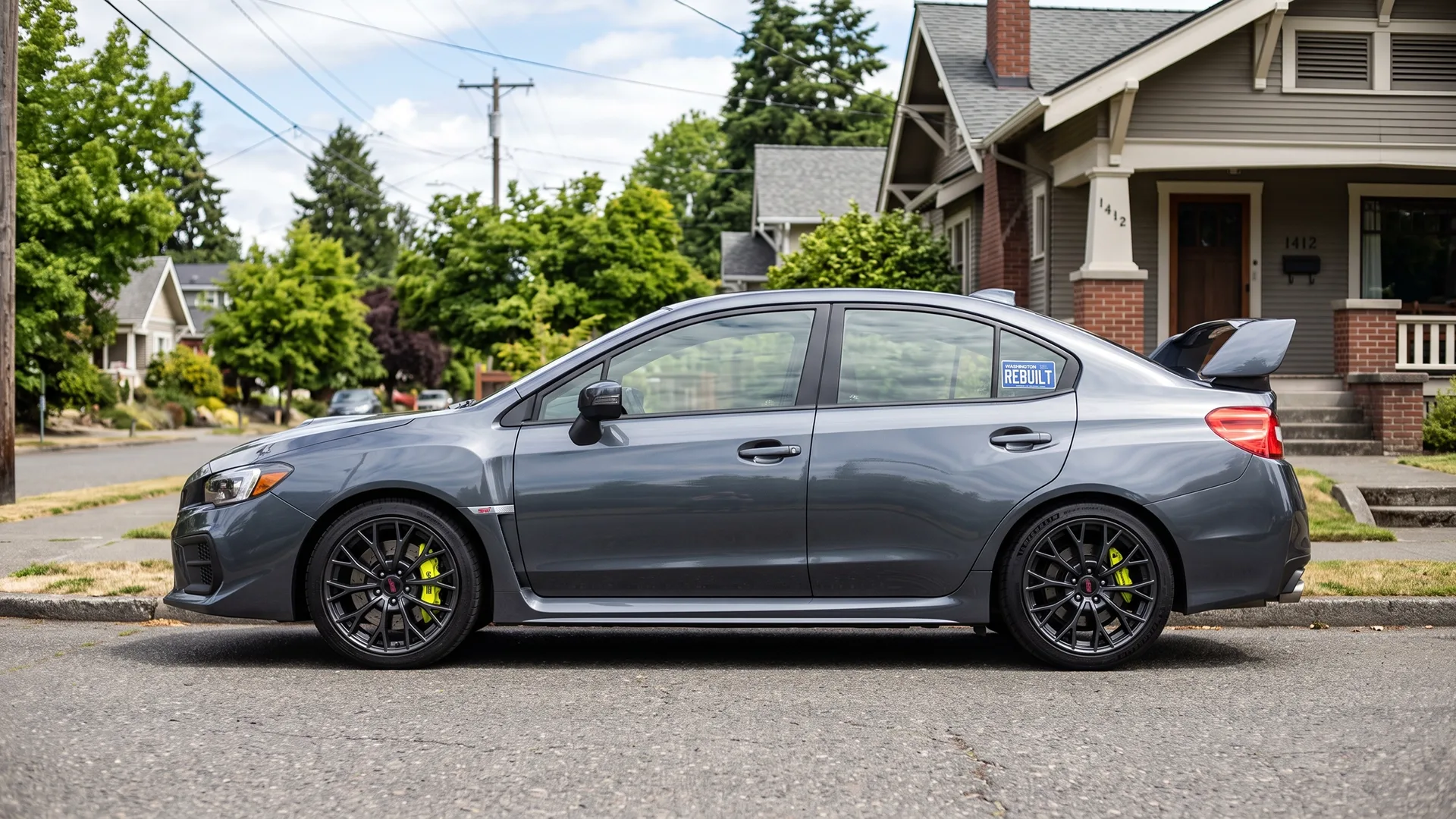
How to Sell Rebuilt Title Car
Private sale with a full documentation package
Rebuilt buyers are value shoppers who understand what the brand means and want proof the repair was done properly. Sellers are best off leading with the rebuilt brand, making it clear in the headline, so they attract fewer but more serious inquiries. They waste less time on prospects who walk away as soon as they learn the vehicle has been rebuilt.
Specialty branded-title dealers
A growing segment of independent dealers, including national operators such as AutoSavvy, fill their inventory with rebuilt vehicles. They often offer in-house financing. These dealers pay wholesale for rebuilt vehicles, not retail, but they close fast, take the car as-is, and are the only "instant offer" channel that commonly buys these vehicles.
Enthusiast and marque-specific channels
Certain trucks, older performance cars, and EVs with documented battery integrity sell well on forums, club listings, and niche marketplaces. These buyers tend to be experienced in vehicle mechanics who evaluate vehicles and repair quality by personal inspection. They are not scared off by the branded title label.
Wholesale and salvage auctions
Can you trade in a rebuilt title car? Copart, IAA, and open dealer auctions give access to rebuilders, exporters, and dismantlers. Proceeds are the lowest of any channel, but the sale is certain and quick. The options can be the right answer when speed or storage cost outweighs price.
Online instant-offer buyers
Large national retailers generally do not sell branded-title cars at retail, but they may offer the wholesale disposal value when you trade in a rebuilt title car. They generally offer the price floor, but it remains an option to consider.
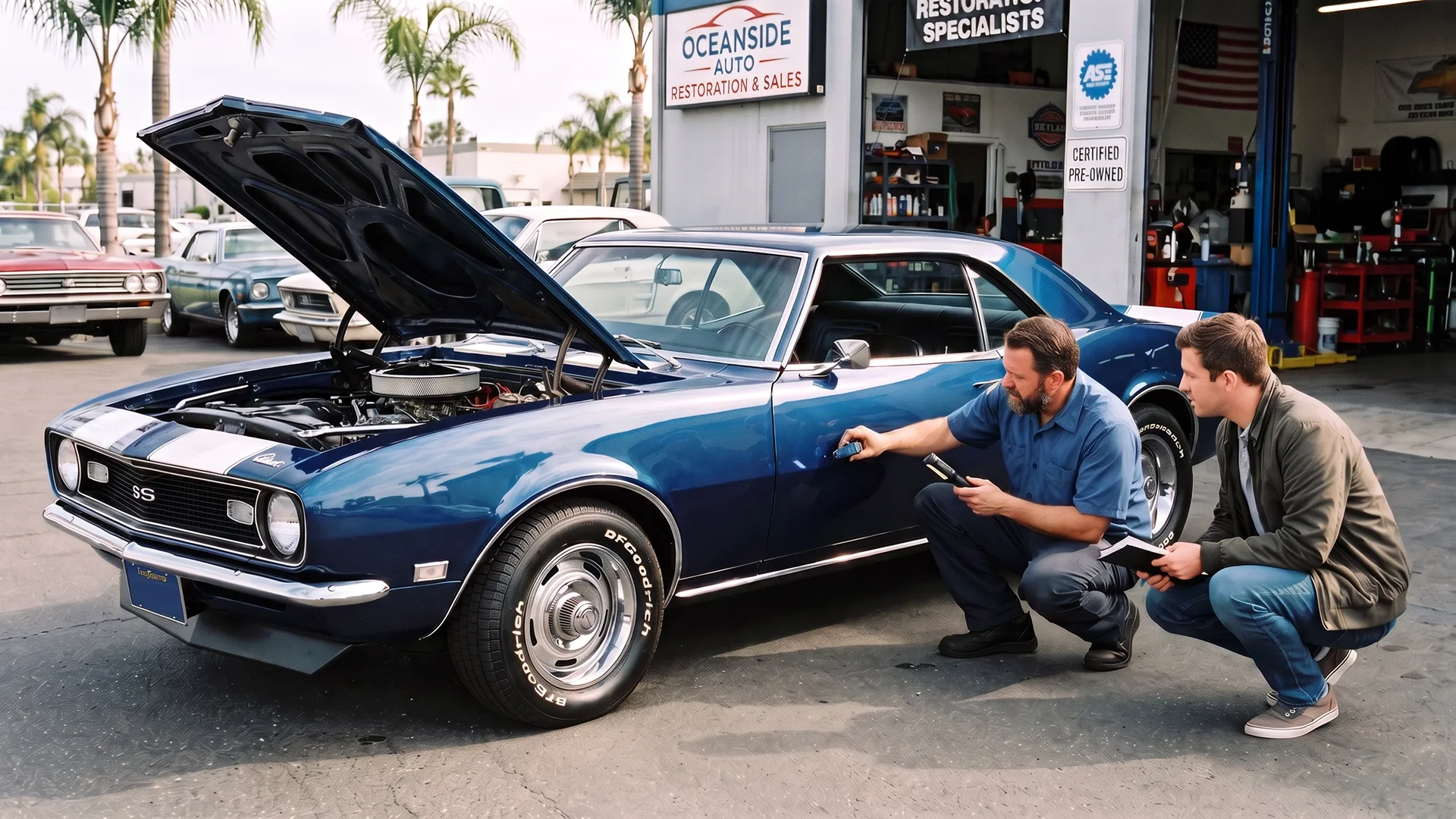
Documentation When Selling a Rebuilt Title Car
For each sales channel, the documentation package is what closes the gap between a wholesale number and a retail one. Assemble your documentation package before listing the vehicle. The package should include:
- The rebuilt title itself and the state inspection certificate
- Itemized repair invoices with an OEM-versus-aftermarket parts list
- Frame-measurement readings taken before and after structural work
- ADAS calibration certificates for affected systems
- Pre- and post-repair diagnostic scan reports
- A four-wheel alignment printout
- Photographs of the vehicle in its damaged state and during the rebuild
- A current, independent pre-purchase inspection from a shop the buyer did not have to find.
For knowledgeable buyers, the photographs of the pre- and post-repair vehicle are among the most persuasive items in the file, especially when they show that the damage was cosmetic front-end and hail rather than flood or structural damage.
When selling a branded title vehicle, you should:
- Price the vehicle so it is comparable to other branded listings, not the clean-title book value
- Disclose the brand in writing on the bill of sale
- Have the buyer sign an acknowledgment of their awareness of the damage
- Prepare to point financing-dependent buyers toward credit unions and online lenders.
Transparency is not only the ethical choice; it also converts a suspicious shopper into a confident one, and it is what a rebuilt car is sold on.
How We Help Get You Where You're Going
People buying a salvage or rebuilt title vehicle often acquire vehicles from out of state and need the vehicle transported to their home or workshop. If that fits your description, we commonly move inoperable vehicles for customers.
As a leading broker, Nexus Auto Transport has a nationwide network of vetted carriers experienced in all aspects of vehicle transfers. Contact us for a quote and see how our 3-step process makes it easy for you from start to finish.
Use our car shipping calculator for a free quote: https://nexusautotransport.com/car-shipping-calculator/
Comparative Analysis of Vehicle Title Statuses
Title Type |
Insurance Availability |
Average Resale Value |
Safety Inspection Requirement |
|---|---|---|---|
Clean Title |
Full market access. Every carrier writes liability, comprehensive and collision; claims settle at standard actual cash value with no branded-title adjustment |
The 100% baseline against which all other titles are measured. Eligible for certified pre-owned programs and standard bank, captive and credit union financing |
Only the routine periodic safety or emissions inspection the state requires of all registered vehicles |
Salvage Title |
The vehicle cannot be legally registered or driven; carriers will not write comprehensive or collision; some offer limited liability or storage policies |
20% to 40% of clean-title value; Buyers are rebuilders, exporters, dismantlers and parts sellers |
Cannot be registered until it is repaired and passes the state salvage/rebuilt examination |
Rebuilt Title |
Liability is widely available, but full coverage is not: 20% to 30% of insurers decline branded titles outright; expect 20% to 40% surcharge |
20% to 40% below comparable clean-title car; 30% to 50% below on late-model and luxury units |
One-time state rebuilt/reconstructed exam before brand converts and registration is issued |
FAQs
How does a rebuilt title affect a car's resale value compared to a clean title?
Rebuilt titles impose a permanent 20% to 40% discount on vehicles compared to their clean-title counterparts. The spread increases to 30% to 50% on newer, luxury, and low-mileage cars, largely because buyers of high-value vehicles have more alternatives and possess the money to avoid risky vehicles.
Can a buyer secure a standard auto loan for a vehicle with a rebuilt title?
Buyers generally cannot obtain a loan for a vehicle with a rebuilt title from a major national bank. Large banks and captive finance arms typically exclude branded titles from their underwriting guidelines, because a rebuilt vehicle is harder to value, harder to insure, and harder to resell if it has to be repossessed.
Financing is available from a narrower set of sources:
- Local and regional credit unions, which are frequently the most flexible
- Online lenders that underwrite branded titles case by case
- Specialty and subprime auto lenders
- Dealers that offer in-house financing, which is common among branded-title dealerships.
What specific documents must you provide to prove a rebuilt car is roadworthy?
The primary document is the state-issued rebuilt or reconstructed title, issued after the vehicle passes a state examination. The exam requirements vary by state, but typically follow a pattern such as:
- Pay an examination and revised title fee
- Provide proof the vehicle passed a state safety inspection
- Receipts for the parts installed
- Photographs of the vehicle before repairs and VIN-bearing components from the original vehicle for verification.
Is it possible to purchase comprehensive insurance coverage for a rebuilt title vehicle?
Yes, though the options are narrower than for a clean-title car. Liability coverage is widely available; a rebuilt vehicle is road-legal and must be insured to be registered.
Comprehensive and collision coverage are more difficult to obtain, with 20% to 30% of carriers declining branded titles outright as a matter of underwriting policy. Those that write policies tend to do so case by case rather than through an online quote.
Progressive, Allstate, American Family, and USAA write policies for branded title vehicles, so select major insurers do so, but you can expect to pay 20% to 40% more than for insurance on a comparable clean-title vehicle.