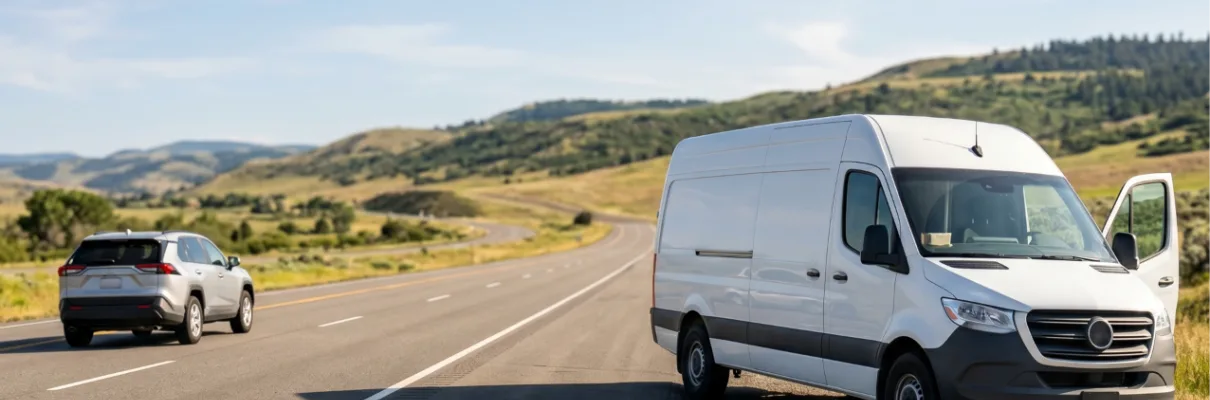

Helping a buddy move after college or pack up the family home for a new job is a commendable trait. It typically means getting paid with a few slices of pizza and a liter of soda, rather than making hundreds of dollars in your day job. You’re showing your appreciation for someone by offering physical labor and sweat equity.
The problem is that the amount of furniture and boxes becomes too much for a typical vehicle. That’s when you need to consider a much larger moving truck that requires a different type of driver’s license. You go for the rental only to ask yourself, “what is a Class C driving license anyway?”
If you’re coordinating a cross-country move or even something down the street and need a big vehicle, you must know what a Class C license is and why it may be better to leave the move to the experts.
What Is a Class C Driving License?
A Class C driving license typically falls into two main categories in the United States. The first is the most common and is known as a non-commercial driver’s license. There are roughly 242 million non-commercial Class C drivers in the country. These are people driving standard vehicles, cars, trucks, and SUVs that are under a certain weight limit and not meant for transporting a large number of passengers or ёgoods.
A Class C Commercial Driver’s License is known as a CDL. You are required to have a CDL if you’re doing any interstate, intrastate business, carrying 16 or more passengers, hauling goods or materials over a certain weight limit, or operating a vehicle with specialized controls (dump truck, snowplow, etc.).
The one detail you want to focus on when moving your friend is the Gross Vehicle Weight Rating (GVWR). As long as the truck you’re using is under 26,001 pounds, you probably can get by with a non-commercial Class C. That’s another reason to consider auto shipping your friend’s car. Even if they own heavy machinery, a company like Nexus Auto Transport can coordinate the nationwide heavy machinery shipping while you focus on packing up the kitchen to put in the back of a van.
Why Moving Trucks Feel So Different to Drive
If the moving truck does require a CDL, you’re in for a different experience. That will mean you’ll have to get specialized training, pass a few tests, and get certified and licensed by the state. Not all states honor the same CDL. You might go through this whole process so you can move an entire home’s worth of items, only to get stopped at a nearby weigh station when you cross the border from Illinois to Wisconsin.
Even then, after all that work, a larger moving truck responds differently than a Toyota Tundra. A fully loaded moving truck might:
Require more space to make a complete stop at an intersection
Have much larger blind spots where motorcycles can hide
Turn wider and risk running over a curb or into a post office box
Struggle in heavy wind, rain, and snow
Even the most experienced CDL driver has to undergo a ton of training, both in real life and on simulators, to adapt to extreme weather and aggressive drivers on the road.
What Rental Trucks Can You Usually Drive with a Class C License?
The good news is that there are many local moving truck rental companies like Penske and U-Haul that do not require what is a Class C driving license. You can easily find a 10-foot truck for your dorm room or studio apartment and drive it with the same license you got when you first passed your driver’s test.
All these trucks stay under the 26,001 weight threshold. Even a “20-footer” for a small home can be driven with a standard Class C license. It’s when you exceed that weight limit that you’ll need a CDL.
As you run through a pre-moving checklist, follow helpful tips to make the transition smoother and less stressful. Calling the moving company you’re using ahead of time to double-check what the driver requirements are is a big step in the right direction.
Standard Class C License Vehicle Guide
Vehicle Type | Typical Use | Class C Usually Enough? | Key Weight/License Limit | When to Double-Check |
|---|---|---|---|---|
Cars & SUVs | Daily driving, commuting, family travel | Yes | Usually well under 26,001 lbs GVWR | If towing heavy trailers or RV |
Pickup Trucks | Personal hauling, light towing, work use | Yes | Most standard pickups stay below CDL limits | If using heavy-duty dual rear wheel or commercial setups |
Cargo Vans | Small business deliveries, local moving | Yes | Typically under 26,001 lbs GVWR | If modified for commercial freight or passengers |
10-Foot Moving Trucks | Dorms, studio apartments, small moves | Yes | Common rental size for Class C drivers | Verify GVWR on rental paperwork |
15-Foot Moving Trucks | Apartments, one-bedroom homes | Yes | Usually designed for standard licenses | Double-check if heavily loaded |
20-Foot Moving Trucks | Larger apartments or small homes | Usually Yes | Most stay below CDL threshold | Confirm weight rating before pickup |
Vehicles Over 26,001 lbs GVWR | Large commercial trucks | No | CDL usually required | Verify state CDL requirements |
Hazmat Vehicles | Fuel, chemicals, hazardous materials | No | Hazmat endorsement/CDL required | Check federal and state hazmat laws |
16+ Passenger Vehicles | Shuttle vans, church or event transport | No | Passenger endorsement/CDL commonly required | Verify passenger transport regulations |
RVs & Specialty Recreational Vehicles | Motorhomes, campers, towing setups | Sometimes | Some states allow under Class C | Always check state-specific RV laws |
Please note: Driver licenses rules vary by state. Always double check the GVWR before signing any rental agreement.
State Rules Can Still Change the Moving Your Friend Situation
There are anywhere from 3 to 3.6 million CDL drivers in the US. The federal system for getting a CDL is designed to accommodate someone getting licensed in Maine who drives all the way to Arizona for produce transport.
The framework might be nationwide, but the practical behavior is conditional. For example, California allows certain recreational vehicles under Class C limits. Some states may change the rules based on towing restrictions. Other times, you’ll be stopped to “check your book” to ensure you’re not driving more hours than are allowed for heavy machinery or equipment.
It can be extremely confusing to drive a moving truck across state lines, even with a non-commercial Class C license. Always check the fine print of your truck rental to see what documents you need to keep on hand, and investigate the local DMV websites of the states you’ll be moving through.
If you do get pulled over, provide all your documentation and follow instructions. Some law enforcement may not know current rules and regulations, and it’s best to hash that out after the stop occurs rather than in the middle of a busy highway.
The Real Challenge Is Usually the Moving Logistics
What is a Class C driving license isn’t the real concern during a big family move. It’s the logistics of packing furniture, coordinating timelines, managing utility transfers, booking hotels, paying for food, and handling kids or pets. Now, imagine all those concerns, compounded by the need to move a second or third family vehicle.
You may not want to separate the two adults in the situation into different vehicles. It’s much easier to send your goods in a single moving truck, follow in one vehicle, and have the rest of your cars, SUVs, collector vehicles, and specialty items like boats and motorcycles shipped by a professional team instead.
With Nexus Auto Transport, you gain access to fully coordinated auto shipping from coast to coast and border to border. Everything is managed for you, from expedited shipping that meets your move-in date for college to enclosed auto shipping to protect your antique Ford Mustang. With a growing network of professional, vetted carriers, you can get your family car shipped to a new home in Santa Monica while you relax and enjoy your cross-country journey stress-free.
Use our shipping calculator to see how delivery timelines and pricing align with your moving route.
How to Make Your Class C Moving Truck Drive Easier
If you are using a moving truck with a non-commercial Class C license, you may want to practice a few tips to get the situation under control. To start, move when the season is the safest.
You may want to avoid late spring, summer, and early fall relocations, as well as college move-in months, when more people are on the road. That is also when truck costs will be higher due to availability.
You also want to be sure your personal auto insurance covers driving a larger truck. Review your liability coverage and personal property limits. Even if the truck is fine, a sudden gust could send that custom plate collection box onto the floor. You don’t want to not have coverage for that expense and cause a rift between friends.
Some additional tips include:
Buckle your seatbelt and adjust your mirrors before you move that truck
Spend an hour or so driving around a big parking lot to get used to the size, turning radius, and visibility of the moving truck
Stick to speed limits and follow other vehicles at a safe distance. Your truck will stop more slowly than a typical vehicle
Use your mirrors when switching lanes and give yourself more room when turning
Avoid passing when you can and look at maps or GPS apps to ensure you have proper clearance under bridges and overpasses
Back up with caution and use cameras, or have a passenger hop out to check your surroundings
Park in larger spaces where you don’t have to back out to rejoin your mapped out route
Never put your pets in the back of a moving truck, as it gets hot and cold in there
It’s a good idea to secure everything you can in the back and have a secondary lock for the door. You don’t want to worry that someone will break into the moving truck to steal your collection of rare baseball cards as you're relaxing in a hotel.
Should You Actually Drive the Truck Yourself?
What is a Class C driving license matters when you’re trying to negotiate a large moving truck around heavy traffic and pedestrians. You may not be comfortable driving on multi-lane highways, during a winter storm, or when motorcycles are flying past in the middle of the night.
It’s okay to tell your friend you think a better solution is to hire a professional moving company to actually drive the truck. You’ll be there to pack everything up and serve as the navigator on their cross-country journey in the family van, as Nexus ships the second vehicle. It’s all about managing stress, efficiency, and ensuring safety as you move. Go with your gut so you and your friend are fully supported during the journey.
Legal Does Not Always Mean Practical
A non-commercial Class C driving license is more than enough for a rental moving truck, but when things get too heavy, you’ll need a CDL to get the job done. Either way, you can alleviate a lot of stress by hiring auto transport for any secondary cars, SUVs, trucks, snowmobiles, campers, boats, or motorcycles. That way, you can focus on moving your friend and leave the rest to the pros.
FAQs
How can I check a moving truck’s GVWR before driving it?
There is always a manufacturer’s certification label. Most of the time, it is located on the door frame next to the tire pressure recommendations.
Does a Class C license cover a fully loaded rental moving truck?
Yes, up to a point. You can rent a 10-, 15-, or 20-foot moving truck, but if the weight exceeds 26,001 pounds, you’ll need a CDL.
When would a moving truck require a CDL instead of a Class C license?
It’s all about weight class and what you’re hauling. In addition to being over 26,001 pounds, if you’re moving hazardous materials or more than 16 passengers, you’ll also need a CDL.
Can state rules change what I’m allowed to drive with a Class C license?
Yes. Each state has its own rules regarding the licensing of driver’s licenses. While there are national standards, you may encounter situations in which a state like Alaska may require special circumstances for going off-road with a Class C license, compared to Kansas.
What should I check before driving a moving truck for someone else?
The type of license you’ll need and insurance coverage. Those are the two most important factors. Everything else is simply reading through the contract so you ensure there aren’t any surprises while you’re on the road.