
The internet has transformed car buying by allowing us to search for vehicles nationwide. Someone who wants a specific vehicle with the right trim, color, and mileage might find that vehicle on a car-buying site sitting on a lot five states away. Experian reports that 9.3 percent of car purchases cross state lines, and the number jumps a few percentage points for exotic and classic cars.
Whether dealing with a late-model vehicle or a classic car, you may find yourself ready to buy a sight-unseen car, but these transactions are not risk-free. So, if you are interested in a vehicle that you have not seen in person, follow the eight steps below to avoid making an expensive mistake.
Step 1: Run a Comprehensive Vehicle History Report
Once you have found a vehicle you might be interested in buying, pay for a full vehicle history report from Carfax or AutoCheck for about $40. You should pull a history report for any pre-owner car, but especially when buying a car online without seeing it.
Both pull from data on:
- Title records
- Odometer readings
- Accident disclosures
- Insurance claims
- Fleet and rental use
- Lemon law buybacks
Review the number of previous owners, service records, and whether the title shows as clean or salvage. About 23 percent of vehicle insurance claims result in the car being totaled, so there are millions of these cars each year, some of which are rebuilt. A "salvage" or "rebuilt" title means an insurer once declared the car a total loss, which affects resale value, insurability, and structural integrity. One accident does not need to be a dealbreaker, but several, or a gap in service history, deserve a hard conversation with the seller, or you can walk away.
Step 2: Require a Video Walkaround
If you are satisfied with the vehicle history, ask for a raw video walkaround in daylight. Even better, use FaceTime, Zoom, or similar tools so you can talk with the seller as they show the:
- Exterior panels
- Undercarriage
- Engine bay
- Door jambs
- Trunk floor
- Interior
Get close-ups of all four tires, the windshield, and any area where the listing photos are suspiciously vague.
Ask questions as you go. The unscripted nature of the review and conversation will provide a sense of the seller’s knowledge and trustworthiness. Ask them to open the hood and start the engine, while showing you the dashboard warning lights at ignition.
Sellers that balk at this step for a sight-unseen car are not sufficiently transparent for you to continue working with.
Step 3: Hire an Independent Pre-Purchase Inspector
After the vehicle and seller pass those hurdles, a primary rule for how to buy a car sight unseen is to have a pre-purchase inspection performed. Services like Lemon Squad, CARCHEX, and HQ Inspections will inspect a vehicle for $100 to $200. Many AAA locations also offer pre-purchase inspections.
A qualified inspector checks for:
- Hidden accident damage
- Rust
- Fluid leaks
- Tire condition
- Brake wear
- Suspension and mechanical issues
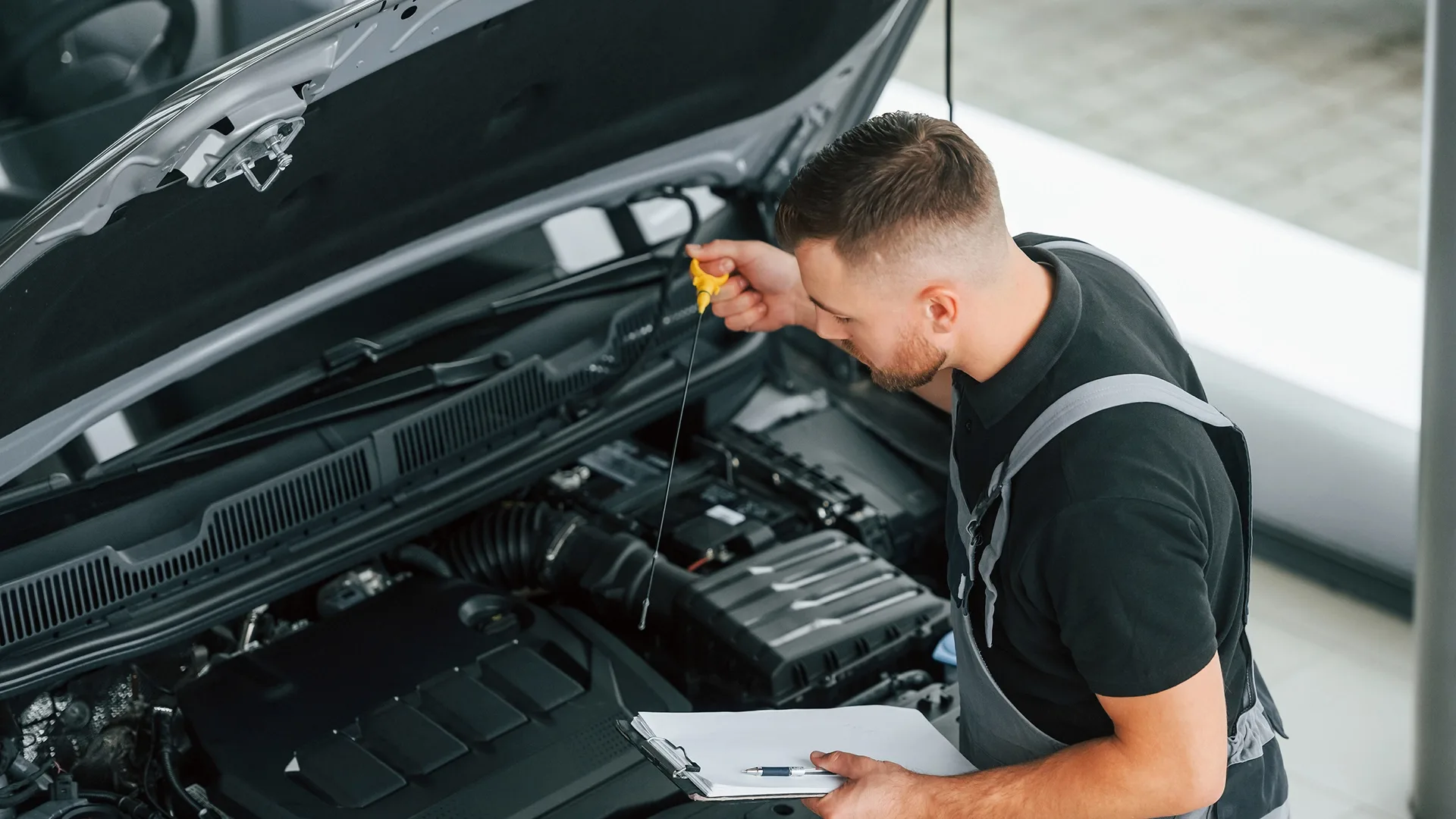
They can perform a diagnostic scan for stored trouble codes for the seller of the sight unseen car. Get the report in writing. If the inspector identifies problems the seller didn't disclose, use the information to negotiate the price or decide to walk away.
Step 4: Verify the Title and the Seller's Identity
To confirm the seller's identify:
- Have the seller photograph and send the vehicle title to you.
- Confirm the name on the title matches the seller's.
- Confirm the titled VIN matches the VIN plate on the dashboard.
- Check the title for lienholders; if a lender is named, the seller must pay off the loan before transferring the title to you.
With private sellers, have them send a copy of their driver's license, then compare their address against their contact information.
Step 5: Understand Each State's Title Transfer and Tax Rules
Before you drive away with the deal, call your DMV to determine the paperwork you'll need to register an out-of-state vehicle.
Each state handles out-of-state title transfers differently. Some states require the bill of sale to be notarized by the seller. Others require an emissions or safety inspection before they'll register the car. Most states will charge sales tax based on your home state's rate, not the seller's, payable at registration, which can add several hundred to several thousand dollars to the final cost.

Step 6: Pay Securely — Never Wire Money
How you pay for the car can be a major vulnerability. Wire transfers are largely irreversible, so once you send the funds, there is no getting them back regardless of whether the car arrives, and as described, or exists at all.
Dealerships often accept a credit card deposit followed by wiring the balance. For private sellers, use an escrow service like Escrow.com, which holds the funds until you confirm the car's arrival. The escrow fee is one or several percent of the transaction, but offers substantial protection. If a private seller insists that you wire the funds, walk away, since that is not how legitimate vehicle sales work.
Step 7: Arrange Transport Through a Licensed Auto Carrier
When the deal is complete, you need to get the car from there to here. Key steps include:
- Using a carrier or broker for auto transport that is insured and licensed.
- Verifying their cargo insurance and checking their FMCSA (Federal Motor Carrier Safety Administration) registration.
- Selecting a transport carrier that is enclosed or open.
- Taking timed pictures or videos of the vehicle's condition prior to pickup and thoroughly examining it upon delivery before signing the Bill of Lading.
- Since the Bill of Lading is the main document when submitting an insurance claim, note any new damage on it.
Step 8: Buy Insurance Before the Car Arrives
Contact your auto insurance provider as soon as you sign the deal.
Most insurers can add coverage over the phone or through their app, effective immediately.
Without active coverage, you have exposure when the car leaves the seller's hands. Transport carrier cargo insurance generally covers damage during transit, but you need comprehensive and collision protection when the vehicle is in your possession.
Summing It Up
Buying a car online without seeing it is sometimes the best way to obtain a unique vehicle. It can also be a cost-effective method of buying a car that is in greater demand where you live than where the seller lives.
Still, the difference between a great deal and a disaster often comes down to your performing due diligence:
- Pulling the vehicle history
- Hiring the inspector
- Securing the title
- Protecting the payment
- Transporting the vehicle professionally
Follow these steps, and you greatly reduce the potential for issues when making a long-distance auto purchase.
How We Can Help Ship Your New Car
Buying a car sight-unseen can be a challenge, but once you’ve made the deal, you want to ensure the car is shipped to your location without issues. Feel free to obtain quotes from multiple providers, and you’ll often choose to work with Nexus Auto Transport. Request a free quote today, and your vehicle will soon be on the road to its new home.
Instant Quote: https://nexusautotransport.com/car-shipping-calculator/
Estimated Vehicle Shipping Costs and Transit Times
Distance Range |
Open Trailer Average Price |
Enclosed Trailer Average Price |
Estimated Delivery Days |
|---|---|---|---|
Under 500 miles |
$400 to $700 |
$600 to $1,000 |
1 to 3 days |
500 to 1,500 miles |
$700 to $1,100 |
$1,000 to $1,500 |
2 to 7 days |
1,501 to 2,500 miles |
$1,000 to $1,600 |
$1,400 to $2,200 |
5 to 10 days |
2,500+ miles |
$1,300 to $2,000 |
$1,800 to $2,800 |
7 to 14 days |
FAQs
How do I verify a remote seller's identity to avoid escrow scams?
Some steps were touched on previously, but ask for a picture of a government-issued ID, and make sure it matches the name on the title and the contact information they've provided. Do some background searches on their name, phone number, and email address. Check BBB and similar information if you are buying from a dealer.
For the escrow, another rule on how to buy a car sight unseen is that the buyer is in the driver's seat and gets to choose the escrow services. Follow the escrow provider's process and don't fall for any last-minute tricks.
What is the process for obtaining a temporary registration permit to drive an out-of-state car?
When buying from a dealer, the process is largely handled by them since most states authorize dealers to issue temporary tags with proof of insurance. When buying privately, some states allow you to receive temporary or one-trip tags by showing the title, proof of insurance, and a modest payment. Be sure to check with the DMVs in your state and the seller’s.
How does transport cargo insurance protect my vehicle during transit?
Carriers generally maintain cargo insurance that covers all vehicles being transported. (Nexus requires carriers to have $100,000 in cargo insurance). However, the carrier’s coverage may not cover the full value of all the vehicles in the event of a serious accident. Carriers often offer supplemental insurance that you pay for. Also, a personal policy for a classic car may cover it during transport.
Your best practice is to confirm the complimentary and supplemental insurance options through the auto transporter and review them with your insurance agent to determine your best course of action.