
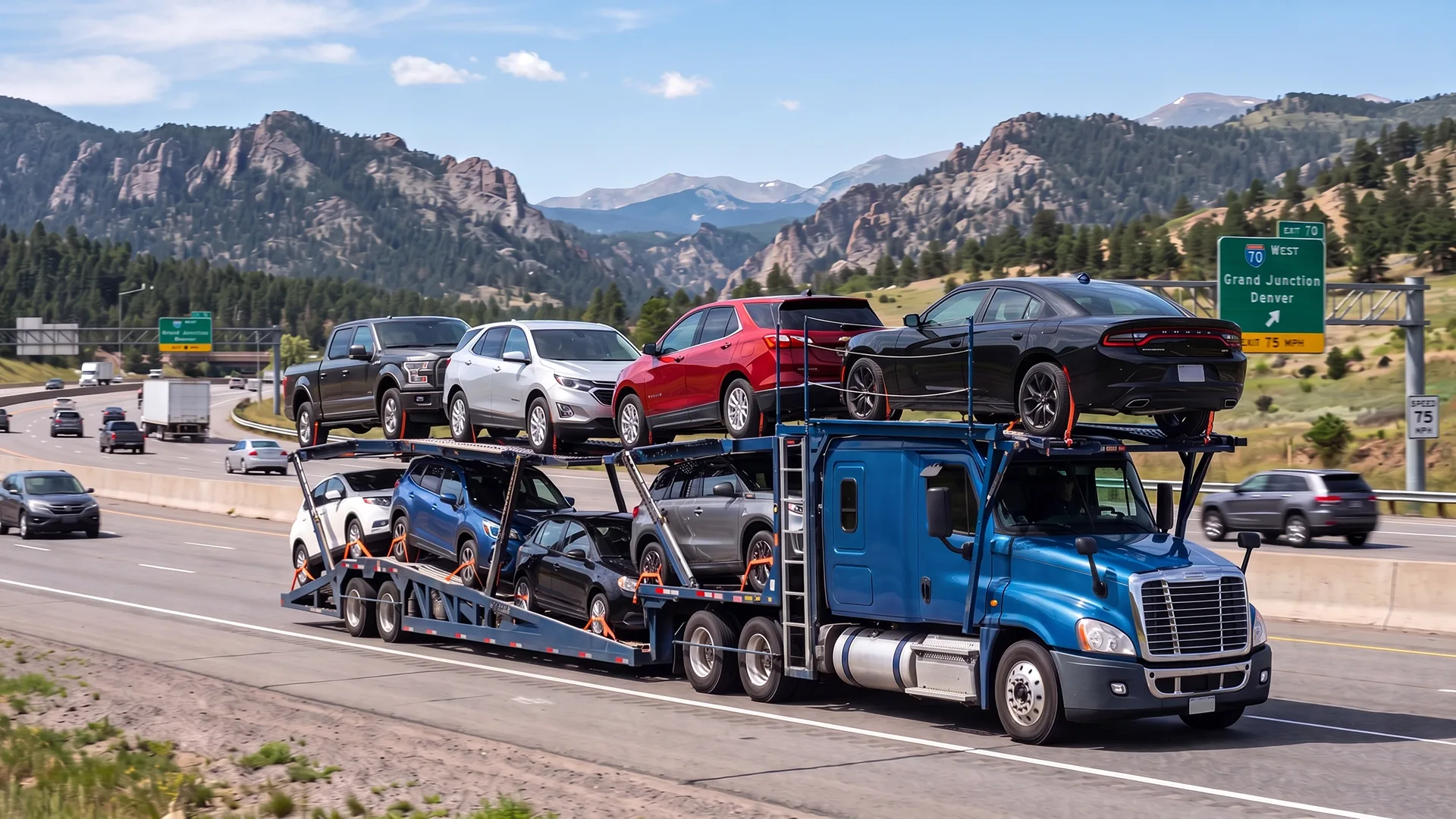
An open carrier rolling down the interstate in 2026 looks much like one from 2006. It still has a stinger-steer tractor, hydraulic decks, and the driver climbs the rail to check the tie-downs before the run. So, while the trucks haven't changed much, nearly everything around them has, with advances in best practices for hauling equipment and tools.
Photos Replace the Clipboard
The most consequential document in the car shipment business is the Bill of Lading (BOL), which for decades was a carbon-copy form filled out with a ballpoint pen. Damage disputes came down to whether a driver's hurried diagram of a scratch matched what the customer saw at delivery.
In recent years, best practices in car hauling equipment have shifted toward electronic BOLs, which have changed the evidentiary picture. Central Dispatch's carrier app, launched in 2024, has logged more than 4.7 million completed inspections, and an April 2026 update added search functions, eBOL viewing and sharing, and in-app invoicing. Much of that is because more than half of carriers now reach the platform by phone rather than on a desktop. Others have built comparable apps.
The impact on customers has been substantial. Instead of a pen sketch, you get:
- A timestamped, geotagged photo set of your vehicle at pickup and a matching set at delivery, with signatures attached to both.
- Claims no longer involve arguments about memory and have transitioned to arguments about evidence, which is much better for the customer.
Tracking that Updates Itself
Tracking where the car carrier is at any given time used to require the dispatcher to call the driver. Another advance in the best car moving tools is the shift to carrier apps that push location updates automatically. They also send pickup and delivery notifications the moment inspections are completed on the truck, without anyone needing to place a call.
This functionality matters less for reassurance than for planning. Delivery windows in vehicle transport are inherently soft. The timing of your car's arrival depends on the other six or seven cars on the trailer, so the practical value of live status is that even learning bad news -there has been a two-day delay in timing- allows you to adjust your plans sooner than was possible in the past.
Pricing Reflects the Market
The oldest complaint in retail car shipping has been the lowball quote that never finds a carrier will take the load. That led customers to book at a price no carrier will accept, so the car sat, and the price got revised upward days later.
AI-driven rate engines focus squarely on that historical problem. With these updates to the best car moving technologies, quotes and pricing have become more data-informed and accurate, leading to more orders dispatched quickly.
For the customer, that means quotes are priced more accurately, carriers accept bids faster, and lowball quotes stand out from the crowd because these companies provide more consistent quotes.
Carrier Vetting Technology
Double brokering, which is a situation in which the company you booked quietly resells your shipment to a carrier you did not vet, has been the most damaging consumer-facing problem in this industry.
Several carrier-vetting platforms now run continuous FMCSA authority and insurance monitoring rather than one-time checks. In addition, FMCSA launched its Motus system in 2026 that enhances the carrier registration and update process to better ensure carrier information is current.
For a customer, this continuous monitoring catches the carrier whose insurance lapsed a week ago. It does not replace your own confirmation. The USDOT number painted on the truck should still match your paperwork, but advances in car hauling technology narrow the pool and keep delinquent carriers from being assigned by brokers.
Digital BOLs also remove the paper handoff between delivery and invoicing. That makes them among the best car hauling equipment to use. Electronic BOLs link to payment systems, so carriers get paid 2 to 3 days faster; since many carriers are small businesses, quick payments improve cash flow.
Changes in Vehicles Being Shipped
Electric vehicles have grown as a percentage of vehicles being transported. EVs are heavier than ICE vehicles, have different tie-down and jacking points, and require handling protocols that differ from their gas-powered cousins. Carriers have added EV-specific securement methods, tools to support trailer weight-distribution planning, and driver training modules to ensure proper EV handling.
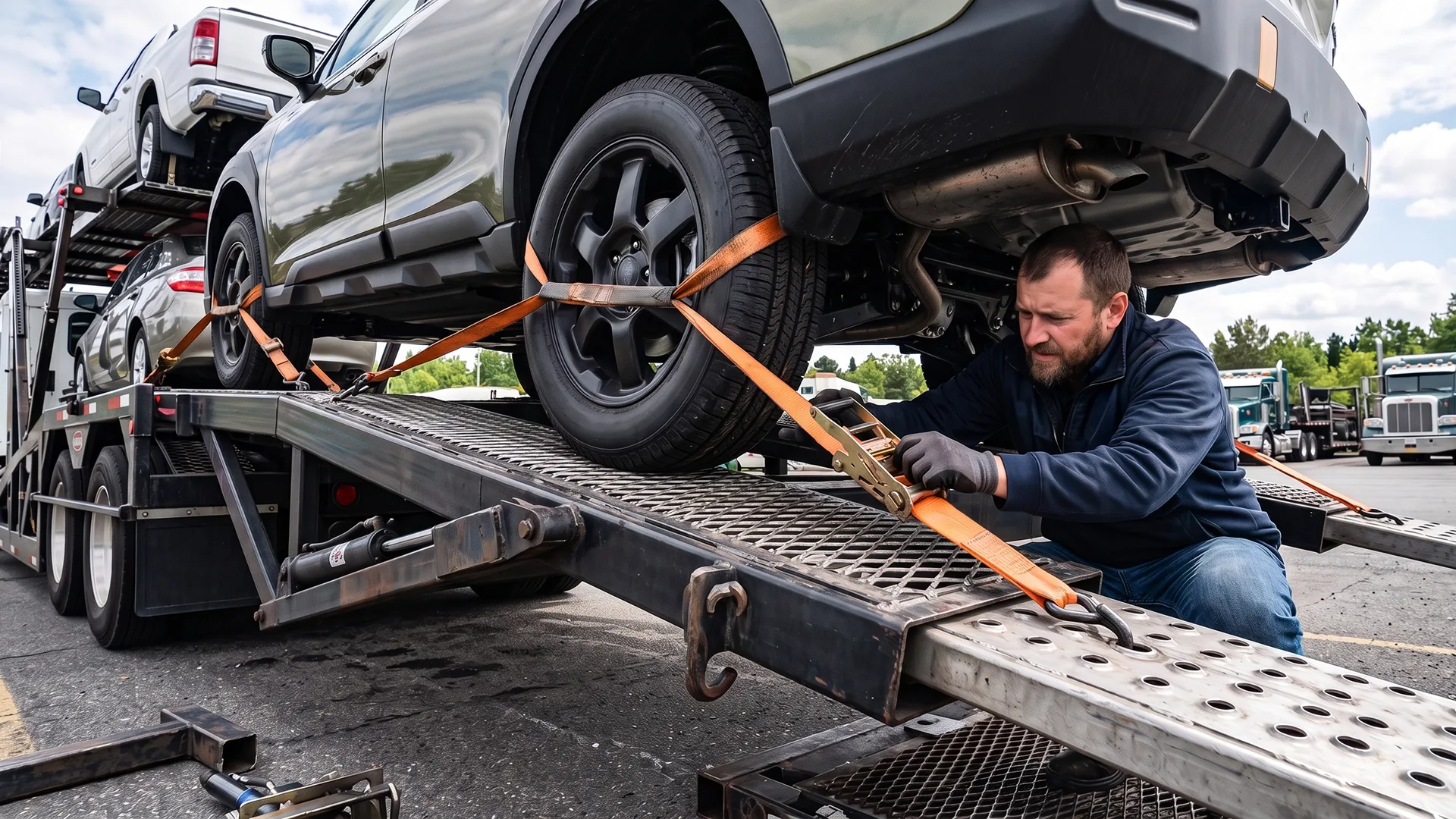
Soft over-the-wheel securement, which clamps the tire and leaves the vehicle on its own suspension, has moved from an enthusiast-hauler practice toward a default for high-value and low-clearance cars.
What Hasn't Changed
Adoption of these technologies has been uneven.
- The auto transport carrier base is filled with small fleets running a handful of trucks, and a hauler with an excellent safety record may still use paper BOLs.
- Autonomous or driverless trucking remains in exemption-and-pilot mode, with FMCSA still processing Level 4 applications as of spring 2026.
- Apps still can’t eliminate bad weather, traffic, or a driver's hours-of-service clock.
For customers, check with your carrier and ask whether they've adopted car hauling technologies. Does a paper BOL document my vehicle's condition as well as an electronic version, and where is my vehicle right now? Companies that have made these investments can provide documentation or answers in seconds. The ones that haven't will tell you they will call you back.
How We Help Get You Where You're Going
Carriers that use technology to make the auto transport process more efficient and effective for customers are more highly valued in our vetting process. While we don't require bleeding-edge tools, staying current is critical to ensuring your needs are met.
Nexus Auto Transport is a leading broker with a nationwide network of vetted carriers experienced in all aspects of vehicle transfers. Contact us for a quote and see how our 3-step process makes it easy for you from start to finish.
Use our car shipping calculator for a free quote: https://nexusautotransport.com/car-shipping-calculator/
Vehicle Security Equipment Comparison for Customers
Equipment Type |
How It Secures Your Vehicle |
Primary Benefit to Customer |
Ideal Vehicle Type |
|---|---|---|---|
Over-the-Wheel Straps |
Nylon webbing passes over the tire and anchors to the deck on both sides, clamping the wheel down. The vehicle rides on its own suspension; nothing contacts the body or chassis |
Zero metal-to-vehicle contact. No stress on frame, control arms, or paint, and no risk of a hook slipping off |
Classic, custom, restored, exotic, and low-clearance vehicles; any car with original or repainted underbody |
Lasso Straps |
A single strap loops around the tire and cinches against itself, then runs to two deck anchor points that pull in opposing directions |
Fast to apply and fits a wide range of wheel and tire sizes without swapping hardware, shortening the load time and reducing vehicle handling |
Standard passenger cars, crossovers, and SUVs on open carriers; dealer, auction, and fleet moves |
Axle Straps |
Heavy webbing wraps the axle housing or a suspension control arm, then connects to a ratchet or chain anchored to the deck |
Very high working load capacity with a soft contact surface; holds a vehicle securely even when it cannot be positioned precisely on the deck |
Pickups, heavy SUVs, and 4x4s with exposed solid axles; inoperable vehicles winched aboard |
Heavy-Duty Chains |
Chain hooks into factory recovery points or frame slots; tensioned with a ratchet binder or built-in winch |
Highest working load limit of any option and resistant to abrasion, heat, and road debris. |
Heavy-duty pickups, box trucks, and equipment over 10,000 lbs. GVWR |
FAQs
How does Nexus ensure carrier trucks use the correct straps for my specific car type?
The vehicle year, make, model, and modification details you provide determine the required equipment. Those details tell us whether the car has usable factory tie-down points, its ground clearance, and whether it can be winched or must be driven on.
Vehicles requiring soft over-the-wheel securement are flagged as such on the dispatch order, and only carriers whose equipment list includes wheel nets or lasso straps can accept them.
Why are over-the-wheel straps safer for custom or classic cars than traditional chains?
Chains transfer load into the vehicle. They pull hard enough to compress the suspension and hold the body down against the deck. On a modern unibody vehicle with engineered tie-down points, that works fine, but not for classic or custom cars.
Older vehicles often have no factory tie-down points, which means a driver improvising with chains hooks into whatever looks strong. Because chains bind the vehicle to the deck rather than letting it move, every bump the trailer takes is transmitted through the suspension into the body instead of being absorbed by the springs and tires.
With over-the-wheel straps, the webbing surrounds the tire, so the only contact point is rubber, and the car rides on its own suspension just as it would on the road.
What safety standards must a carrier meet before Nexus assigns them to my shipment?
Any carrier hauling a vehicle across state lines must hold active FMCSA operating authority with an MC number and a USDOT number, and must maintain public liability coverage on file, which describes essentially every multi-car carrier on the road. Anyone can verify that filing through FMCSA's public databases.
Federal minimums are necessary, but not sufficient. For example, the FMCSA does not require auto haulers to carry cargo insurance, which pays if your car is damaged. So, our carrier vetting includes keeping a current cargo insurance certificate with a per-occurrence limit realistic for a fully loaded trailer.
We also monitor carriers to ensure they have an active safety rating and a roadside inspection and out-of-service history that holds up under review. We monitor authority status and insurance filings on an ongoing basis rather than checking them only at onboarding.