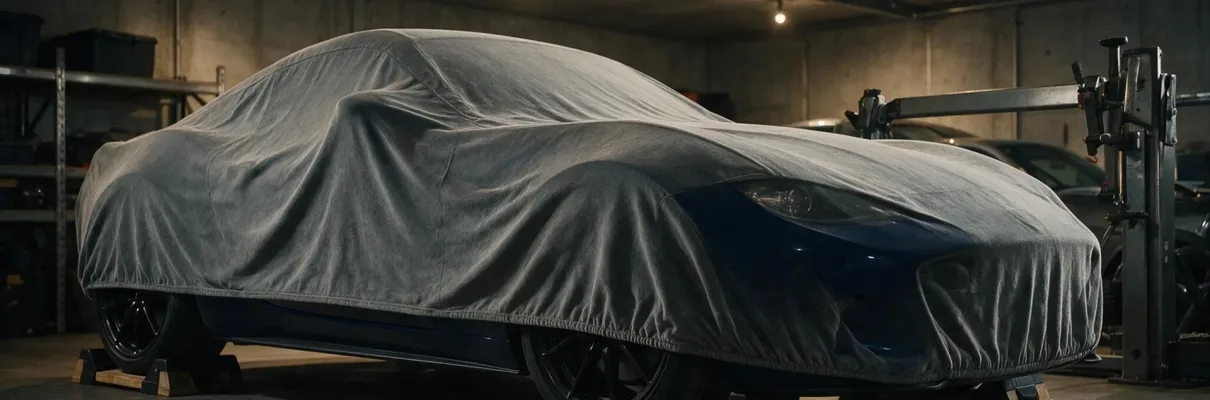

Taking the steps to store a car correctly is the smart approach if you will not use it for 30 days or more. Modern ethanol-blended gasoline begins to degrade and absorb moisture around the 30-day mark, and battery self-discharge becomes a problem at 4 to 6 weeks. Other issues can arise depending on where you store the car and for how long.
We’ll use the guide to outline the proper steps for storing a car for 30 days to 9 months, but will first suggest that you consider shipping the vehicle to your destination. Shipping a car works well for snowbirds, college students, and some work assignments. Of course, while shipping the vehicle is not always necessary, preparing it for storage is. So, here's a step-by-step guide on how to store a car long term.
Step 1: Choose the Right Storage Location

Your first decision when storing cars for long periods is where you will store them, since that decision determines whether additional steps are needed. A climate-controlled indoor facility is the gold standard. They have stable temperatures and humidity controls that prevent condensation on metal surfaces and inside the engine.
An enclosed garage, even when unheated, is a common and good option because it keeps the car away from rain, UV radiation, falling debris, and pests. Outdoor storage under a breathable, fitted car cover is a last resort. It works for shorter stints but leaves the vehicle vulnerable to moisture trapped underneath the cover and can lead to more corrosion than no cover at all.
Car storage facilities charge $50–$400 per month depending on location and whether the unit is climate-controlled, with many providing power outlets for battery tenders.
Step 2: Perform a Fresh Oil Change
Old engine oil accumulates combustion byproducts that will sit against your engine's internal surfaces for months if left idle. Even if your oil isn't due for a change by mileage, change it before storage. Fresh oil provides a protective film on cylinder walls, bearings, and other metal components throughout the dormant period.
Change the oil filter at the same time, and top off the other fluids including radiator coolant, brake fluid, power steering fluid, and windshield washer fluid.
Step 3: Fill the Gas Tank and Add Fuel Stabilizer
A full gas tank is important for two reasons. First, a full tank minimizes the air space where moisture can condense inside the tank, and second, it prevents the tank walls from oxidizing.
An important companion step is to add a fuel stabilizer such as Sta-Bil or STA-BIL 360 Protection. Modern gasoline contains ethanol, which begins to degrade and absorb moisture in as little as 30 days. Untreated fuel left for several months can varnish injectors, gum up carburetors, and clog fuel lines.
Add the stabilizer and drive the car for 10 to 15 minutes so you circulate the treated fuel through the fuel system.
Step 4: Care for the Battery
A car battery left unattended for months will self-discharge and may sulfate to the point where it can't hold a charge anymore, leaving you with the hassle and a replacement bill when you return. You have two practical options.
The best choice for many is a battery tender (also called a trickle charger or float charger). They plug into a standard outlet and maintain the battery at an optimal charge without overcharging it. They cost $25–$60 but pay for themselves the first time you don't need to replace a battery. If your storage location does not have a power outlet, disconnect the negative terminal before leaving. Doing so slows self-discharge significantly, though the battery will still need a charge upon your return.
Step 5: Protect the Tires
Tires develop flat spots when sitting in the same position for months, especially in cold temperatures. The car's weight compressing the same portion of the tire for months can deform the tires. The deformation can become semi-permanent with bias-ply tires and temporary but annoying with modern radials.
A simple method of reducing tire spotting is to inflate tires to the maximum pressure listed on the sidewall. Fully inflating the tires minimizes the contact patch and slows flat spotting.
For storage beyond six months, consider placing the car on jack stands to lift all four wheels off the ground. If you use jack stands, place them under the vehicle's designated lift points and leave the car in gear or in Park with the parking brake released since long-term parking brake application can fuse the brake pads to the rotors.
Step 6: Clean the Car Thoroughly
Thoroughly wash the exterior and apply paint sealant to create a protective barrier against humidity and minor abrasion. Pay special attention to washing out the underbody and wheel wells where road salt and mud accumulate.
Other prevention steps include:
- Cleaning the interior completely: remove food, vacuum the carpet and seats, and wipe down surfaces. Even a cracker crumb invites mice and insects to take up residence.
- Applying a thin coat of WD-40 or a dedicated metal protectant to exposed chrome or bare metal surfaces.
- Stuffing steel wool or copper mesh into the exhaust pipe opening(s) and the air intake snorkel to prevent rodent entry.
- Placing dryer sheets inside the cabin as a rodent deterrent. Place rodent bait stations around (not inside) the vehicle if you're storing in an area with pest activity.
Step 7: Address the Brakes
Brake rotors develop surface rust when sitting idle, especially in humid climates. The rust is usually harmless because it is scrubbed off with normal driving. However, longer-term storage can lead to pitting if the condensation persists. If you're parking on jack stands with the wheels off the ground, leave the vehicle in gear with the parking brake off.
Step 8: Review Your Insurance Coverage
Keeping full insurance coverage when storing cars for long periods is an unnecessary expense. Contact your insurer about suspending or reducing your policy to "comprehensive only." Taking this step keeps your vehicle covered for non-collision events such as theft, fire, flood, and falling trees, while eliminating the collision and liability coverage that is unnecessary for a parked car.
Comprehensive-only coverage runs 20 to 40% of a full-coverage premium, so you can save significant money over the storage period. Just be sure to restore the policy to full coverage before you drive it again.
Step 9: Check on the Car Periodically
If you have access to the vehicle, visit the storage location every 4 to 6 weeks to:
- Run the engine for 10 minutes to circulate oil through the system, recharge the battery, and exercise seals that dry out when not used.
- If the car is on its wheels, move the car several feet forward and back to shift the tire contact patches.
- Perform a walkaround looking for leaks, pests, or moisture intrusion.
Bringing It Back Out of Storage
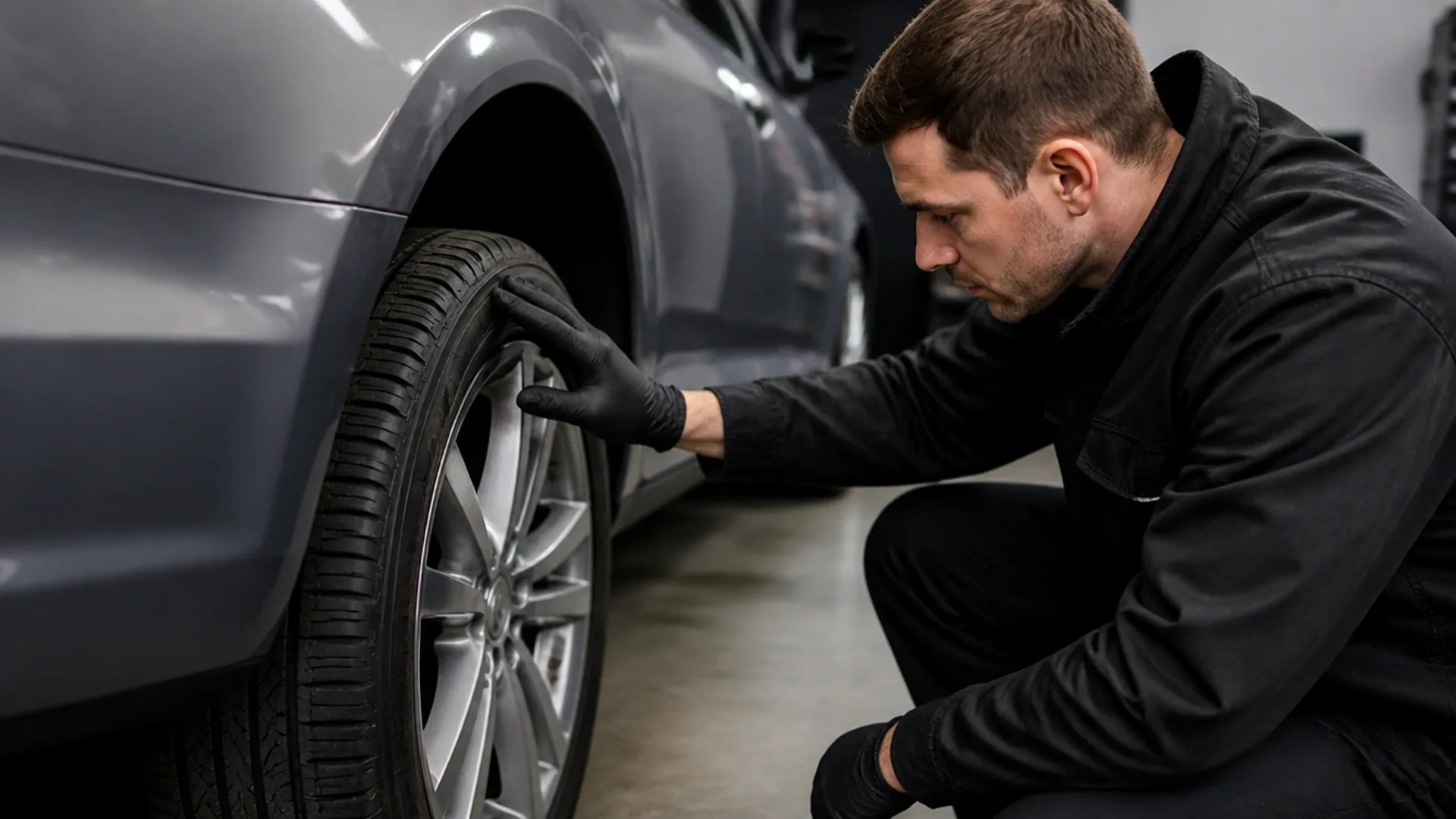
When you return and want to use the vehicle again, perform a series of steps before taking it on the road.
- Check the tire pressure. Tires will lose several or more PSI depending on how long they were stored.
- Inspect for fluid leaks underneath the car.
- Reconnect the battery or charge it if needed.
- Check the windshield washer fluid, brake fluid, and coolant levels.
- Remove the steel wool from the exhaust before starting the engine. Drive gently for the first 10 to 15 minutes to let lubricants circulate and brakes scrub clean.
Medium-to-long-term storage done right means you step back into a car that drives exactly as you left it.
Long Term Storage or Shipping?
As mentioned earlier, if you do not need the vehicle while you are away, taking the steps to store it properly is a good investment that allows you to take it back on the road shortly after your return.
However, if you need or want the car at your new destination, shipping it there may be the answer, and the shipping costs may be competitive relative to the storage costs at home and potential rental fees elsewhere.
If you are thinking about shipping your car, contact Nexus Auto Transport or use our cost calculator to get a free quote today!
Car Long Term Storage vs Auto Transport Comparison
Method |
Average Cost |
Risk of Mechanical Degradation |
Ideal Use Case |
|---|---|---|---|
Home Garage Storage |
Free to $50/month (supplies only) |
Medium. Uncontrolled temperature and humidity accelerate corrosion without proper prep |
Owners with a dry, secure garage; seasonal vehicles; short- to medium-term storage (1–6 months) |
Professional Storage Facility |
$50 to $400/month (standard to climate-controlled) |
Low. Stable climate and controlled humidity minimize degradation |
Valuable, classic, or exotic vehicles; owners without garage access; longer-term storage (3–12 months) |
Nexus Auto Transport |
$500 to $1,500 (open carrier); $1,000 to $3,000+ (enclosed) |
Very Low. Vehicle is loaded and unloaded, not driven; enclosed option adds full weather protection |
Snowbirds, purchasing or selling a vehicle remotely |
FAQs
Does standard auto insurance remain active while a vehicle is parked in a facility for months?
Yes. If you do not modify your insurance while your car is in long-term storage, it remains in effect. As noted in Step 8, consider reducing your coverage to "comprehensive only" while in storage and return it to normal status before driving it.
What specific ingredients should be used when selecting a fuel stabilizer?
Like a multi-vitamin for your car, fuel stabilizers should include a handful of ingredients:
- Antioxidants: Butylated hydroxytoluene (BHT) and butylated hydroxyanisole (BHA) neutralize the free radicals that cause gasoline to oxidize and form varnish and gum deposits.
- Corrosion inhibitors: Compounds like benzotriazole or tolytriazole form a protective film on metal surfaces inside the fuel system that prevents rust and oxidation.
- Ethanol treatment agents/Demulsifies: Modern pump gas contains up to 10–15% ethanol (E10/E15), which is hygroscopic, meaning it pulls moisture out of the air.
Sta-Bil 360 Protection and PRI-G (Petroleum Restoration Inc.) are popular products that contain all these ingredients.
Can parking a vehicle on a dirt surface accelerate undercarriage rust?
Yes, and it's an underappreciated storage mistake people make. Dirt surfaces:
- Retains moisture, leading to high humidity levels between the ground and undercarriage.
- Contains decaying leaves, grass, or other organic matter, which releases mild organic acids as it breaks down, accelerating oxidation on bare or lightly coated metal.
- Heats and cools more dramatically than a concrete slab, which drives repeated condensation cycles on the metal surfaces above it.
If concrete or asphalt isn't an option, laying a heavy-duty polyethylene tarp or a dedicated ground sheet under the vehicle dramatically reduces moisture vapor.
How do temperature fluctuations impact tire pressure during extended storage?
For every 10°F change in ambient temperature, tire pressure changes by roughly 1 PSI. That's a small number day to day, but over a long period with seasonal swings, it adds up quickly. A car stored from October through April in a northern state might see the storage environment swing 60–70°F from the warmest to the coldest days, meaning tires can lose 6–7 PSI from temperature alone.
Cold temperatures are the main culprit. Tires inflated to 35 PSI when parked in October could be at 28 PSI by January in an unheated garage, leading to flat spotting.