
Whether moving a vehicle to another state or across the country, owners face the decision of whether to drive it themselves or hand it off to a professional carrier. Both approaches have merit. The right choice depends on your vehicle, your timeline, your budget, and how much uncertainty you can tolerate. Here is an accounting of what each approach costs in money, time, and risk.
Depending on your situation, you may need to move multiple family members and a dog across the country. That means you may not have the time or the available licensed drivers to move additional family cars across the country yourself. Since it is difficult to account for all possible situations, we’ll assume you have at least one vehicle that needs to cross the country.
The DIY Case: What You Control, and What You Don't
DIY auto transport means one of two things: driving the vehicle yourself or towing it. Both approaches allow you to control your schedule and eliminate the anxiety of handing your keys to a stranger, but they bring their own risks as well.
Drive It Yourself
Driving the car yourself is the most common way to DIY transport and can look attractive on an macro perspective. However, your out-of-pocket expenses will include:
- Fuel for a 2,500-mile trip
- Three to four nights of lodging
- Meals and snacks along the way
- Tolls and miscellaneous expenses
Depending on your vehicle’s gas mileage, your choice of hotels and meals, and the number of travel days, your expenses will run $900 to $1,500, with an average vehicle over four days and stays at mid-range hotels costing $1,100 to $1,350.
The out-of-pocket figure also does not account for the vehicle's true operating cost, which the IRS sets at 76 cents per mile for 2026. Apply the 76 cents rate to a 2,500-mile trip, and your true economic cost of the car alone rises to $1,900. Add your other travel expenses, and it easily exceeds most professional shipping quotes.
Tow It Yourself
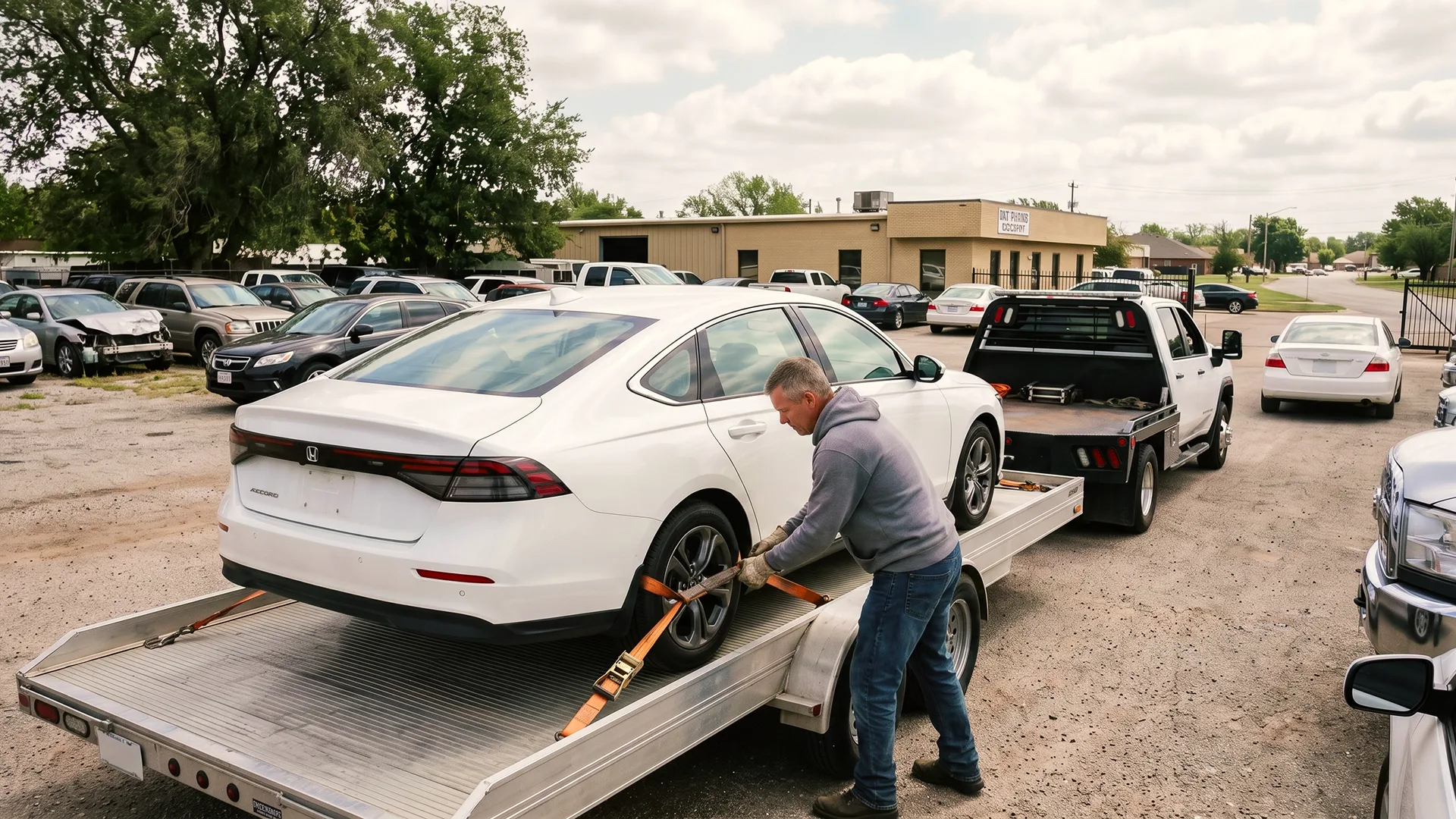
Towing the vehicle with an auto transport trailer is the other common DIY approach. When towing a car yourself, you have all the expenses mentioned above, plus it costs $400 to $800 for a one-way cross-country rental of a trailer that handles vehicles up to 4,000 pounds. You also need to account for the loaded trailer:
- Adding length and braking distance
- Increasing fuel consumption for the towing vehicle
- Requiring a hitch and tow vehicle capable of handling the trailer's gross weight
- Being difficult or dangerous to drive for those lacking experience hauling trailers
Another challenge with towing is that the typical tow trailer only works for front-wheel drive vehicles. They may not be a good solution for EVs or inoperable vehicles.
The Benefits of Hiring a Professional Auto Transporter
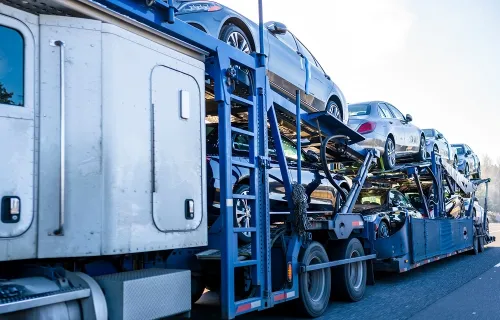
Professional auto transport brokers and carriers operate in a mature, regulated industry. Open-carrier shipping, which is the multi-car trailer you see on the interstate, for a typical car costs:
- $600 to $700 for trips under 500 miles
- $800 to $1,400 for mid-range hauls
- $1,100 to $1,600 for cross-country routes
Prices increase for large SUVs, pickup trucks, and some other vehicles. Transit times vary based on the route's popularity. High-volume corridors such as New York to Florida or California to Texas take 3 to 7 days. Less-trafficked routes going to or from more rural locations can increase to 10 to 14 days.
The clearest advantage of professional transport is that your vehicle arrives with zero added miles, and you don't experience the wear of a long drive. For most everyday vehicles, the financial difference between driving and shipping is narrower when true operating costs are factored in.
Another challenge for professional shipping is that their pickup and delivery windows are multi-day to week-long estimates, not guarantees. Those windows are needed to account for weather, mechanical issues, traffic, and potentially pickup up or dropping off other vehicles along the route.
DIY or Car Transport for Specialty Vehicles
The DIY vs. professional decision changes dramatically depending on the vehicle you need to transport. The benefits of hiring a professional auto transporter become quite clear for most specialty vehicles.
Classic and collector cars
Driving or towing a classic or collector car on a 2,500-mile trip exposes the car to rock chips, weather damage, and the possibility of a minor accident that can be a restoration setback. Enclosed transport, in which the vehicle rides in a covered trailer, typically costs $1,400 to $2,400 for a cross-country haul. For a car worth $50,000 or more, the price premium is a form of insurance.
Most collector car owners maintain specialized insurance that covers that car for its agreed value rather than market value, so the car is better protected there as well.
Luxury and exotic vehicles
The logic of classic and collector cars applies to luxury and exotic vehicles as well. A Porsche 911 or a Tesla Model S Plaid is too valuable and too low-riding to expose to the road debris that open transport allows.
Enclosed carriers with soft-tie systems and hydraulic liftgates are the standard for this category, and most reputable specialty shippers have crews experienced with the idiosyncrasies of low-clearance vehicles.
Electric vehicles
Electric vehicles are heavier than comparable fuel injection vehicles due to the battery pack weight, so they cost more to ship. On the other hand, self-driving an EV cross-country involves planning charging stops every 200 to 250 miles and adds hours of time to a cross-country trip compared to a gas vehicle.
On balance, shipping an EV usually makes more sense than driving it cross-country, where range anxiety and charging infrastructure gaps can extend the time needed for the drive.
The Risk of DIY or Car Transport
Insurance is a sharp differentiator between the two approaches. Professional carriers are required to carry minimum cargo liability coverage, and reputable carriers carry $100,000 or more. Your personal auto insurance policy almost certainly does not cover damage that occurs while your vehicle is being professionally shipped.
On the other hand, if damage occurs to a vehicle you are towing, that damage is handled by the towed vehicle's collision and comprehensive policy, which people often drop for an older vehicle.
Another form of risk is driver fatigue. DIY long-haul driving is physically and mentally demanding, especially when towing a vehicle. A solo driver covering 2,500 miles in four days pushes the limits of safe driving. The federal hours-of-service rules for commercial drivers exist for that reason.
The Bottom Line
For an everyday vehicle on a well-traveled route, the out-of-pocket cost of driving cross-country yourself is $900 to $1,500, with most landing in the $1,100 to $1,350 range. Those amounts overlap with or are higher than professional transport fees, and when you look at vehicle wear and depreciation at the IRS per-mile rate, driving a 2,500-mile trip costs $1,900, well above any shipping quote.
For most people, the math does not favor driving it yourself, and for vehicles of greater value, professional shipping is almost always the right economic choice.
Let Us Help with Your Vehicle Transport Needs
Understanding and executing vehicle transport is the core of our business. As a leading broker, Nexus Auto Transport has a nationwide network of vetted carriers who understand and are experienced with all aspects of vehicle transport. Contact us for a quote and see how our 3-step process makes it easy for you from start to finish.
Instant Quote: https://nexusautotransport.com/car-shipping-calculator
Expense and Effort Comparison for a 1,000 Mile Move
Cost Category |
DIY Driving Option |
Professional Transport Option |
|---|---|---|
Fuel and Road Tolls |
$133 to $200 fuel (varies by mpg) + $25 to $60 in tolls = $158–$260 total |
$0; normally in carrier quote |
Hotel and Food Costs |
1 night lodging ($120 to $180) + meals & snacks ($140 to $205) = $260 to $385 |
$0 for vehicle; owner travels separately by air or other means |
Vehicle Wear and Depreciation |
Adds 1,000 miles to odometer; IRS true cost 76¢/mile = $760 total (~$600 beyond fuel) |
$0; zero miles added; no mechanical wear, no odometer impact |
Personal Time and Road Fatigue |
14 to 18 hours behind the wheel; 1 to 2 full days committed; fatigue risk |
2 to 4 hours for drop-off and pickup coordination; 3 to 7 days transit time on carrier |
Insurance Coverage |
Personal auto policy (liability + collision/comp if carried); towed second vehicle must carry its own collision coverage |
Carrier cargo liability ($100,000+); personal auto policy not required during transit |
FAQs
Is it cheaper to drive or ship a car cross-country when factoring in hidden costs?
Driving your car across the country looks cheaper upfront, but it usually isn't. DIY driving can win with a solo driver in a fuel-efficient car, sleeping several nights at a budget motel on a route with minimal tolls, assuming the driver values the road trip experience. The trip can cost as low as $650 to $800. That's below a professional carrier quote, but it requires hitting the low end of every variable simultaneously, and it still doesn't account for wear.
For a typical American driver in a typical vehicle on a typical cross-country route, professional shipping is either comparable to or cheaper than driving once all real costs are considered.
What is the maximum mileage distance where driving a vehicle yourself is still practical?
There are different thresholds depending on whether "practical" means physically manageable, cost-competitive, or both. Safety research and federal commercial driving guidelines put the physical limit at 500 miles per day.
The cost-competitive threshold is 1,000 miles or less. Driving is cheaper on an out-of-pocket basis below 1,000 miles, but once vehicle wear is considered, shipping is the better deal.
How does a long-distance drive affect the resale value and wear of a car?
Each additional 1,000 miles reduces resale value by about $100 to $200 depending on your vehicle's age, make, and model. A related issue is psychological because used car buyers treat the 30,000-, 60,000-, and 100,000-mile markers differently, so if a cross-country drive pushes a car over one of those thresholds, the resale impact is larger than the per-mile math alone.
Does personal auto insurance cover damages during a DIY towing move?
Your towing vehicle's liability coverage extends to the trailer and whatever is on it, including a second car being transported. If you cause an accident while towing, damage to other people's property and their injuries fall under your liability coverage.
Your towing vehicle's own collision and comprehensive coverage also remains active. If you're in an accident and your primary car is damaged, that's covered normally.
Standard auto policies do not extend to physical damage coverage to a rented trailer. If you damage the trailer in an accident or it's damaged while parked, your personal policy pays nothing toward repairing it.