
Today, you have numerous options for shipping household items locally, to a nearby state, and across the country. A traditional option has been to hire a full-service, professional mover who packs and transports your goods. Another option is the DIY approach in which you rent a moving truck, pack, drive, and unpack it yourself. In between are several hybrid options in which you pack and unpack your goods, while someone transports them to the new location.
We’ll look at each option, the situations in which they work best, and provide pricing estimates so you can identify the options worth investigating further.
Full-Service Moving Companies
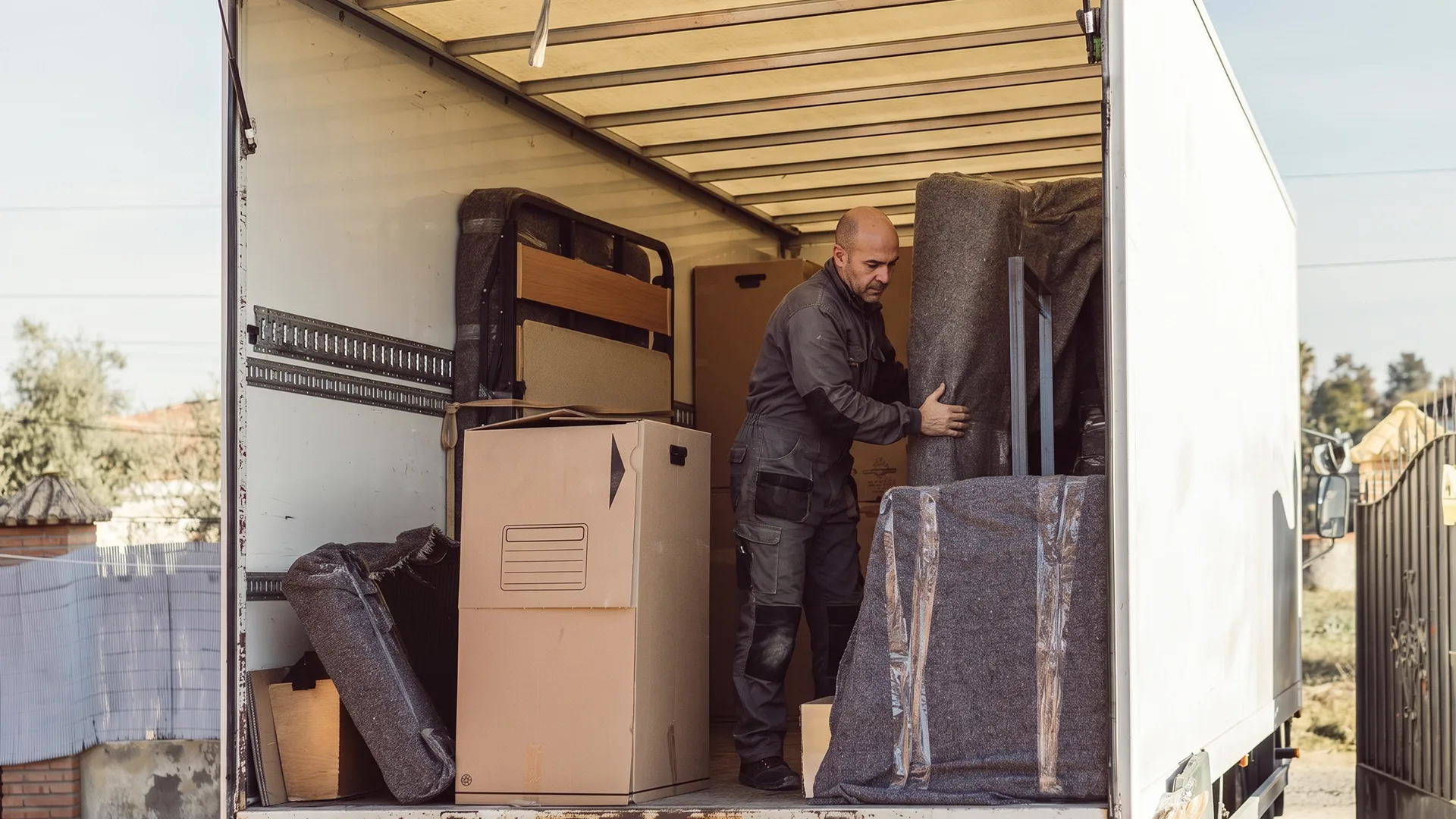
Full-service moving companies perform all three key moving functions: packing, transporting, and unpacking. Full-service firms send a crew to your home, pack your goods in boxes they provide, wrap larger items in blankets they also provide, and load everything on their truck. The professional movers then transport your possessions to your new home, where they unload them and place them in your designated locations.
The full-service option is the ideal method of household goods shipping for those with more possessions than time, and the financial resources to pay for the service. Full-service movers:
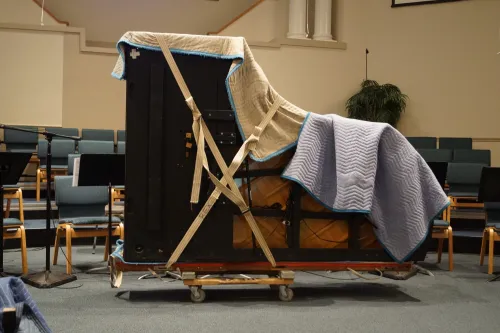
Have the tools and experience to move difficult items such as pianos
Possess the know-how to pack your possessions to avoid damage
Offer basic cargo insurance, though your best bet is to buy additional insurance
Excel at scheduling their services since they know how long each step is likely to take.
Of course, hiring a professional moving company is the most expensive option, with the costs primarily depending on the volume of your possessions and the distance they are being moved.
Full-service moves can range in cost from $600 for a local, one-bedroom apartment move to $10,000 for a two-bedroom house cross-country move. Moves during the peak summer season command premium prices.
DIY with a Rental Truck
At the opposite end of the spectrum is renting a truck through companies like U-Haul, Penske, and Budget. They rent trucks, trailers, dollies, blankets, and sell boxes, packing tape, and other materials you need to pack your own possessions. Trucks can be rented for a one-day local move in which you return the truck to the same location as you rented it. Alternatively, they also offer one-way rentals, meaning you rent the truck in your home city, drive it to your new home, and drop it off at one of their rental facilities at your new location.
The rental truck option appeals to younger movers or those with family and friends who are physically capable of handling the tasks involved in moving a household. Whereas a professional mover can pack a full house in a day or two, the DIY option requires you to:
Acquire all packing materials
Pack your household goods
Load them on the truck
Drive the truck to your new home
Unload and unpack the boxes
DIY household goods delivery is the cheapest option on paper, but it comes with hidden costs for fuel, food, and lodging on long moves, and one-way truck rentals can be substantial, so prepare a thorough budget before making your decision.
DIY truck rental moves can range in cost from $325 for a local, one-bedroom apartment move to $4,200 for a two-bedroom house cross-country move.
Hybrid Option: Portable Moving Containers
Portable storage containers have become a popular hybrid household transportation option since PODS pioneered the concept in 1998. Like the DIY truck rental option, you are responsible for packing, loading, and unloading your possessions, but the company transports them from your current to your new home. They can warehouse your goods if you need extra time before moving into your new home.
The secret to their hybrid approach is that they drop a steel container at your door, you load it, and they haul it to your new address. PODS gives you 30 days to load the container, which benefits those who need to stretch out the loading process.
U-Pack, operated by ABF Freight, offers two options: a portable moving container (ReloCubes) or space in a moving truck in which you pay based on your linear foot usage. They give customers 3 days to pack the container or trailer, so you need to prepare in advance when working with them. They also tend to deliver quite quickly.
U-Haul U-Box will deliver a U-Box to your home, or you can pick one up at their retail location. U-Boxes are smaller than competitors’ containers, which can save you money or require a second container. Since U-Boxes are shipped by ground freight, their delivery can be slower than other options.
In general, portable containers work best for those with flexible time, who want to pack at their own pace, or who need storage between homes. The portable container option is generally more expensive than the rental truck approach but allows greater flexibility in your traveling between locations.
Portable container moves can range in cost from $220 for a local, one-bedroom apartment move to $7,500 for a two-bedroom house cross-country move.
Hybrid Option: Freight Shipping (LTL)
Less-than-truckload (LTL) freight shipping is a best-kept secret in the moving world. Freight carriers generally move commercial cargo daily across the country. Still, they will ship household goods at per-pound or per-linear-foot rates that can be significantly cheaper than moving companies since you only pay for the space your goods occupy.
Like the rental truck and portable moving container options, you handle the packing, loading, and unloading process, but the process is less user-friendly.
You provide the packing container or pallets, including shrink-wrapping
You drop off and pick up at freight terminals. (Some offer pickup and drop-off services at an additional cost.)
Your goods will switch trucks at terminals along the way, and the increased handling increases the potential for damage.
Delivery times are less predictable.
LTL freight works best for people moving heavy household goods such as appliances, furniture, and tools, for which the weight-to-volume ratio favors freight pricing over parcel services. This option is most attractive to those who are familiar with freight shipping and its packing requirements.
LTL freight is not appropriate for local moves, but interstate moves range in cost from $500 for a 500-mile interstate move to $2,900 for a two-bedroom house cross-country move.
Household Goods Shipping: Your Choice
There isn’t a one-size-fits-all when it comes to shipping household items. For most people, the decision comes down to three issues:
How much you're moving
How far it's going
How much labor you'll trade to save money

The household transportation moving container approach works well for those with studio or one-bedroom apartments. For a two- to three-bedroom home involving a move of 1,000 miles or more, a portable container balances cost and convenience. The rental truck option works well for those moving less than several hundred miles and who have the time and energy to handle every step in the process.
For families moving across town or a few hundred miles with plenty of time and energy, a rental truck is hard to beat from a cost standpoint, and for those who don’t want to deal with moving logistics, the full-service mover is the best option.
Regardless of how you move your household items from one state to another, you may need to transport a vehicle from your old to your new home. If you have vehicle transport needs, consider Nexus Auto Transport and use our cost calculator to obtain pricing.
Estimated Moving Costs by Distance and Home Size
Distance Range | 1-Bedroom Apartment | 2-3 Bedroom House |
Local Move (<100 miles) | $100 to $2,500 | $325 to $5,000 |
Interstate Move (500 miles) | $450 to $3,500 | $750 to $5,500 |
Cross-Country Move (2,500 miles) | $900 to $7,000 | $1,500 to $10,000 |
FAQs
Are there any hidden fuel surcharges or tolls not included in the initial quote?
For full-service moves, costs that some consider to be surprises include: fuel surcharges, tolls, and fees for carrying items up flights of stairs, long distances, and similar activities. Some portable container services use a no-hidden-fees approach, and others include fuel surcharges and the like. For truck rentals, the cost of fuel on the low-mileage trucks surprises some, and you are responsible for tolls and mileage overages.
What does the basic liability coverage protect during transit?
Basic liability coverage, also called released value protection, applies to federally regulated moves, and the financial protection is limited to $0.60 per pound, regardless of its value. This protection is not available for goods you pack yourself, so in this context, it only applies to full-service movers.
How is the dispute resolution handled if an item is damaged during a move?
For full-service movers, the dispute resolution depends on which form of insurance applies, a topic we cover here. Insurance protection for household goods delivery in portable containers and rental trucks is available. However, since you pack the container yourself, you are primarily responsible for damage that occurs during the typical shipping process, so your renters’ or homeowner’s insurance often applies.
Can I track the exact location of my auto shipment in real-time?
The top auto transport companies provide customers with consistent updates on the status of their vehicles through email, text, and their customer support centers. However, the complications and requirements of interstate shipping do not allow real-time tracking. For example, it is illegal for drivers to use their phones while their vehicles are moving.
Be sure to confirm with your car shipping company in advance how they will keep you informed of your car's status.