

The lowest car shipping quote isn't necessarily the best deal. Before choosing a company, make sure you're comparing the same services and understand what's included in the price.
That's particularly important because an initial quote may be an estimate rather than the final price a carrier agrees to transport your vehicle for. The route, vehicle, timing and type of service all matter. Knowing how those factors affect the price makes comparing auto transportation quotes much more useful.
Why Car Shipping Quotes Can Be Different
Two companies can quote different prices for the same car going between the same cities without either estimate necessarily being wrong. Each company may be working from different assumptions about timing, available carriers or the service types included in the quote.
The Federal Motor Carrier Safety Administration (FMCSA) also distinguishes between auto transport brokers and carriers. A broker arranges transportation with a carrier, while the carrier actually moves the vehicle. Both must be registered with FMCSA when operating interstate. The FMCSA consumer advisory for automobile transporters explains how to check a company's registration and what to watch for before booking.
When making a vehicle transport price comparison, look beyond the total at the bottom of the estimate. Start with the factors that have the greatest effect on what your shipment should cost.
Route and Shipping Location
Distance is an obvious part of car shipping cost, but mileage alone doesn't determine the price.
A carrier also has to consider how easily your vehicle fits into a route with other scheduled pickups and deliveries. A shipment between two major metropolitan areas may be easier to accommodate than one requiring the truck to travel on more remote routes.
When comparing estimates, make sure each company is pricing the same pickup and delivery locations. If you're flexible, ask whether meeting the driver at a more accessible location could lower the cost.
Route changes can matter as well. If you change the destination after requesting a quote, don't expect the original estimate to remain accurate.
The Vehicle You're Shipping
A large SUV or pickup occupies more trailer space and adds more weight than a compact sedan. That can affect how many other vehicles the carrier can transport and therefore what the carrier needs to charge.
Vehicle condition matters too. A car that doesn't run may require a carrier equipped with a winch or other loading equipment. Nexus can arrange transportation for non-running vehicles, but the vehicle's condition needs to be disclosed when you request the quote. Additional charges may apply because of the equipment and handling required.
Modifications can also affect pricing when you compare car transport quotes. If your truck is lifted, your muscle car is unusually low or the vehicle has oversized tires, provide those details from the beginning. An estimate based on the dimensions of a stock vehicle may not accurately reflect what you're actually shipping.
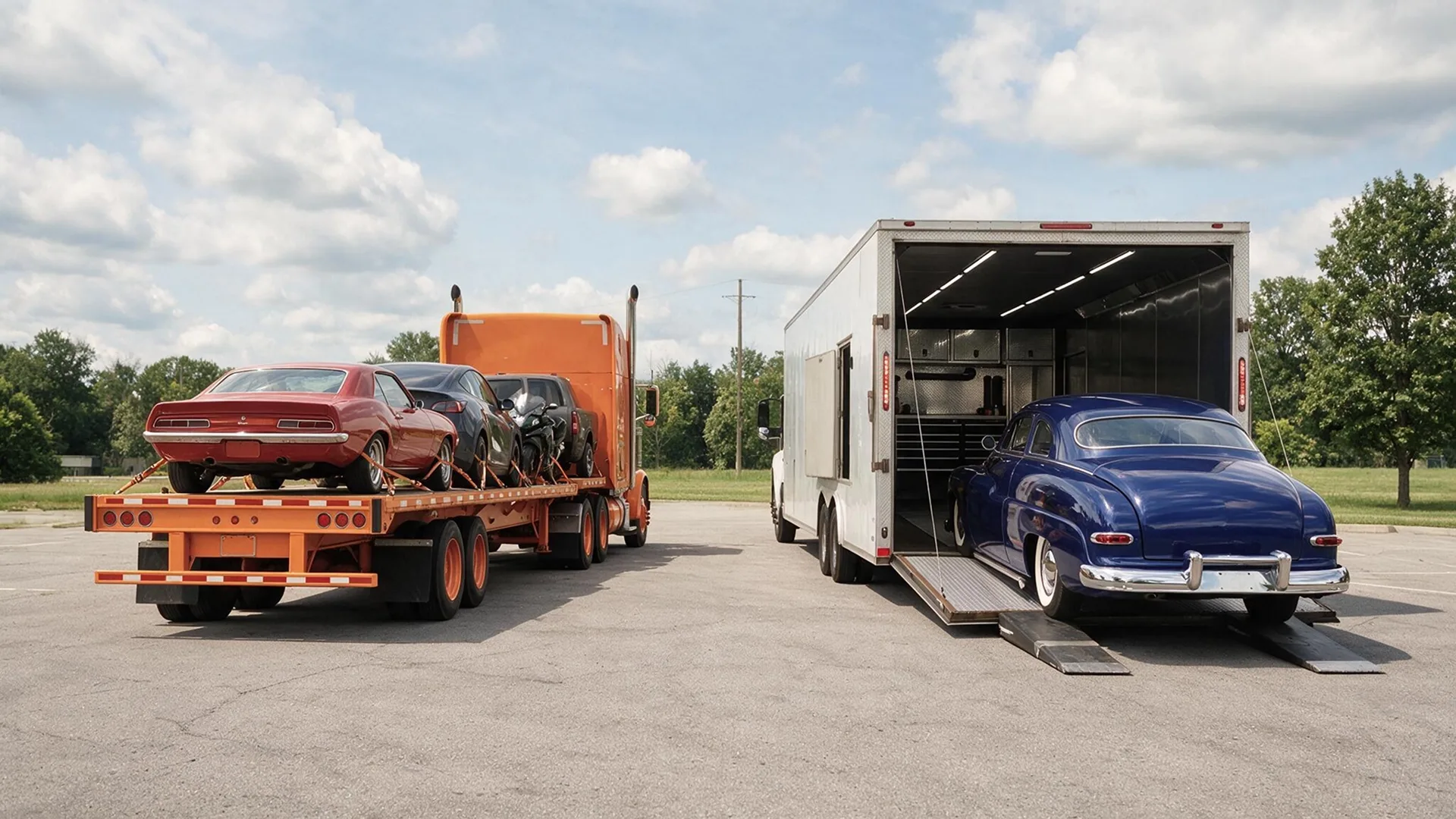
Compare the Same Type of Car Shipping Service
A $900 quote and a $1,300 quote don't tell you much if they cover different services.
Most everyday vehicles are transported on an open trailer. It's generally the lower-cost choice because open carriers are widely used for ordinary vehicle transportation.
Enclosed trailers typically carry fewer vehicles than open carriers, so the carrier's operating costs are spread across fewer customers. That makes enclosed transport more expensive, but in return your vehicle gets greater protection from weather and road debris, making sense for classic, exotic, restored and other high-value cars, but most daily drivers don't require it.
Expedited delivery generally costs more because you're asking the company to prioritize a tighter schedule. Standard shipping gives the company more flexibility to match your vehicle with an available carrier.
Car Shipping Service Types and Cost Comparison
Service Type |
Protection Level |
Relative Cost |
Best Suited For |
|---|---|---|---|
Open Trailer Transport |
Standard |
Lower |
Most cars, SUVs and pickups |
Enclosed Trailer Transport |
Higher protection from weather and road debris |
Higher |
Classic, exotic, restored and high-value vehicles |
Expedited Shipping |
Same protection as selected trailer type |
Higher |
Tight pickup schedules |
Standard Shipping |
Same protection as selected trailer type |
Lower |
Customers with flexible schedules |
Door-to-Door Delivery |
Depends on selected trailer |
Varies by route |
Convenient residential or business pickup and delivery |
Terminal-to-Terminal Delivery |
Depends on selected trailer |
Varies |
Shipments where terminal service is available and practical |
Don't assume terminal-to-terminal shipping will automatically save money. Availability varies and storage or additional handling can change the economics. The useful comparison is the total service that actually fits your shipment.
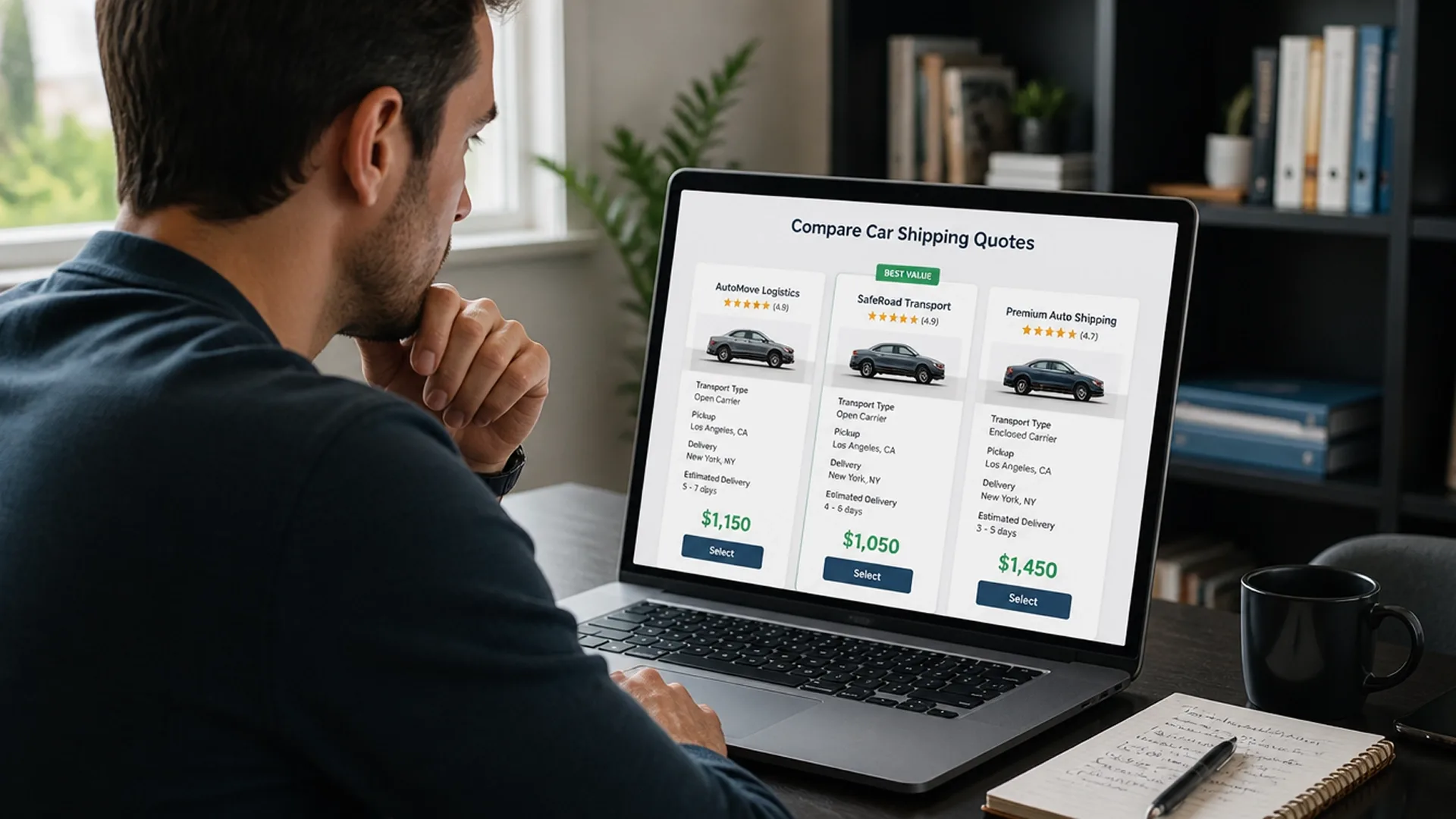
How an Estimate Becomes a Final Price
This is where many customers get confused. An initial quote estimates what it should cost to move your vehicle based on the route, vehicle, timing and current market conditions. The broker must then find an independent carrier with space on a truck traveling your route who will accept the shipment at that price.
Carrier availability and demand can change between the time you request a quote and the time your vehicle is assigned to a truck. That means even a reasonable initial estimate can change. This is why an unrealistically low quote can cause problems: if qualified carriers won't accept the shipment at that price, a higher cost may be required to secure a transporter.
Car shipping quotes from Nexus use the details of your shipment to provide a current, non-binding estimate. Accurate information matters. Entering a sedan when you're actually shipping a full-size SUV or failing to mention that the vehicle doesn't run may make the initial number less useful.
A good estimate should give you a realistic basis for planning. Be cautious of unusually low quotes from companies that may leave out costs to make their quoted price more attractive.
Look for Fees and Conditions Before Comparing Prices
Once you have several estimates, look beyond the quoted price. Find out exactly what each one includes and what circumstances could result in additional charges.
Check for:
- Deposits and when they become nonrefundable
- Cancellation or rescheduling charges
- Additional charges for a non-running vehicle
- Enclosed or expedited service charges
- Charges associated with oversized or modified vehicles
- Payment method and when the balance is due
- Any limits on personal belongings in the vehicle
- Possible storage or terminal charges
- What happens if the pickup or delivery location changes
Don't rely on a verbal assurance that something is included. Read the written terms and ask for clarification if the price structure isn't clear.
Understand Pickup, Delivery and Insurance Terms
Price isn't the only part of an estimate worth comparing. The conditions attached to it can make one offer considerably better than another.
Pay attention to:
- Whether pickup and delivery dates are estimates or guarantees
- Who to contact if the schedule changes
- What happens if a large carrier can't safely reach your address
- What insurance coverage the carrier provides
- Whether the policy has exclusions or deductibles
- How vehicle damage must be documented and reported
- What the cancellation and refund policy allows
Pickup and delivery times should generally be treated as estimates. Traffic, weather, road closures and mechanical problems can affect the progress of a truck carrying vehicles across several states. Nexus' current customer guidance identifies these factors, along with carrier availability, as reasons actual transit times can vary.
Seasonal Demand Can Change the Price
Auto transport pricing responds to supply and demand. The number of vehicles that need to move on a particular route can change throughout the year, as can the number of trucks available to carry them.
Seasonal changes are especially noticeable on routes used heavily by snowbirds and during busy moving periods. A route with plenty of available truck space one month can become considerably more competitive a few weeks later.
Fuel is another operating cost that changes over time. The U.S. Energy Information Administration's weekly gasoline and diesel fuel update tracks current retail diesel prices. Fuel prices can influence carrier operating costs, although they are only one factor affecting what it costs to transport a vehicle.
The same supply-and-demand principle applies to truck availability. Drivers may be more readily available during that time in a slower period, while another season may bring greater competition for trailer space.
Comparing estimates close to the time you actually intend to ship gives you more useful information than relying on a quote obtained months earlier.
How to Make a Vehicle Transport Price Comparison
Before choosing a company, reach out to a few different car transporters and give each one the same information.
Use the same:
- Pickup and delivery locations
- Vehicle year, make and model
- Vehicle operating condition
- Requested pickup date
- Open or enclosed transport choice
- Standard or expedited service
- Special requirements or vehicle modifications
Then compare what's included rather than simply sorting the quotes from lowest to highest.
If one price is substantially below the others, ask what accounts for the difference. A legitimate pricing advantage is useful. An estimate that excludes charges you'll encounter later isn't.
You can also verify an interstate broker or carrier through the FMCSA Licensing and Insurance system. That gives you an independent way to check the company you're considering rather than relying solely on its website.
FAQs
How do seasonal fuel price fluctuations affect my initial shipping estimate?
Fuel costs are one factor carriers consider when deciding what they need to charge for a trip. If diesel prices change significantly between an early estimate and carrier assignment, market pricing may change as well. Fuel isn't the only factor, however. Route demand, available truck space, vehicle size and timing can have an equal or greater effect.
What specific proof must I provide to file a successful transit damage claim?
The most important records are the vehicle condition reports on the Bill of Lading, the shipping document used to record the vehicle's condition, along with clear photographs taken at pickup and delivery. Inspect the car before signing at delivery and note any new damage on the Bill of Lading. Nexus identifies that document as important to subsequent insurance claims. Keep copies of the paperwork, photographs and communications relating to the shipment and follow the assigned carrier's claims requirements.
Are there additional fees for shipping non-operational vehicles?
There can be. A non-running vehicle may require a carrier equipped with a winch or other specialized loading equipment, which can increase the price. Tell the company the vehicle doesn't run when requesting the estimate so the appropriate equipment and cost can be included from the beginning.
Why do carrier-assigned prices differ so drastically from broker-provided quotes?
A broker's initial quote reflects your shipment details and market conditions at the time. The final price depends on finding a qualified carrier with space on your route who will accept the shipment at that price. Carrier availability, demand and operating costs can change, so the final price may differ from the original estimate. When comparing quotes, be wary of a price that's dramatically lower than the others and ask what could cause it to change before you book.
Compare the Whole Offer, Not Just the Number
The most useful auto transport estimate is one that reflects the vehicle and service you actually need. Compare the route, trailer type, schedule, vehicle details, fees and terms before deciding which offer provides the best value.
Nexus Auto Transport can help you understand the options and arrange transportation that fits your vehicle and schedule.
For a current estimate based on your route and vehicle, get an Instant Quote.