Most people shipping a car for the first time think they are buying a single, consistent service. However, consumers make multiple decisions before finding the types of auto transport that best fit them and their vehicle.
Consumers must decide which kind of trailer the car rides on, where the vehicle changes hands at each end, how quickly it needs to be picked up, and occasionally whether it travels by truck at all. Each choice moves the price, and each comes with a tradeoff.
Open Transport
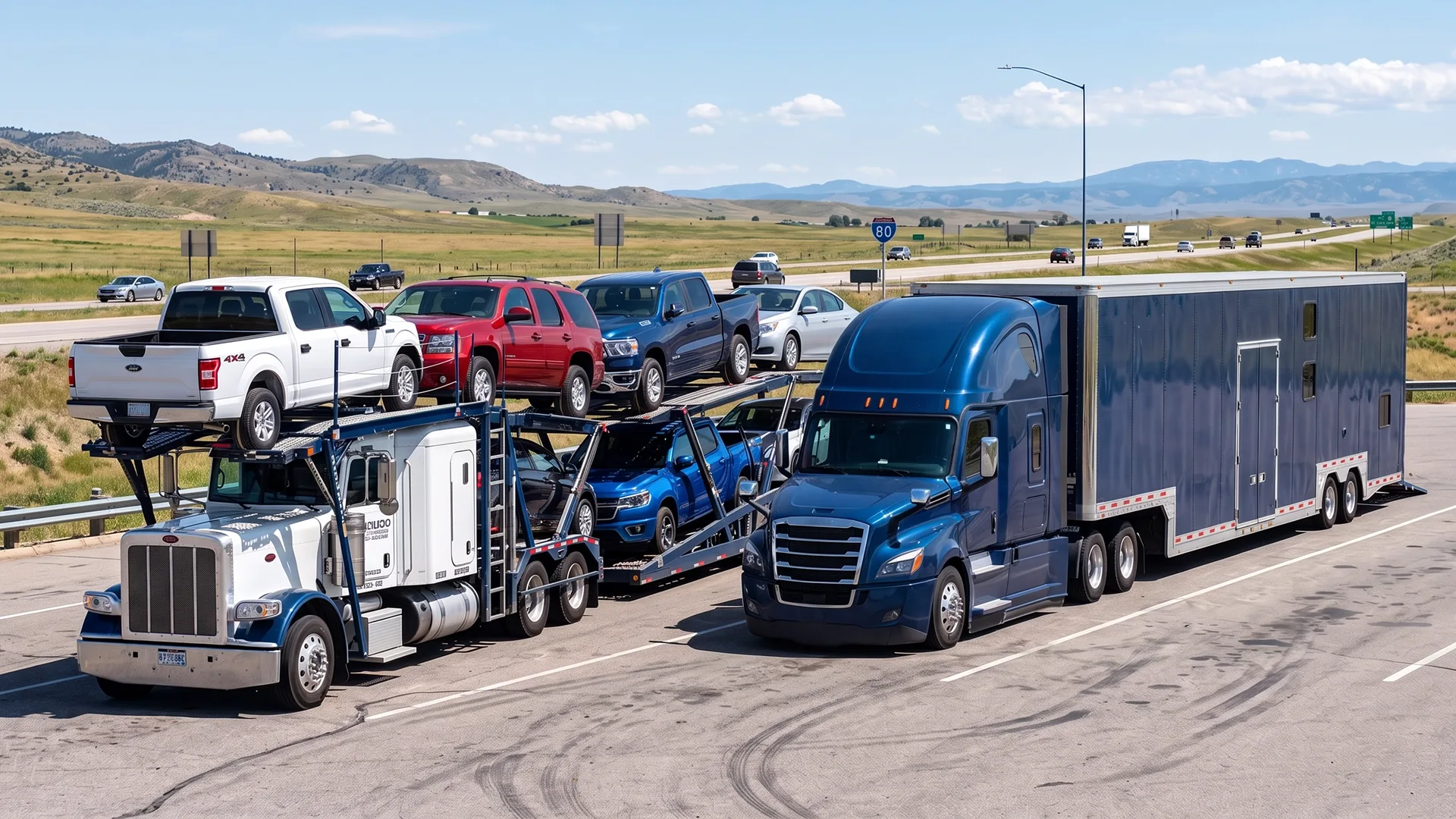
The open carrier is the two-level rig often seen traveling the interstate, loaded with seven to ten cars, and is the industry's default car transport type. One truck hauling multiple vehicles spreads fuel, driver pay, and insurance costs across a full load, which lowers each customer's share. Many trucks are also open on the road, making them the easiest to schedule on short notice.
The tradeoff is that open carriers do not shelter the vehicles. The car rides through rain, road grime, and whatever the truck ahead throws back. Real damage is uncommon, and the usual consequence is a car wash at delivery, so this form is best suited for daily drivers.
Some companies offer a top-load request that places your car on the upper deck, above most road debris and clear of any fluid that might drip from a car on an overhead rack.
Enclosed Transport
Enclosed transport trailers are the second type of car carrier. They carry one to six vehicles that are protected by a roof and hard or soft sides. Weather, stones, and curious onlookers stay outside.
Enclosed operators are often loaded using hydraulic liftgates rather than steep ramps, which is important for lowered sports cars and restored classics sitting close to the ground.
The enhanced protection, fewer vehicles per load, and smaller fleet of enclosed transport trailers make it 40 to 60 percent more expensive than open carriers.
Enclosed service is the preferred auto transport option for certain vehicle types: collector cars, exotics, fresh restorations, and any car in which cosmetics are critical. Most enclosed carriers also have enhanced cargo insurance policies to provide better financial protection for the more valuable vehicles they haul.
Door-to-Door Service
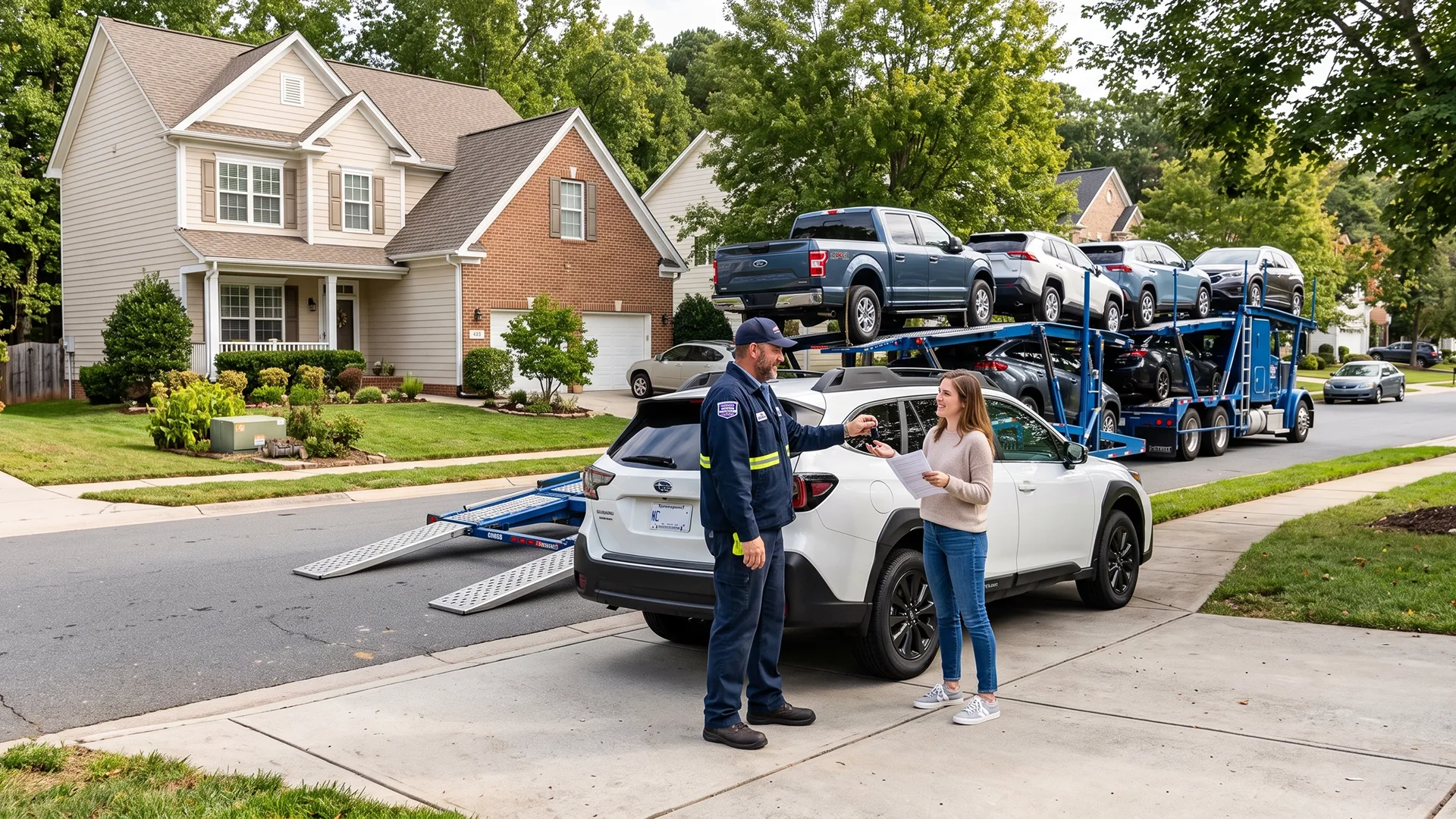
Door-to-door service is the industry standard for car transport types. That is, the driver picks up the car at your address and delivers it to the address you provide at the destination. Depending on your address, however, a full-size car hauler may not be able to reach those locations legally or safely. Narrow residential streets, low branches, weight-restricted roads, and gated communities may force the handoff to occur in a nearby parking lot. In industry terms, that still counts as door-to-door.
The advantage of door-to-door service is convenience. Nobody needs to drive to a depot, and the car only changes hands at pickup and delivery.
Terminal-to-Terminal Service
With terminal service, you leave the car at a carrier or partner lot and retrieve it from another lot near your destination. Terminal-to-terminal service allows carriers to build loads around their depots or hubs, which can lower the price and shorten the wait for a truck. Terminal-to-terminal can also lower the shipment price by 20 to 30 percent on some routes, though you may need to pay for your personal transport to and from the terminal.
The downsides are practical. Terminals keep business hours; the car may sit a day or two before loading or after arrival, and you may incur storage fees if you don't pick up your car within their window. Also, terminals cluster around major metro areas, so the option works best when both ends of the trip are near a major city.
Expedited Shipping
For a standard order with auto transport types of vehicles, your job is posted to a load board, and a carrier accepts the job when the price and route suit them. That typically happens within a few days, or it can drag on if your origin or destination is off the beaten path.
Expedited service moves the order up the line by paying above the going rate so a driver already planning to travel your route takes it sooner. Expedited service speeds up the pickup, not the trip itself. Federal hours-of-service rules limit property-carrying drivers to 11 hours behind the wheel inside a 14-hour on-duty window, and weather, traffic, and other factors affecting the carrier en route still apply.
Expedited service can cost 30 to 50 percent more, and no one can honestly promise a delivery date. However, on shorter hauls with fair weather, you can usually expect on-time delivery. If you need your car delivered by a particular date, ship it earlier.
Other Options
Several other auto transport options exist based on vehicle type or transport method.
- Inoperable vehicle transport. A car that doesn't start, steer, or brake needs to be winched onto the trailer, and the carrier needs to know ahead of time, so it sends the right equipment. Inoperable vehicles that do not roll or steer must be lifted onto a flatbed trailer.
- Rail. Amtrak's Auto Train carries you and your car nonstop between Lorton, Virginia, outside Washington, D.C., and Sanford, Florida, near Orlando. The Amtrak service covers only one route, and you must ride along.
- Ocean. A car bound for Hawaii, Alaska, or Puerto Rico travels by roll-on/roll-off vessel or in a container and usually arrives at a port, not your driveway.
- Air. Flying a car is possible, but a domestic move can run into five figures.
Most shippers use open, door-to-door, standard scheduling. It is the cheapest option and the best choice for the typical household car. Step up to enclosed when a car's value or condition calls for it, choose a terminal when your schedule is flexible and you live near a hub, and pay for expedited only when a firm deadline makes the premium cheaper than missing it.
How Nexus Helps Get You Where You're Going
When moving to a different state, you may need help moving a vehicle to your new home, and managing that process is our core business. Nexus Auto Transport is a leading broker with a nationwide network of vetted carriers experienced in all aspects of vehicle transfers. Contact us for a quote and see how our 3-step process makes it easy for you from start to finish.
Use our car shipping calculator for a free quote: https://nexusautotransport.com/car-shipping-calculator/
Comparison of Auto Transport Methods
Transport Type |
Price Level |
Protection Level |
Best Suited For |
|---|---|---|---|
Open Car Hauler |
Lowest. The industry’s baseline |
Basic. Cara exposed to weather and road debris. Cargo limits run $100,000 to $250,000 per load |
Daily drivers, tighter budgets, and short-notice bookings, since open carriers are easiest to schedule |
Enclosed Car Hauler |
Higher. About 30 to 60% above open |
Highest. Shielded from weather, debris, and onlookers, often loaded by liftgate. Cargo limits run $250,000 to $1 million+ per load |
Classic, exotic, luxury, freshly restored, lowered, or modified vehicles, and cars worth more than an open carrier’s policy would pay |
Door to Door |
Standard rate; most quotes assume it. Terminal service can cost 20 to 30% less |
Depends on the trailer chosen (open or enclosed). Fewest handoffs, with no time in a storage lot |
Most shippers, especially tight schedules, high-value cars, and anyone without a terminal nearby |
Expedited Shipping |
Premium. A guaranteed pickup costs 30–50% more; dedicated single-car run costs more still |
Depends on the trailer chosen. It speeds up pickup, not the trip, since drivers are capped at 11 driving hours in a 14-hour window |
Firm deadlines such as a lease end, home closing, move-out date, or military report date |
FAQs
How do I prepare my vehicle for open versus enclosed transport?
The prep work is the same for both.
- Wash the car so existing scratches and dents are easy to see
- Photograph every panel, the roof, the wheels, and the odometer in daylight. The photos and the condition notes on the Bill of Lading are your evidence if you ever file a claim.
- Leave about a quarter tank of fuel.
- Remove or disable toll transponders, turn off the alarm or give the driver instructions, and tell the company about any mechanical quirks.
- Remove all personal items from the vehicle.
- Fix or disclose fluid leaks, since on a two-level trailer your car may be parked above someone else’s.
What insurance coverage is included during interstate car shipping?
Interstate for-hire carriers must file proof of public liability insurance with the FMCSA, and the minimum for trucks hauling general freight is $750,000. That policy pays for harm the truck does to other people and their property. It does not cover the cars on the trailer.
Your car is protected by the carrier's motor truck cargo policy. Car haulers have no federal cargo floor, so limits come from market practice and broker and shipper demands, often $100,000 to $250,000 per load on open trailers and $250,000 to $1 million or more on enclosed carriers. Keep in mind that the limit usually applies to the whole load, not to your car alone.
Carrier cargo policies often exclude pre-existing damage, personal items inside the car, mechanical failure, and some weather events. Your personal auto policy's comprehensive and collision coverage may apply during transport, subject to your deductible, so call your insurer before the car ships. Also, ask for the carrier's certificate of insurance, check its authority and insurance filings on the FMCSA Company Snapshot, and write any new damage on the Bill of Lading before you sign at delivery.
Can I ship personal belongings inside my vehicle during transport?
Usually a little (up to 100 pounds), with conditions, and always at your own risk. Two issues drive the limits. First, car haulers are not authorized to move household goods. Second, their carrier cargo policies cover the vehicle, not what is inside it, so a laptop stolen from the back seat isn't the carrier's responsibility. Ocean shipments are stricter, and some carriers will not accept any personal items at all. Read their terms before you pack.
How does terminal-to-terminal shipping compare to door-to-door services?
Door-to-door is built around convenience; terminal-to-terminal trades some of that convenience for a lower price and more scheduling flexibility.
Compared to door-to-door, terminal-to-terminal:
- Requires dropping off and picking up the vehicle at a terminal.
- Costs 20 percent less or so/
- Requires travel time and some cost to go to and from the terminal.
- Cars are picked up during terminal business hours, and storage fees may apply if you don't pick them up promptly.
- Cars may be moved multiple times at the terminal.
- Primarily serves customers located near terminals in major metro areas.