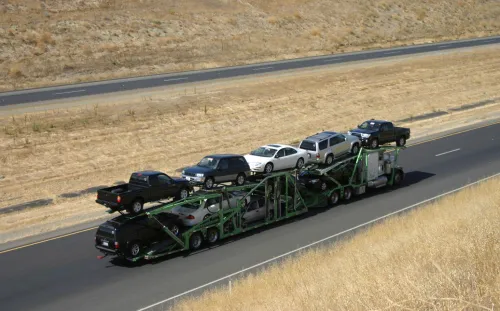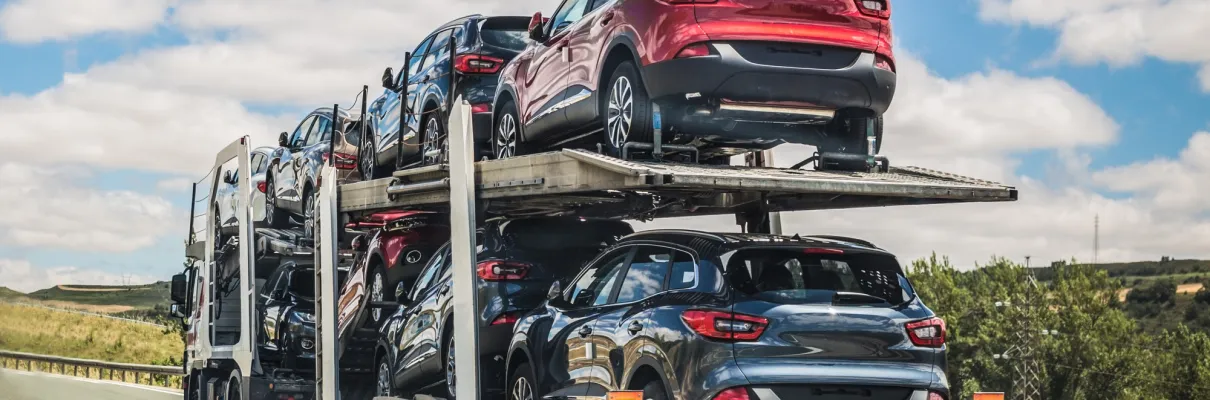

Regardless of where you live, you have seen long-distance car carriers hauling vehicles around the country. People tend to notice open carriers more than enclosed carriers because the latter have roofs and side panels that better protect the vehicles being shipped, which are often higher-value or classic vehicles.
Some people take the DIY approach and move vehicles themselves using rented trailers or tow bars. However, the options are often impractical for major interstate or cross-country moves, particularly if you lack experience hauling a trailer. Instead, most rely on professional auto transport companies to safely handle long-distance vehicle shipping.
What Is Long-Distance Car Transportation?
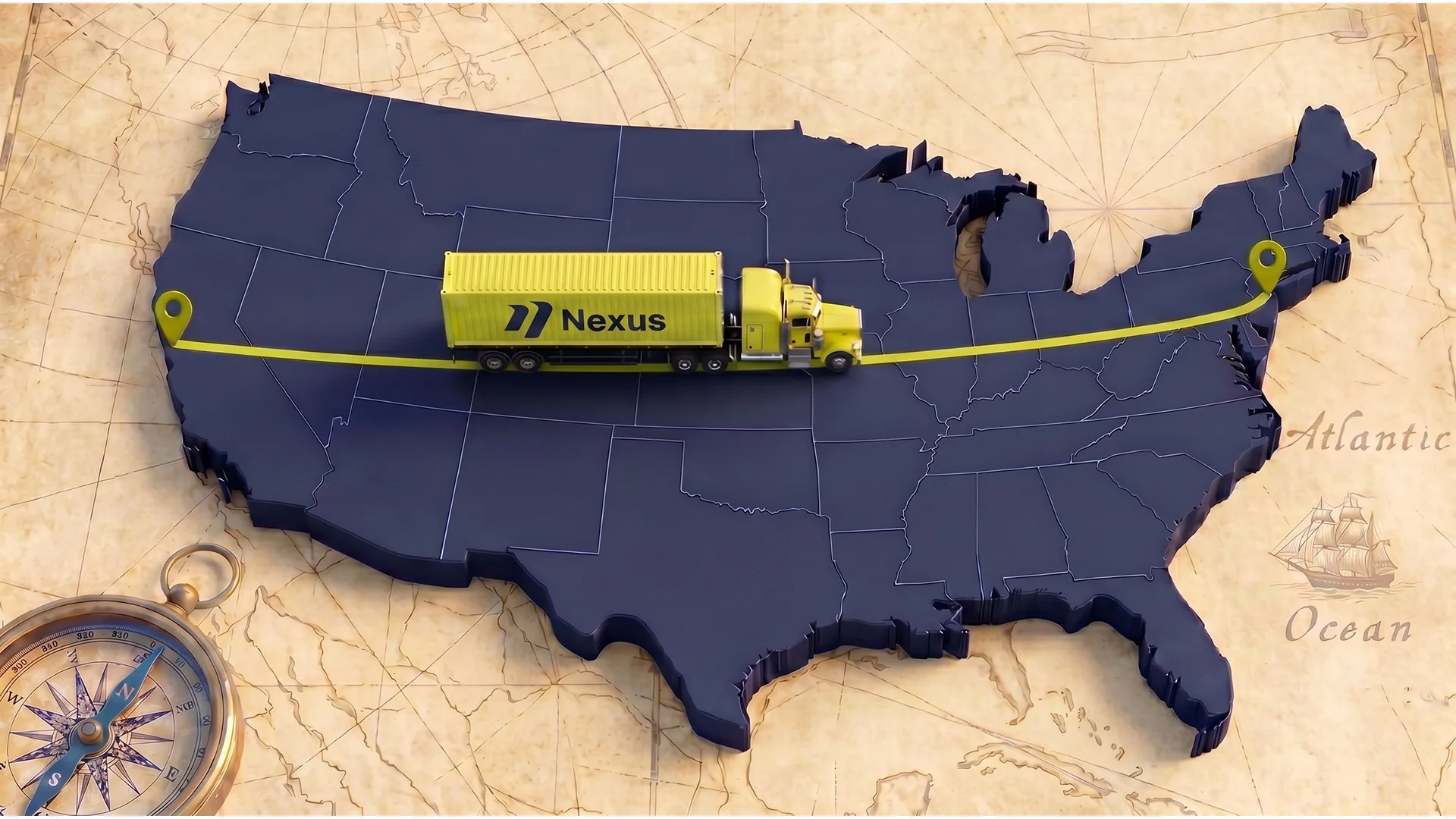
Long-distance auto transport refers to shipping a vehicle across a large state, across state lines, coast to coast, or internationally. The best long-distance car shipping companies offer full-service, door-to-door auto transport, which simplifies the process for the customer.
When you need long-distance car transport services, look for an established company like Nexus Auto Transport, which is known for safe, secure, and efficient vehicle shipping.
What Are the Benefits of Long-Distance Car Shipping?
Long-distance car shipping offers advantages compared to driving or towing a vehicle yourself. Key benefits that customers value include:
Saves time and eliminates long road trips
Reduces fuel, lodging, food, and travel expenses
Protects your vehicle from wear, tear, mileage, and breakdown risk
Efficient and convenient, especially with door-to-door service
Quick booking process, while professionals handle the logistics
Enclosed transport protects luxury, classic, or vintage vehicles from debris and weather
Often more cost-effective overall than DIY transport
What Services Do Long-Distance Car Transport Companies Provide?
Although we often refer to the service as car shipment or transportation, it applies to a range of vehicles, including:
Daily drivers, luxury cars, classic cars, EVs
Inoperable vehicles
Motorcycles, golf carts, and specialty equipment
Many companies also coordinate international shipments and military or corporate relocations.
How Much Does Long-Distance Car Shipping Cost?
If you’re searching for affordable long-distance car transportation, the table below reflects updated national averages for 2026. These prices apply to open carrier transport for a standard-sized passenger vehicle under normal conditions.
Average Cost of Long-Distance Car Transport
Shipment Distance (Miles) | Avg. Cost per Mile | Sample Distance & Price |
0 to 500 | $1.50 to $2.00 | 300 mi = $450 to $600 |
501 to 1,000 | $1.00 to 1.50 | 750 mi = $750 to $1,125 |
1,001 to 1,500 | $0.75 to $1.00 | 1,250 mi = $940 to $1,250 |
1,501 to 2,000 | $0.60 to $0.75 | 1,750 mi = $1,050 to $1,310 |
2,001 to 2,500 | $0.55 to $0.65 | 2,250 mi = $1,240 to $1,460 |
2,501 to 3,000 | $0.48 to $0.60 | 2,750 mi = $1,320 to $1,650 |
Note: Prices vary with vehicle size, operability, route demand, seasonality, fuel costs, and pickup/drop-off accessibility. Enclosed transport typically costs 30–60% more than open transport.
Tips for How to Transport a Car Long Distance
Navigating long-distance auto transport can seem intimidating if you have not used these services before, so here are nine tips to help you through the process. Following these tips will help ensure you receive the services you need and want at a fair price.
1. Give Yourself Plenty of Lead Time
People sometimes don't think about transporting their vehicle, but delayed booking during peak seasons, such as summer and snowbird months, can limit carrier availability and increase your price.
Booking two weeks in advance is the norm, but increase that to four to six weeks if you need to ship:
In the summer or during snowbird season
To or from a remote location
Using enclosed rather than open transport
Advanced booking also gives you time to understand how the car-shipping process works and avoid unnecessary stress.
2. Comparison Shop Car Shipping Companies
Start by requesting quotes from multiple companies servicing your route. Reputable auto transport companies offer free, no-obligation quotes.
Be wary of companies that require payment to provide a quote. Use the quotes as a starting point, since unusually low prices should be a red flag, and consider each company’s reputation for service delivery.
3. Verify Companies You’re Considering
Always verify that a car transport company is properly licensed and insured.
Check the Better Business Bureau (BBB) for reviews and complaint history
Look up the company’s USDOT number on the Federal Motor Carrier Safety Administration website
The Federal Motor Carrier Safety Administration requires all interstate auto transport companies to be registered and compliant.
4. Inquire About Insurance Coverage
Licensed auto transport carriers are required to carry cargo insurance, but coverage limits vary. Ask for a copy of the policy and review it carefully.
It is also a best practice to consult your personal auto insurance provider to understand potential coverage gaps and overlaps. Supplemental insurance may be available if additional protection is needed.
5. Choose the Type of Shipping Service
Two key choices you need to make when considering your car transportation options are open versus enclosed carrier and door-to-door versus terminal-to-terminal shipping:
Open carrier car transport is the most popular and affordable option. While vehicles on open carriers are exposed to weather and road debris, the risk is like that of everyday driving. This option is the most popular and best for most vehicles.
Enclosed carrier car transport is used for classic, exotic, luxury, or high-value vehicles because the trailer or carrier has a roof and sides that provide maximum protection from weather, dirt, and road hazards.
and
Door-to-door shipping offers maximum convenience, with pickup and delivery as close to your address as legally and safely possible.
Terminal-to-terminal shipping involves dropping off the car and picking it up from a trucking or transportation terminal. More common in the past, customers now choose door-to-door shipping for the convenience, faster delivery, and to avoid potential storage fees.
Long Distance Transport Options Comparison
Factor | Open Transport | Enclosed Transport |
Cost | Lower | 30 to 60 % higher |
Protection level | Lower | Roof and panels protect against weather the road debris |
Best for | Everyday vehicles | Higher value and classic cars |
Availability | Better due to more carriers | Worse, especially to remote areas |
Delivery time | Faster, up to 7 days faster on cross country shipment | Slower |
6. Understand the Shipping Process
Once booked, your pickup and delivery windows are determined by carrier availability and route logistics. Urban routes are typically less expensive than rural ones.
You or a designated representative must be present at pickup and delivery to inspect the vehicle and sign the Bill of Lading, which is critical if damage occurs en route.
Many companies now offer shipment tracking updates for added peace of mind.
7. Maintain Realistic Expectations
Most shipments arrive within 6 to 12 days, though cross-country routes may take longer depending on weather, traffic, and carrier schedules.
Reputable auto transport companies provide estimated windows, not guaranteed dates due to variables beyond their control.
8. Inquire About Payment Options and Documentation
Most auto transport shipments involve:
An initial booking payment
A remaining balance due at delivery
Payment methods vary, so you should confirm acceptable forms of payment in advance.
Required documentation typically includes:
Vehicle title or registration
Proof of insurance
Government-issued photo ID
Additional authorization may be required for shipment to Hawaii or international destinations.
9. Prep Your Car for Transport
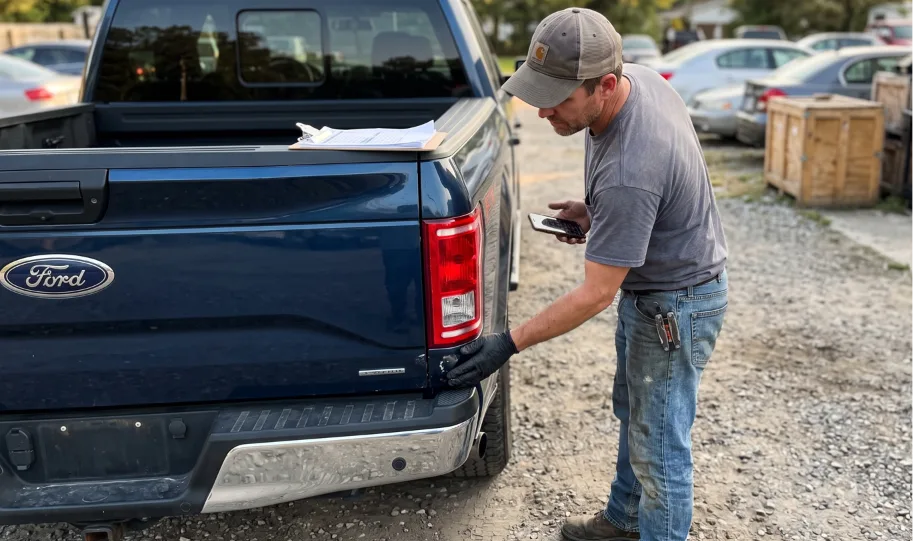
Remove all personal items from your vehicle. Personal belongings are not insured and may cause weight or safety issues. Additional prep tips:
Wash your vehicle before pickup
Check tire pressure, fluid levels, and ensure there are no leaks
Keep fuel at approximately one-quarter tank
Proper preparation helps ensure a smooth and timely pickup.
Long Distance Car Transport Preparation Checklist
Stage | Key Tasks | Why It Matters |
Before Booking | Obtain several quotes and verify insurance coverage | Ensure competitive pricing and coverage if damage occurs |
Before Pickup | Wash car, check for battery and for leaks | Washed car reveals damages, leaking or inoperable car may be refused |
During Transport | Pay attention to messages and keep in touch if | Keeps you aware of delays or delivery issues |
At Delivery | Have documentation and payment as needed | Carrier will not release car without them |
Long-Distance Car Transportation
These nine tips are a guide for how to transport a car long-distance. They will go a long way to ensuring your long-distance car transportation experience goes smoothly, efficiently, and stress-free.
Ready to ship your vehicle? Get a free, no-obligation car shipping quote today and let Nexus Auto Transport handle the journey.
FAQs
How do I find out where my car is during long-distance transport?
The top auto transport companies provide customers with consistent updates on the status of their vehicles through email, text, and their customer support centers. However, the complications and requirements of interstate shipping do not allow real-time tracking. For example, it is illegal for drivers to use their phones while their vehicles are moving.
Be sure to confirm with your car shipping company in advance how they will keep you informed of your car's status.
How far in advance should I book long-distance auto transport?
Booking far in advance does not save money or otherwise help the customer in the auto transport industry. The general rule of thumb is to book 2 to 4 weeks in advance of your desired pick-up date. However, you should book several weeks earlier if you are coming from or going to a remote location, during peak seasons (summer and snowbird migrations), or if you plan to use an enclosed carrier, since there are fewer of them on the road.
What documents do I need for long-distance car shipping?
For a standard domestic shipment, you will need:
Government-issued photo ID, such as a driver's license
Vehicle title/registration
Proof of insurance
Bill of Lading, which the carrier generates at pickup.
If someone else will sign on your behalf at pickup or delivery, carriers often require a notarized authorization letter.
Can I pack personal items in my car for long-distance transport?
The car carrier's transport insurance generally does not cover personal belongings left in the vehicle. Most auto transporters require you to remove personal items from your vehicle for insurance purposes and to minimize weight.
How do I prepare my car differently for long distance shipping vs short distance?
There are few, if any, differences in how you prepare your car for a short versus a long trip. Key preparation steps include:
Wash your car to make damage more visible at inspection
Document pre-existing damage with photos
Remove personal items (most carriers prohibit or won't insure them)
Leave the fuel tank at one-quarter full (enough to load/unload, while not adding extra weight)
Disable toll tags and parking passes to avoid inadvertent charges
Retract or remove antennas, spoilers, or
Check for fluid leaks (carriers can refuse leaking vehicles)
Check the battery to ensure the vehicle is charged