
The moment you have a new baby, everything changes. Whether you gave birth to your bundle of joy or are joining the ranks of proud adoptive parents, you want to keep those tiny humans safe. It is natural to be overprotective at first, especially when you’re new to the caretaking situation.
The problem is that a car that once felt safe cornering around town starts to look a little different. The lack of airbags, concerns about fitting a car seat, and worries about stroller storage all start to make you reconsider which vehicle you should own.
That change creates pressure. You want to know what is the safest car to ensure your baby is protected, but also what balances your budget, space, reliability, and long-term practicality the most. That is where paying close attention to features pays off.
Why New Parents Think About Vehicle Safety Differently
Over 3.5 million babies are born in the United States each year. To put that figure in perspective, there are over 298 million registered vehicles. That means there is a chance, albeit a small one, that you could end up in a fender bender with a baby on board.
You’re more likely to have an accident around the house or a baby with fussy eating habits than get into a serious accident, but when you’re in charge of a helpless baby, your fears compound. That is why parents think about what is the safest car differently than a college student or a business owner during their morning commute.
Parenthood changes things. You look at a vehicle on an auction site or visit a local dealer and start questioning:
Can I install a rear-facing car seat in the back?
What’s the best way to drive home from the birth center?
Does this make and model allow me to see blind spots in parking lots?
Can I load the kiddo into the car seat with a cover during rain or snow?
When you factor in the emotional side of having a baby, you look at life differently. There is nothing wrong with those feelings. They are instinctual and completely normal. The trick is to take those fears and anxieties and use that energy for good by doing your due diligence ahead of buying or shipping a vehicle home.
What “Safe” Actually Means in 2026
The good news is that a modern vehicle offers way more protection than something from the 1950s, 60s, or even the early 00s. Most fall into two categories: crash protection and crash prevention.
Crash protection is measured by organizations such as the IIHS (Insurance Institute for Highway Safety) and the NHTSA (National Highway Traffic Safety Administration). They look at things like frontal impact performance, child occupant protection, and roof strength to determine how well the vehicle “holds its form” in the event of a serious accident.
Crash prevention is the other category. That is where specialty features play a role in avoiding a potential accident. You’ve likely already heard of these types of features, such as:
Automatic emergency braking
Lane-keeping assistance
Blind-spot monitoring
Rear cross-traffic alerts
360-degree cameras
Adaptive cruise control
To put it another way, buying a used Volvo from out of state and having it shipped home because there are advanced safety systems may offer more peace of mind than a more affordable local option without those features.
Plenty of leading companies, like Tesla, Subaru, Honda, and Toyota, market these safety features to attract family buyers. Just remember, they are not replacements for proper, attentive driving, but they do help reduce errors on the road.
Why There Is No “Perfect” Family Vehicle
It’s also important to realize, when you’re learning about what is the safest car, that there is no 100% “best fit” solution. What works for a big family of 6 kids will be different from what works for a young couple adopting their first baby.
The safest vehicle you can purchase is the one that best fits your riding lifestyle, budget, and expectations. Safety ratings help you decide, but the final size and value depend on your unique needs.
Full-Size SUVs
Larger SUVs are often at the top of the safety rating charts for families because they are bigger, offer more cargo capacity, provide improved visibility, and make it much easier to install a rear-facing car seat.
Something like the Volvo XC90 or Toyota Grand Highlander will provide you with more than enough space and infotainment for longer drives or for navigating snow and wet roads. The trade-off is you’re going to pay more for parking, fuel, and maneuverability in denser urban areas.
Sensible Sedans
Many families overlook the power and advanced features of a midsize sedan like a Honda Accord or Hyundai Sonata.
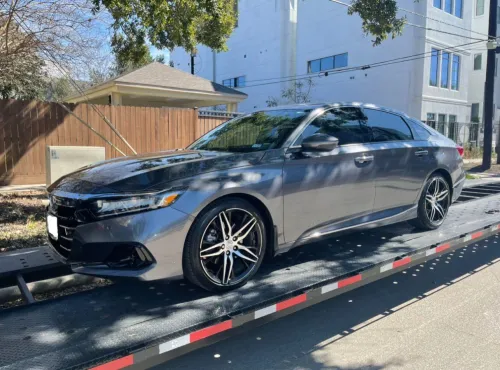
Midsize sedans like the Honda Accord, Toyota Camry, or Hyundai Sonata now include many of the same safety systems found in larger vehicles. The 2026 Honda Accord often appears on many top safety lists because it offers airbags, a frame, drivability, and sensors that families need.
You also get better fuel economy, easier parking, and lower ownership costs for a smaller sedan. The only trade-off is less storage for pets and strollers, so be sure to examine the trunk before you buy.
Compact SUVs
A much better compromise is to invest in a compact SUV. Something like the Subaru Forester or Toyota RAV4 will give you SUV visibility and practical storage, but also better fuel efficiency and easier handling.
If you’re a first-time parent wondering what is the safest car, go with a compact SUV. It is a decent upgrade that is often less expensive than a full-sized SUV. Plus, you can often find hybrid models at this level that offer more adaptability for longer road trips.
Family Car Safety Checklist for New Parents
Safety Factor | Why It Matters for New Parents | What to Check | Best Suited Vehicle Types |
Rear-seat crash protection | Babies and young children ride in the back seat | Review rear-seat and side-impact safety results | SUVs, compact SUVs, midsize sedans |
IIHS/NHTSA safety ratings | Independent ratings help compare real crash performance and safety systems | Look for IIHS Top Safety Pick/Top Safety Pick+ and strong NHTSA ratings | All vehicle types |
Automatic emergency braking | Helps reduce collision risk | Confirm it works at city and highway speed. | SUVs, compact SUVs, sedans |
Blind-spot monitoring | Helps parents change lanes safely | Check for side-mirror alerts and rear cross-traffic support | SUVs, minivans, sedans |
Lane-keeping assist | Helps prevent drifting | Test whether the system gently corrects or only warns | Sedans, compact SUVs, SUVs |
Car seat/LATCH accessibility | Makes proper car seat installation easier and safer | Check anchor visibility, spacing, and ease of reach | Compact SUVs, midsize sedans, minivans |
Rear-door width | Wider doors make it easier to lift a baby seat in and out | Open the rear doors fully and test with your actual car seat | SUVs, minivans, compact SUVs |
360° camera or rear cross-traffic alert | Helps reduce parking lot and driveway risks | Confirm camera clarity and rear visibility. | SUVs, compact SUVs, minivans |
Cargo space for baby gear | Strollers, diaper bags, groceries, and travel gear | Bring your stroller and test trunk space | SUVs, compact SUVs, minivans |
Smooth braking/handling | Predictable driving helps keep newborn trips calmer | Test braking, steering, ride comfort, and stability | Sedans, compact SUVs, SUVs |
Why Relocation and Vehicle Shipping Often Become Part of the Equation
While you’re considering which vehicle to purchase to ensure your “minion” in the back seat is safe, be sure to look at car shipping. Many buyers try to save on the total cost by buying out of state, but overlook how to get the vehicle home. When you have a new baby, you don’t want to leave and hop on a plane for a long road trip back home with your recent car purchase.
A much simpler solution is to trust a team like Nexus Auto Transport to get your vehicle back home safely. With clear pricing and nationwide door-to-door shipping, including expedited and enclosed delivery options, you can leave the coordination to the experts as you focus on your baby.
Explore our complete guide to car shipping services to better understand your options. That will help you budget time and money for moving to a new home, relocating for work, or getting closer to family so that the new baby has plenty of uncles, aunts, and cousins to swoon over them.
How to Choose the Safest Car for Your Actual Lifestyle
The best family vehicle you can get your hands on doesn’t necessarily have the highest safety rating for your needs. You have to consider your lifestyle. Think about:
Space needed for storage and daily life
Driving style (city, suburban, rural, heavy snow, rain, etc.)
How easy it is to install and move a car seat
Parking and commuting
How long do you hope to own the vehicle
Rear seat accessibility with LATCH anchor access for car seats
Visibility and surround view (360°) camera support for blind spots
Smooth braking and stable steering
Rear seat ventilation and charging ports
Hands-free doors
You want the safe vehicle that actually supports your daily routine, not a generic idea of safety. Bring your stroller along to the dealer to test out the trunk. Ask the seller questions about space, convenience, safety features, and accessibility. Something as simple as a rear hook to hang a baby toy may make all the difference in your decision to buy that compact SUV from Seattle and have it shipped home.
Building Confidence for the Next Chapter
When you have a growing family, you change how you think. It’s logical to start looking at your car and wonder how you’ll get your baby to doctor’s visits, playdates, swimming lessons, and around the neighborhood so they finally take a nap.
The trick is to explore all your options so you can find a safe vehicle that suits your daily habits and family needs. Once you do, trust a professional carrier to ship back to your driveway. That way, you have more time hanging out with that little one staring back with excitement in their eyes.
FAQs
How should parents compare crash-test ratings before choosing a family car?
Both the NHTSA and the IIHS have crash-test ratings. You want something with a 5-star designation or a “top safety pick+” description. However, when you’re comparing, make sure the vehicles are in the same weight class. Comparing an SUV to a compact car isn’t the same as comparing an SUV to another SUV.
Are SUVs always safer than sedans for families with a baby?
Not necessary. It depends on where you live, how you drive, and your expectations. What you can say is that an SUV has better visibility and adapts to rougher roads or weather conditions than most sedans.
Which safety features matter most for driving with a newborn?
Airbags, proper restraints, built-in indicators and sensors, LATCH system for car seats, and adaptive driving support, such as early warning systems for potential impacts.
How can parents check if a car seat will fit safely before buying a car?
The easiest way is to take your car seat to your local dealership and see how it fits in floor models. You can also consult with local certified Child Passenger Safety Technicians, Doulas, and Midwives. They have a ton of experience and insight.
When should families consider shipping a car instead of driving it during a move?
If you have a newborn, you don’t want to take a long road trip. It’s much easier on your family to wait until they’re ready to fly and then travel ahead of your shipped car. That will save you a lot of hassle while on the road.