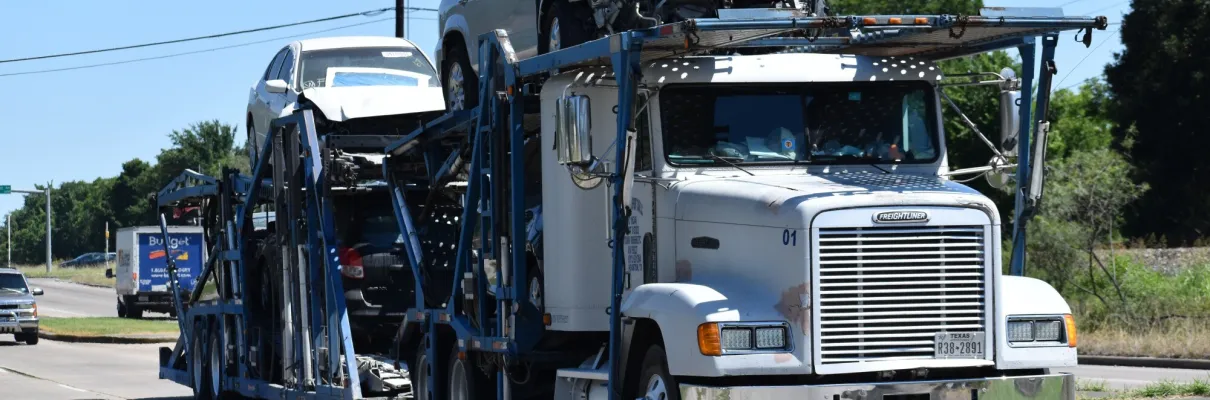

Auto transport insurance protects against unforeseen events during transit, such as damage or loss, ensures compliance with transport regulations and laws, and provides vehicle owners with peace of mind.
A key to understanding insurance and liability coverage for auto transport is to dispel two misconceptions. One is that your personal policy covers your vehicle during transport, and the second is that every carrier offers the same insurance protection and that it fully covers your vehicle's value. Neither is true.
Besides clearing up these misconceptions, our guide highlights different insurance options, explains how to verify and understand the carrier's coverage, and discusses how to navigate limits, among other topics.
Continue reading to get up to speed on this essential topic.
Basics of Auto Transport Insurance
One or more car transporter insurance policies may cover your vehicle while in transit, including the carrier's insurance, your personal vehicle policy, and supplemental or gap coverage you buy to cover the vehicle while in transit.
Auto transport carriers must offer insurance by law. Carriers directly transport your car with their own truck fleets, whereas brokers connect customers to carriers through their networks. Carriers in the US must have liability insurance that covers damage to third parties (other vehicles, pedestrians, or property). Most carriers also offer cargo insurance that protects the goods they transport, such as your car. However, cargo insurance is not always required, and the coverage may not fully cover your vehicle.
The auto shipping companies typically have $100,000 to $150,000 in total coverage for open carriers and $250,000 to $300,000 for enclosed carriers. Enclosed carriers generally haul fewer, but more valuable, vehicles, which contribute to the coverage difference. Importantly, those coverage limits are for all the vehicles on a carrier or trailer, which may leave your car underinsured without separate coverage.
Open Transport vs. Enclosed Transport Insurance Coverage Comparison
Open Auto Transport |
Enclosed Auto Transport |
|
|---|---|---|
Average Cargo Insurance Limits |
$100,000 to $150,000 total coverage |
$250,000 to $300,000 total coverage |
Protection from Weather Elements and Road Hazards |
Limited |
Extensive |
Suitability for High-Value and Classic Vehicles |
Not well suited |
Preferred |
Risk of Divided Coverage Shortfalls |
More vehicles per trailer and lower total coverage increases divided coverage risk |
Fewer vehicles per trailer and higher total coverage reduces divided coverage risk |
Impact on Final Shipping Premium |
Lower cost, but higher risk |
Higher cost, but lower risk |
Additional Types of Auto Transport Insurance
While your personal vehicle insurance policy may cover damages or loss during transit, not every policy does so. It is essential to check with your provider in advance to determine whether your policy includes auto transport coverage and the protection levels it provides.
You should also consider paying for supplemental shipping insurance through your carrier. Often, they offer third-party policies that cover damages beyond the carrier's standard limits. You may also obtain gap insurance through the carrier, a broker, or a third party.
Understanding Deductibles and Choosing Coverage Limits
The deductible in understanding insurance and liability coverage for auto transport is the amount you pay out of pocket before your insurance coverage kicks in. Car shipping deductibles range from $200 to $2,000, with $500 being the norm; they only apply if the carrier's insurance does not fully cover the damage.
Cargo companies generally offer complimentary insurance, but it may not fully cover your vehicle because the insurance value is divided among all the vehicles on a carrier's trailer. So, a carrier with eight vehicles and $100,000 in cargo insurance provides $12,500 coverage per vehicle, which is too low for high-value vehicles, such as classic or luxury models.
The shipping distance and route also impact auto transport costs. Longer shipping distances increase the likelihood of damage, and certain geographic areas are prone to harsh weather or crime.
Seasonal differences for auto transport insurance requirements also play a role. Insurance prices are generally higher during the peak season from June to August. Although winter brings inclement weather, lower auto transport demand tends to lower insurance costs.
When choosing the coverage limit for a vehicle shipment, start by considering your vehicle's value. Drivers with more valuable cars often choose enclosed transport, as this shipping method better protects the car and offers higher average coverage limits than open carriers.
What's Typically Covered
When your car is being transported, the car transporter insurance is primary and typically covers risks such as:
- Road hazards (e.g., potholes or flying debris)
- Accidents or collisions
- Damage during loading or unloading.
Your personal policy may provide coverage for damage beyond the auto transport insurance requirements, from weather, theft, or vandalism beyond that handled by the carrier's insurance. However, you likely need a comprehensive policy for this protection, and you should always confirm your coverage in advance with your insurance provider.
Exclusions and Limits
Vehicle transport insurance can be tricky, so it is best to verify all exclusions and limits when reviewing your auto-shipping coverage. For example, some carriers' cargo insurance covers damage from weather, such as hail, but extreme weather events may be considered "acts of God" and are not covered.
The carrier's insurance generally does not cover normal wear and tear during your car's journey, damage caused by a vehicle defect, your personal items in the vehicle, or electric vehicle batteries unless they are damaged in an accident.
Many carriers require you to remove personal items before transport. If the carrier allows personal belongings, it often has weight limits to help it meet its maximum weight requirements.
How to Verify and Understand Your Coverage
Suffering vehicle damage during shipment is a headache, but being financially responsible for those damages because you didn't verify the carrier's insurance makes it worse. You can verify a carrier's insurance by requesting a copy of their insurance certificate. In addition, you can often find the carrier's insurance policy on the declaration or overview pages, which contain the agreement, exclusions, and policy limits.
Another method to verify the carrier's insurance coverage is to enter their USDOT (U.S. Department of Transportation) number or MC (Motor Carrier) number on the FMCSA (Federal Motor Carrier Safety Administration) website.
Once you understand the carrier's insurance coverage, review your options for additional insurance and balance the cost and coverage against your risk tolerance given your vehicle's value.
What to Know About Making a Claim
When filing an insurance claim, a key document is the Bill of Lading, which describes the condition of your car when you dropped it off and when you picked it up. Documenting your vehicle's condition at drop-off allows you to prove later that the damage occurred during transport.
You may be asked to provide additional documentation for a claim like:
- Driver interaction dates and times
- A copy of the terms and conditions
- Photo evidence
- Relevant email communication
- Payment verification
Carrier customers may file a claim with their personal insurance company, but the process is time-consuming. Since cargo insurance is based on the declared value of the transported vehicles, its claims often get resolved more quickly than those for liability insurance.
Conclusion
Your vehicle is at risk every time it leaves the driveway, whether you drive or ship it, and it needs proper insurance in both situations. To ensure your shipped vehicle is properly covered:
- Confirm your personal vehicle coverage
- Identify the broker's base and supplemental coverage options
- Determine whether coverage gaps exist
- Close any gaps through supplemental or third-party coverage
Following those four steps and documenting the situation, including any damage that occurs from drop-off to delivery, will provide peace of mind and help you avoid the financial impact of damage to your vehicle while in transit.
Nexus Auto Transport is a trusted leader in the auto shipping industry. We don’t just move vehicles; we protect them every step of the way. Our comprehensive range of insurance policies is customized to fit your specific needs, offering robust protection against various risks.
To explore transport and auto transport insurance costs for your vehicle, start by obtaining an instant quote from Nexus Auto Transport. Doing so will allow you to begin your new journey.
FAQs
What should I do if my vehicle's value exceeds the carrier's standard cargo insurance limit?
Your first step when considering auto transport should be to verify your existing auto insurance policy's coverage, which may handle car shipping under your collision coverage. If your vehicle's value exceeds the carrier's standard cargo insurance limit and your existing policy is inadequate, you can ask the carrier to cover the full value (at a higher cost). Other options include buying supplemental or gap insurance from a third party.
Can I purchase supplemental auto transport insurance directly through a shipping broker?
You can often buy supplemental auto transport insurance from your broker. However, you should ensure they work with a named, reputable insurance underwriter and will provide the policy document in advance.
How much time do I have to file a damage claim after my vehicle is delivered?
You typically have 1 week to 1 month to file, which should be stated in your contract. However, it is vital that you thoroughly inspect the vehicle upon delivery and note any damages on the Bill of Lading before signing. If you find damage after taking delivery, file your claim as soon as possible.
Do I need to keep my personal auto insurance active while my car is shipped?
Keeping your personal insurance active during shipping is almost always the right choice and may be required by your lease or lender. Your comprehensive insurance often covers issues that may be excluded by the carrier, such as vandalism, acts of God, and damage from road debris. Timing when to turn your personal insurance on and off during shipping can also be difficult.
Which specific documents are required to prove that my car sustained damage during transport?
The most important document to prove damage is a Bill of Lading that includes the damage noted at delivery and signed by the driver. Other documentation includes timestamped images and videos of the vehicle at drop-off and delivery. If you identify issues, notify the carrier and insurer by certified mail or email as quickly as possible (ideally, within 24 hours).