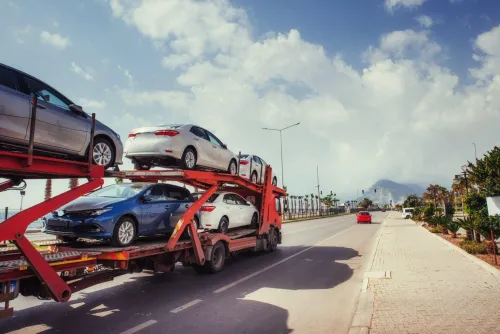
Most people shipping vehicles across the country have only a passing familiarity with the federal framework governing the industry. Yet, those regulations steer the industry, helping to protect everyone on the road and your belongings in transit.
The auto transport rules and regulations determine who is legally authorized to move your vehicle, the insurance coverage when something goes wrong, how the Bill of Lading protects your rights, and what federal rules say about what you can leave in the vehicle. Here is a comprehensive breakdown of the car shipping rules that matter when crossing the country.
Federal Authority Governs Interstate Auto Transport
Among the essentials of cross-country auto transport is that the movement of vehicles across state lines is regulated by federal law, specifically the Federal Motor Carrier Safety Administration (FMCSA). An interstate auto transporter must obtain operating authority from the FMCSA before hauling vehicles across state lines.
Carriers are issued an MC number (Motor Carrier number), authorizing the carrier to transport property for hire in interstate commerce. Carriers also need a USDOT number, used for safety monitoring and compliance reviews. Both numbers are public. You should verify your carrier's numbers on the FMCSA website.
If a company cannot provide an MC number or its FMCSA record shows an inactive or revoked status, it is operating illegally, and you have no federal protections if something goes wrong.
How the Industry Works: Brokers vs. Carriers
A carrier is a company that owns and drives the truck. A broker sits in the middle and helps find a suitable carrier for your shipment. Brokers do not own or operate their own trucks, but they have access to a nationwide network of carriers who do.
Most consumers book through a broker because brokers offer one point of contact, competitive pricing, and carrier coordination. The broker's fee is generally included in your quote, not shown as a separate line item.
Consumers can book a carrier directly, but doing so requires you to find a carrier planning to run the route you need, so it takes research and time.
FMCSA Insurance Requirements: What the Law Mandates
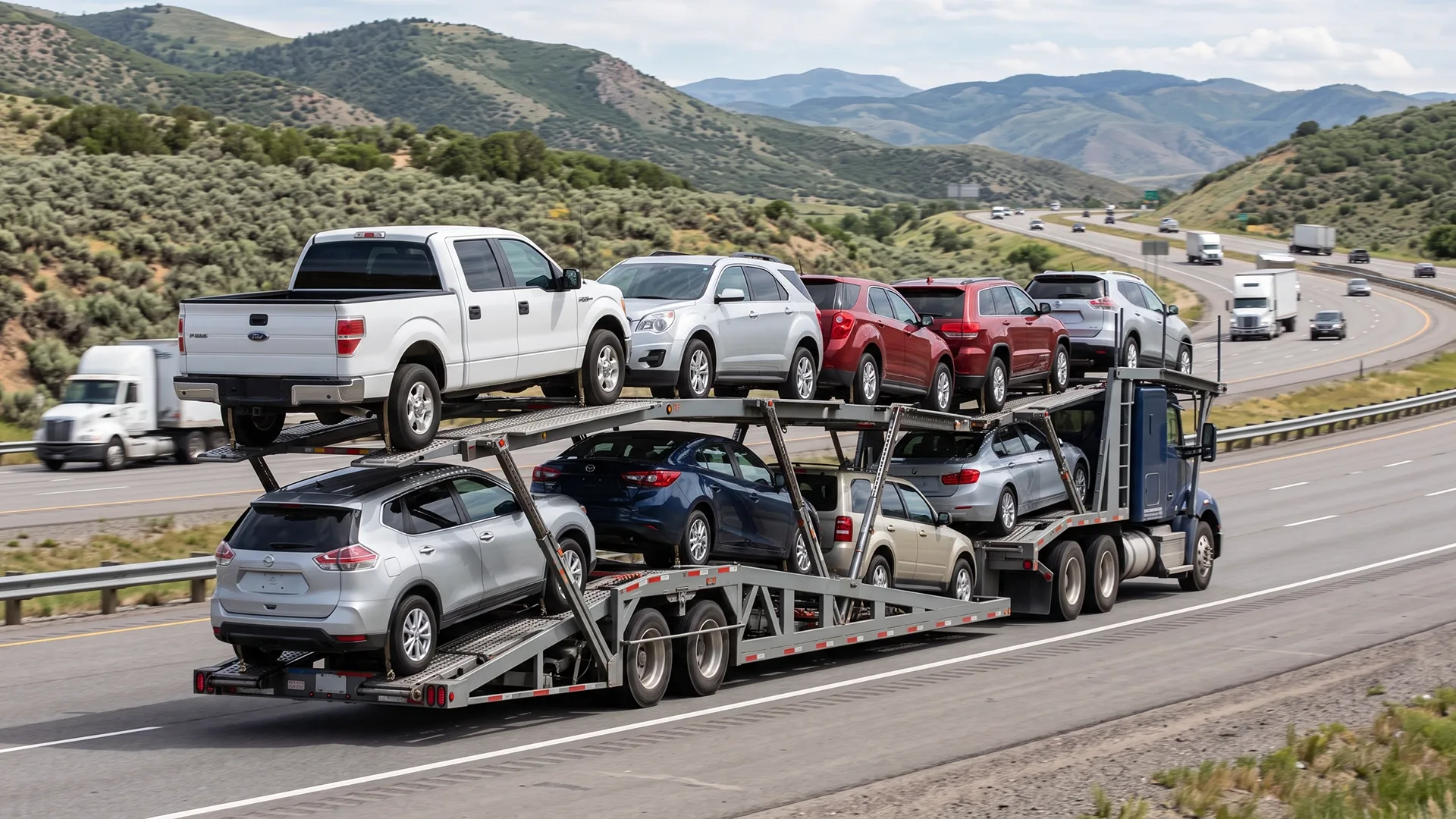
Among the auto transport rules and regulations are federal regulations that set minimum insurance requirements for auto transport carriers. Carriers hauling non-hazardous property, like motor vehicles, must have $750,000 or more in combined single-limit liability coverage. Liability insurance protects third parties (other drivers, property owners) in the event the carrier causes an accident but does not protect your vehicle.
Your vehicle receives protection from the carrier's cargo insurance, a separate policy line. The FMCSA requires carriers to maintain cargo insurance. Still, the requirement is quite low ($5,000 per vehicle or $10,000) so car carriers generally carry much more, and auto brokers often require carriers to carry $100,000 or more in cargo insurance.
The cargo coverage limits are aggregate, applying to all the vehicles on the hauler. A carrier with a $100,000 cargo policy and nine cars on the truck in a catastrophic accident will likely pay out far less than full value per vehicle once the claims are distributed.
You should also know that:
- Cargo insurance on open carriers frequently excludes weather-related damage. Hail, flooding, and wind events are classified as acts of God. The carrier's position is that weather is uncontrollable and the owner chose open transport.
- Cargo insurance on enclosed transport typically covers weather damage, since the vehicle is physically shielded. If your vehicle has meaningful value, this distinction matters.
- Personal auto insurance policies seldom cover damage that occurs during transport, though coverage for antique and high-end cars may include this coverage. Verify your coverage in writing with your insurer before shipping, not after damage has already occurred.
The Bill of Lading: Your Most Important Legal Document
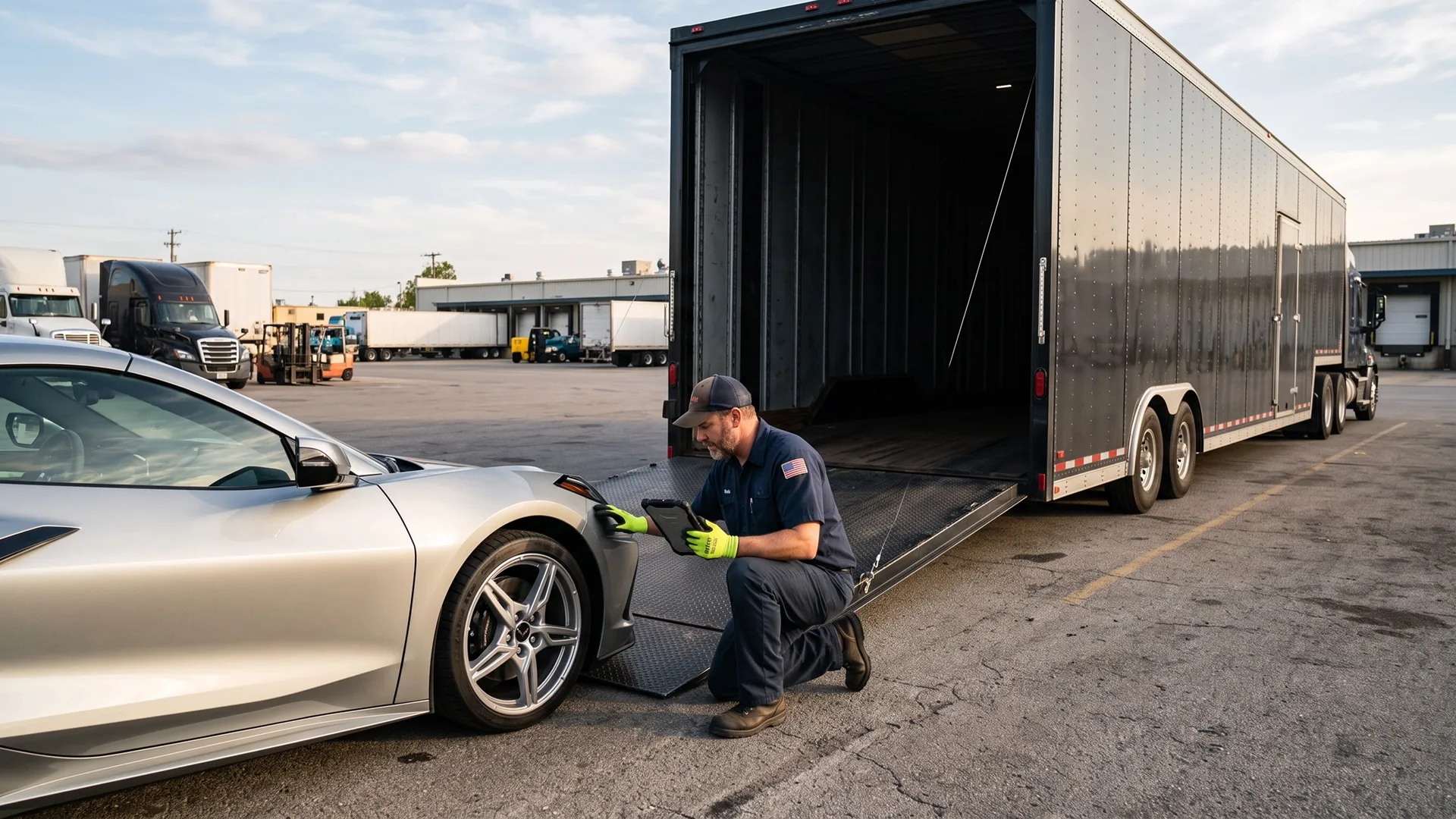
The Bill of Lading (BOL) is the core legal document for your auto transport transaction, by acting as a contract, a vehicle receipt, and an inspection record.
At pickup, the carrier's driver will inspect your vehicle and complete a vehicle condition report that is part of the BOL. The inspection papers show scratches, dents, chips, and blemishes. The driver signs the BOL, then you sign it, which confirms the accuracy of the driver's documented condition. If the driver missed a scratch or mischaracterized a condition, note it on the form before signing. Be sure to take photographs with timestamps at the time of pickup. They are your independent verification to confirm or dispute what the driver's inspection says.
At delivery, the inspection process occurs in reverse. The driver presents the delivery condition report. Before signing it, inspect the vehicle under good lighting. Damage that was not present at pickup should be noted on the BOL before you sign it. If you sign off on the BOL and later find damage, filing a successful damage claim becomes more difficult.
For documentation purposes, you should keep the:
- BOL
- Transport contract you signed with the broker or carrier (specifying price, route, pickup and delivery windows, and cancellation terms)
- Proof of the carrier's insurance
- Written confirmation of the carrier's MC and USDOT numbers.
If a dispute arises and you file a complaint with the FMCSA or pursue a civil claim, this documentation will be critical to your case.
Federal Rules on Personal Belongings Inside Shipped Vehicles
Auto transport carriers operating under FMCSA authority are licensed to transport motor vehicles, not household goods. Household goods carriers operate under a separate regulatory framework and have different licensing, insurance, and tariff requirements.
When a shipper places personal items inside a vehicle traveling by auto transport carrier, those items constitute unlicensed household goods transport. By law, car carriers may not knowingly transport household goods. In practice, many carriers tolerate a limited number of personal items in the trunk (up to 100 pounds), resulting in legal exposure in both directions.
For shippers like you, the primary concerns are:
- The lack of insurance coverage since cargo insurance does not cover personal belongings.
- Damaged, stolen, or lost items are not covered under the carrier’s policy, and probably not by your homeowner’s or renter’s policy either.
- Carriers also cannot exceed their legal weight limits. So, carriers who discover a vehicle packed beyond the informal limit may demand its removal or may decline the shipment entirely.
The legal infrastructure governing auto transport exists to protect consumers. The rules are not complicated, but they require that you take them seriously.
How We Can Help with Car Shipping
Understanding the essentials of cross-country auto transport helps customers ensure a smooth vehicle shipping experience. As a leading broker, Nexus Auto Transport works with a nationwide network of vetted carriers who meet our requirements and adhere to or exceed federal rules. Contact us for a quote, as our 3-step process makes it easy for you from start to finish.
Instant Quote: https://nexusautotransport.com/car-shipping-calculator/
Federal Limits and Requirements for Interstate Auto Transport
Regulatory Category |
Federal Limit or Legal Standard |
Impact on Vehicle Owner |
|---|---|---|
Carrier Maximum Weight |
80,000 lbs. gross vehicle weight (GVW) on interstate highways |
Oversized or heavy vehicles can push a loaded hauler over the federal GVW limit. Carriers may decline the shipment, require a special oversize/overweight permit, or charge. |
Maximum Vehicle Height Limit |
Loaded open auto haulers typically reach 13 to 13.5 ft. Vehicles taller than ~7 ft. cannot ride on the upper deck of a standard open carrier. |
Vehicles exceeding ~7 ft may be restricted to the lower deck, require enclosed transport, or need a special oversize permit. Expect higher cost and reduced carrier availability |
Driver Maximum Operating Hours |
Drivers are allowed a maximum of 11 hours of driving after 10 consecutive hours off duty; cannot drive after the 14th consecutive hour on duty; must take a 30-minute break after 8 cumulative driving hours; 60/70-hour cap over 7/8 consecutive days |
Cross-country auto transport requires mandatory rest breaks and off-duty windows, which is why cross-country delivery typically takes 5–10 days |
Mandated Carrier Cargo Insurance |
$750,000 in combined single-limit public liability coverage for carriers of non-hazardous property. Carriers must also maintain cargo insurance |
Cargo coverage is aggregate, shared across all vehicles on the hauler. In a multi-vehicle loss event, payouts can fall well short of actual vehicle value |
FAQs
What legal documents must I provide to the carrier before my vehicle is loaded?
There are no federal requirements, but most carriers expect the following documents at pickup:
- Government-issued photo ID
- Proof of vehicle registration
- Proof of insurance
- Lienholder authorization, if your vehicle is financed or leased
- Signed transport contract
- Bill of Lading (generated by the carrier at pickup)
How does federal broker bond regulation protect my shipment?
The broker bond is a specific and often misunderstood protection — useful in one type of situation, irrelevant in others. Here's how it works.
Every licensed freight broker, including auto transport brokers, must maintain a surety bond or trust fund of at least $75,000 as a condition of holding FMCSA operating authority.
The broker bond is a financial performance guarantee, not a damage insurance policy. It protects you against broker financial failure or fraud, such as an insolvent broker taking your deposit or full payment and never arranging for a carrier to transport your vehicle. The bond also protects carriers from brokers who route a shipment successfully but then fail to pay the carrier for completed work.
The broker bond does not cover physical damage to your vehicle during transport.
Are there legal penalties for shipping personal household goods inside a transported vehicle?
The FMCSA regulatory framework targets carriers and brokers, not individual shippers. A consumer who packs clothes and shoes in the trunk of a transported vehicle is not the regulated party and faces no direct federal fine for doing so. However, carriers face potential penalties for operating as an unlicensed household goods mover and potential weight violations.
Two categories of personal goods that create federal legal exposure for the shipper and carrier are:
- Hazardous materials (gasoline cans, propane, flammable liquids, or other items classified as hazmat)
- Undeclared firearms