
While most vehicles handled by auto transporters arrive at their destinations without incurring damage, the potential for vehicle damage exists from the moment you give your keys to the driver until they are returned to you at the destination. However, few people regularly ship their personal vehicle, so most have limited understanding of how insurance covers their vehicle during the loading and unloading processes, and while in transit.
In most instances, your vehicle is covered by three forms of insurance, including:
The vehicle owner’s personal auto insurance
The carrier’s cargo insurance policy
Supplemental or gap insurance you buy to cover your vehicle on this trip.
Whether your vehicle is covered by transport or personal insurance may appear complicated, but it becomes clearer once you understand the assumptions behind different forms of insurance.
Two Different Policies Doing Different Jobs
Your personal auto insurance policy, issued by GEICO, State Farm, Progressive, or another consumer insurer, covers you as the vehicle owner and driver. The collision portion of the policy handles instances when you hit something while driving or something hits your car. The comprehensive portion of the policy covers damage to your car when a fallen tree damages it in the driveway, when it is stolen or vandalized, or when it is damaged during a hailstorm.
The assumption in each instance is that your personal insurance covers your car when it is under your control, and the insurer calculates your insurance premium based on your vehicle, where you live, your driving miles, and your driving record.
Cargo insurance is a commercial insurance product carried by freight carriers and trucking companies, including vehicle haulers. Cargo insurance covers goods that are the responsibility of the carrier during transport. Whether a trucker hauls snack foods, refrigerators, or automobiles, they generally carry cargo insurance that financially protects the goods being hauled.

Does Personal Auto Insurance Apply During Vehicle Transport?
It may come as a surprise, but most personal auto insurance policies do not cover damage to your vehicle while under the control of a third party. Auto policies typically exclude coverage when the vehicle is under the "care, custody, and control" of someone else, such as while being transported, stored, or serviced or repaired. Instead, damage that occurs to your vehicle in those situations is covered by the service provider’s insurance.
These exclusions are in place because your insurer typically has not accounted for the risks of your vehicle being controlled by others. (Policies for collector cars or luxury vehicles may include in-transit coverage as an endorsement, because they more often are shipped rather than driven to their destinations.)
Of course, you should discuss with your insurance provider how your policy handles damage while being shipped before you finalize your transport contract. As part of the conversation, you should also discuss acquiring supplemental insurance, which we cover shortly.
It is worth noting that some moving companies also transport vehicles. Whether you receive coverage through their moving and car insurance is best left up to them to answer.
Carrier Cargo Insurance: The Aggregated Gap
Licensed auto transport carriers involved in interstate commerce are required by the Federal Motor Carrier Safety Administration (FMCSA) to carry minimum levels of insurance. The standard requirement for auto haulers is a minimum of $750,000 in combined single-limit liability coverage, which protects against bodily injury and property damage to third parties. Although not a federal requirement, carriers generally require carriers to carry specific levels of cargo insurance to cover the vehicles on their hauler.
While cargo insurance pays for physical damage to the vehicles in the carrier's possession, whether from an accident, a road hazard, fire, or other covered peril, it is important to understand two situations in which your car may not be fully covered.
Cargo insurance limits apply to the entire load, rather than per vehicle. That means a carrier with a $250,000 limit spreads that coverage across all vehicles being transported. In the event of a significant accident when hauling eight or nine vehicles, the combined damage to those vehicles may exceed the policy limits, in which case, your vehicle may not be fully covered.
Carrier Cargo Insurance: The Acts of God Gap
Like most insurance policies, cargo insurance comes with exclusions. Weather events such as hailstorms, floods, and windstorms are classified as "Acts of God,” and are often excluded from cargo coverage on open carriers. The thinking is that the carrier cannot control the weather and the shipper chose a transport method appropriate for standard conditions.
Applying the exclusion to your case, if you ship your vehicle on an open carrier and it sustains hail damage in Kansas, the carrier's cargo policy may deny the claim. Enclosed transport, which costs 30 to 60 percent more, provides physical protection from weather and often is covered by cargo insurance because your vehicle was shielded from the weather.
Cargo insurance in the auto transport arena also excludes pre-existing damage, mechanical or electrical failures unrelated to physical impact, and damage to personal items left inside the vehicle. In fact, most carriers require that you remove all personal items from your vehicle before shipping.
Which Coverage Applies? Transport or Personal Insurance?
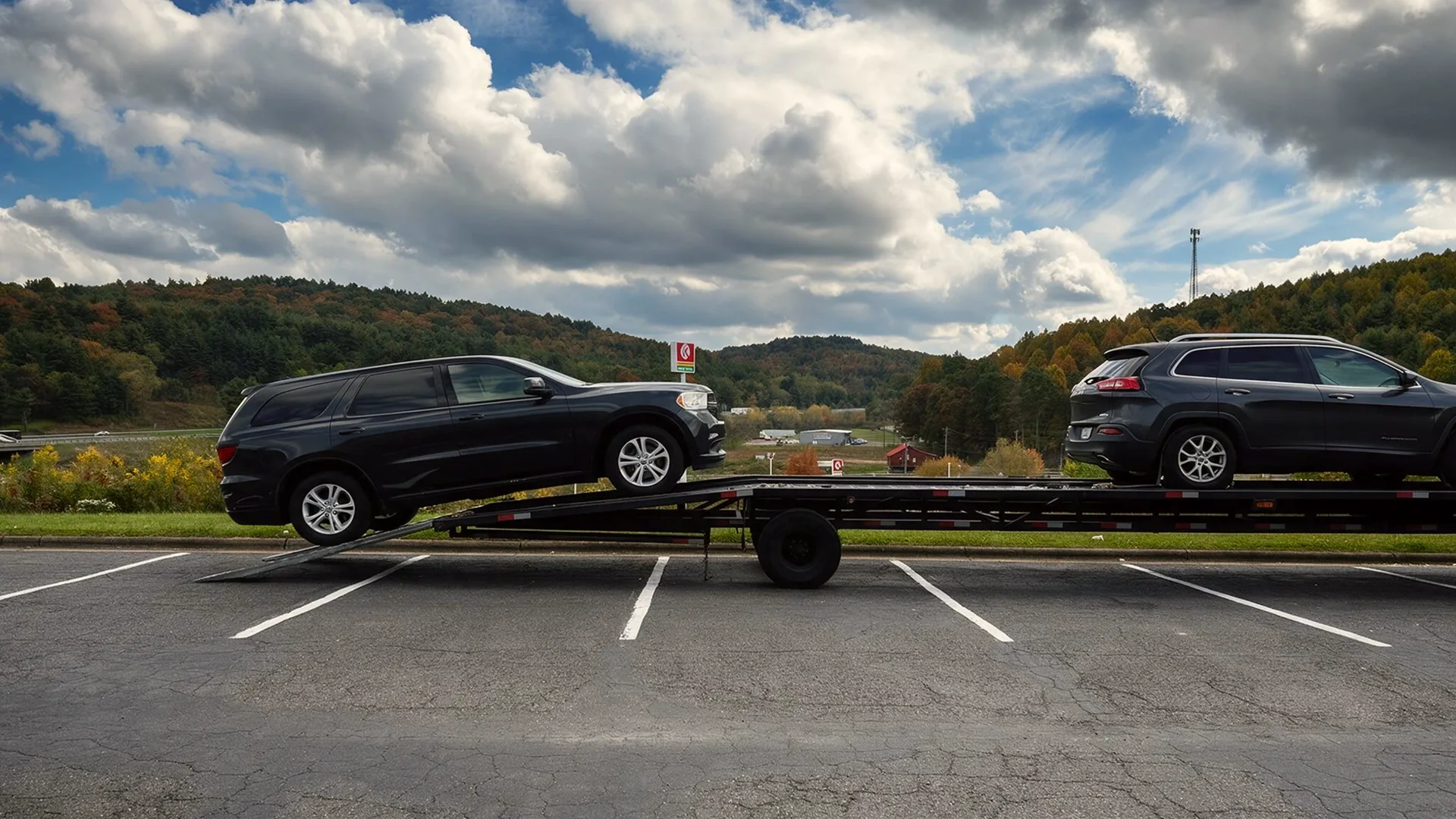
The practical answer regarding whether transport or personal insurance applies when damage occurs during auto transport is that the carrier's cargo insurance is the primary and intended coverage. Your personal auto insurance almost certainly will not pay for damage.
Even the carrier's cargo insurance does not guarantee an easy or full settlement. The insurance company is interested in minimizing payouts, so adjusters may dispute the cause or extent of damage. Also, policy limits may not fully cover a high-value vehicle.
The combination of those issues is why the industry developed supplemental coverage options. Supplemental or gap insurance is generally an add-on option you pay extra for that covers your vehicle above and beyond the base transport price. It protects the carrier's standard cargo limits. For vehicles worth $50,000 or more, classic cars, exotic vehicles, or those with sentimental or replacement value that exceeds a typical cargo policy, supplemental coverage is worth the additional cost.
Practical Steps to Ensure Your Coverage
Whatever insurance applies in the event damage occurs, you have the burden to prove that the damage occurred in transit, though the Bill of Lading (BOL) helps support your claims. Before loading your vehicle on the car carrier, the driver visually inspects your vehicle interior and exterior and records pre-existing damage in the BOL, which you sign. (You can add notes if you disagree with the driver’s characterization of your vehicle’s condition.)
The driver also inspects your vehicle at the destination and records any vehicle damage at the point. Upon your signing the BOL, it becomes the foundational evidence in any damage claim, so you should:
Carefully inspect the vehicle before and after its transport
Take time-stamped images or videos during the pre- and post-inspections
Record any discrepancies in the BOL before signing
Understanding Transport and Personal Insurance
Understanding the distinction in coverage between transport or cargo insurance and your personal auto insurance is crucial when transporting a vehicle. Most of the time, your vehicle will arrive without issue. Still, if damage occurs, you will need to understand the differences and, as needed, also acquire supplemental or gap insurance to give your vehicle full protection.
Besides insurance, you can protect your vehicle by shipping it with a tried and trusted broker like Nexus Auto Transport. Nexus schedules shipments only with carriers whose equipment, insurance coverage, and service levels we have vetted, many of which we have long-term working relationships.
To work with an auto transporter you can trust, start with a free, no-obligation quote for our services.
Carrier Cargo Insurance vs. Personal Auto Policy
Incident Type | Carrier Cargo Coverage | Personal Policy Coverage |
Loading and Unloading Damage | Covered | Not covered |
Road Accidents Caused by the Carrier | Covered | Not covered |
Weather or Environmental Damage | Likely covered in enclosed carrier | Not covered |
Vehicle Theft During Transit | Covered if carrier negligence contributed to loss | Not covered |
Damage to Personal Items Inside the Car | Not covered | Not covered |
FAQs
Does my personal auto insurance deductible apply during transport?
Since personal auto insurance generally does not cover damage that occurs during transit, the deductible does not apply. However, if you have a high-value vehicle covered with a rider on your personal policy, then your deductible will apply.
How do I secure additional coverage for a high-value or classic vehicle?
The first step in acquiring coverage for a high-value or classic vehicle is to insure it with an insurer that specializes in those vehicles, such as Hagerty or Grundy. They insure your vehicle for an agreed-upon value. Both companies cover vehicles in transport rather than apply the "care, custody, and control" exclusion.
Of course, you can also buy supplemental insurance if your current insurer does not cover vehicles in transport.
What is the typical timeline for processing a transport damage claim?
You should notify the carrier (and broker, if applicable) within 24 or 48 hours of receiving the vehicle and noting the damage in the BOL. The carrier has 30 days to acknowledge the claim and 120 days more to deny or pay the claim. Most settle within 30 to 45 days. Damages supported by the BOL tend to be settled more quickly. Other claims can drag on depending on their nature.
If you incur damage, obtain an estimate to repair the damage as soon as possible and include the estimate in your claim.
Are personal belongings left inside the vehicle covered by the carrier's policy?
No. Virtually every cargo insurance policy excludes personal items left in the vehicle.