

The cost to charge an electric car compared to a car with internal combustion engines (ICE) may seem difficult to compare, but the comparisons are increasingly clear. EVs generally have 15 percent higher sticker prices than comparable ICE vehicles, but EVs tend to have larger incentives, so upfront costs are closer than they may seem.
The sticker price difference often receives attention, but understanding the cost of fueling an EV versus an ICE vehicle is crucial to deciding about your next vehicle.
Overall, the ongoing costs for you to charge an EV depend on:
- The type of charger you use
- Where you live
- How much of your charging occurs at home versus on the road
The Three Levels of EV Charging
Electric vehicle charging comes in three tiers defined by the voltage and power it delivers, called Level 1, Level 2, and Level 3, though you can think of them as slow, medium, and fast.
Level 1 (Slow)
Level 1 charging uses a standard 120-volt household outlet, the same outlet that accepts the two-pronged plug on your lamp or laptop. Since Level 1 uses the standard outlet, the only special equipment needed is the cord that came with the EV. You can find 120-volt outlets everywhere, and their accessibility is the biggest advantage. The downside is that Level 1 chargers are slow.
Level 1 chargers:
- Deliver 1.4 to 1.9 kilowatts of power
- Provide 3 to 5 miles of driving range per hour of charging
- A mid-size EV with a 60 to 80 kWh battery takes 20 to 40 hours to go from empty to fully charged
Level 1 is best suited for plug-in hybrids with smaller batteries and EV drivers with low daily miles since they can charge the EV overnight and into the next day.
Your cost to charge your car at home depends on your electricity rate. The current national residential average is about 17.45 cents per kilowatt-hour, so adding 5 miles of range costs about 15 to 25 cents.
Level 2 (Medium)
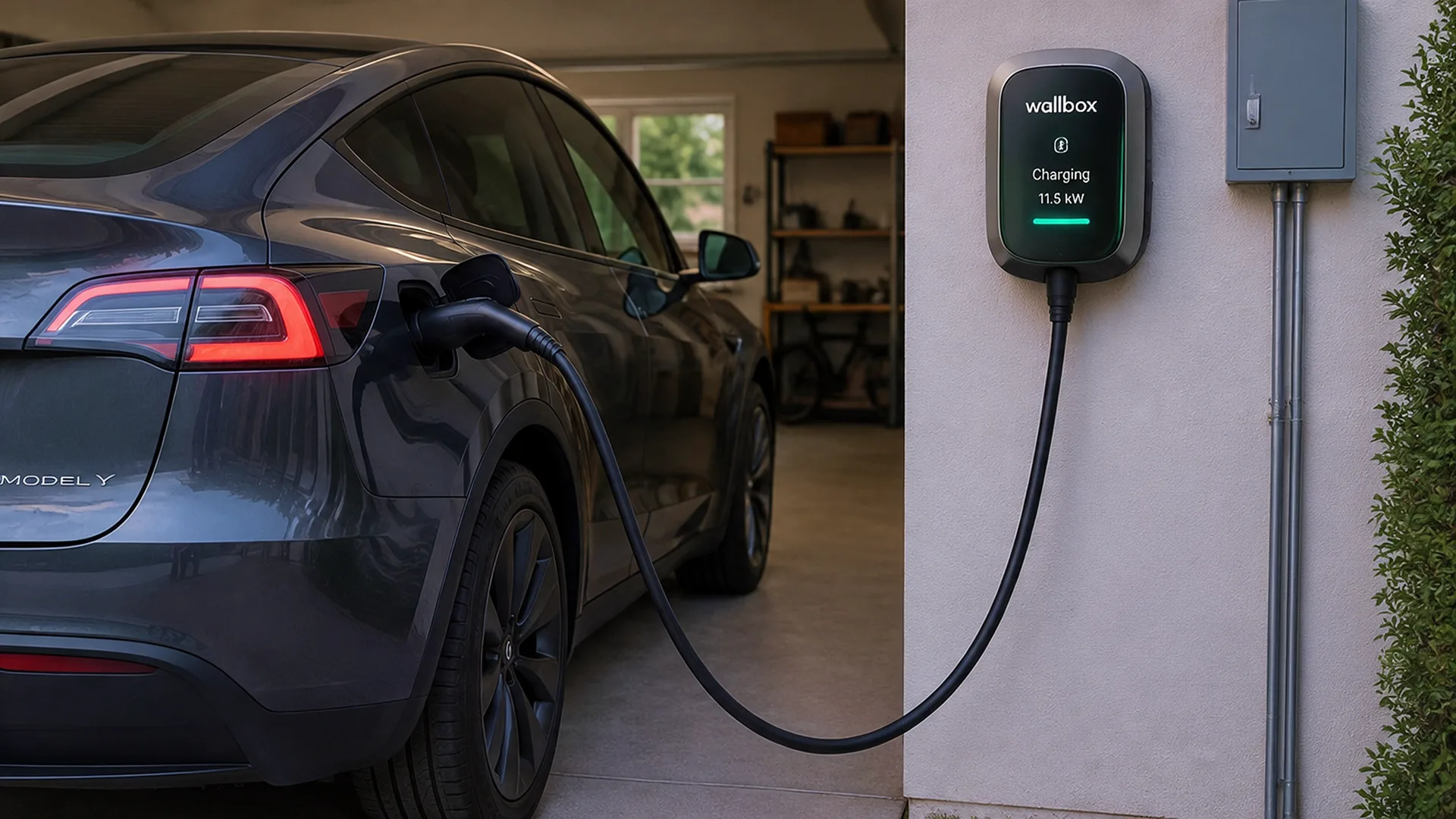
Most EV drivers primarily rely on Level 2 chargers. These chargers run on 208 to 240 volts, using the same type of circuit as a clothes dryer or electric range. They:
- Deliver 3.3 and 19.2 kilowatts of power, depending on the equipment
- Add 15 to 40 miles of driving range per hour, so a full charge takes 4 to 8 hours
When installed at home, Level 2 chargers are wall-mounted and require a dedicated circuit. Installation runs from $300 to $1,000 depending on your home's current electrical setup and local labor rates. Federal tax credits and utility rebates can offset a portion of that cost.
Once installed, the per-kWh cost is the same as your residential electricity rate. Using the nationwide average electricity rate, charging a 60-kWh battery from empty to full costs about $10.47 at home. Most EV owners plug in each night and wake up to a full battery.
You can also find public Level 2 chargers at centers, hotels, hospitals, workplaces, and parking garages. Rates on public Level 2 networks run around 30 cents per kWh, which pushes a full 60 kWh session to approximately $18.00. If your workplace, gym, or other places you frequent offer free charging, you can dramatically reduce the impact on your pocketbook.
Level 3 (Fast)
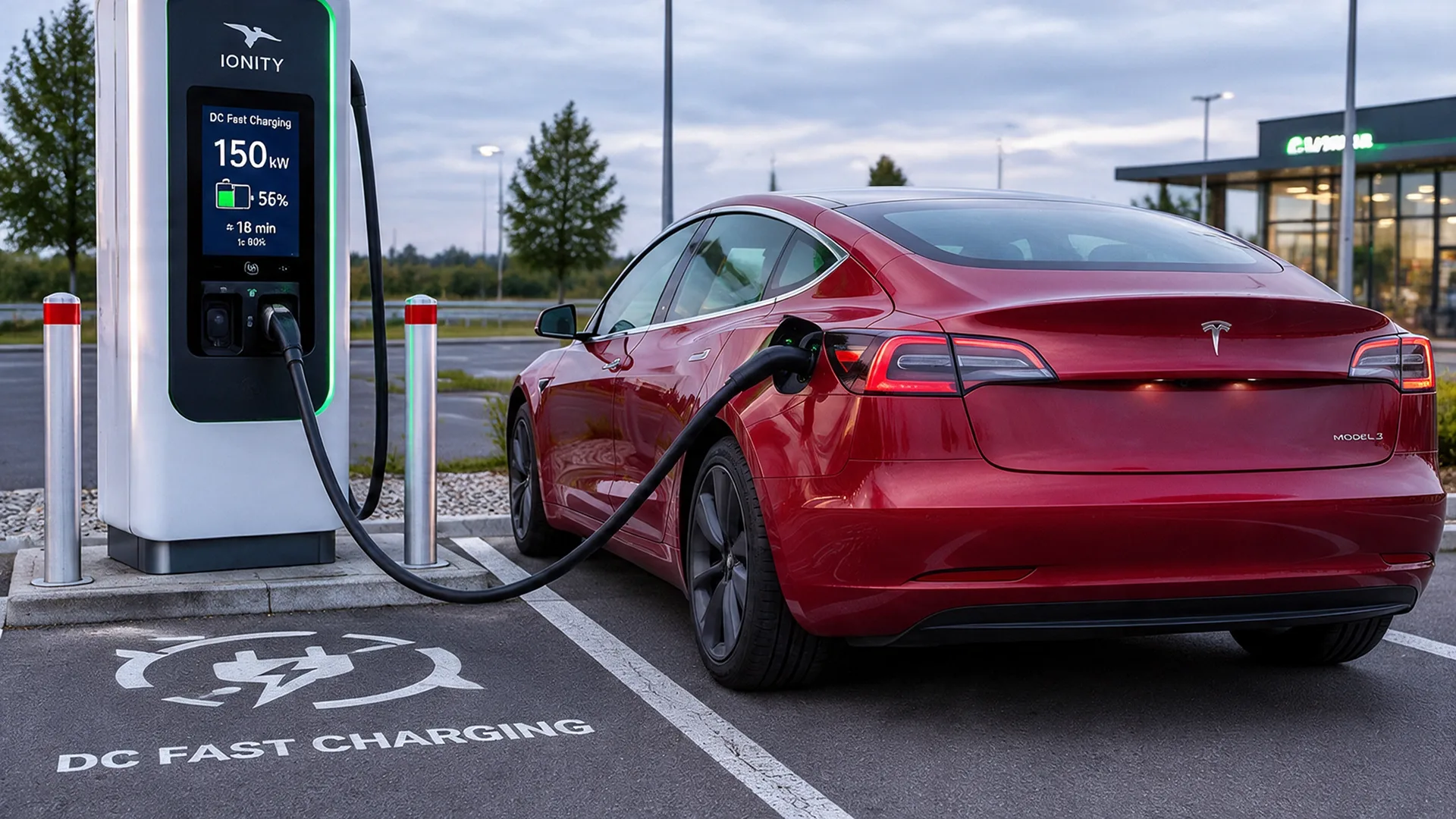
Level 3, also called DC fast charging (DCFC), pushes high-voltage direct current straight to the battery. Depending on the charging station and your vehicle:
- Output ranges from 50 kilowatts on lower-tier equipment to 350 kilowatts on advanced hardware, though most production EVs accept between 100 and 250 kW.
- A capable EV at a 150-kW charger recovers 100 to 200 miles of range in 20 to 30 minutes.
The ability of Level 3 chargers to quickly “fill up” your car is what makes long-distance EV travel practical. Drivers quickly learn to build quick rest stops into their journeys, much like stopping for gas with an ICE vehicle. Level 3 chargers quickly charge the battery up to 80 percent, but battery chemistry slows the charging rate after that, so the standard practice when on the road is to stop charging at 80 percent and plan to refuel again in 2 to 3 hours.
Public DC fast charging networks price their sessions at 40 to 60 cents per kWh, with a national average of about 55 cents. Charging a 60-kWh battery at that rate costs $33. Prices vary by location, time of day, and membership status, with drivers who are network members saving 10 to 15 percent per session.
EV Charging Cost by State
The U.S. Energy Information Administration determined that the average U.S. household paid 12.94 cents per kWh in 2024, but there are wide differences from state to state. The highest electricity rates in the continental U.S. were in the Northeast and California, where rates are double or more than other states. But these states also pay more for gasoline, so the relative differences between EVs and ICE powertrains remain similar, with EVs remaining the more cost-effective option in most cases.
Another challenge in the Northeast is that more people live in apartments or other situations where home charging is not available. They rely more on public chargers, which increases the cost of operating their EVs. Of course, you should consider the relative cost of gasoline or diesel and electricity in your location when determining the economic benefits of EV versus ICE vehicles.
EV Charging Cost per Mile vs. Gasoline vs. Diesel
The most useful way to compare fueling costs across powertrains is to look at the cost per mile, since it accounts for differences in vehicle efficiency.
Gasoline vehicles
The national average price of $3.78 per gallon for regular unleaded (July 2026). (Check AAA for today’s fuel prices.) A car averaging 30 miles per gallon pays about 12.6 cents per mile in fuel. A less efficient vehicle at 25 mpg pushes that to nearly 15 cents per mile. Based on the EPA's current average fleet fuel economy of 28 mpg for new passenger vehicles, most drivers pay 13 to 15 cents per mile with their gas-engine cars.
Diesel vehicles
Diesel vehicles face higher fuel costs, with the national average for on-highway diesel at $5.13 per gallon (July 2026). That means a diesel truck averaging 20 miles per gallon pays 25.7 cents per mile for fuel. Even a diesel car or crossover averaging 35 mpg pays around 14.7 cents per mile. Diesel's efficiency advantage offsets some of the higher fuel price, but the high diesel prices put a damper on ownership.
EVs charging at home
These are the clear winners for per-mile cost. Assuming the national residential average of 17.45 cents per kWh and an EV efficiency of 3.3 miles per kWh, home charging costs about 5 cents per mile, or 8 cents per mile less than a gasoline car. For someone driving 12,000 miles per year, that brings $960 in annual savings in their electric vehicle charging cost. Over five years, you save nearly $5,000.
EVs on public Level 2 chargers
Those using Level 2 public chargers see less advantage, but at 30 cents per kWh and running at 9 cents per mile, they still beat the 13 to 15 cents per mile of gas cars.
EVs using DC fast chargers exclusively
EV owners that use fast chargers exclusively are on par with gas on a per-mile basis, since it costs 12 to 17 cents per mile at prevailing fast-charge rates. Those who rely heavily on public fast charging will realize less financial benefit than those who mostly charge at home or work.
The Bottom Line
Overall, the electric vehicle charging cost advantage exists. The gap is wider for drivers with reliable overnight home charging access or a subsidized workplace charger. A typical EV owner who charges 80 percent at home and 20 percent at public stations can expect to pay 6 to 8 cents per mile, which is half to two-thirds less than the typical per-mile price for gasoline. For diesel, especially for truck drivers paying $5 or more per gallon, the gap in the EV's favor is wider.
Transporting an Electric Vehicle
The process to ship an EV across state lines or across the country is similar to an ICE vehicle, though the differences include:
- EVs should be towed only on flatbed trailers. Their wheels remain mechanically connected to the motors even when turned off, so towing an EV with its rear wheels on the road can cause significant damage.
- Carriers ask that your vehicle have a 30 - 50% state of charge to allow them to move the vehicle on and off the carrier. Higher states of charge can cause heat problems.
- EVs are heavier than comparable ICE vehicles, so it often costs 20 percent more to haul them.
- Owners of high-end EVs often choose to better protect their vehicle by using an enclosed carrier rather than an open carrier, which often costs 30 to 60% more than an open carrier.
Of course, if you need to transport your electric vehicle, consider working with the Nexus Auto Transport team. We use carriers with the experience and training to properly handle your EV, ensuring it arrives at its destination on time and in great condition. If you have questions or are interested in a quote, feel free to contact us.
Instant Quote: https://nexusautotransport.com/car-shipping-calculator/
Electric Vehicle Charging Speed and Cost Comparison
Charger Level |
Optimal Location |
Charging Speed per Hour |
Average Cost per Charge |
|---|---|---|---|
Level 1 Standard Outlet |
Home (120V wall outlet) |
3–5 miles of range per hour |
~$10.47 for 60 kWh charge at national average of 17¢/kWh |
Level 2 Upgraded Outlet |
Home, workplace, or public station (240V dedicated circuit) |
15–40 miles of range per hour |
~$10.47 at home (17¢/kWh) or ~$18 at a public station (30¢/kWh) |
Level 3 DC Fast Charging |
Highway corridors and high-traffic public stations |
100–300+ miles of range in ~30 minutes |
~$33 per session at the average public rate of 55¢/kWh |
FAQs
Does extreme winter weather increase the cost of charging an electric car?
Cold temperatures reduce the energy that lithium batteries deliver because electrochemical reactions slow as temperatures drop. Studies put the loss at 20 to 35 percent. Winter weather also leads people to use the car’s heating system, and chargers can take twice as long to charge your vehicle. According to AAA’s 2026 study, operating an EV at 20°F was more than twice the cost at 75°F.
Do electric vehicle charging rates vary by state during peak hours?
Yes. Charging rates during peak hours vary as dramatically as electricity overall, leading to substantial differences in cost based on the time of day that you charge. Drivers with a Type 2 charger at home should enroll in the utility’s time-of-use (TOU) program, which can save nearly $1,000 per year in high-rate states.
How does the weight of an electric vehicle battery affect its shipping cost?
As mentioned previously, EVs weigh more than comparable ICE vehicles, so it costs more to transport them. In addition, due to the 80,000 federal GVW limit, carriers often must reduce the number of vehicles hauled when one or more is an EV. The combination leads to a 20 percent premium for shipping EVs.
Can you charge an electric vehicle while it is loaded on a transport carrier?
No. Approximately 15 percent of EV fires occur while being charged. Charging an EV on an auto carrier or on board a ship is universally prohibited.