
A vehicle history report is the cheapest piece of due diligence available in a used-car purchase, and the one most consistently misread. Buyers treat a clean report as a certificate of health, when it is not. It records what has been reported about the VIN and says nothing about unreported issues.
Understanding that distinction helps you recognize that a used car history report offers useful information without leading you to false confidence based on a clean report.
What is a Vehicle History Report?
A vehicle history report compiles information and attaches it to a particular vehicle identification number (VIN). Providers aggregate records from many sources, including:
- State motor vehicle agencies
- Insurance carriers
- Auto auctions
- Salvage yards and recyclers
- Repair facilities
- Fleet and rental companies
- Police and fire departments
- Emissions and inspection stations
All the information is assembled chronologically. One provider, CARFAX, draws on more than 151,000 data sources and has over 35 billion records, covering vehicles from model year 1981 and on.
However, a vehicle history report is not a legal document. It carries no warranty of completeness and has no legal force.
Gaps in a report can result when:
- An accident is settled in cash between two drivers.
- An independent shop completes a repair and does not report it.
- The owner performs DIY maintenance.

Where to Obtain a Vehicle History Report
The four primary used car history report sources are complementary rather than interchangeable since each specializes in different types of data or records.
CARFAX
- The most detailed consumer product and the most expensive: $44.99 for a single report, $59.99 for two, $109.99 for five.
- Its advantages are service-record depth and speed since incidents tend to post there first.
AutoCheck
- An Experian product that costs $29.99 for one report or $59.99 for five within 21 days.
- It includes stronger auction data and adds a proprietary 0 to 100 score benchmarking the vehicle against similar vehicles.
NMVTIS (federal National Motor Vehicle Title Information System)
- The authoritative source on title brands built from state DMV records to stop branded vehicles from being retitled as clean in another state.
- Consumers can buy an NMVTIS report for a few dollars. The Department of Justice Research Vehicle History page lists approved suppliers.
NICB VINCheck
- A free service for up to five searches per 24 hours per IP address that flags theft, salvage, and flood records reported by insurers.
When a Report is Most Valuable
Every used vehicle purchase justifies spending $30 to $45 on this paperwork, but vehicle history reports are more valuable in certain situations, including:
- When buying out of state or sight unseen, the report and an independent inspection are your only eyes on the vehicle.
- CARFAX counted roughly 482,000 water-damaged vehicles in circulation entering 2025, plus an estimated 45,000 more damaged between April and July of that year. The states with the most flood cars — Pennsylvania, Illinois, New Jersey, California — are often not the states where the vehicle was flooded.
- Older vehicles with long ownership chains, where the odds of a laundered brand compound with every transfer.
- Auction, wholesale, and online-marketplace purchases, where there isn't a salesperson answerable for what the car has been through.
- A documented moderate accident is worth money off when negotiating a price.
It is also worth pulling a report on a vehicle you already own before shipping it. A pre-transport condition record reads very differently when the car's prior damage history is already on the table, and it protects you against a carrier being blamed for damage that predates pickup, or against a prior repair being passed off as transport damage.
Which Records Deserve the Closest Reading?
Review the information on a vehicle history report in the order of the information's rigor:
- Title brands: These are legal status indicators of significant vehicle problems, not opinions.
- Odometer readings: NHTSA estimates 450,000 vehicles are sold with false readings each year, so confirm there aren't instances of odometer readings going backwards.
- Accident entries: Focus on the severity coding, not the repair dollars.
- Other: Ownership and use type, service continuity, registration geography, and open recalls.
More generally, pay attention to the sequence of certain events. For example, immediately after an accident or other issues, did the title transfer to a wholesaler, and was a new title issued in another state? This is an indicator of potential title washing.
Second, compare what the report says against the physical vehicle. Do the odometer, paint, and door-jamb stickers match the vehicle's condition? If you spot a discrepancy between the paper and the metal, you should generally walk away.
How Nexus Helps You Bring A Vehicle Home
When buying a car from a different state, you may need help transporting the vehicle to its new home, and managing interstate vehicle transfers is our core business. Nexus Auto Transport is a leading broker with a nationwide network of vetted carriers experienced in all aspects of vehicle transfers. Contact us for a quote and see how our 3-step process makes it easy for you from start to finish.
Use our car shipping calculator for a free quote: https://nexusautotransport.com/car-shipping-calculator/
Vehicle History Report: Key Records to Check
Record Type |
What It Shows |
Why It Matters |
Potential Red Flag |
|---|---|---|---|
Title brands and current title status |
Salvage, junk, rebuilt/reconstructed, flood or water damage, lemon-law buyback, odometer-discrepancy and "not actual mileage" brands, plus the state and date each title was issued. |
A brand is legal status that attaches permanently; caps resale value, and restricts financing, full-coverage insurance and CPO eligibility |
A brand that appears in one state and vanishes after a later retitling elsewhere |
Odometer readings |
A dated sequence of mileage captured at title transfers, state inspections, emissions tests, dealer service visits and auction sales |
Mileage is the second-largest driver of value after condition |
Any later reading lower than an earlier one; a multi-year gap in readings; or annual mileage implausible for the use type |
Accident and damage records |
Police-reported crashes, insurance claims, airbag deployment, structural or frame damage, and a severity code (minor / moderate / severe or structural) |
Severity coding is what buyers and appraisers price |
A "structural damage reported" entry, airbag deployment with no subsequent repair record, or a damage report followed immediately by a title transfer to a wholesaler |
Title and registration geography |
Each state the vehicle was titled in, the dates, and how long it stayed in each |
Geography predicts the visual inspection findings: road-salt corrosion in the Rust Belt, sun and interior degradation in the Southwest, flood exposure on the Gulf and Atlantic coasts |
A chain of three or four states within a short span |
Ownership count and use type |
Number of prior owners and how the vehicle was registered: personal, lease, rental, corporate fleet, taxi or livery, government, or driver-education |
Use type predicts wear pattern and maintenance discipline far better than mileage alone. Fleet and rental vehicles are serviced on schedule but driven hard by many operators |
An undisclosed rental or taxi history on a car advertised as a one-owner personal vehicle; four or more owners on a vehicle under six years old |
Service and maintenance history |
Dated entries from reporting repair facilities and dealerships: oil changes, brake and tire work, timing belts, transmission service, state safety inspections |
Continuity of care is the closest a report comes to describing how the car was treated; provides sanity-check on odometer |
A multi-year gap in an otherwise dense record; a last service entry far below the current odometer; past due maintenance. |
Open recalls and manufacturer buybacks |
Unrepaired safety recalls, manufacturer buyback or lemon-law repurchase entries, and warranty status or remaining coverage |
Recall repairs are free at any franchised dealer, so an open recall is a safety exposure with no cost attached to closing it |
Open recalls unaddressed by a dealer selling the car; a "manufacturer buyback" entry the seller did not disclose. Confirm recall status for free at NHTSA.gov/recalls. |
FAQs
What should I do if a vehicle history report has missing information?
Treat gaps as unknowns, not as an indication of a clean history. Then, try to close the gaps by ordering a second report from a different aggregator, since CARFAX and AutoCheck draw on overlapping but not identical sources. Also, run an NMVTIS report through an approved provider for a few dollars; it is the only source built from state title records themselves. It is also where a brand that a commercial report missed will surface. Run the free NICB VINCheck for theft, salvage, and flood flags.
Ask the seller to provide service invoices covering the gap years. Private owners who use an independent shop often have a folder of receipts that never made it into any database.
Finally, treat an unexplained multi-year gap as a reason to expand the inspection scope. Gaps are ordinary on older vehicles, on cars serviced outside dealer networks, and on any repair paid out of pocket.
How far back does a vehicle history report usually go?
In principle, to the vehicle's first title. CARFAX covers vehicles from model year 1981 forward. In practice, depth depends on when the involved states digitized their title records, which happened anywhere from the 1980s to the early 2000s.
Expect solid coverage for the last fifteen to twenty years, thinner and more intermittent coverage before that, and near-total silence pre-1990s. Insurance and auction feeds are the most recent additions to these systems, so accident and total-loss data is meaningfully better after about 2000 than before.
Can a vehicle history report show odometer rollback or title washing?
You can spot rollbacks because the reports show findings chronologically. A reading that shows lower mileage than a previous one is the surest sign of a rollback.
Title washing or moving a branded vehicle to a state that does not carry the brand forward, then retitling it clean, is what NMVTIS was created by federal statute to defeat. NMVTIS is the strongest single check on a washed title, and it is worth a few dollars even when you have already bought a CARFAX.
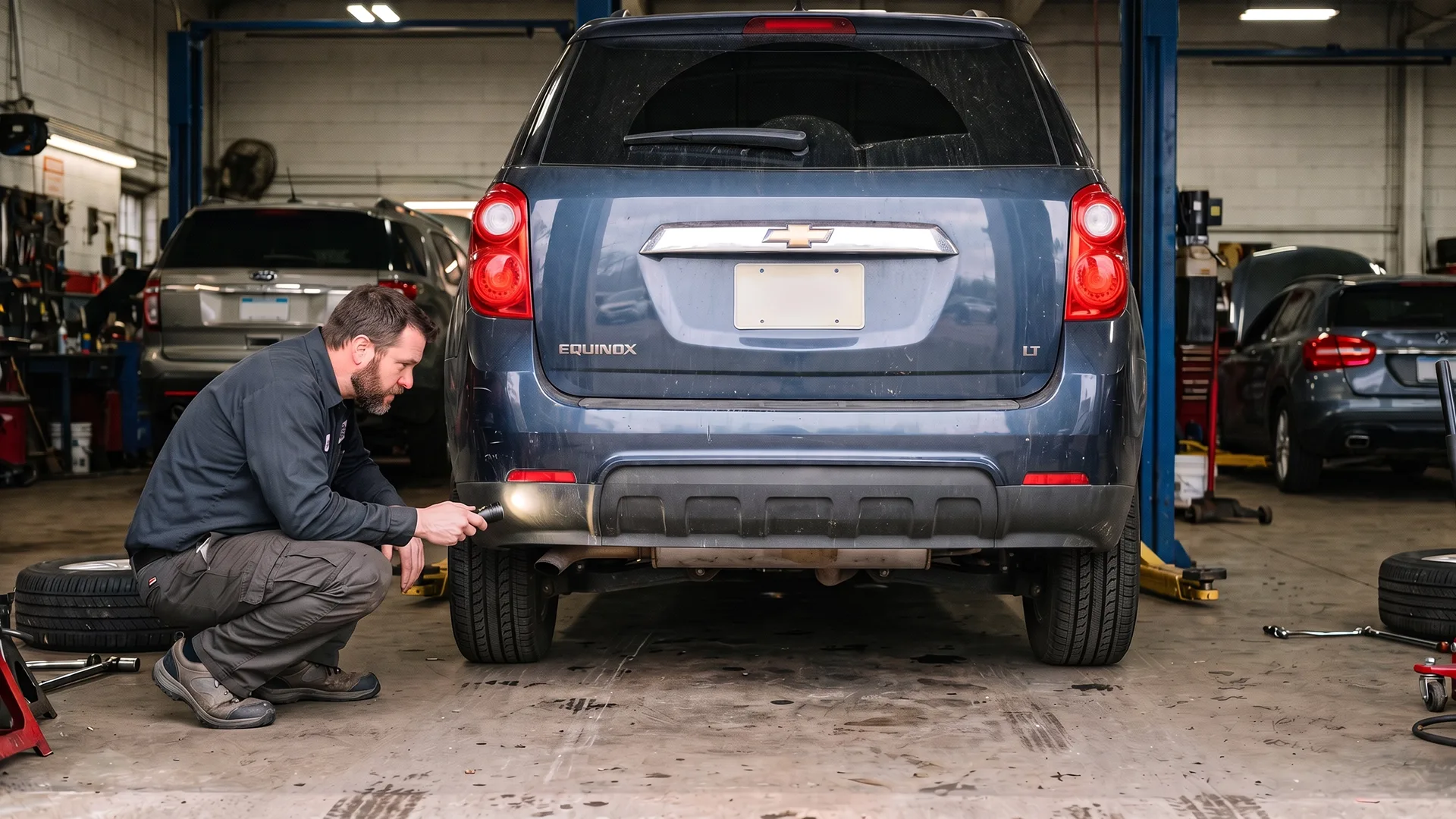
Should I still get a pre-purchase inspection if the vehicle history report is clean?
Yes, without exception. An independent pre-purchase inspection runs roughly $100 to $200, or a fraction of one car payment. Ask the inspector to perform:
- A paint-depth gauge reading on every panel.
- A full diagnostic scan for stored fault codes and ADAS calibration status.
- An underbody examination for corrosion, weld patterns, and wrench marks on bolt heads
- A flood check covering corrosion under seat rails, silt in the spare-tire well and the wiring harness, and any musty odor.
- On an out-of-state or sight-unseen purchase, the independent inspection is not optional diligence. It is the basis of the purchase decision.