
Walk into the back office of a busy car dealership, and you will hear a specific kind of controlled chaos — phones ringing, managers cross-referencing screens, someone confirming a carrier pickup by text message.
Much of that noise is about vehicles in motion: a unit bought at auction three states away, a sold car that needs to reach a customer two hours out, a trade-in sitting at a satellite lot that needs to move to the main location before the weekend rush. What is striking is how little of this communication runs through the dealership's central software system — the same system that handles nearly everything else.
That system is the dealer management system, or DMS, and understanding the gap between what gets integrated and what is left out is key to understanding one of the persistent inefficiencies in auto retail: the absence of auto transport information in the vehicle inventory software components of the DMS.
How a DMS Integrates a Dealership's Operations
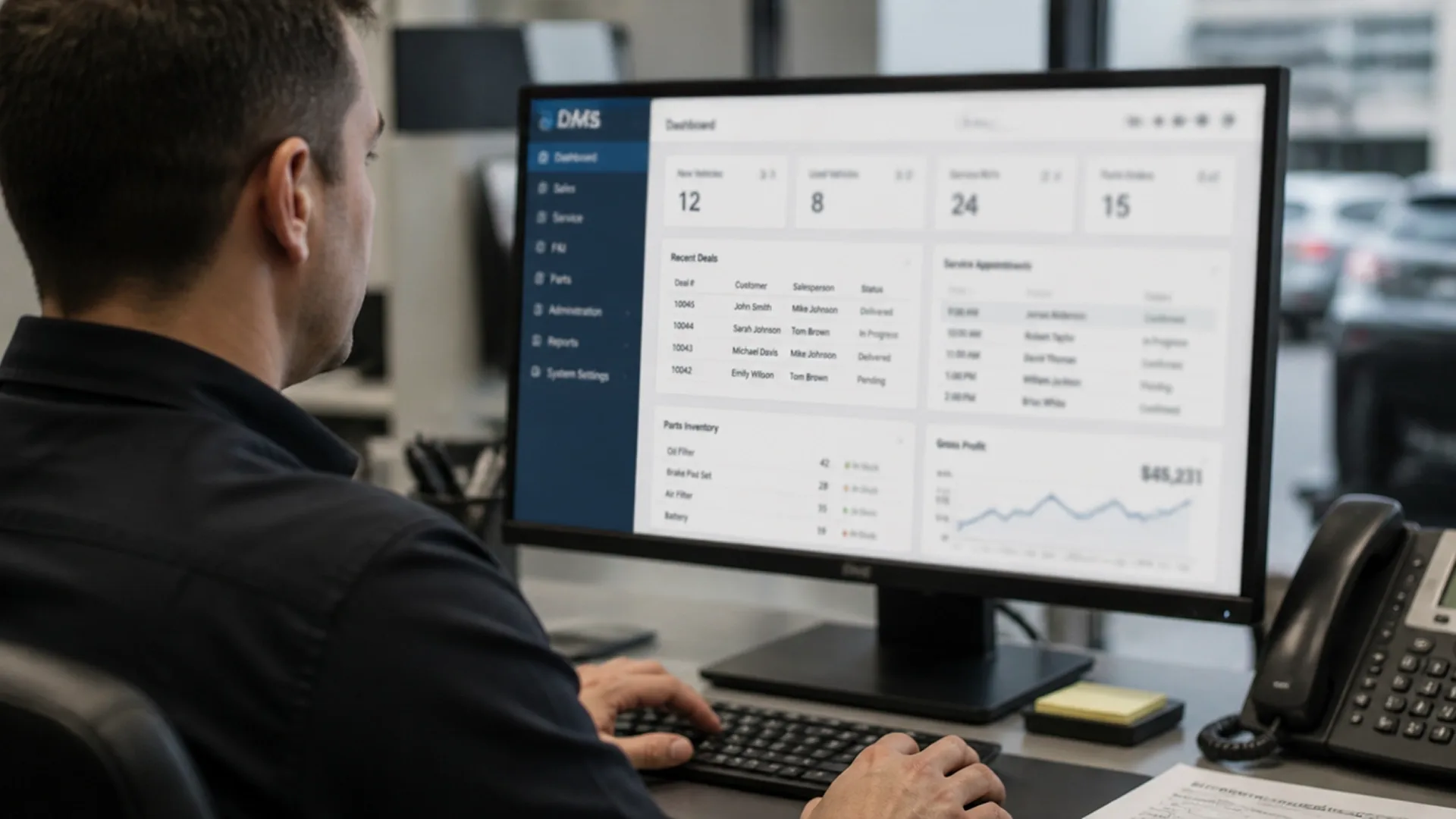
The DMS is the central nervous system of a dealership and about 80 percent of U.S. car dealers use one of three dominant systems: CDK Global, Dealertrack, and Reynolds & Reynolds. It contains and shares core information needed by the various departments: sales, service, F&I, parts, and administration.
The core promise of a DMS is that information enters once and flows automatically to every department that needs it. In practice, that means the major business functions all draw from and write to the same underlying database in real time.
Consider the example of a salesperson who sells a vehicle and marks it as sold in the DMS. This sets off a chain of automatic updates across the dealership.
The count in the car inventory management module drops, removing the car from the available lot and from online listings.
The finance and insurance department receives a trigger to open a deal jacket, the digital folder that holds the transaction paperwork.
The accounting system gets a corresponding entry.
If the customer traded in a vehicle, the trade-in vehicle gets logged as incoming inventory
The same integration works on the service side. When a technician opens a repair order, the parts department sees which components are needed. When the work is complete and the customer pays, the cashier's entry closes out in accounting automatically. Managers can see how many vehicles are in the service lane, how many repair orders are open, which ones await parts, and what the department's revenue looks like, all from the DMS dashboard in real time.
Seamless data flows like these are why dealerships invest in DMSs and why switching DMS vendors is painful. The DMS is the dealership's operational backbone that makes processes more efficient and accurate. Rather than departments maintaining separate logs, calling one another for status updates, or reconciling records at month-end, a quality DMS provides a single source of truth, with errors minimized by eliminating the manual re-entering of data across systems.
The Integration Stops with Vehicle Inventory Software
Although dealer management systems integrate most dealership operations, the vehicle transport process is not one of them. Shipping a car from an auction, another rooftop, or to a customer also generates a stream of information, such as:
Pickup confirmation
Carrier identity and contact information
Estimated and actual transit times
Location status
Condition at pickup and delivery
Cost
However, none of that data is native in a standard DMS despite vehicle movement being a routine part of the car business. Dealers regularly acquire inventory from the OEMs, at auctions, and via trade-ins. Plus, dealer groups with multiple locations regularly rebalance inventory, moving a pickup truck from a suburban location to a rural one where it will. Dealers selling to customers outside their immediate market arrange transport as part of the sale. Each of those activities and their data lives outside the DMS.
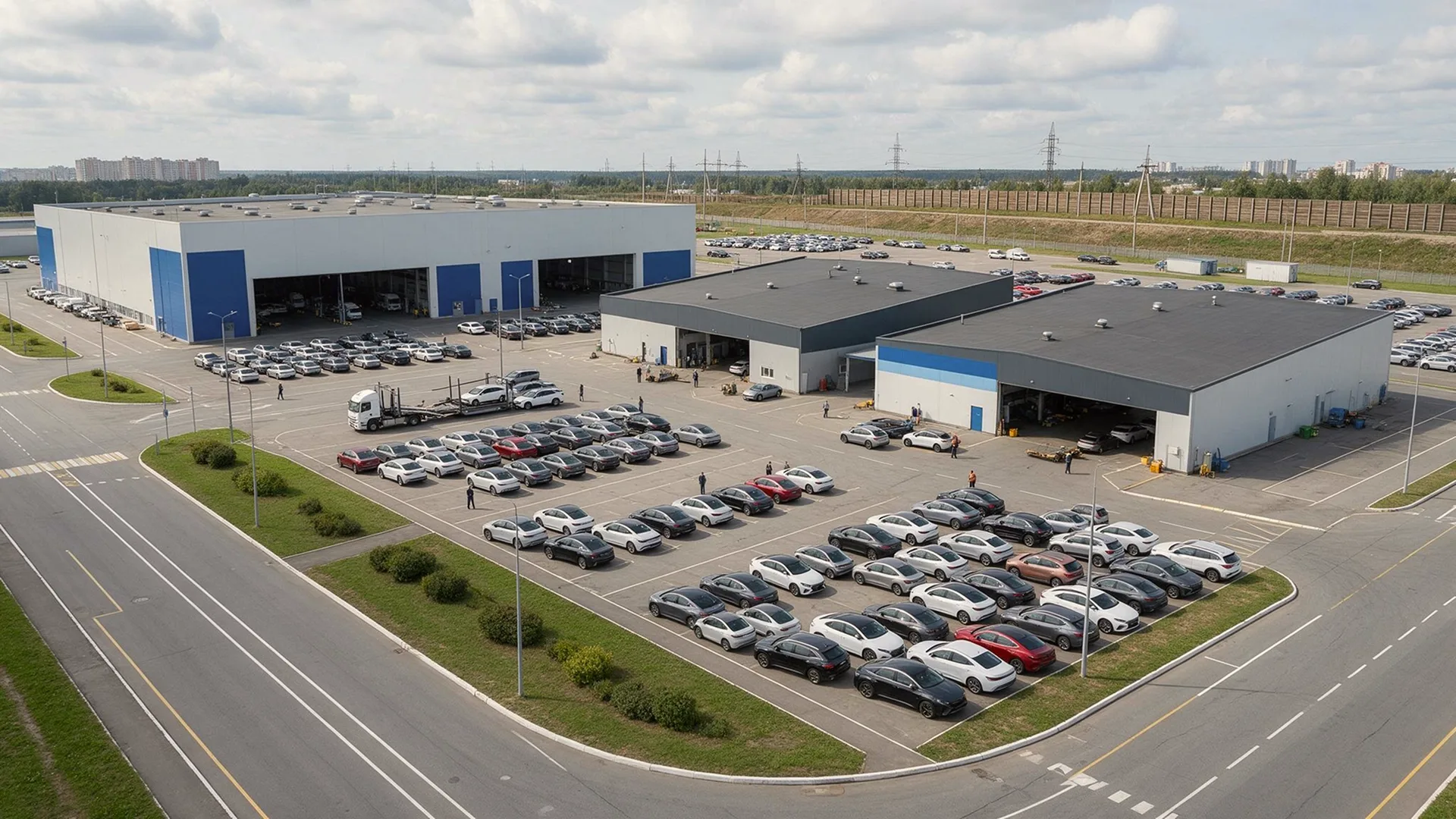
How Dealers Handle Car Inventory Management and Transportation Today
Lacking integrated transport data, dealerships develop a patchwork of processes that rely on phone calls, text messages, and emails. When the buyer's agent at an auction arranges transport through a broker, they exchange texts to schedule the vehicle pickup and delivery, and the information exists only in those personal communication channels. If the inventory manager wants to know when to expect a unit, they call the buyer. If the service manager wants to schedule a pre-delivery inspection, they track down the same information separately. The same questions are answered multiple times by multiple people.
A step up from phone-call coordination is the use of standalone spreadsheets or simple tracking documents that someone maintains separately from the DMS. These logs capture what's in transit, which carrier has each unit, and the expected arrival date. They are updated manually, which means they lag reality and depend entirely on that one person staying on top of a job that competes with everything else they're doing.
Some dealers use dedicated transport brokerage platforms, which are software built for arranging and tracking vehicle moves, that run alongside the DMS in separate systems. These tools may be better than spreadsheets and phone calls for managing the transport side, but they still don't talk to the DMS. A vehicle that arrives at the lot and is logged into the transport platform as "delivered" still must be entered into the DMS manually by someone who handles inventory. That re-entry takes time, introduces the potential for error, and means there is always a lag between when a car arrives and when the rest of the dealership's systems reflect that fact.
Why the Gap Exists in Automotive Inventory Management
The transport gap exists due to technical and commercial reasons. On the technical side, sharing data between two software systems requires both sides to agree on the format and rules for the exchange, what developers call an application programming interface, or API.
Major DMS vendors, particularly CDK Global and Reynolds & Reynolds, tightly control these APIs, and require outside companies to pay access fees and navigate lengthy approval processes before connecting to their platforms. That friction makes integrations slower and increases their cost, so transport platforms generally do not connect with dealer management systems.
On the commercial side, vehicle transport is not where DMS vendors have made their money. The platform value and pricing are built around the finance, accounting, service, and inventory functions at the core of the business. Transport is seen as an adjacent process, something dealers handle outside the DMS, not a core workflow worth handling natively.
The Broader Cost
The auto retail industry has spent years and enormous sums digitizing the customer experience, the sales process, and the service operation. The DMS sits at the center of that investment. But the vehicles, the physical objects the business exists to sell and service, can spend days or weeks moving between locations with no trace being available in the DMS that is supposed to know and tell all.
That gap shows up in lower inventory turns, unresolved transport damage claims, and salespeople making delivery promises they can't keep. Unfortunately, these blind spots exist in an otherwise well-integrated system and are resolved today by dealer personnel calling one another, hoping to get a straight answer.
How We Can Help with Auto Transport
Nexus Auto Transport cannot solve the problem of transportation activities not being integrated into your DMS. Still, we can make transporting your vehicles simpler, faster, and more reliable, so there are fewer phone calls and fewer changes in plans.
As a trusted provider of auto transport services, Nexus Auto Transport can help you ship your new and used cars to buyers by using the latest car-hauling software and working with our vetted auto carriers across the country.
Instant Quote: https://nexusautotransport.com/car-shipping-calculator/
Standalone Inventory Systems vs Integrated Auto Transport Solutions
Feature | Standalone Inventory Software | Integrated Transport System |
Real-Time Stock Tracking | Tracks inventory on the lot; not in transit | Would allow tracking vehicles in transit and lot |
Automated Shipping Quotes | Quotes obtained using separate systems or manually | Could solicit quotes and select transporter in system |
Logistics Lead Time Calculation | Need to obtain timing using separate systems or manually | Could integrate scheduling and tracking into system |
Bulk Transport Ordering | Shipping multiple vehicles requires manual effort | Could integrate bulk transport in bidding and tracking process |
FAQs
How long does it take to integrate auto transport APIs with existing dealership inventory software?
DMS vendors such as Tekion or Dealertrack, working with a transport vendor who has done DMS integrations before, could realistically complete the process in two to four months from contract to live. When working with CDK or Reynolds, six months to a year is a likely timeframe, plus there would be substantial DMS access fees and per-dealer installation charges.
What are the insurance coverage limits when shipping multiple vehicles directly from a dealership lot?
Open carriers typically carry cargo coverage of $100,000 per load, and enclosed carriers commonly carry $250,000 to $1,000,000 per load; neither may be adequate when shipping multiple vehicles.
Some dealer open lot (DOL) insurance includes protection for vehicles being transported to or from the dealership. Vehicles financed through a floor plan may have vendor-specific requirements about coverage during transport. Dealers need to confirm how these issues apply to their situation.
Can inventory management software automatically trigger transport requests based on declining stock levels?
The vehicle inventory management portion of dealer management systems includes functions to recommend acquiring new vehicles or transferring stock to another store based on stock on the lot or vehicle aging, but they require a dealer manager to approve the recommendation. Generally, the automotive inventory management portions of dealer management systems do not automatically trigger transport requests.
Franchised new car dealer parts departments often have automatic parts reordering functions integrated with the OEM.
Are there volume discounts for dealerships shipping multiple cars monthly through a dedicated carrier?
The most important discount dealers can obtain comes from load consolidation, with savings of 30 percent possible. Dealers can also receive percentage discounts based on exclusive relationships or rate stability agreements that avoid the spot market nature of auto transport pricing. Dealers who consistently run vehicles on certain routes can also save money by creating direct carrier relationships.