

If you’ve been searching “should I buy EV,” you’ve probably found plenty of strong opinions in both directions. The better question is whether an electric vehicle fits the way you actually drive.
Your daily mileage, charging access, climate and road-trip habits matter. Someone with a garage and a 30-mile commute has a very different use case from a driver who regularly covers hundreds of miles through rural areas.
Still, there are good reasons to consider going electric.
1. Home Charging Can Replace Most Gas Station Stops
For many owners, one of the biggest changes is simply waking up with a charged car.
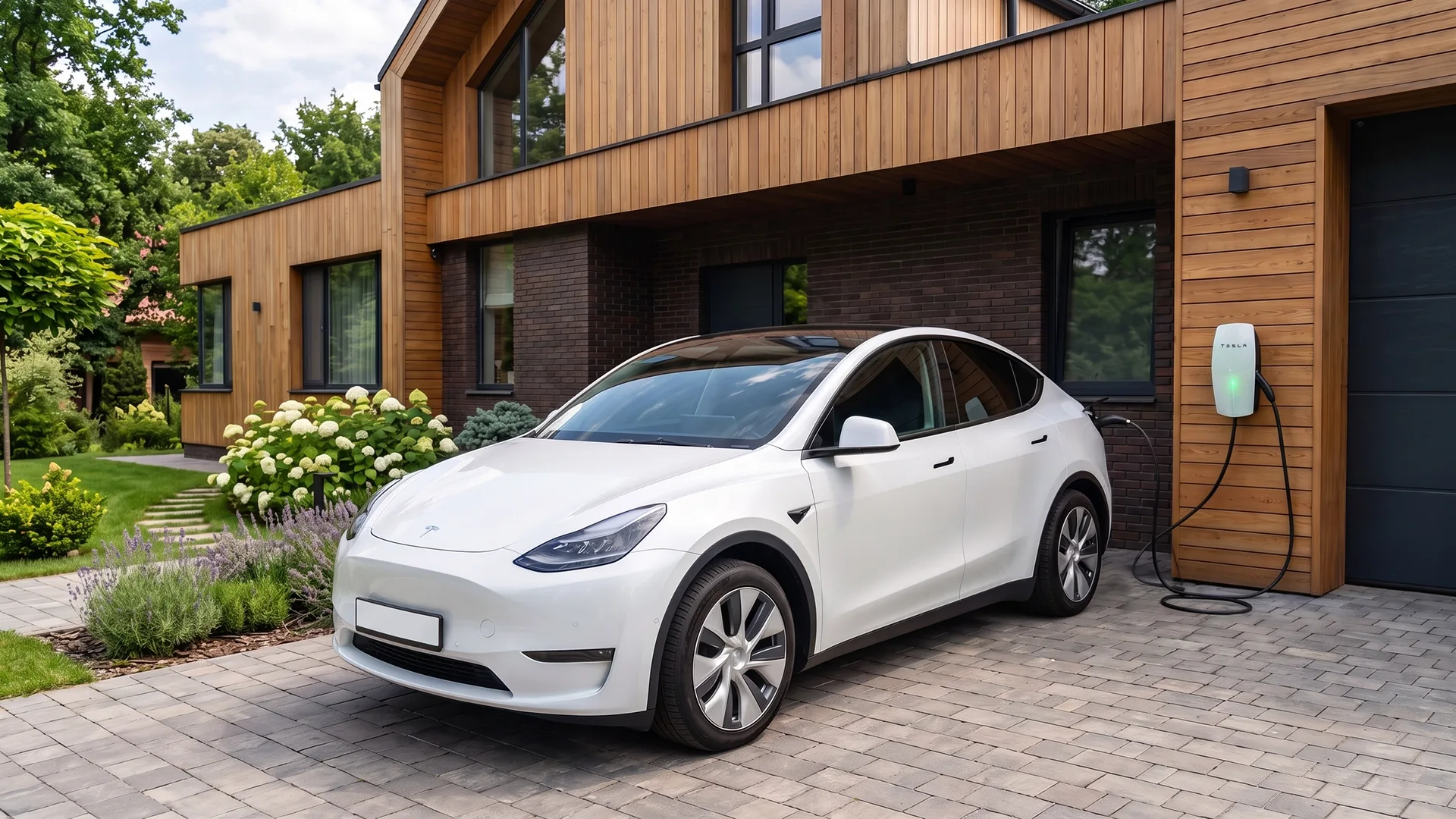
With Level 2 home charging, routine fueling happens while the car is parked overnight. Plug it in when you get home and it can be ready again by morning.
Your cost depends on local electricity rates and the efficiency of the vehicle. The U.S. Department of Energy’s Alternative Fuels Data Center offers tools for comparing EV and gasoline operating costs.
Public fast charging still matters on trips, but drivers who charge mostly at home may rarely need it during an ordinary week.
2. EVs Usually Need Less Routine Powertrain Maintenance
An electric vehicle has no engine oil to change, spark plugs to replace or conventional exhaust system to maintain.
You’ll still have tires, suspension components, cabin filters and other wear items. Depending on the model, battery cooling systems may also require service.
But the basic electric drivetrain has fewer moving parts than an internal combustion engine. Regenerative braking can reduce wear on conventional brakes as well.
For many buyers, reduced maintenance is one of the most practical benefits of electric car ownership.
3. Electricity Can Cost Less Than Gasoline
This advantage depends heavily on where you charge.
Home charging is usually the favorable case. Rely heavily on higher-priced public DC fast chargers and the savings can shrink.
Instead of relying on a national average, compare your own numbers. Look at the efficiency of the EV you’re considering, your residential electricity rate and what you currently spend on gasoline.
The more miles you drive, the more those differences can matter.
4. Electric Motors Deliver Immediate Response
You don’t need an expensive performance EV to notice the difference.
Electric motors can deliver substantial torque immediately, giving many EVs quick, smooth acceleration from a stop. Most also avoid the conventional gear changes you’d feel in a gasoline-powered vehicle.
Around town, even an ordinary electric crossover can feel unusually responsive.
It’s one of the EV advantages that makes more sense from the driver’s seat than from a specification sheet.
5. EVs Produce No Tailpipe Emissions
A battery-electric vehicle has no gasoline engine, so it produces no tailpipe emissions while driving.
That doesn’t mean an EV has no environmental impact. Vehicle and battery production consume resources, and the electricity used for charging has to be generated somewhere.
Even accounting for those factors, the U.S. Environmental Protection Agency says EVs typically produce lower lifetime greenhouse gas emissions than comparable gasoline vehicles.
The size of that advantage depends partly on the electricity mix where the vehicle is charged.
6. Buyers Have Far More EV Choices
Electric vehicles are no longer confined to a handful of small cars.
You can now shop among hatchbacks, sedans, crossovers, three-row SUVs, luxury vehicles and full-size pickups. That makes it easier to find an EV that fits your life rather than reorganizing your life around the vehicle.
It also helps to understand the different types of electric car.
A battery-electric vehicle runs entirely on electricity. A plug-in hybrid can travel on battery power before using a gasoline engine. A conventional hybrid uses a smaller battery that charges while the vehicle is being driven.
7. EV Range May Be More Practical Than You Expect
Range anxiety is real, but advertised maximum range isn’t the only number that matters.
If you drive 35 miles on a normal day and charge at home each night, you may not need 400 miles of range.
Long trips require more planning. Charging speed, charger availability and cold-weather performance become more important when highway travel is part of your routine.
Before buying, find out the time it takes to charge an electric vehicle at home and on a compatible fast charger.
8. EVs Can Be Quiet and Easy to Drive
Without an engine, exhaust system and conventional transmission shifts, an EV feels different.
There’s still tire and wind noise, but acceleration is generally quiet and smooth. Many EVs also offer one-pedal driving, which uses regenerative braking to slow the car significantly when you lift off the accelerator.
Some drivers love that feature. Others prefer a more conventional feel. Most vehicles let you choose.
9. An EV Can Make Sense as the Household Daily Driver
An electric vehicle doesn’t need to handle every trip your household takes.
For a two-car family, an EV used for commuting, school runs, shopping and local errands can capture many of the benefits of electric ownership without becoming the default vehicle for every long road trip.
That can also keep you from paying for more battery capacity than you actually need.
Sometimes the right vehicle is the one that handles 95% of your driving extremely well.

10. Shopping Nationwide Can Open Up More Choices
The EV you want may not be sitting at the nearest dealership.
Used inventories vary by region, and a particular battery, trim level, color or option package may be easier to find several states away. Online dealerships and auctions make it much easier to shop nationally.
That creates another question after the purchase: how do you get the vehicle home?
Flying out and driving it back is one option. Shipping a car to another state lets the dealer, seller or auction location handle the pickup while the vehicle travels by carrier.
That can be especially useful when you’re already coordinating a move or home purchase and don’t want another long-distance trip added to the schedule.
Comparison of Electric Vehicle Shipping Factors
EV battery packs can make electric vehicles heavier than similar gasoline models. That matters when a commercial transporter plans its load because the carrier has both space and weight limits.
Vehicle Type |
Average Weight |
Recommended Transport Method |
Shipping Cost Factor |
|---|---|---|---|
Compact Electric Sedan |
About 4,000–4,500 lbs. |
Open transport for most vehicles |
Battery weight may exceed that of a similar gas sedan |
Electric SUV |
About 4,500–5,500 lbs. |
Open or enclosed |
Size and weight can reduce available carrier capacity |
Electric Pickup Truck |
About 6,000–7,000+ lbs. |
Carrier selected for actual size and weight |
High weight can have a larger effect on loading and price |
Hybrid Vehicle |
About 3,500–4,000 lbs. |
Standard open transport in most cases |
Usually less of a weight issue than a large battery EV |
Weights are representative ranges. Actual curb weight varies by model, battery, drivetrain and trim.
Nexus can arrange open or enclosed transport for EVs. The important part is providing the correct year, make and model so the vehicle’s size and weight are known before a carrier is assigned.
Large electric SUVs and pickups deserve particular attention because some weigh considerably more than conventional passenger cars.
What Should You Check Before Buying an EV?
Before you commit, look at how the vehicle will work in your own routine:
- Home charging: Can you charge where you live?
- Around town: Pick a range that fits how much you actually drive.
- On trips: Check where you can charge along the way.
- Cold weather: Winter temperatures can reduce usable range.
- Insurance: Get a quote for the exact model before buying.
- Purchase price: Compare total ownership cost, not just fuel savings.
An EV can be a terrific fit, but it should win the comparison based on your real needs.
For a closer look at the decision, see Why buy an electric vehicle?.
FAQs
Do electric vehicles require special carriers for interstate transport?
Not simply because they’re electric. Most operating EVs can travel on the same open or enclosed carriers used for other passenger vehicles. The transporter does need accurate information about the EV’s size and weight so the load can be planned correctly.
How does the extra weight of an electric car battery affect shipping costs?
A battery can make an EV considerably heavier than a similar gasoline vehicle. Because commercial carriers have weight limits, a heavy electric SUV or pickup may use capacity that otherwise could have gone to another vehicle. That can affect the shipping price.
Is it safe to ship an electric vehicle with a fully charged battery?
A full battery usually isn’t necessary for ordinary auto transport. Follow the manufacturer’s recommendations and the carrier’s instructions before pickup. The vehicle only needs enough charge for loading, unloading and short movements during transport.
Get a Quote to Ship Your EV
Already found the electric vehicle you want? Nexus Auto Transport can arrange transportation from an out-of-state dealer, seller or auction location without adding a long retrieval drive to the purchase.
Use Instant Quote to estimate the cost of getting it home.