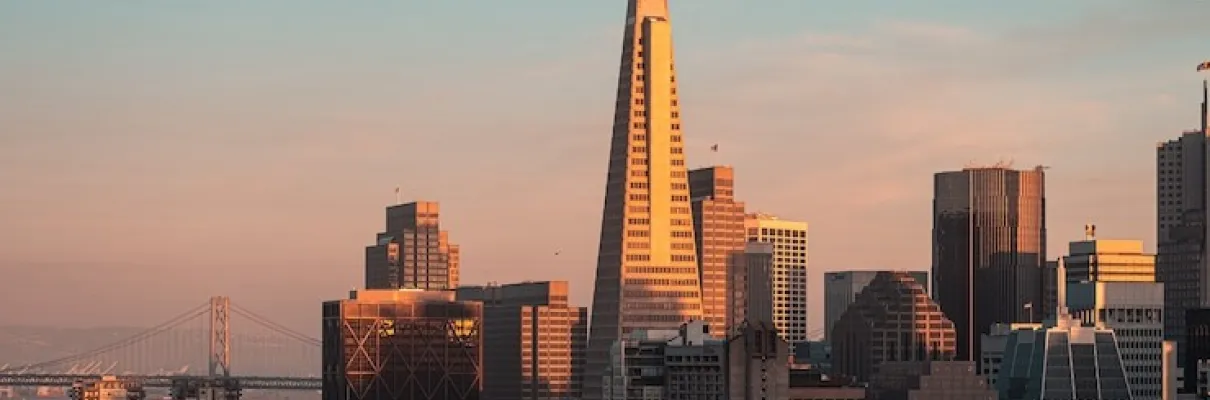

San Francisco is one of the busiest auto transport markets on the West Coast, so rates are competitive. Many parts of the Bay Area face delivery challenges due to hills, narrow streets, and laws that restrict full-size trailers from using many streets.
Still, whether you are shipping to or from San Francisco, this guide covers what it costs, how long it takes, and what to plan around to make the transfer work best for you.
Cost of San Francisco Auto Transport
The average auto transport shipment costs about $1,150, while cross-country moves can be over $3,000. Because of the traffic volume, pricing to and from San Francisco is similar in both directions, though shipments to the Bay Area can be a bit less expensive during peak season.
Typical open transport prices to and from San Francisco in 2026 are:
- Los Angeles (383 mi): $500–$875
- Sacramento: $500–$700
- Las Vegas (520 mi): $550–$1,050
- Seattle (810 mi): $700–$1,075
- Phoenix (820 mi): $700–$1,050
- Dallas (1,731 mi): $1,100–$1,400
- Chicago (2,132 mi): $1,150–$1,500
- Miami (3,042 mi): $1,275–$1,575
- New York (2,906 mi): $1,375–$2,050
Estimated Transit Times for San Francisco Car Shipping
You can expect a pickup window for Bay Area addresses to be one to three days after booking, though North Bay and outlying addresses need an additional day or two. Once the car is loaded, the following travel times apply:
- 1 to 2 days within California
- 2 to 4 days to the Pacific Northwest or Southwest
- 3 to 7 days to Texas and the Midwest
- 7 to 10 days coast to coast
Like all highway trucks, car carrier drivers are limited by federal hours-of-service rules to eleven work hours per day. When you factor in pickups, drop-offs, and other non-driving duties, car haulers cover 400 to 500 miles per day. View delivery date estimates as windows, not deadlines; don't schedule a lease turn-in or a flight around the earliest days of your delivery window.
Popular Routes for Auto Transport to San Francisco
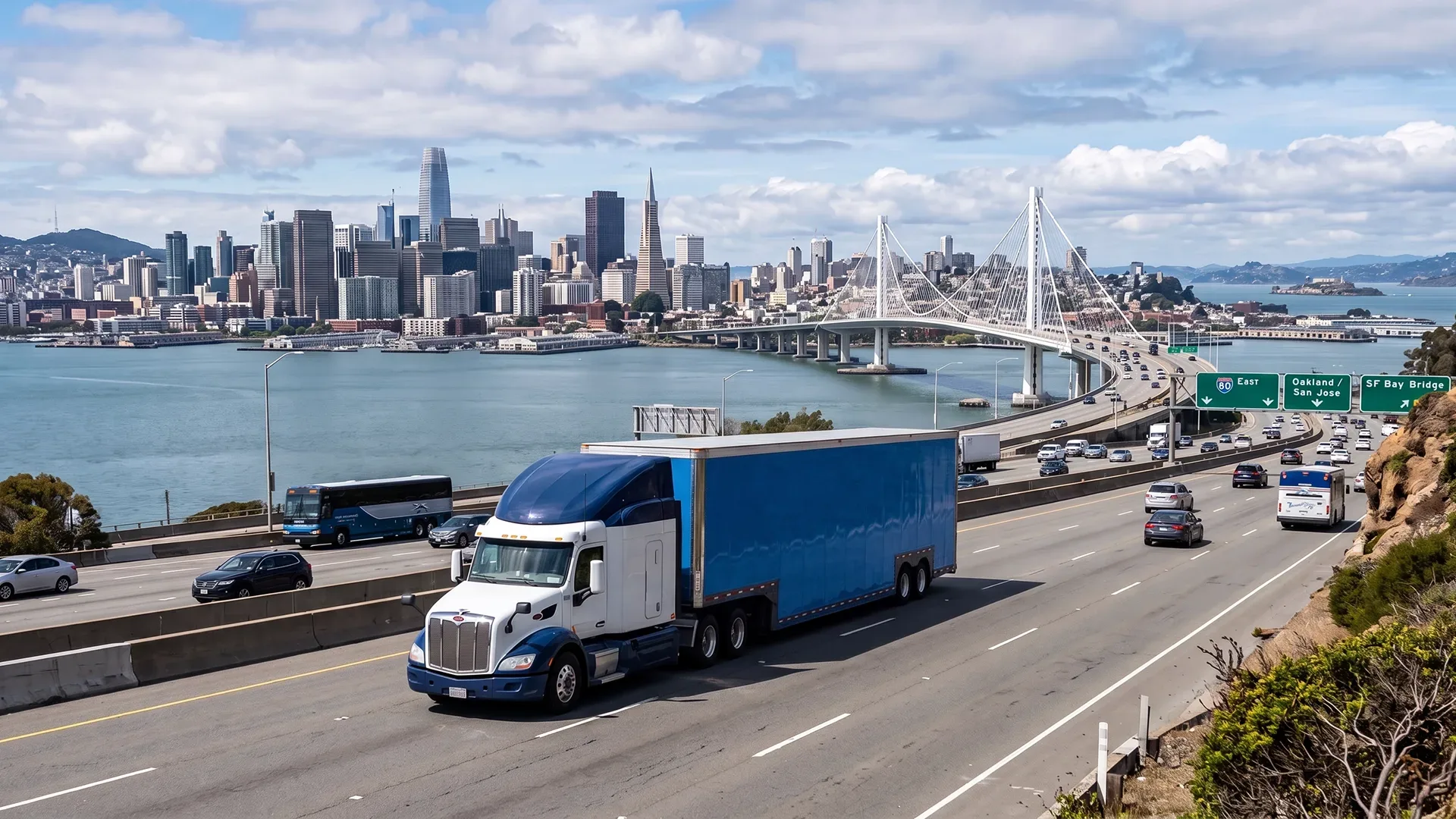
San Francisco enjoys solid connections to points north, south, and east. The San Francisco to Los Angeles route has the highest frequency in the state and the lowest cost per booking.
- I-5 north carries steady volumes to Portland and Seattle
- I-80 east is the workhorse for Sacramento, Reno, Salt Lake, Denver, Chicago, and onward to the Northeast
- Southwest traffic to Las Vegas and Phoenix runs year-round, as do southern cross-country routes through Los Angeles onto I-40 or I-10 toward Texas and the Southeast.
These are established lanes with reliable backhauls, so the pricing is often better than other routes of similar mileage. However, a pickup or delivery point 100 miles off a busy corridor can cost more than you might think because it makes the run less efficient.
Open vs. Enclosed Transport
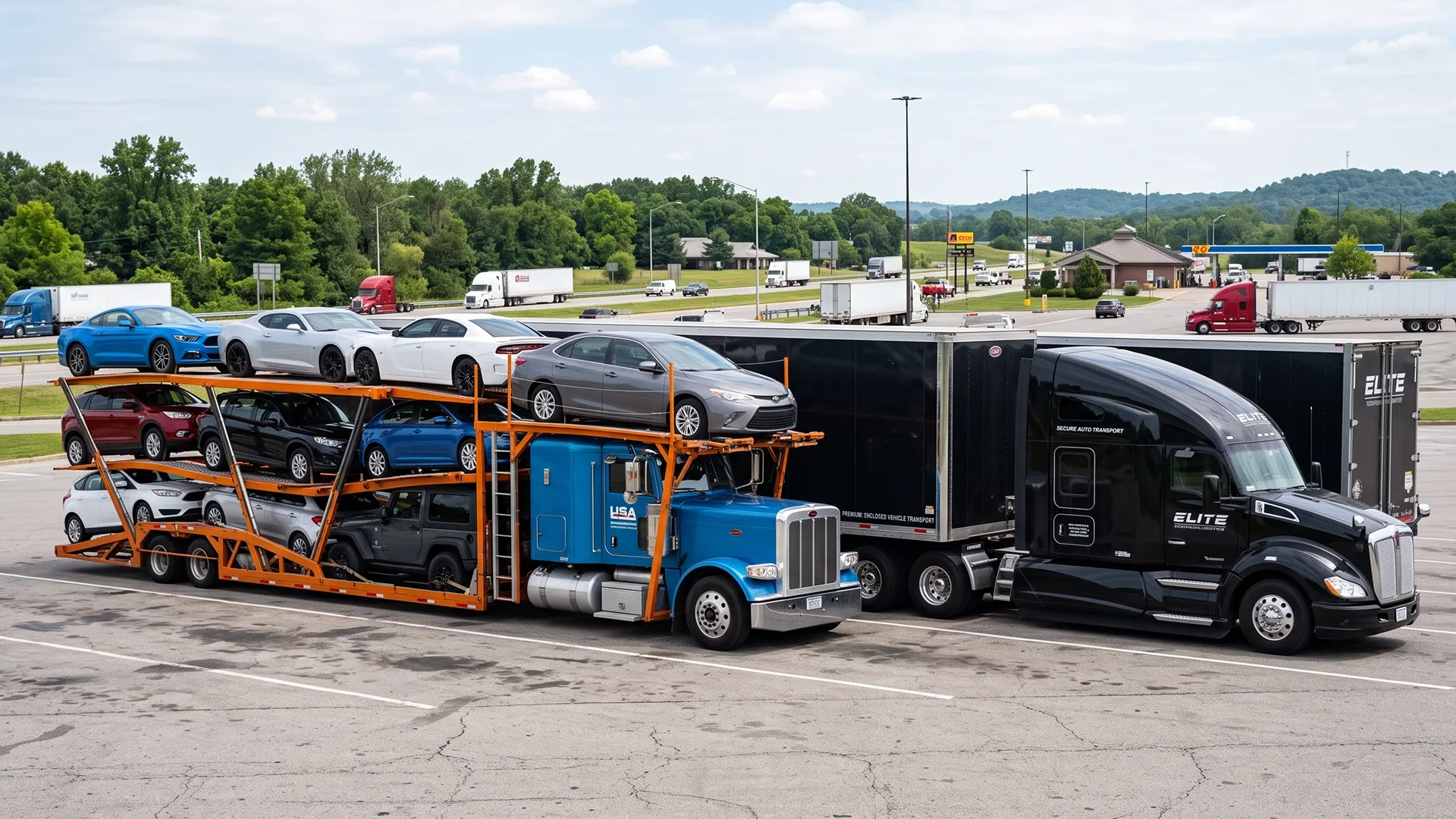
Open transport carriers are the double-deck trailers seen carrying eight to ten cars down the highway and are the industry standard. Enclosed transport carriers have roofs and walls that seal the transported vehicles from weather, road debris, and view, and have a price premium of 30 to 60 percent.
Enclosed is preferred for collector cars, exotics, and high-value luxury vehicles. The Bay Area has unusually deep enclosed capacity because of the regional collector and exotic market. However, enclosed trailers are the least maneuverable equipment to work on a city street, so plan on using a meet point and book further ahead.
Pickup and Delivery for San Francisco Auto Transport
Very little gets loaded at the curb inside San Francisco proper. Steep grades, narrow blocks, overhead wires, street weight limits, and the city's peak-hour restrictions on large commercial vehicles combine to make hillside neighborhoods effectively unreachable for a 75-to-80-foot hauler. Carriers solve this by meeting at an accessible location, such as a wide arterial like Van Ness Avenue or a retail parking lot in Daly City. It may require a short rideshare, while protecting your car and the driver.
The Peninsula and East Bay generally receive door-to-door service, as happens anywhere a truck can get straight, level access with room to unload.
Route and Carrier Availability for San Francisco Car Shipping
The Bay Area has access to I-80, I-5, US-101, and I-280 and enough population to support a strong auto transport San Francisco carrier supply. Still, get 3+ since price spreads of $150 to $300 are common.
Three regional factors affect pricing and planning:
- Summer peak-season pricing runs 20 to 30% above winter
- Sierra weather on I-80 can delay eastbound shipments from November through March
- Bridge and peak-hour congestion limit the hours drivers can load in the city.
When booking auto transport to or from the Bay Area:
- Book two to three weeks out from your desired date, or three to four for an enclosed carrier
- Verify the carrier's active MC or USDOT number and cargo insurance before you put down a deposit.
- Photograph the car from every angle at pickup and deliver and confirm the driver's comments in the Bill of Lading before signing
How We Help with Auto Transport in San Francisco
Whether you are from out of state and buying a car in California or relocating, you may need help moving a vehicle to or from San Francisco. Nexus Auto Transport is a leading broker with a nationwide network of vetted carriers experienced in all aspects of vehicle transfers. Contact us for a quote and see how our 3-step process makes it easy for you from start to finish.
Use our car shipping calculator for a free quote: https://nexusautotransport.com/car-shipping-calculator/
San Francisco Auto Transport Factors
Factor |
How It Affects Shipping |
What the Customer Should Consider |
|---|---|---|
Pickup and Delivery Location |
Full-size haulers are 75–80 ft long, longer than San Francisco's 65-ft limit; they can't safely work steep, narrow blocks; city shipments often need alternative meet; Peninsula and East Bay addresses often load at the door |
Expect to meet the driver on a wide arterial (Van Ness, Geary) or in a retail lot; Offering a meet point up front can save costs and days off the pickup window |
Vehicle Size and Condition |
Route data shows roughly +$110 for an SUV or crossover and +$400 for a pickup over sedan pricing. Inoperable vehicles need a winch, adding $150 to $300 |
Provide exact year, make, model, and modifications when quoting |
Open vs. Enclosed Transport |
Open carriers handle most of the market. Enclosed runs 30 to 60% more |
Use open for a daily driver. Choose enclosed for collector, exotic, luxury, or freshly restored vehicles; enclosed capacity books out further ahead |
Route Demand and Carrier Availability |
The Bay Area sits at the junction of I-80, I-5, US-101, and I-280; carrier density is high, so competitive bids and short pickup windows on major lanes |
Compare 3+ quotes; spreads of $150 to $300 on identical lanes are normal. If your origin or destination is North Bay, Santa Cruz, or Sierra foothill, expect 1–2 extra days and a modest premium |
Season and Timing |
Spring and summer are peak; rates are 20 to 30% above winter levels; Bay Bridge and peak-hour truck congestion compress the workable loading day |
Book 2 to 3 weeks out on standard lanes and three to four weeks for enclosed or peak-season moves. Give a two-to-three-day pickup window rather than a fixed date |
FAQs
Can a car carrier pick up or deliver a vehicle directly in downtown San Francisco?
Door-to-door delivery in the downtown area is rare. A full-size open hauler is 75 to 80 feet long and needs a straight, level, unobstructed stretch of street plus overhead clearance to raise a ramp. San Francisco also has one-way grids, double-parking enforcement, and peak-hour commercial vehicle restrictions make door-to-door deliveries rare.
Instead, carriers arrange to meet on a wide major road or a large retail parking lot. Some carriers run smaller single-car flatbeds for a shuttle leg into the city at extra cost. Ask about or suggest a meet point at booking rather than discovering it the morning of pickup.
Are there restrictions for car carriers on narrow streets in San Francisco?
Yes, and they are both physical and regulatory. San Francisco treats vehicles over 65 feet long, 8.5 feet wide, 14 feet high, or 34,000 pounds per axle as "extralegal." They require an SFMTA permit. Standard single-trip permits cost $16, annual permits cost $90, and operating without one carries a $1,000 fine.
Permitted extralegal moves are limited to daylight weekday hours, not including the 7 to 9 a.m. and 4 to 6 p.m. peaks, and heavy loads are barred from certain crossings.
Can I ship an inoperable vehicle from San Francisco?
Yes. Inoperable or non-running vehicles ship routinely, but they require a carrier with a winch and loading ramps, which is a smaller subset of the fleet, so expect a $150 to $300 surcharge and a slightly longer pickup window.
How you define "inoperable" also matters. A car that does not start but still rolls, steers, and brakes can be winched onto the trailer. A vehicle with seized brakes, a locked steering column, missing wheels, or frame damage needs specialized equipment and should be described when requesting your quote.
How far in advance should I book car shipping in the San Francisco Bay Area?
Two to three weeks is standard for open transport traveling a major route. That gives you time to compare quotes, verify credentials, and let a broker match you to a truck heading your way. Increase that to three or four weeks for enclosed transport, for pickups between May and August when relocation demand peaks, and for outlying origins.