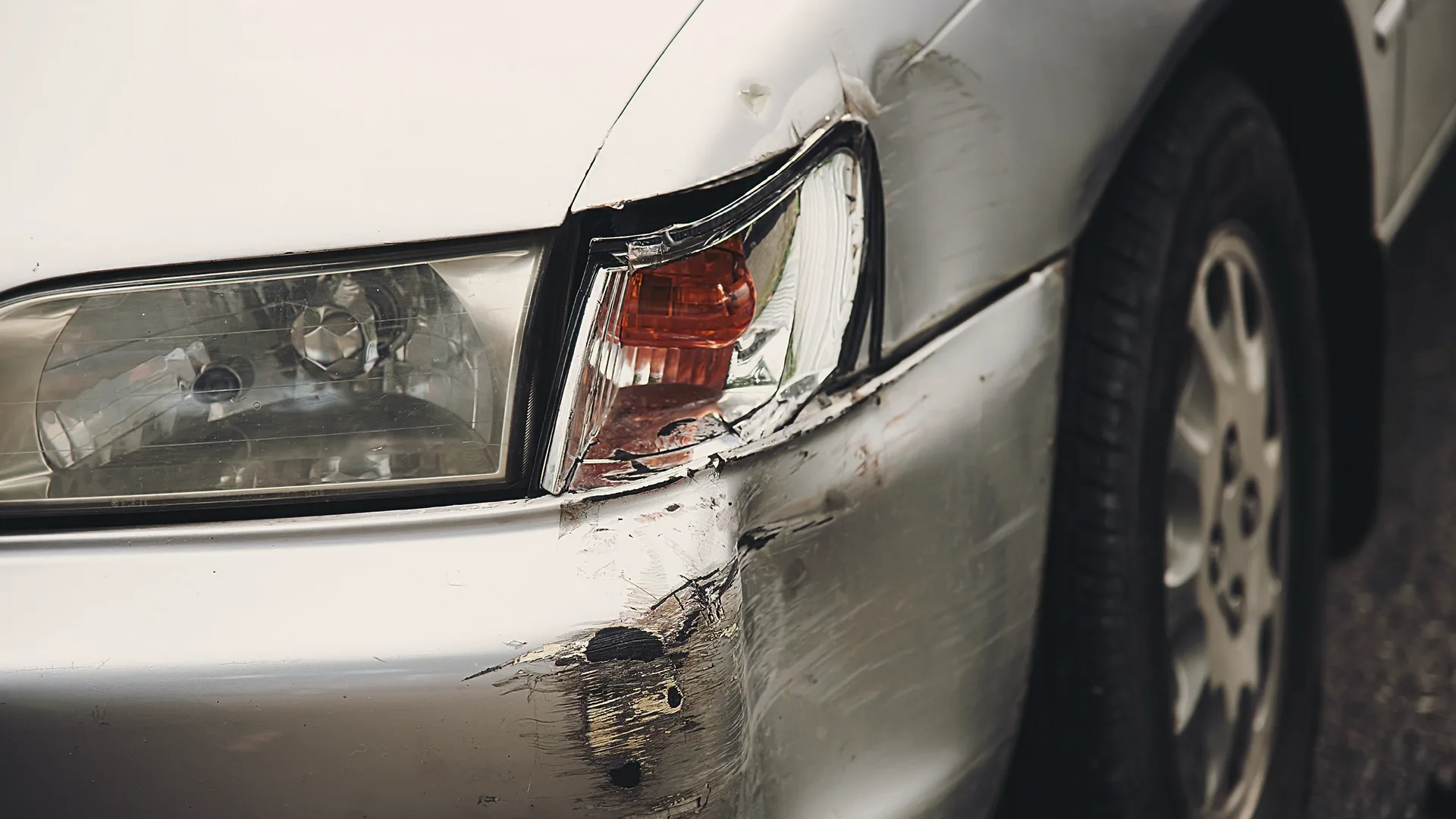
It is natural to ask how much does an accident devalue a car. From an engineering standpoint, a vehicle that has been in a collision and repaired well can return to its pre-accident quality. However, the market still discounts accident vehicles.
One accident entry on a vehicle history report can strip 10 to 20 percent off a car's value, and a structural-damage flag can take 20 to 40 percent off. Overall, an accident history impacts a used car’s value regardless of repair quality.
Why the Market Discounts an Accident
The market's discount on accident vehicles isn't a judgment about the car itself; it is a price for uncertainty about the vehicle.
A buyer looking at two identical vehicles has no way to verify that the vehicle with a repair history was returned to factory specifications. Even with a surface inspection, they can't see inside the front quarter panel, determine whether the welds match the OEM procedure, or assess how they recalibrated the forward radar when the bumper came off.
Faced with unknowns, buyers discount the vehicle's value. The appraisal industry calls this the inherent diminished value, a loss that persists even after a technically perfect repair. In nearly every case, the loss stems from the accident record on the vehicle history report, not a known defect.
Other issues come into play as well, including:
- Most certified pre-owned programs disqualify vehicles with structural damage, which pushes an otherwise clean car out of the highest-margin retail channel and into standard used inventory or the wholesale auction lane.
- Lenders and insurers also reference history-adjusted valuations. For example, Black Book factors accident history into its wholesale numbers, and the reported accident continues in vehicle history throughout the vehicle's life.
CARFAX has estimated that as many as 40 percent of vehicles on U.S. roads carry some damage in their history, and about one in four cars is sold within a year of a damage incident.
How Much is My Car Worth After an Accident? The Key Factors
Not all accidents are created equal, and not all reported accident damage affects vehicle values the same way. When trying to understand how much an accident devalues a car, the following factors are important.
- Severity coding, not repair cost. A $4,500 repair coded as structural on a history report hurts the value more than an $8,000 repair coded as moderate. Buyers react to the label, not the repair cost. The biggest valuation cliff is the line between cosmetic and structural damage.
- Repair quality and parts sourcing. Insurers often specify aftermarket parts for accident repairs to control claim costs, and appraisers and experienced buyers recognize the difference between OEM and aftermarket parts. The problem isn’t limited to sheet metal and frames. Modern vehicles are filled with electronic and sensing gadgets, and non-OEM components can affect driver-assistance systems and battery systems in EVs and hybrids. The concern exists even for repairs performed by certified shops using OEM parts.
- ADAS calibration. Advanced Driver Assistance Systems (ADAS) cover lane departure warning, blind spot warnings, and similar systems that can be damaged in relatively minor accidents. Because drivers rely on their accuracy, these systems often need recalibration after collision repairs, raising questions about their reliability. Industry insiders recognize these issues and discount accident vehicles accordingly.
- Title status. A salvage or rebuilt title status is a legal data point, not an indicator of vehicle quality. Still, it permanently caps the car's value, often at half the value of a clean-title equivalent. It also can constrain financing and full-coverage insurance.
- Vehicle profile. The percentage of value loss is higher for luxury, low-mileage, and late-model vehicles because buyers have more alternatives and higher expectations. Older, high-mileage vehicles show less measurable loss.
How Buyers Can Check Accident History
The impact of accident history on used car values is dramatic, so how can potential buyers avoid buying or overpaying for an accident vehicle? Potential buyers should start with:
- CARFAX or AutoCheck. They provide vehicle history reports that aggregate police reports, insurance claims, repair-facility records, and auction data by VIN. However, accident repairs paid out of pocket and never reported to police or an insurer leave no trace.
- National Motor Vehicle Title Information System (NMVTIS). A federal system accessed through an approved provider for a few dollars. NMVTIS draws from state DMV records and is the authoritative source for brand history. It helps spot cars retitled after crossing state lines to obscure a previous title brand.
- Vehicle Inspection. An independent technician's pre-purchase inspection is the only step that catches what the paperwork misses. They can perform paint-depth gauge readings on panels, a diagnostic scan for stored fault codes and calibration status, and examine panel gaps, bolt heads with wrench marks, overspray in door jambs, and mismatched weld patterns underneath.

What Sellers Can Do Ethically
Buyers aren’t the only ones concerned about accident vehicles. Every seller also asks how much my car is worth after an accident. When selling an accident vehicle, your best policy is honesty, backed up with documentation.
When you are involved in an accident, insist on OEM parts, choose a manufacturer-certified shop, and collect the paperwork, including an itemized parts list, frame-measuring readings before and after, weld and sectioning records, pre- and post-repair diagnostic scans, and ADAS calibration certificates naming each system and method. A folder of that material converts an unknown repair into a known. It is the only lever a seller controls.
You can also get an independent USPAP-certified appraisal establishing pre- and post-loss value. It may support a diminished value claim against the at-fault driver's insurer and later gives a private buyer a third-party number to react to instead of a guess.
Attach the repair file to the vehicle listing, and note the incident on the bill of sale, with the buyer acknowledging both. A documented, professionally repaired car with calibration certificates is a known risk, not something hidden from the buyer.
When selling the car, dealer trade will likely apply the steepest discount, because they are hedging against the uncertainty. A private buyer who reads the file, or an enthusiast who understands collision repair, will often pay more for the same vehicle.
How We Help Get You Where You're Going
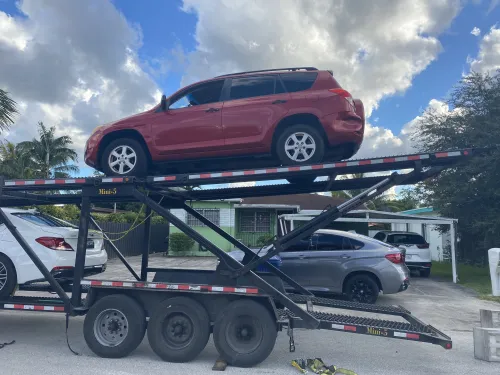
When buying a vehicle with an accident history from out of state or even an inoperable vehicle, you need an auto transporter you can trust. Vehicle transport is our core business. As a leading broker, Nexus Auto Transport has a nationwide network of vetted carriers experienced in all aspects of new and used vehicle transfers. Contact us for a quote and see how our 3-step process makes it easy for you from start to finish.
Estimated Depreciation by Damage Severity
Damage Type |
Average Value Loss Percentage |
Impact on Safety Rating |
Recommended Repair Documentation |
|---|---|---|---|
Minor Cosmetic Scratches |
2% to 8% of pre-accident value; Near zero if the repair was paid out of pocket and never generated a vehicle-history entry. |
None in most cases; Clearcoat, paint and trim work do not touch crash structure, restraints or ADAS; Scratches on a bumper cover that houses radar, ultrasonic or camera hardware, disturb sensor aim when repaired |
Itemized paint and body invoice; Written statement from the shop that no structural, restraint or sensor components were involved |
Moderate Sensor or Bumper Damage |
10% to 20% of pre-accident value; 20% to 25% when airbags deployed |
Crashworthiness is preserved with OEM parts and procedures; ADAS performance is the real exposure. |
Pre-repair and post-repair diagnostic scan reports; ADAS calibration certificate identifying each system, static or dynamic method, and the OEM procedure followed; OEM vs. aftermarket parts list |
Severe Frame or Airbag Damage |
20% to 40% of pre-accident value with an explicit structural-damage flag on the history report |
Material, and largely undocumented; NHTSA and IIHS rate models, not individual cars, so a repaired vehicle keeps its published rating on paper |
Printed OEM repair procedure for every structural operation along with various calibration readouts; Current title status and, if branded, the state rebuilt-inspection certificate |
FAQs
How do insurance companies calculate diminished value after a collision?
Most insurers start from the 17c formula, a method State Farm introduced during the Mabry v. State Farm litigation in Georgia and which the industry has since adopted broadly. Its four steps include:
- Establish the vehicle's pre-accident value from a recognized guide
- Apply a base loss value of 10 percent of that number, a ceiling the insurer treats as the most it will pay for an accident vehicle
- Apply a damage multiplier based on the extent of the damage
- Apply a mileage multiplier that steps down with higher mileage until 100,000 miles and above
Can a dealership refuse a trade-in based solely on a minor accident record?
Yes. A dealer has no legal obligation to accept a trade-in, and a reported accident is a legitimate reason to decline. The driving factor is where the dealer plans to send the car. A car that cannot enter a certified pre-owned program has to be retailed as a standard used unit or wholesaled at auction, so the dealer prices the trade accordingly.
What legal disclosures are required when selling a repaired vehicle in a private sale?
State law sets disclosure obligations, and they vary considerably, so the specific rule depends on where the sale happens. Two federal requirements apply to nearly every used-vehicle sale: 1) an accurate odometer disclosure, and 2) for dealers, the FTC Used Car Rule Buyers Guide. Beyond that, states diverge.
Title branding is the clearest line. Concealing or attempting to launder a branded title is fraud everywhere, but other rules vary by state.
Still, sellers cannot legally lie. Actively misrepresenting a material fact, such as answering “no” when asked whether the car has been in an accident, or concealing structural repair, exposes the seller to common-law fraud. Check your state DMV website for details.
How does a salvage title differ from an accident history report?
A salvage title is a government document. A state motor vehicle agency issues it when an insurer declares a vehicle a total loss, which generally happens when repair costs reach a state-defined percentage of actual cash value. The brand stays on the title and follows the vehicle across state lines.
A car with an active salvage title generally cannot be registered, insured for full coverage, or legally driven on public roads. Repairing it and passing a state inspection converts the brand to "rebuilt” or “reconstructed,” which restores registrability but never restores a clean title.