
Sometimes, the type of car you want isn’t readily available at the local dealership. When you’re hunting around for a custom Ford Mustang or a historic Porsche, you may need to look at alternative sources.
Car auctions are fantastic solutions for unearthing specialty cars, securing better pricing, sourcing fleet vehicles, handling government seizures, finding work trucks, and acquiring rebuilt vehicles. The trouble is that not all auctions work the same. You don’t want to walk into one of these events without any idea of how to place a bid or have money ready when it's time to complete the transaction.
Learning how to buy a car at an auction is crucial if you want to find the perfect vehicle, finish all the fees and paperwork, and get your new ride back home.
Why Auction Cars Are Not Always as Cheap as They Look
Well over 8 million cars are sold at auction each year, and that’s just the ones through the NAAA (National Auto Auction Association). That doesn’t mean each one is a screaming new deal. You could find a Toyota Prius that’s a few years old with only 20,000 miles on it listed with a current bid for $6,500, but that’s not the final price.
Buying cars at auction always involves more fees than you might expect. You need to budget appropriately. That final cost of the Prius might include:
Buyer’s premium: $500–$900
Documentation fee: $75–$150
Gate or loading fee: $50–$150
Sales tax: $250 (based on state)
Title/registration: $35 (based on state)
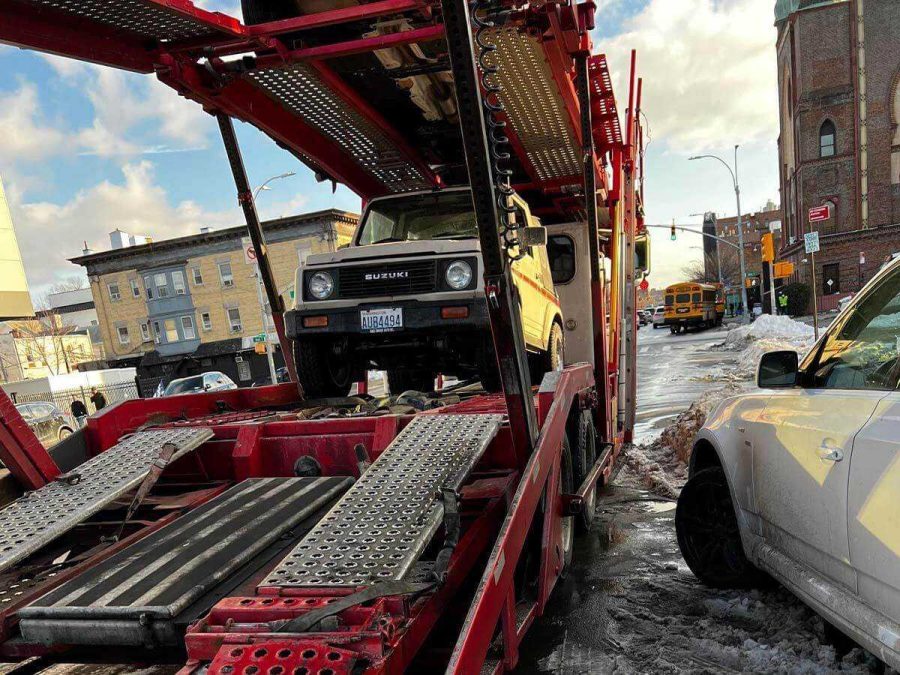
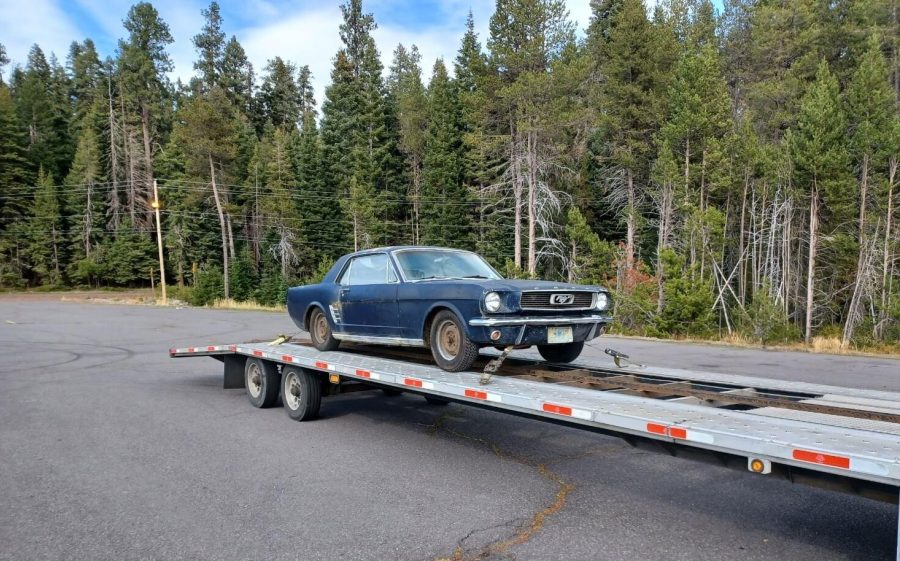
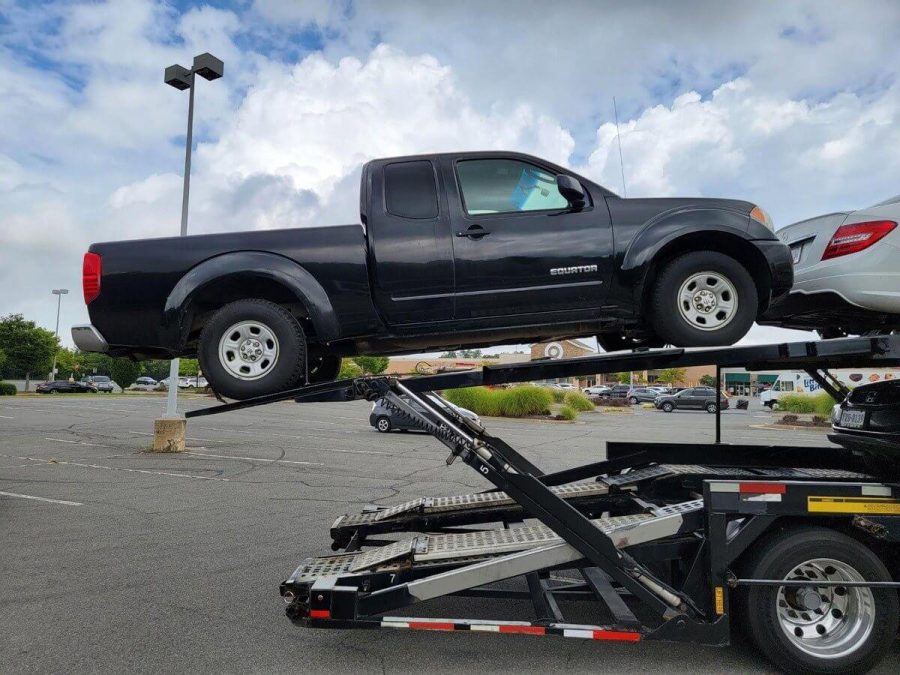
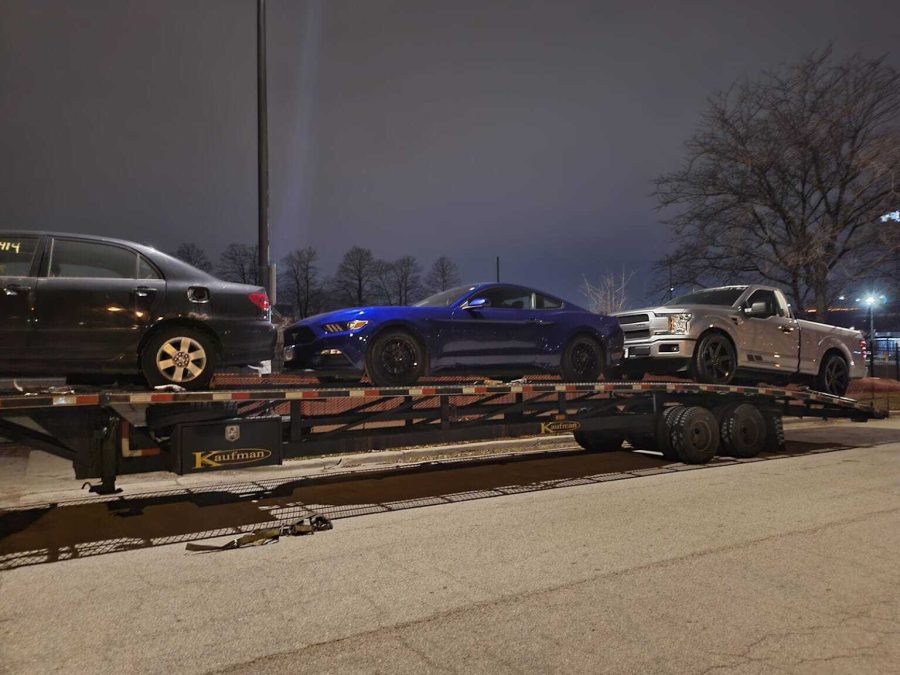
There are also storage fees if you don’t pick up the car you just won within a specified time limit, and you have to get it back home. If you’re not in the area because you’ve bid online or have a proxy present, you’ll need to secure reliable car shipping from a nationwide provider like Nexus Auto Transport. Depending on your delivery options, that can run anywhere from $300 to $2,000.
When all is said and done, that $6,500 Prius can easily turn into a $10,000 car. As long as you go in with “eyes wide open,” you can get a good deal, but you have to budget for the entire buying experience.

How Do Car Auctions Work?
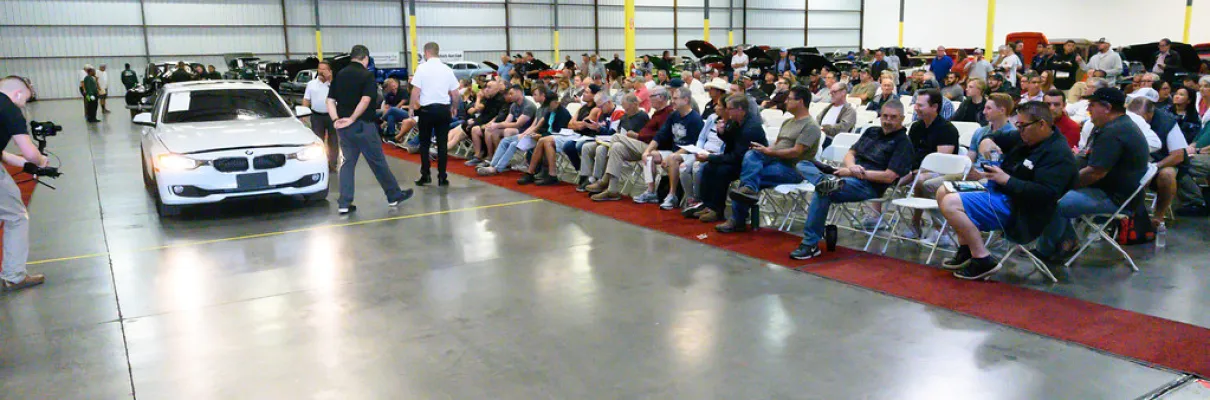
The good news is that a typical car auction is fairly simple. An organizer like Manheim or RM Sotheby’s will put on an event. Sellers list their vehicles. Once approved, that catalog goes out to vetted buyers who either pay an entry fee, place a deposit in escrow, or some combination, as long as they have the money to make a purchase. Whoever places the highest bid gets the car.
There are a variety of auction types as well. A government-run auction typically includes public fleet vehicles, seized vehicles, surplus equipment, and former municipal/law enforcement cars. A dealer-only auction requires you to have a dealer’s ID to bid or even attend. You can also find salvage auctions where cars that’ve been damaged by hail or accidents are featured.
Most buyers will look for online auctions with a lot of inventory or for private (closed) events with specific themes where vintage, luxury, and specialty cars are listed. Those tend to include food, entertainment, and an entire “scene” that attracts many buyers.
If you come across an auction that is “no-reserve,” it means the highest bid wins regardless of that amount. That’s where you hear about a friend of a friend winning a brand new Toyota Tundra for $100.
Other listings are likely to have a reserve price. That means the seller has set a minimum bid threshold. If that amount isn’t met, the car doesn’t sell. There’s also:
Preliminary bidding: Placing a bid on a listing before the auction officially opens to the larger audience.
Live bidding: Online bidders are invited to participate alongside in-person or phone bidders.
Proxy bidding: designating an agent or “stand-in” to bid on your behalf.
Seller approval: The seller has the right to accept, reject, or counter the final bid price.
The more buying cars at auctions you do, the easier this structure becomes to learn.
Hidden Auto Auction Fees Breakdown
Fee Type | Average Cost Range | When It Applies | Can It Be Avoided |
|---|---|---|---|
Buyer's Premium | $200–$1,000+ (often 5%–15% of sale price) | Charged on nearly every winning bid | No |
Internet Bid Fee | $50–$200+ | Added when bidding through an online platform | Sometimes |
Gate and Loading Fee | $50–$150 | Charged when the vehicle is released from the auction | Rarely |
Late Payment Penalty | $25–$500+ depending on auction rules | Applied when payment is not completed within the auction's required timeframe | Yes, by paying on time |
Lot Storage Fee | $20–$75 per day | Charged when a purchased vehicle remains on the auction lot beyond the pickup period | Yes, by arranging prompt pickup |
Do You Need a License to Buy a Car at Auction?
The good news is you don’t always need a dealer's ID to attend a large auction. For example, if you want to attend the annual Monterey Auction hosted by RM Sotheby’s in California, you’ll need to register and prove your financial resources. That’s it. No license required.
Different states have different rules, so it’s always wise to do a little research ahead of time about any formal application fees, dealer training, or business applications. You could also run into specific rules regarding the purchase of a salvage vehicle. That may require a rebuilder or broker license.

How to Buy a Car at an Auction Step by Step
Step 1: Research
Start your process by checking out what auctions are available in your area, online, or when you’re on vacation. You want to have a CARFAX account ready to research the listing’s accident, ownership, title, maintenance, and lien history. You can also use Kelley Blue Book or Edmunds to get the car’s retail value for comparison.
Step 2: Set a Budget
Do not make the mistake of overbidding. Set a budget that includes all anticipated expenses so you can walk away from the auction with your car and not extra debt. You want a dream bid amount and a maximum bid amount. That way, if you get into a bidding war, you have a hard out.
Step 3: Register
Have a clean account, ID, and any other documents needed to register for the auction you want to attend. How do car auctions work depends a lot on the type of auction and who is allowed to bid, so register as early as possible to get all the info you can.
When you register, you should receive an email or packet with instructions on how to place a bid, details on pickup/drop-off, and how quickly they’ll want you to move or ship the car from storage.
Step 4: Review & Bid
Take your time checking out the different listings. Even when you are on the lookout for a reasonable Hyundai hybrid, you can always come across that stunning Bentley at your maximum bid price. That’s part of the fun!
Step 5: Ship Your Car
How to buy a car at an auction must include the cost of auto shipping. Not every auction you attend will be near your home. If you’re two states away, it’s often more efficient and simpler to have the vehicle shipped with Nexus Auto Transport.
This entire process doesn’t have to feel overwhelming. A good “pro tip” is to attend an auction as an observer first. That way, you get a feel for the situation before your money is on the line.
Taxes, Titles, and Registration Requirements
The taxes you pay for the car are determined by your local DMV when you register. There may be sales tax at the event, but it is usually included in the final listing price.
Your new acquisition may also require permitting, emissions testing, and inspection. All of those are typically handled by the buyer post-sale. However, it’s good to check whether the car you’re bidding on has passed these tests recently as a quick way to see if it's in good condition.
Always, always, always make sure the title is present and verifiable. You don’t want to buy a luxury Lexus LS only to find the title is really salvaged. That’s why it's often worth having a friend with car-repair experience come along to the auction. That $50 entry fee for a buddy can save you thousands on later repairs.
Vehicle Pickup and Transportation Logistics
The final piece of the how to buy a car at an auction puzzle is transportation. If the car you’re buying is near your home, you can pay for the vehicle and drive it off the lot. Easy peasy.
If the car you want is far from where you live, you’ll need a better solution. That’s where working with a professional car shipping company that offers complete auction-to-driveway delivery really helps.
Nexus Auto Transport has a massive network of vetted carriers available to transport auction vehicles from coast to coast, border to border, or even to a nearby state when you don’t want to deal with the hassle.
Use our shipping calculator to see how delivery timelines and pricing align with your maximum bidding value and total auction budget. Not only can our carriers pick up from an auction site, but having a plan in place for car transport helps you avoid storage fees or complex logistics when the event is over, and people want to go home.

Is Buying Cars at Auction Worth It?
Buying cars at auction is an excellent way to save money and find rare vehicles that would otherwise be harder to source. There are all kinds of good opportunities at government, dealer, private, salvage, and public auctions, but you need to do your research ahead of time to ensure you’re getting a solid ROI on your money.
Take your time, go as an observer first, bring a buddy to verify the vehicle’s condition, and you should leave the auction with a great new car ready to ship with a Nexus carrier.
FAQs
Are there any tips for buying cars at auction that people should know?
Yes! Bring cash, as that is quicker than most online transactions. You should also consider second-chance bidding if a car doesn’t reach its reserve price, and leverage end-of-day deals when the promoter wants to empty the lot.
What documents must I provide to the auto transport company so they can legally pick up my car from the auction lot?
The carrier needs a Gate Pass to enter the lot, or at least a Release Authorization that includes the lot number, VIN, and Bill of Sale. The carrier will then issue a Bill of Lading to ensure everything is legal during transport.
What is the standard procedure if the vehicle has severe undisclosed mechanical issues that were not mentioned in the auction listing?
You’ll have to file a claim as quickly as possible. Most auction houses have an arbitration process that reviews the evidence and renders a judgment. As long as you have all the documents, you should be good.
How long does it typically take to receive the vehicle's official title after winning the bid and completing the payment?
Expect it to take about 2 to 4 weeks for most major auctions like Copart or IAAI. If you have the Bill of Sale, you’re legally all set and can get a temporary plate from your state’s DMV/BMV.