Moving a car from one state to another appears simple from the outside. A truck shows up, the vehicle gets loaded, and the vehicle comes off at its destination.
Below the surface is one of the more densely regulated corners of American commerce, with federal transport rules and regulations covering financial obligations, driver licensing, and the like, many of them enforceable during roadside inspections. Here's what those obligations include.
Licensing and Registration
Car shipping rules require every company hauling vehicles across state lines for compensation to have operating authority from the Federal Motor Carrier Safety Administration (FMCSA), part of the U.S. Department of Transportation, which requires a USDOT number.
Federal car transport laws require keeping MCS-150 census data (e.g., legal name, address, fleet size) current and paying annual Unified Carrier Registration fees.
Brokers, or companies that arrange transport without owning trucks, need separate broker authority. A company doing both jobs needs both registrations.
Insurance and Financial Responsibility
Transport rules and regulations carry over to insurance and financial responsibility requirements, including:
- For-hire carriers of non-hazardous property (including automobiles and trucks) must have liability coverage of $750,000 for vehicles rated over 10,000 pounds GVWR.
- Brokers and freight forwarders must post a $75,000 surety bond or trust fund.
Federal car transport laws do not require general-freight carriers, including auto haulers, to file cargo insurance. Cargo insurance coverage for car haulers is a commercial matter, meaning brokers and shippers demand it, not the FMCSA, so reputable operators voluntarily carry $150,000 to $250,000 in coverage.
Driver Qualifications
Carriers must maintain a driver qualification file on every driver that includes their:
- Employment application
- Motor vehicle record pulled at hire and annually thereafter
- An annual review of driving history
- A road test certificate or equivalent
- Safety performance history from previous employers
- DOT medical examiner's certificate.
Drivers must be at least 21 for interstate work, hold the appropriate CDL class, and pass a physical from a certified medical examiner at least every two years.
Drug and alcohol rules follow a similar path:
- Pre-employment, random, post-accident, and reasonable-suspicion testing.
- Violations are sent to the FMCSA Drug and Alcohol Clearinghouse, which employers must query before hiring and at least annually for current drivers.
Since 2025, drivers must pass an English language proficiency assessment as well.
Hours of Service
Property-carrying drivers have hours of service limitations including:
- Limiting drivers to 11 hours of driving after 10 consecutive hours off duty, within a 14-hour on-duty window
- A 30-minute break is required after 8 hours of driving
- Weekly limits of 60 hours in 7 days or 70 hours in 8 days, which reset after 34 consecutive hours off.
Nearly all hours-of-service information must be recorded on an electronic logging device, and falsified logs are treated as serious violations.
Vehicle Handling and Cargo Securement
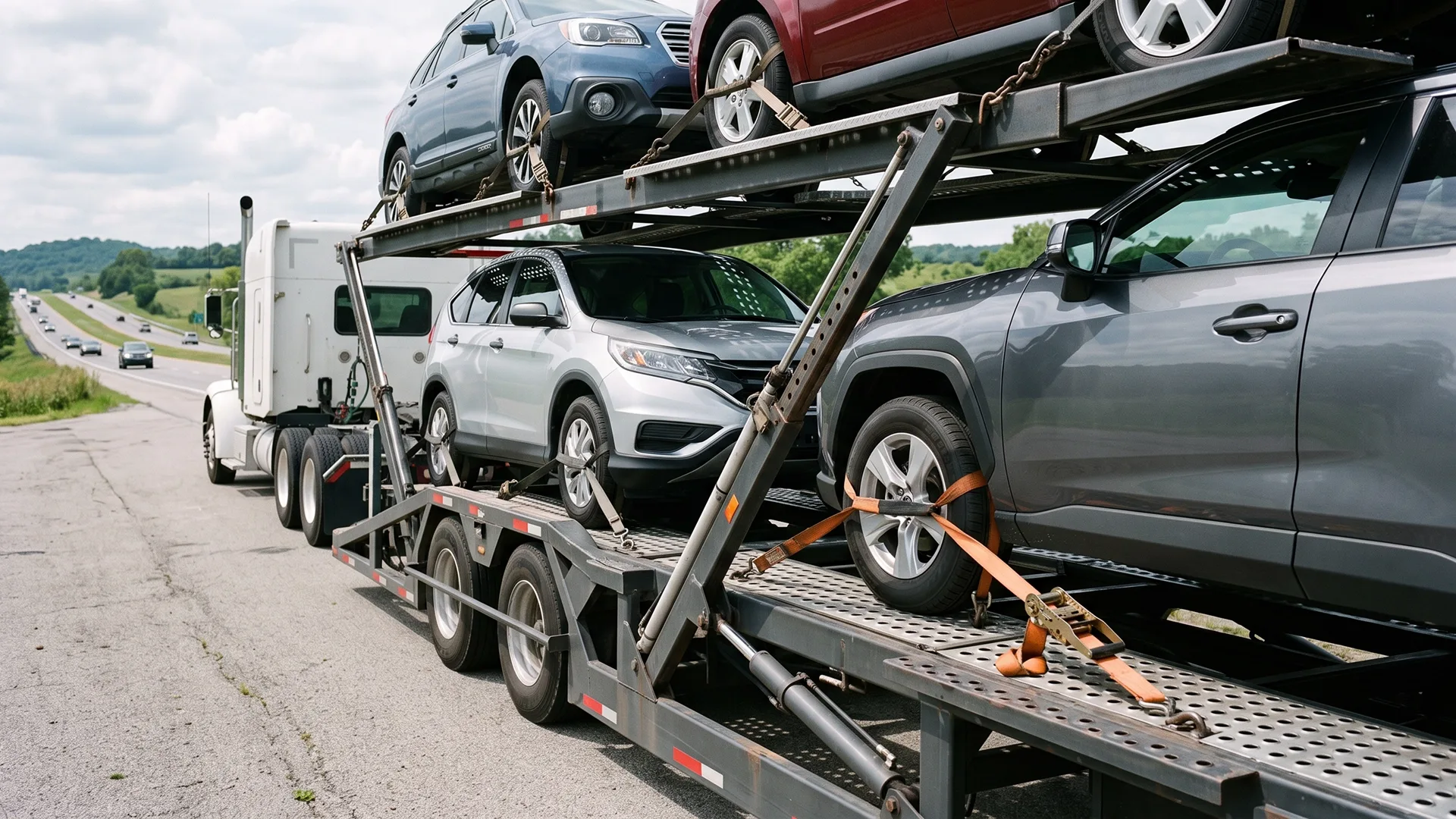
Car shipping rules are quite specific about how transported vehicles are secured to the rig.
- Automobiles, light trucks and vans weighing 10,000 pounds or less must be restrained front and rear against lateral, forward, rearward and vertical movement, using a minimum of two tiedowns.
- Tiedowns attached to a vehicle's structure must use mounting points the manufacturer designed for that purpose.
- Securement isn't a one-time activity. Drivers must verify securement before moving, inspect them within the first 50 miles of a trip, and re-examine them every 3 hours or 150 miles, whichever comes first.
There are also regulations requiring:
- Annual equipment inspections
- Daily pre- and post-trip inspections
- Driver vehicle inspection reports documenting defects
- Repairs before a defective unit returns to service
Documentation and Claims
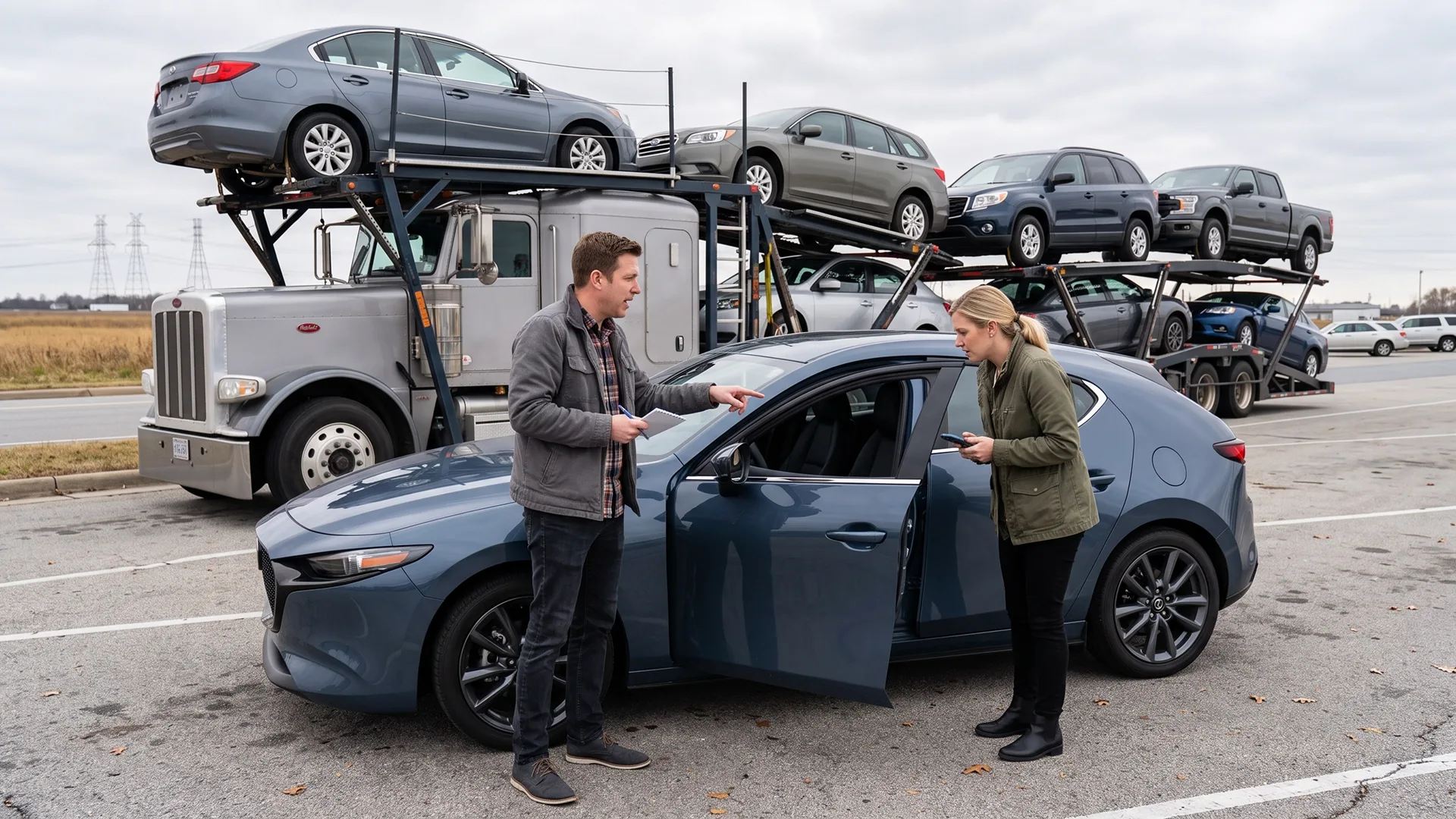
In interstate commerce, carriers must issue a Bill of Lading (BOL) or receipt for all property they accept. With the auto transport portion of the business, the BOL doubles as the vehicle condition report, with each vehicle being inspected and signed off by the driver and customer at pickup and delivery. The BOL is the primary evidentiary document for all damage disputes, so it is vital that you follow the inspection procedures closely.
When damage claims occur, carriers must:
- Acknowledge a valid written claim within 30 days
- Pay, decline, or make a settlement offer within 120 days, and provide written status updates every 60 days
Carriers must also retain the records mentioned above for varying periods.
The Enforcement Backdrop
New carriers face a safety audit within their first year, and all carriers are scored continuously through FMCSA's Safety Measurement System. Poor scores trigger interventions, investigations, up to an out-of-service order that closes the operation.
Shippers can check the authority status, insurance on file, and inspection history in a few minutes through FMCSA's public lookup tools.
How We Help Get You Where You're Going
Understanding and executing vehicle transport is our core business. As a leading broker, Nexus Auto Transport has a nationwide network of vetted carriers experienced in all aspects of vehicle transfers. Contact us for a quote and see how our 3-step process makes it easy for you from start to finish.
Auto Transport Company Compliance Checklist
Requirement |
What the Company Must Have |
How Customers Can Verify It |
Why It Matters |
|---|---|---|---|
FMCSA Authority |
Active interstate operating authority to transport property for hire (FMCSA) |
Look up company on SAFER and confirm the operating status is "Authorized for Property" and active |
Carriers need authority to move vehicle across state lines for pay |
USDOT Registration |
A USDOT number, which is the federal safety identifier tied to the company’s inspection, crash, and compliance record |
Run the USDOT number through SAFER and confirm it matches the legal business name on your paperwork |
USDOT number links safety history to the company |
Insurance Coverage |
Public liability (bodily injury and property damage) of at least $750,000 for vehicles over 10,000 lbs. GVW
Cargo insurance covering the vehicles being hauled.
Brokers post a $75,000 surety bond or trust fund instead. |
Check FMCSA’s Licensing & Insurance database (li-public.fmcsa.dot.gov) for the liability filing, insurer name, policy number, and effective dates.
Request the cargo certificate of insurance directly from the insurance agency |
Liability coverage protects third parties in a crash. It does not pay for damage to your car.
Cargo insurance is the only coverage that pays for your vehicle |
Written Contract |
A signed transport agreement stating the total price, deposit, balance due and payment method, pickup and delivery windows, and cancellation and refund terms.
A Bill of Lading issued when the vehicle is picked up, which doubles as the vehicle condition report signed at both pickup and delivery. |
Get all terms in writing before paying a deposit
Confirm the Bill of Lading names the carrier hauling the vehicle, not the broker
Walk the vehicle yourself at both ends, note any discrepancy on the form before signing, and photograph every panel with timestamps |
The Bill of Lading is core evidence of any damage claim and establishes the chain of custody |
Driver Qualifications |
A driver qualification file on every driver
Drivers at least 21 years old for interstate work, holding the correct CDL class
A drug and alcohol program pre-employment, random, post-accident, and reasonable-suspicion testing |
You cannot inspect a driver qualification file, but you can review the company’s roadside inspection results on SAFER, including its driver out-of-service rate against the national average |
A driver out-of-service rate above the national average signals weak hiring standards and thin oversight |
Vehicle Securement |
Vehicles must be restrained front and rear against lateral, forward, rearward and vertical movement using at least two tiedowns
Driver must verify securement before moving, within the first 50 miles, and every 3 hours or 150 miles |
Watch the vehicle being loaded and photograph how it is strapped down and where the tiedowns attach
Review the carrier’s inspection history on SAFER for cargo securement and vehicle maintenance violations |
Improper securement causes suspension damage from over-tightened straps, undercarriage contact on loading ramps, and damage at the strap contact points |
FAQs
How can I verify whether an auto transport company has active FMCSA authority?
Carriers receive an MC number (Motor Carrier number) authorizing them to transport property for hire across state lines. Carriers also need a USDOT number, which is used for safety monitoring and compliance reviews. Both numbers are public and you can verify a carrier's numbers on the FMCSA website.
What should I do if an auto transport company refuses to provide proof of insurance?
You should treat an auto transport company’s refusal to provide proof of insurance as disqualifying. Federal law requires carriers to carry liability insurance, but not cargo insurance. You should insist on the certificate coming directly from the insurance agency, not a forwarded PDF from the carrier that could be forged.
Are auto transport brokers required to follow the same rules as motor carriers?
Brokers and carriers have overlapping registrations and sharply different obligations. Brokers get FMCSA authority, process agents, and Unified Carrier Registration fees like carriers, but the carrier safety regulations do not apply to brokers. Since brokers do not have trucks or drivers, they do not need to follow the carrier rules covering:
- Hours of service
- Driver qualifications
- Drug testing
- Vehicle securement
- Safety ratings
Instead of liability insurance, they post a $75,000 bond. Even with brokers posting a bond, all vehicle damage claims fall under the carrier's cargo insurance.
What should I check if a different carrier is assigned to my vehicle after booking?
Carrier reassignment is not necessarily a red flag, since most retail auto transport is brokered and dispatched to the best available truck that is traveling in your intended direction. If a carrier change occurs, follow the same process as before by:
- Getting the new carrier's legal name and USDOT number in writing
- Reviewing them on SAFER
- Requesting their cargo insurance certificate.
The primary risk you face is double brokering at pickup. If a different carrier arrives and the DOT number on the truck doesn't match your paperwork, don't allow them to load your vehicle without checking with your broker and confirming the carrier's authority and insurance.