
Americans are a mobile people, with the latest US Census estimates showing that 40 percent of Americans do not live in their birth state. The frequency of moving from state to state means many will face the challenge of transporting their household goods and motor vehicles across state borders during their lives, some more than once. While many people use personal cars or trucks to move themselves and their household items, motorcycle owners face a different challenge since two-wheeled vehicles have limited carrying capacity.
To help motorcycle owners consider their options when moving, we’ve developed this guide on how to ship a motorcycle cross-country. So, let's explore your opinions, their advantages and disadvantages, and the costs involved.
Options for Shipping a Motorcycle Across the Country
Motorcycle owners have multiple options for cross-country motorcycle transport, including:
- Riding your motorcycle across the country
- DIY by Towed Trailer
- As freight on an LTL carrier
- Professional vehicle transportation carriers, with open and enclosed options
We’ve excluded as an option shipping your motorcycle in a professional moving company trailer along with your other household goods. Few moving companies will ship motorcycles in their trailers due to concerns about the motorcycle’s gas tank and gasoline vapors. Likewise, moving companies generally refuse to move e-bikes and other vehicles with lithium batteries, though some will ship them if the batteries are removed.
Riding Your Motorcycle Cross Country
Riding your motorcycle across the country is an option, but the time and expense of a cross-country ride is difficult to justify solely for moving purposes. You may consider a cross-country ride a desired life experience, but it is not motivated by efficiently moving your motorcycle across the country as part of a household move.
Shipping a Motorcycle DIY by Towed Trailer
Riding your motorcycle across the country is an option, but the time and expense of a cross-country ride is difficult to justify solely for moving purposes. You may consider a cross-country ride a desired life experience. Still, it is not motivated by the efficient movement of your motorcycle across the country as part of a household move.
Trailering a car or motorcycle across the country has its challenges. While this approach has its benefits, it faces challenges, including:
- Safety concerns for those who lack experience hauling a trailer
- Price, especially for long, one-way rentals
- Additional costs for fuel, lodging, and meals
Shipping a Motorcycle as LTL Freight
Another option is to crate and ship your motorcycle as freight on a less-than-truckload shipment. This approach is common among motorcycle dealers and others with experience in the area, but is seldom used by consumers. The challenges for individual consumers include:
- Lack of knowledge of proper crating and trucking industry regulations
- Cost of crating and other materials
- LTL shipments are loaded and unloaded multiple times as they move from terminal to terminal on their cross-country trip, increasing the potential for damage
- Slow and less predictable delivery date
- LTL shipments must be dropped off and picked up at the terminal. There is no door-to-door service.
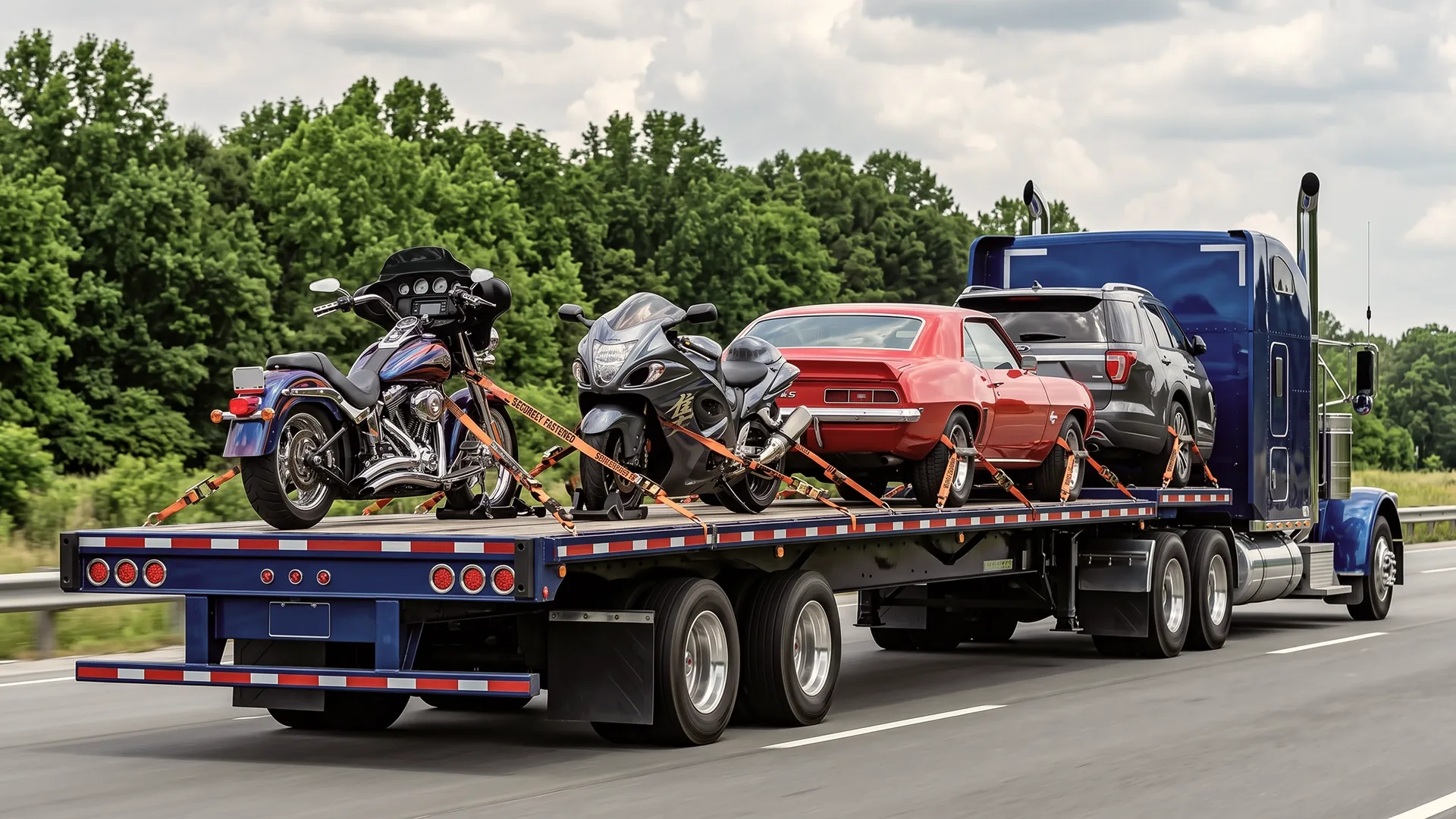
Professional Vehicle Transport Carrier
The most common method of shipping a motorcycle across the country is via a professional shipping company. Among the benefits of this approach are convenience, experienced drivers, shipping speed, choice of open and enclosed carriers, and pricing.
Convenience
A key benefit of shipping a motorcycle with a professional transport company is convenience. Professional transport companies, especially brokers like Nexus Auto Transport, offer online cost calculators that let you get a quick bid and arrange your shipment.
They also provide door-to-door service, meaning the carrier will pick up and drop off your machine at your chosen locations, including your home driveway, your workplace, or a self-storage building.
Experience and Equipment
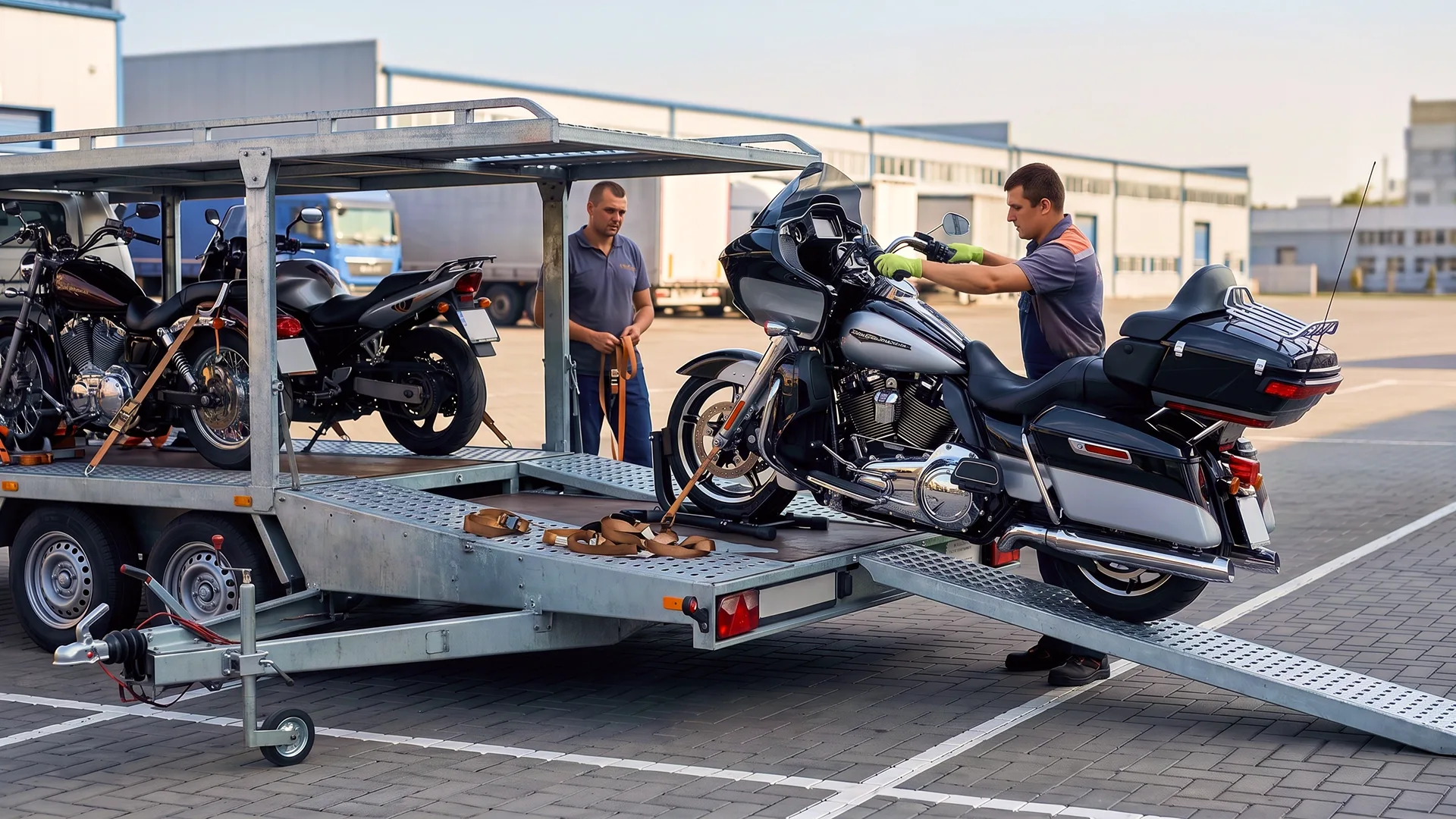
Another benefit of hiring a motorcycle shipping company is their use of experienced drivers with quality equipment. They use high-quality tie-downs and other hardware, so you can trust a reputable company to transport your bike and deliver it without damage.
Shipping Speed
The best transport companies handle tens of thousands of cars per year and generally ship motorcycles on the same trailers, though with appropriate handling. Since they have carriers regularly running routes throughout the country, they can schedule your motorcycle quickly and get it on the road to your destination. The typical time for an open carrier, cross-country shipment is 7 to 14 days. It might also take longer to ship your motorcycle if your pickup and delivery locations are in remote areas.
Your scheduled pickup and delivery dates are estimates due to weather, traffic, and other factors beyond the carrier's control.
Choice of Open and Enclosed Carriers
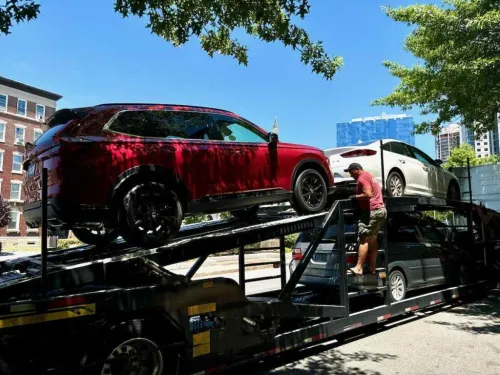
Your motorcycle can use cross-country motorcycle transport with an open carrier or enclosed carrier. With an open carrier, your motorcycle is transported on a trailer without a roof or sides, so it is exposed to weather and debris, as if you rode it across the country.
With an enclosed carrier, it is transported include the covered trailer, so it is protected from traffic grime, stones, and the elements. Enclosed carriers hold fewer vehicles than open carriers, and there are fewer of them, so the process is more expensive. Nevertheless, enclosed carriers are preferred for high-end, customized, or classic motorcycles.
Pricing
The typical price to ship a motorcycle across the country is $600 to $900 on an open carrier and $900 to $1,400 in an enclosed carrier. Your motorcycle's make and model, fuel prices, home and destination locations, and the season you're shipping affect the price.
Don't forget to ask the transport company about hidden fees or expenses. A reputable company will be upfront about its costs and not charge you for unnecessary services.
Shipping Process
If you plan to use a professional vehicle transporter to move your motorcycle across the country, you should start making shipping arrangements four weeks before your desired pickup date. This will help ensure your motorcycle arrives at its destination by your deadline.
Prepping Your Bike for Shipping
To prepare your bike for shipping, remove dirt or grime from your motorcycle's bodywork or tires. Other important prep tasks include the following:
- Turn off your bike's alarms.
- Confirm the tires are properly inflated.
- Unlock the motorcycle's steering wheel.
- Leave your gas tank at quarter full, which makes your bike lighter to transport.
Pickup and Delivery Processes
The transport company will send a driver to pick up your motorcycle. The driver will visually inspect the bike and document any existing damage to the motorcycle on your Bill of Lading, a legal document that describes the item being transported. You will need to sign the Bill of Lading acknowledging its accuracy. (A best practice is to take photos and videos of your bike when you turn it over to the driver and upon arrival at the destination.)
After signing the Bill of Landing, your bike will be placed on the hauler, secured, and begin its journey to your new home.
Your broker should keep you informed of your motorcycle's status as it crosses the country. The driver will attempt to provide door-to-door service at pickup and delivery. Still, you may need to meet at a nearby parking lot or similar location if the carrier cannot legally and safely reach your location. Narrow streets, low-weight bridges, and low-hanging tree branches are among the reasons for arranging an alternate meeting location.
How We Can Help
When determining how to ship a motorcycle cross-country, using a professional vehicle transporting company is the best way to ship a motorcycle cross-country. At Nexus Auto Transport, we can safely and quickly transport a motorcycle across the country for you, all while making the process as stress-free as possible.
Contact us to learn more about our services and get a shipping quote today!
Instant quote: https://nexusautotransport.com/car-shipping-calculator/
Open vs. Enclosed Motorcycle Transport Comparison
Transport Feature |
Open Carrier |
Enclosed Carrier |
|---|---|---|
Relative Cost |
Less expensive |
30 to 60 % more expensive |
Weather and Debris Protection |
Similar to riding your bike on the same route |
High level of protection |
Carrier Availability and Speed |
Widely available and fast |
Less available and slower, especially at pickup |
Best Suited For |
Standard, everyday motorcycles |
Classic, highly-customized, and higher-value motorcycles |
FAQs
Can I leave my helmet, tools, or personal items in the saddlebags during transit?
Just as you cannot have personal possession in a car during shipment, you need to remove all items from your motorcycle’s storage compartments. Personal items are not covered by insurance and may shift around during shipment, causing damage.
Do you offer real-time GPS tracking for the hauling truck?
No. Real-time tracking is generally not available while the vehicle carrier is on the road. Drivers cannot use their phones while operating their vehicles, but they can check in when stopped. Your broker should keep you informed by email, text, or by contacting their customer service team.
Are upfront deposits required, or is full payment due upon delivery?
Generally, you pay the broker's initial deposit with a credit card, with the remainder paid to the driver at delivery. It is important to note that drivers only accept guaranteed funds, such as cash, cashier's checks, certified checks, or money orders. Credit cards and personal checks are generally not accepted.
For customer convenience, some brokers allow customers to pay the entire transaction upfront by credit card, which customers value because they do not want the hassle of obtaining guaranteed funds.
How is the insurance claim process handled if new damage is found upon delivery?
You typically have one week to one month to file a claim, as stated in your contract. However, it is vital that you thoroughly inspect the vehicle upon delivery and note any damages on the Bill of Lading before signing. If you find damage after taking delivery, file your claim as soon as possible.
The time to process a claim varies widely, though you must file a claim within the timeframe set in the contract and provide all the necessary information. Simple cosmetic damage claims are often resolved within a few weeks, while more complex or contested claims can take several months.
What are common cancellation policies if my moving dates suddenly change?
Most vehicle transporters allow free cancellation before assigning a carrier. Once they assign and dispatch a carrier, cancellation fees of $100 to $200 are common. Brokers are often more flexible than direct carriers when it comes to cancellations.
Can a designated friend or family member sign the Bill of Lading if I am unavailable?
Yes. For a standard domestic shipment, you will need:
- Government-issued photo ID, such as a driver's license
- Vehicle title/registration
- Proof of insurance
- Bill of Lading, which the carrier generates at pickup.
If someone else will sign on your behalf at pickup or delivery, carriers often require a notarized authorization letter.