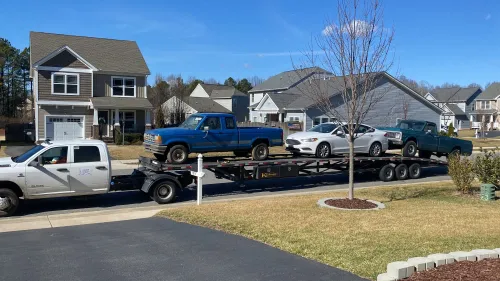

Copart, IAA, and other salvage platforms allow buyers to acquire vehicles located eight or nine states away. After paying for the car, the buyer still needs to ship it to their location, with damaged car transport costs increasing based on storage or lot fees, shipping distance, and how easily the car can be loaded onto the carrier.
The Clock Starts at the Hammer, Not the Payment
Copart buyers typically have three business days (including the sale day) to pay and remove the car from the auction lot before storage fees kick in. The payment and storage clocks don't match. Payment deadlines are based on business days, while the free-storage window includes weekends and holidays. If you win a car on a Thursday, you can burn through the free-storage window before you confirm the carrier.
- The loading hours in the yard compress the schedule further. Most Copart locations release vehicles Monday through Friday, 8:00 a.m. to 5:00 p.m.
- A driver who arrives at 4:45 p.m. will not load, and your storage clock runs overnight.
After the free period, daily storage fees vary by yard. Most cost $20 to $40 per day, though yards in metro areas in California, New York, and Florida can be $35 to $85 per day. Copart also assesses a $50 late-payment fee, and vehicles left unpaid after eight calendar days can be relisted with a penalty of 10 percent of the bid or $600, whichever is greater. On a $3,000 flood car, ten days of metro storage plus a relist penalty can exceed what you paid for the vehicle.
That means you should arrange transport by the end of the day you purchase the vehicle since brokers often need one to three days to post a load and have it accepted by a carrier positioned near that yard.
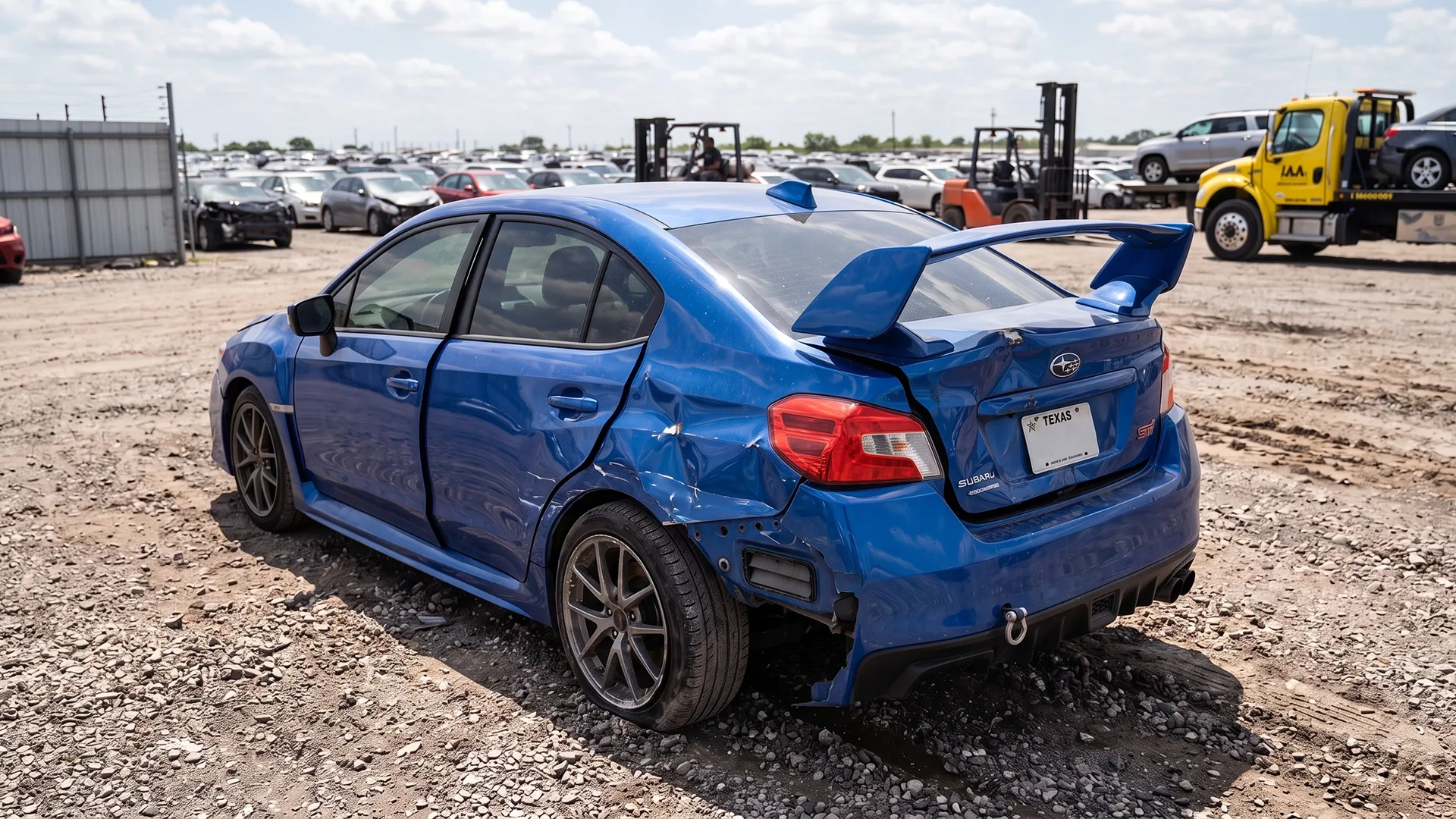
"Operable" is a Spectrum
Auctions describe the vehicle condition using terms such as:
- Run and Drive
- Starts
- Stationary
- Enhanced
Those labels don't map cleanly to what a car hauler needs to know for damaged-car transport: whether the vehicle rolls, steers, and brakes.
A car that will not start but rolls freely on four inflated tires, steers, and holds a brake can be loaded onto the truck using a winch. That vehicle costs more than a car that runs because winch-equipped trailers are a subset of the fleet and loading with a winch takes longer, so it is common to pay $100 to $200 over the standard lane rate.
A vehicle with seized wheels, collapsed suspension, a locked steering column, missing wheels, or frame damage needs to be handled using one of three workarounds for non-running car transport.
- Load the unit with a forklift onto a flatbed or step deck instead.
- Use wheel dollies or skates to drag a non-roller up a low-approach rollback
- Switch to a heavy-duty tow operator
Each differs from winching a car onto a standard trailer and costs more money.
Short Hauls at a Disadvantage
Auto transport pricing is higher per mile on short runs because carriers can amortize their fixed fuel, insurance, hours of service, and deadhead costs across more revenue miles on longer runs.
For salvage buyers, a local pickup that looks cheap may not be, since carriers often apply a minimum on runs under several hundred miles. Buying multiple lots from the same region and consolidating them onto one trailer is the highest-leverage transport decision you can make.
Paperwork Opens the Gate
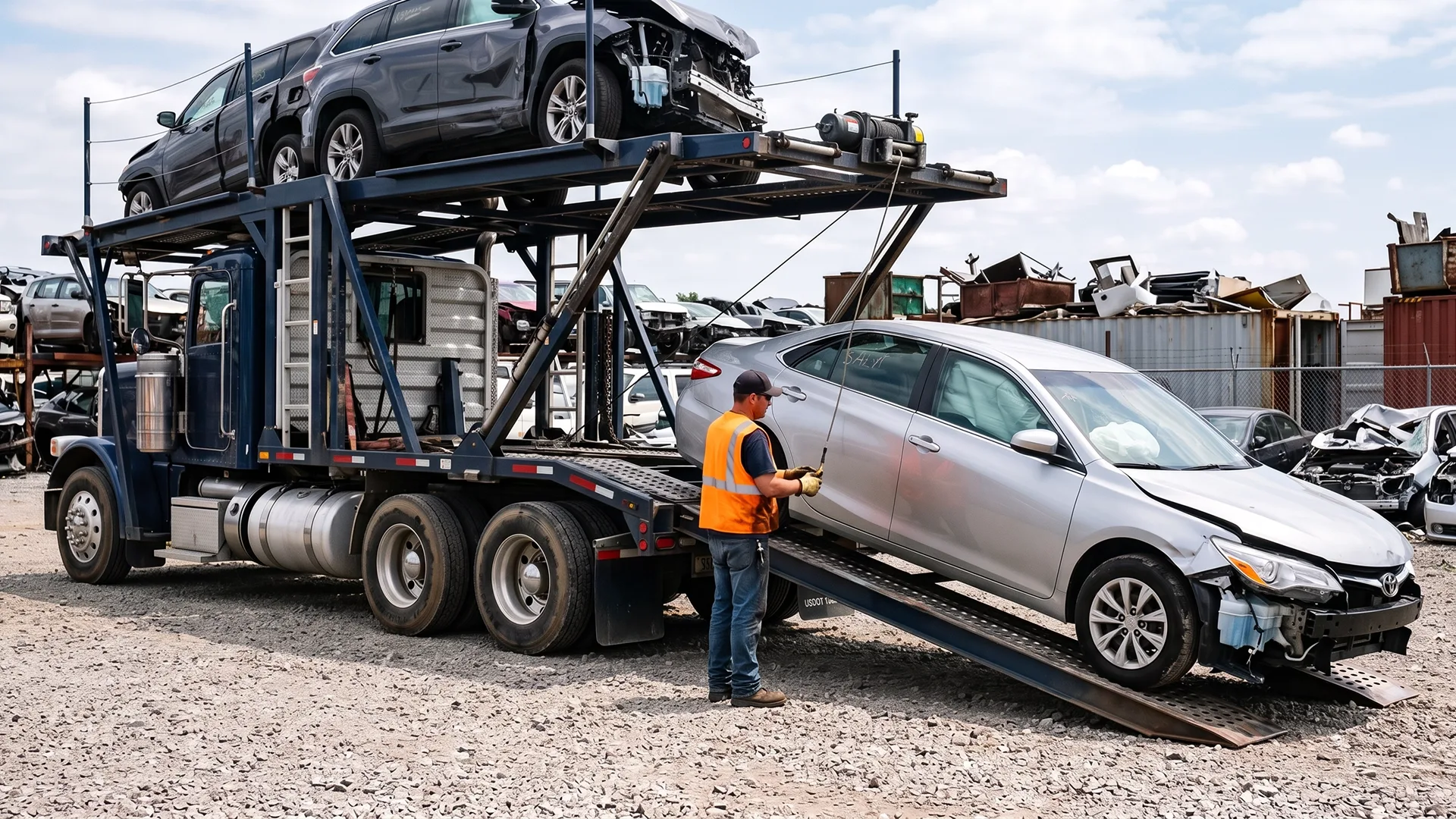
When moving salvage cars, your driver cannot get onto the yard without proper documentation. So you need a broker to vet carriers familiar with that auction’s intake and credential verification process. For example, Copart issues a digital gate pass tied to your buyer account, and the transporter needs your buyer number and the lot number to generate the pass. Some yards issue a four-digit PIN the driver presents at the gate.
Nothing is released until the invoice has cleared, which requires:
- Bid
- Buyer fee
- Gate fee
- $10 environmental fee
If you're releasing the title to a third party or mailing it elsewhere, you'll usually need a notarized limited power of attorney.
As always, document the vehicle's condition before the truck leaves the yard. Carrier cargo insurance covers new damage that occurs in transit, not the pre-existing damage, and a salvage unit has substantial pre-existing damage. Be sure to:
- Photograph each panel, wheel, and interior surface at pickup
- Confirm that the Bill of Lading (BOL) itemizes existing damage in detail since a vague BOL on a wrecked car can lead to an unwinnable claim when additional damage occurs.
Another important issue concerns fluids and airbags. A leaking fuel tank, a dripping differential, or an undeployed airbag can cause problems when loaded on the upper rack, with fluids dripping onto the vehicle below, so always disclose known damage, including leaks.
How Nexus Helps with Salvage Car Transport
Properly vetting auction carriers is part of our core business. Nexus Auto Transport is a leading broker with a nationwide network of vetted carriers experienced in all aspects of vehicle transfers. Contact us for a quote and see how our 3-step process makes it easy for you from start to finish.
Use our car shipping calculator for a free quote: https://nexusautotransport.com/car-shipping-calculator/
Salvage Vehicle Transport Cost Estimation by Distance and Condition
Distance |
Operable Vehicle Rate |
Inoperable Vehicle Rate requiring Winch |
|---|---|---|
Under 500 Miles |
$350 – $750 total ($1.55 – $2.50 per mile) |
$450 – $950 total (winch premium $100 – $200) |
500 to 1000 Miles |
$550 – $1,000 total ($1.00 – $1.45 per mile) |
$650 – $1,200 total (winch premium $100 – $200) |
Over 1000 Miles |
$900 – $1,700 total ($0.50 – $1.10 per mile) |
$1,000 – $1,900 total (winch premium $100 – $200) |
FAQs
How do auction storage fees affect my shipping timeline?
Auction storage fees generally kick in three days post-sale, so you need to get the car off the lot quickly, even though dispatch takes time.
- The broker posts your load to a board and waits for a carrier to accept it, which usually takes one to three days.
- Add the time for your payment to clear on the front end, and you can spend the entire free window before a truck is even assigned.
You can solve most of the problem by:
- Getting quotes and book the carrier before you bid rather than after you win
- Pay by wire so funds clear the same day.
- Give the carrier a two-to-three-day pickup window instead of a fixed date, which prices better and dispatches faster.
- Also clarify who pays the cost if the driver is late.
What happens if a salvage vehicle cannot be loaded with a standard winch?
Non-running car transport refers to vehicles that cannot be loaded by winch; they move to different equipment from a much smaller pool of trucks, so the price and lead time increase. A winch pulls a car that rolls; it cannot help a vehicle with seized brakes, a locked steering column, collapsed suspension, missing wheels, or a bent frame.
If a driver arrives to pick up a rolling non-runner and finds the car will not move, he can refuse the load. You then pay a dry-run or dead-run fee, the vehicle stays put, and auction storage continues accruing.
Who is responsible for paying the auction gate fee during pickup?
The gate fee is a line item on the buyer's auction invoice, not a charge the carrier settles at the window. At Copart, it costs about $79 on a clean-title vehicle and $95 on a salvage-title vehicle. You also pay the bid, the buyer fee, and the environmental fee, all of which must be paid in full before the lot is released.