Since automobiles became mass market products, most people have purchased their cars within an hour's drive of home. That constraint has disappeared with national listing platforms, video walkarounds, remote financing, and a mature auto transport industry that has turned a local process into a national one.
Today, nearly 10 percent of cars are purchased from out of state, so the question now isn't whether you can buy a car three states away, it's whether you should. The decision comes down to whether it is cheaper to buy a car out of state than locally. There is also the vehicle you're buying, its rarity, and how much work you desire a vehicle that is not available near home.
The Case for Buying Locally
Buying local has several advantages, and the less focused you are on a specific make, model, or modification, the more likely shopping local is to meet your needs. Still, it depends on the vehicle you want and how many are available near you.
Among the issues to consider when making the local versus national buying decision are the following:
You can inspect and drive the actual car
The single strongest argument for is it cheaper to buy a car out of state is its practicality. Buying locally lets you test-drive the vehicle and notice a subtle pull to the right, a whine at 40 mph, or a seat that doesn't quite fit your back.
You can look at the panel gaps in daylight, smell the cabin for smoke or mildew, and have your favorite mechanic put the car on a lift before you sign. When you buy remotely, you're substituting a paid pre-purchase inspection for your own in-person evaluation.
Recourse is easier
If the transmission acts up in week three, you can visit the dealership twenty minutes from home. Consumer protections and used-car warranty rules typically follow the state where the sale occurred. When you pursue redress from a dealer in another state, you're dealing with that state's rules, their small claims court, so the travel costs to pursue the claim potentially exceed the disputed amount.
The paperwork is simpler and faster
Buying a car in your home state means:
- Local dealers are familiar with filing your in-state title and registration
- You leave the dealership with plates or a temporary tag
- There's no coordination between two DMVs
- You don't need to wait on a title mailed by a seller you've never met
- Fewer potential conflicts in the buying and home state rules
Relationships have value
Service departments treat customers who purchased at their store differently. You're more likely to get loaner cars, goodwill repairs past warranty, and priority scheduling, which are benefits that don't show up in the purchase agreement.
The Case for Buying Out of State and Shipping
Selection is the headline advantage
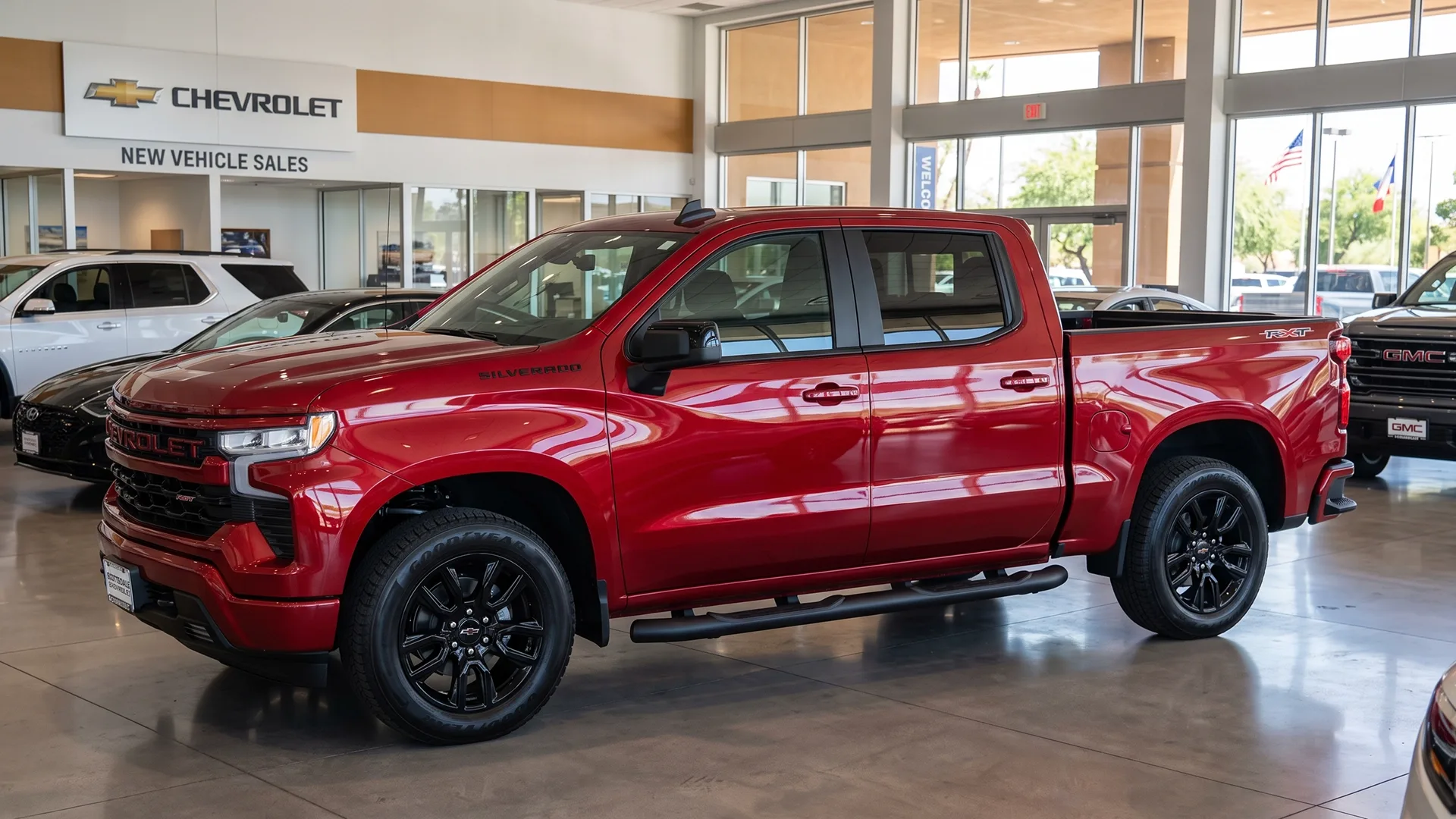
If you want a specific trim, color, transmission, or option package, you may not find it in the local market, or you may have to wait months to find something similar. Waiting six months for the right local example to come along has a cost too, and it's not zero.
Regional pricing differences are real
Vehicle values are not equal across the country. Convertibles and low-mileage rust-free bodies are more widely available and pricier in the Sun Belt. Four-wheel-drive trucks and SUVs are more expensive in northern markets where demand is high, and EVs concentrate in selected states.
Each regional difference affects both availability and used pricing. On a $35,000 vehicle, a 5% regional pricing gap is $1,750, which often exceeds the shipping cost.
Dealer fees are not uniform
Documentation fees vary widely by state; some states cap them by statute, while others impose no cap and four-figure documentation fees are common. Two identical cars can carry a several-hundred-dollar difference in add-ons before you've negotiated a single thing.
Rust matters more than buyers admit
A ten-year-old vehicle from a road-salt state and the same vehicle from Arizona are not the same. Frame and brake-line corrosion increase repair bills and reduce a car's usable life. Buying an older used vehicle from a dry-climate state can be the most important decision in the entire purchase process.
Negotiating leverage improves
When your search radius is national, the dealer doesn't know their inventory is the only one in the country that best meets your needs, and that can help you in the price conversation.
Shipping Costs
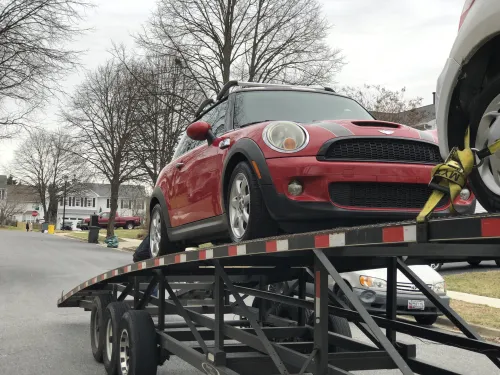
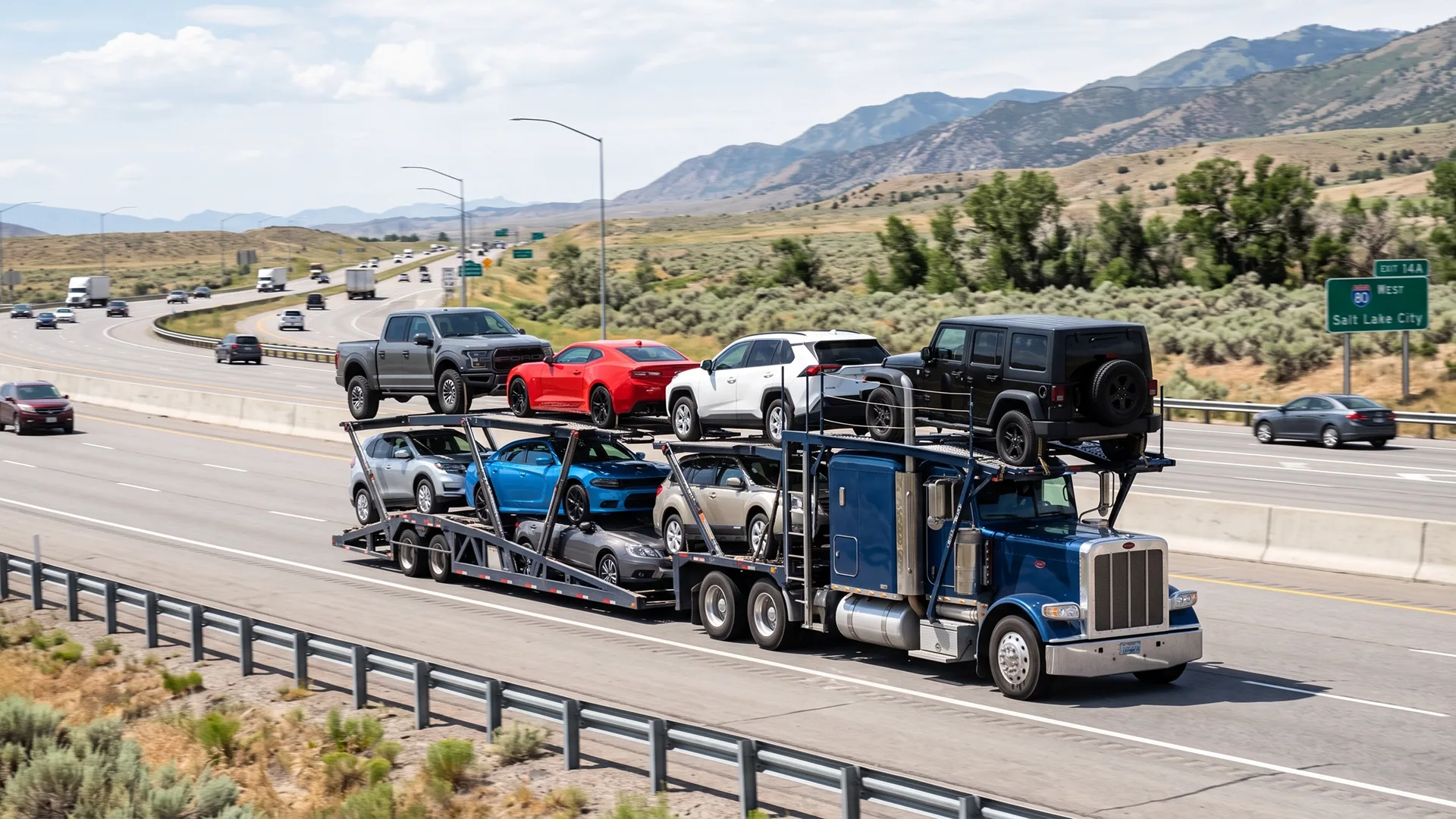
Vehicle transport is the main added expense for out-of-state buyers, but it's more predictable than many buyers expect. Is it cheaper to buy a car out of state should include how much it costs to get the vehicle back home.
- Open carrier shipping generally runs about $0.55 to $2.00 per mile depending on distance. Most shipments cost $700 to $1,150, and a coast-to-coast open carrier typically runs $1,500 to $2,100.
- Enclosed transport costs roughly 30% to 60% more than open transport, plus you'll pay $100 to $200 for a pre-purchase inspection.
Besides the shipping costs:
- The title and registration process can also add friction because it takes longer. Most states require an emissions or safety inspection, and sometimes a VIN verification, before registering an out-of-state vehicle.
- Regardless of where you buy, you generally pay your home state's rate, either collected by the selling dealer or at your DMV counter, so buying in a low-tax state doesn't lower your tax bill.
- Title fraud, undisclosed damage, and dishonest sellers who are harder to hold accountable at a distance.
- Timing is the other cost. Shipping typically adds one to two weeks to the sale and the vehicle appearing in your driveway.
How to Decide Whether to Buy Locally or Elsewhere
When deciding whether it is cheaper to buy a car out of state or locally, a simple rule is this: the wider the gap between what you want and what's nearby, the more sense buying out of state makes. Typical commuter cars are widely available everywhere, so the savings may not justify the added cost and risk. For specific, collectible, low-production, and rust-sensitive vehicles, or those priced meaningfully lower in another region, buying out of state and shipping the vehicle is a rational trade.
So, for a possible out-of-state purchase, add the out-of-state purchase price to the costs of an inspection, temporary registration and permit fees, and transport. Then compare that total to the best local price after negotiation. If the difference is less than $500, local convenience usually wins. If the difference is more than $1,500, or the car you want isn't available locally, buy it out of state and ship it.
Let Nexus Auto Transport Bring Your New Car Home
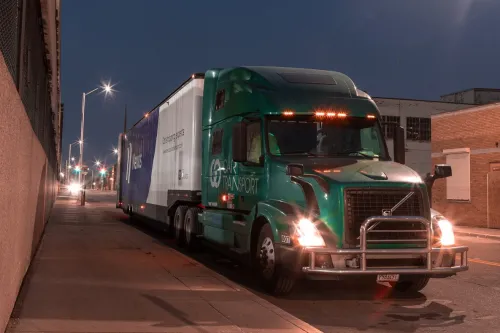
Understanding and executing vehicle transport is our core business, so we can transport your out-of-state purchase to your home. As a leading broker, Nexus Auto Transport has a nationwide network of vetted carriers experienced in all aspects of vehicle transfers. Contact us for a quote and see how our 3-step process makes it easy for you from start to finish.
Instant quote: https://nexusautotransport.com/car-shipping-calculator/
Shipping Out of State versus Buying Locally Comparison
Comparison Criteria |
Out of State Shipping |
Local Purchase |
|---|---|---|
Vehicle Selection and Inventory |
With a national inventory, you can target the exact trim, color, transmission, and option package you want |
Limited to whatever is within driving distance |
Upfront Transport Costs |
An added line item, with most shipments between about $700 and $1,150 and coast-to-coast open hauls at $1,500–$2,100 |
Essentially zero. You drive the car home the day you buy it. |
Hidden Dealership Fees |
Doc fees, prep charges, and add-ons vary by state; possible pre-purchase inspection ($100–$200) and out-of-state title processing; sales tax charged at home state's rate regardless of where you buy |
Fees are local-market standard you see out-the-door price and negotiate face to face |
Inspection and Test Drive Process |
No personal test drive |
You drive the actual vehicle, hear it cold start, check ergonomics and visibility, and can take it to your own mechanic |
FAQs
Is it cheaper to ship a car or drive it yourself to your destination?
Driving takes 2 to 4 days and adds mileage to a new-to-you vehicle. It also means driving an unfamiliar vehicle on a multi-state drive across the country, which is another risk. Shipping costs a 1- to 2-week wait, a pickup window instead of an appointment, and transport costs.
Driving typically wins for trips under about 500 miles, when you need the car immediately, when you’re fine with adding mileage, or when you enjoy longer drives. Of course, treat the latter as a vacation, not part of a cost calculation.
How can a buyer safely inspect a vehicle located in another state before shipping?
If you cannot visit the seller to inspect the vehicle in person or are not mechanically inclined, you can arrange a pre-purchase inspection. Many companies provide independent inspectors who will visit the seller, assess the car's condition, and send you a detailed report with photos or videos.
Taking this step protects you from buying a vehicle that doesn't match the listing or hides major mechanical issues.
What specific documents are required when shipping an out-of-state vehicle purchase?
The required documents vary by state, so confirm the requirements with the DMV in the originating and destination state. Most states require:
- Certificate of title that matches your VIN
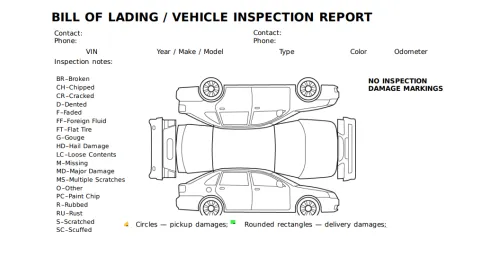
- A bill of sale or dealer invoice
- Proof of identity and residency
If someone else will sign on your behalf at pickup or delivery, carriers often require a notarized authorization letter.
How does carrier cargo insurance protect your vehicle during transport?
Carriers generally carry cargo insurance that covers all vehicles they transport. (Nexus requires carriers to have $100,000 in cargo insurance). However, the carrier’s coverage may not cover the full value of all the vehicles in the event of a serious accident. The best practice is to confirm the complimentary and supplemental insurance options with the auto transporter, then review them with your insurance agent to determine your best course of action.