Whether you intend to buy a used car locally or are open to searching nationwide for the car of your dreams, you need a game plan to ensure the car runs as well as it looks. That game plan starts with a pre-purchase inspection checklist for you to follow, outlining the steps you can expect from a mechanic performing the used car inspection.
Whatever process you use to buy your new car, following our used car checklist will help ensure it lasts for years. Let's explore this checklist here.
Where to Buy Used Cars
You can find great deals on used cars at your local dealership, but buying local isn't your only option. You can find excellent deals online listed among the best websites to buy used cars, including:
- CarGurus
- Cars.com
- Autotrader
- Edmunds
These websites let you browse cars for sale and purchase vehicles directly on the site. Online car auctions are also a convenient way to buy a used car, as you can bid on multiple cars without physically visiting multiple dealers.
When buying a used car online or from a private seller, the car you want may be located out of state. The surest way to confirm the quality of an out-of-state vehicle is to have a pre-purchase inspection (PPI) performed by a qualified mechanic, who will send you a report and/or a video of the vehicle following the inspection. You’ll need the seller's agreement to the inspection, but legitimate sellers who have nothing to hide will not object to the PPI.
Used Car Inspection Checklist
Whether you buy a vehicle locally or out of state, you or a qualified mechanic should inspect the car before you sign on the dotted line. You can hire a qualified mechanic through nationwide services such as LemonSquad. A solid used car inspection checklist should include the following elements:
- Paperwork and History
- Exterior
- Tire and Wheels
- Under the Hood
- Interior
- Undercarriage
- Test Drive
- Car Value Research
Paperwork and Accident History
Once you've identified a car you are interested in, check its history using CARFAX or a similar service to review accident history, title issues, and mileage.
These reporting services are not always perfect, so you should inspect your prospective car for accident damage and avoid buying one that has been in a major accident. Do so by examining the car for paint overspray on the inside of the doors, hood, and trunk. Overspray refers to paint that doesn't land in the intended area (e.g., due to wind) and indicates that certain parts of these cars were re-sprayed following an accident.
Exterior
First impressions are important, and a quick scan of the vehicle can be informative. Then, get into the details:
- Check the body panels for dents, scratches, rust, and other issues.
- Look at your car's panels. Misalignments are clues that the vehicle was in a crash.
- Likewise, inconsistent paint colors often indicate bodywork or accident repair.
Tires and Wheels
The quality of your tires and wheels affects the car’s safety and value, so you should:
- Check the tread depth using the penny test.
- Look for uneven tire wear, which indicates alignment or suspension issues.
- Confirm that all four tires match and are in good shape.
- Ensure the car has a spare tire, jack, and lug wrench.
Under the Hood
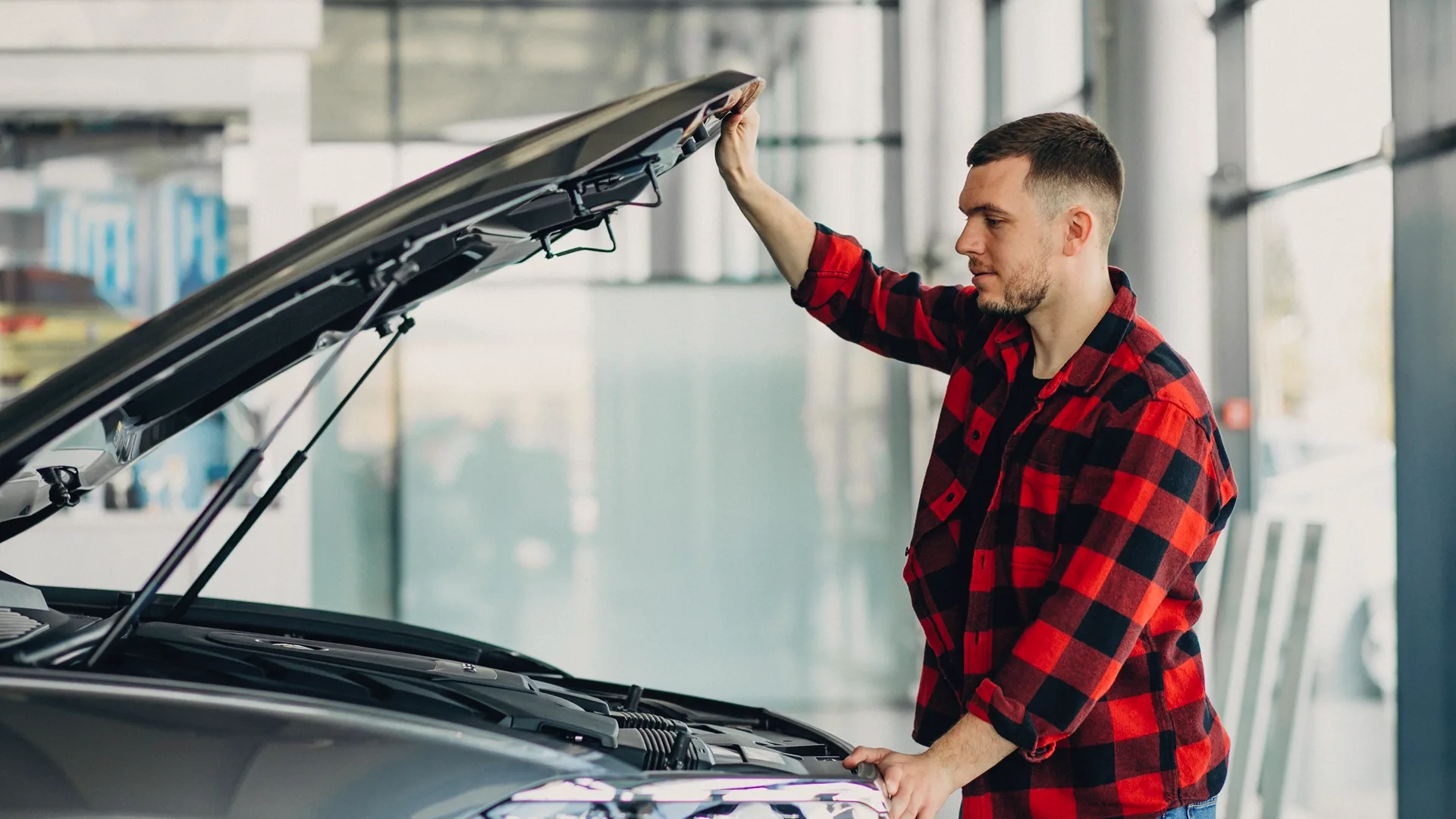
The inspection should include a thorough engine check.
- Checking the vehicle's radiator. Radiator fluid with oily droplets and foam suggests a malfunctioning head gasket.
- Check the engine oil, which should be copper or brown. Avoid vehicles with tar-black or milky oil, as both are signs that the engine isn't working correctly.
- Start the car's engine and avoid vehicles with banging, whistling, or clucking sounds, which indicate engine problems.
Interior
There are numerous checks to perform inside the vehicle as well:
- Check the interior for musty or mildewy smells, as they indicate potential flood damage or leaks.
- Perform a dashboard check. Dashboard elements (e.g., oil indicator and tire pressure lights) should light up when the key is turned to the final position. Pay close attention to engine warning lights that remain on during the basic vehicle inspection, as they may indicate expensive problems.
- Confirm that the seat belts are in order, check the upholstery's general condition, and confirm that the air conditioner and heater work properly.
- Review the rubber footpads on the pedals and the wear on the car's gear lever and steering wheel are in line with the listed mileage.
Undercarriage
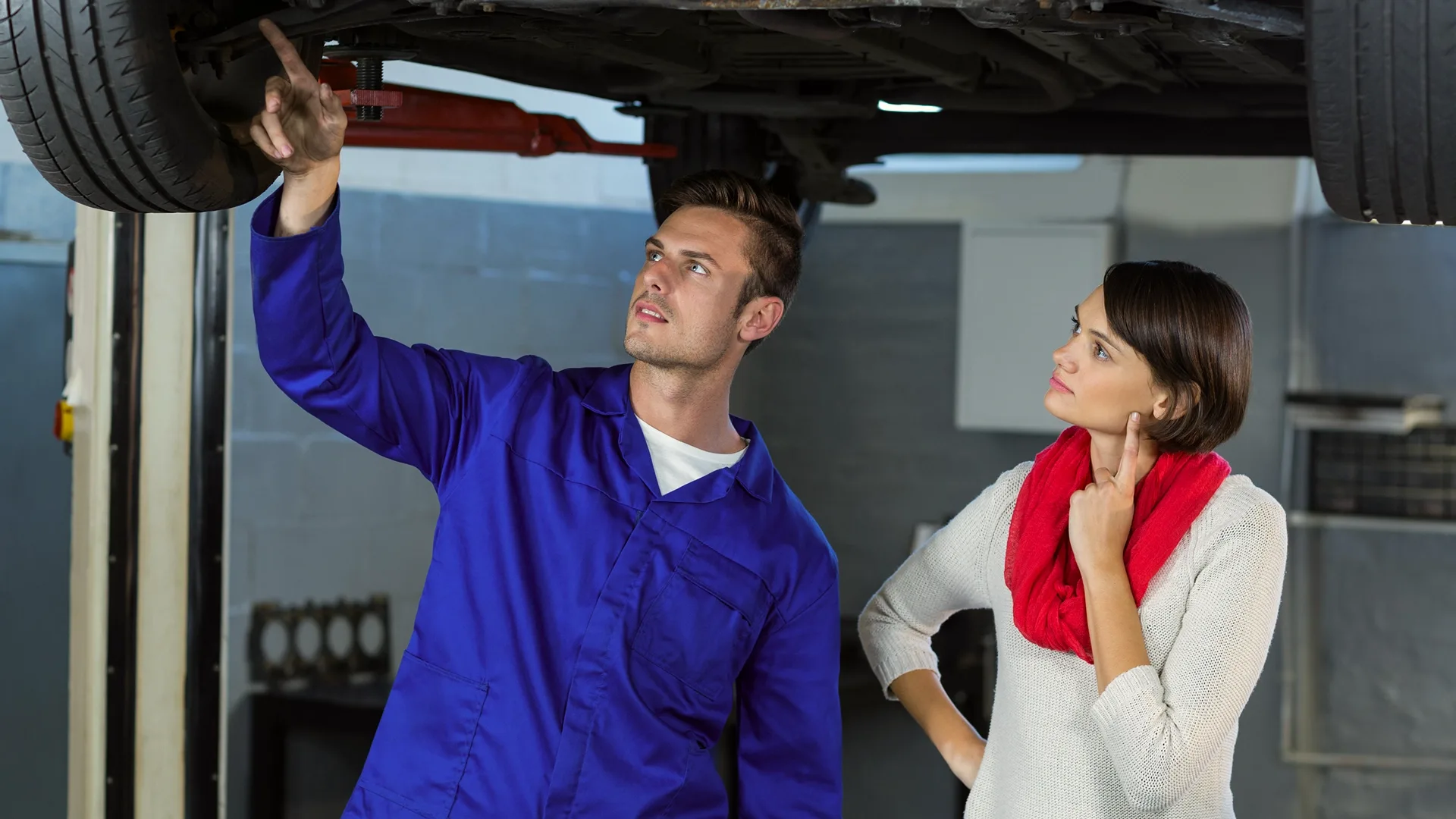
The undercarriage is more difficult to check for those with limited mechanical training, but it can signal problems. The undercarriage inspection should identify:
- Excessive rust
- Fluid leaks
- Exhaust system condition issues
- Suspension system wear
Test Drive
The ultimate check of a car you are considering buying comes by taking it for a test drive. Key things to check on the test drive include:
- Easy, cold start
- Accelerates smoothly and without slipping
- Brakes without pulling left or right
- Steers responsively and without play or vibration
- No unusual clunking or other noises
- Operates well at highway speed
Car Value Research
Another important task to add to your used-car safety inspection checklist is researching the value of your desired car. Knowing the Kelley Blue Book value and using the inspection results will help you confidently negotiate the car's final price with the seller.
You should also recognize that there can be substantial differences in the value of a used car by region, so you may be able to find the right car for you at a lower price on the other side of the country, and those cost savings can easily pay to have the car shipped to your home.
Auto Shipping Costs
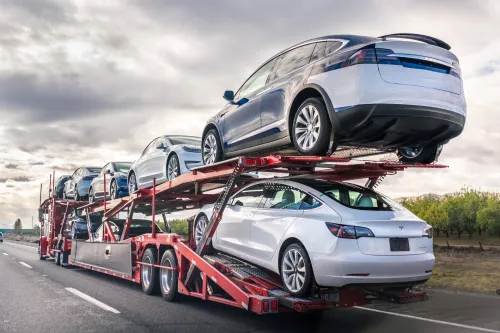
If you find the perfect vehicle hundreds of miles away from home, auto transport companies can help ship the car to its destination, and the work is easy to arrange.
How much does auto transport cost? The cost to ship a car to another state varies depending on your car's model and make and the shipping distance. Shipping the vehicle 500 miles might cost $600. Cross-country car shipping (1,300+ miles) may cost $1,300. Use a car shipping calculator to determine your final price.
How We Can Help with Auto Transport
Nexus Auto Transport can ship your dream used car to your destination once you purchase it. We will complete the task promptly and safely.
Buying a Used Car Locally vs. Online and Out-of-State
Local Dealerships |
Online Marketplaces |
Out-of-State Sellers |
|
|---|---|---|---|
Vehicle Selection and Inventory Availability |
Limited selection in some areas |
Unlimited selection |
Wide selection |
Ability to Perform Hands-On DIY Inspection |
Easy to DIY |
Difficult or unavailable |
Difficult |
Ease of Arranging Professional Mechanic Checks |
Easy to hire qualified mechanic |
Easy to hire qualified mechanic |
Easy to hire qualified mechanic |
Price Negotiation and Regional Market Value |
Best negotiation, but limited regional value benefit |
Limited, often “no negotiation” |
Negotiation power varies, but can benefit from regional value differences |
Post-Purchase Logistics and Transportation Needs |
Easy |
Easy to arrange |
Easy to arrange |
Summing It Up
Before buying a used car, it is best to have a qualified mechanic, a knowledgeable friend or relative, or yourself physically inspect the vehicle. Using a comprehensive pre-purchase inspection checklist helps ensure you do not skip an important step and that you've checked key quality indicators. If you are buying a car from out of state, our used car checklist also helps you confirm that the inspector will thoroughly inspect the vehicle and give you greater confidence in your final decision.
FAQs
What should I do if the perfect used car I found is in another state?
Assuming the perfect car has been thoroughly inspected and is available for a fair price, there is little reason not to buy it. Services like Nexus Auto Transport make shipping a vehicle from another state easy and affordable.
Can the auto transport carrier perform a basic visual inspection before loading my newly purchased vehicle?
The auto transport carrier is required to perform a visual inspection and to document apparent damage in the Bill of Lading. However, this damage-documentation inspection is not as thorough as a pre-purchase inspection and serves a different purpose. The auto transport carrier's inspection primarily documents the vehicle's condition before shipment so it can be compared to the vehicle's condition upon arrival at its destination.
How do I coordinate a professional mechanic check when buying from an out-of-state private seller?
As mentioned above, there are national inspection services such as LemonSquad, as well as regional providers. You can easily search for other reputable firms that perform inspections in the state where your new car is located.
Is it safe to purchase a used car from an online auction without seeing it in person first?
There is no simple answer to this question since there are a variety of online auctions and sellers. Salvage and insurance auctions are the riskiest, while enthusiast auctions are likely the safest. Auctions that allow pre-purchase inspections and have favorable return policies are the safest choice.
Does car shipping insurance cover pre-existing mechanical issues or only transit-related damage?
Car shipping insurance covers only transit-related damage.