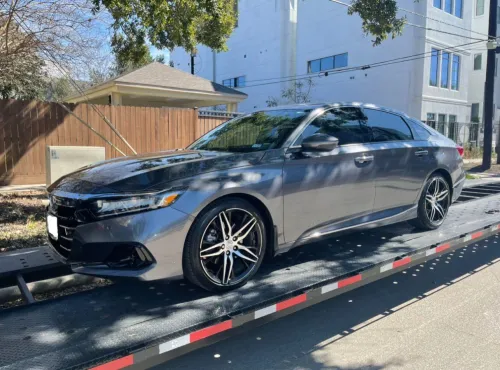

There was a time when buying a used car meant talking to your parents’ friend down the street in hopes of a good deal on their old “beat up” truck. The internet changed all of that. Now, buyers can filter for the details they want, down to the specific radio in the vehicle, via online auctions, marketplaces, and dealer sites.
Buying a vehicle from out of state dramatically increases your ability to find the specific model, color, or style you want. It can make the difference between a good deal on a commuter for work or a 4WD SUV for the winter snow. The problem is that “good deal” still comes with a lot of paperwork.
Even after you’ve sealed the deal on your car, you’ll need to manage title transfers, temporary tags, taxes, registration, inspections, and more. Without these documents, you can run into some hefty legal trouble. The more you understand the necessary paperwork for buying a car across state lines, the better.
Why Buying a Vehicle from Out of State Can Make Sense
Monthly used-car sales figures are around 2.6 million listings. That is a lot of cars that you simply cannot fit in a dealer’s available lot. If you want access to that level of inventory, you need to look beyond your local doorstep.
Buying a used car from out of state makes more sense. You could save a few thousand on a custom Toyota RAV4 in Arizona, then have it shipped back home to Vermont. The same works the other way. There could be a performance car specialist in Montana willing to sell for a much lower price, but only lists that car online.
Most people look into buying across state lines to save on costs, gain access to a more diverse inventory, access rare packages, or work with online car auction sites and manufacturers. The only trick now is to ensure you have the right paperwork to ship with the car you’ve just acquired.
The Core Paperwork for Buying a Car Across State Lines
#1: Vehicle Title
To obtain legal ownership of a vehicle, you must have the vehicle title. That is the most important paperwork for buying a car, anywhere, at any time. It is the single piece of paper that confirms ownership and enables the legal transfer of ownership from a seller to a buyer.
In most states, you’ll need to sign this document before the sale is complete. Before you put your “John Hancock” on the dotted line, be sure the VIN matches the used car you’re checking out, the seller’s details are accurate, and that everything is properly completed (date of sale, purchase price, etc.). You’ll need this document when you go to your local DMV for registration.
#2: Bill of Sale
The Bill of Sale is kind of like a receipt you get from Starbucks after a Trenta latte and a warmed-up brownie. It is the legal “proof of purchase” that may require notarization (depending on your state). Much of the same information on the Bill of Sale is present, like the Title. That should include financial details like purchase price, buyer/seller info, VIN, year, make, and model, date, and signatures.
What some buyers overlook in cross-state purchases is that a Bill of Sale is also required for tax purposes. Some states, like California, have a tax guide for these types of purchases. That is because you typically (not always) pay sales tax based on your home state, not the state where the vehicle is located.
#3: Odometer Disclosure
Anyone transferring ownership of a car 10-15 years or younger (2011 as of this article) must provide an odometer disclosure to the new owner. That is federal law. Some states try to get around this law, but as you’re buying a vehicle from out of state, it’s always better to err on the side of caution.
All this document does is protect against mileage fraud. For example, if you buy a Toyota Prius with a listed mileage of under 10K but end up receiving a car with over 40K miles, you can prove the sale was fraudulent.
#4: Temporary Tags or Transit Permits
Temporary tags are incredibly important, especially if you’re driving the car from the seller to your home. To be “street legal,” it has to be temporarily registered in the seller’s state (not yours).
In most cases, you’ll pay a small fee, get a digital download, and then print it and tape it to your rear window or bumper. You want it visible enough so police don’t pull you over for not having plates.
#5: Proof of Insurance
Even when you’re buying your car from New Hampshire, the only state not requiring vehicle insurance, you need proof of insurance. You’re buying from across state lines, meaning the car has to travel. You want it covered in case anything happens along the way.
The only exception is if the manufacturer is shipping the car to a local dealer. They’ll cover the insurance for that trip. The moment it gets into your hands, the insurance is on you. Make sure that coverage starts the second you turn the car on.
#6: Emissions, Safety, and VIN
In some rare cases, you might need proof of emissions, safety inspections, or VIN verification. Different states vary in these laws. Somewhere like California will be strict with emissions, whereas Montana doesn’t have any similar testing.
A good workaround is to talk with a professional car shipping company like Nexus Auto Transport. Part of the coordinated nationwide support you’ll receive is what documentation to have prepared for transit.
#7: Loan Documents
The last piece of paperwork for buying a car you’ll want to keep handy is the loan documents. This confirms you’re financing the car and reduces the risk of ownership confusion during transit.
It’s not a requirement by any means, but a strong recommendation to keep you from travel troubles with your new purchase.
Car Purchase Paperwork Timeline: What Documents Are Needed at Each Stage
Stage | Required Documents | Why It Matters |
|---|---|---|
Before Purchase | VIN verification, seller ID, financing preapproval (vehicle history like CARFAX if you can get it) | Confirms legitimacy of who can sell the car and protects against fraud |
At Purchase | Signed vehicle title, Bill of Sale, Odometer Disclosure Statement, lien release (if applicable), purchase agreement, loan documents | Legally transfers ownership and documents transaction terms |
Before Shipping | Proof of insurance, temporary tags, shipping contract, Bill of Lading | Ensures the vehicle is legally covered during transit, confirms shipping terms, and creates condition records |
After Delivery | Delivery inspection report, signed Bill of Lading, warranty paperwork, emissions/safety documents | Protects you if damage occurred in transit, verifies delivery condition, and prepares you for registration |
Registration in Home State | Title transfer application, Bill of Sale, proof of insurance, emissions/safety inspection, VIN inspection, tax payment receipts, DMV registration forms | Finalizes legal ownership in your home state, and secures plates and registration |
Should You Drive It Home or Ship It Across State Lines?
With all your paperwork for buying a car from out of state safely secured, the last piece of the logistics puzzle is getting it back home. If the car is close to your location, that is just a matter of asking a friend for a quick ride so you can drive it home. If it's farther away, like coast to coast, you’ll need to plan for flights, hotels, fuel, meals, time off work, and additional wear and tear on the depreciation value.
For many people buying a vehicle from out of state, the logical answer is to use transparent pricing and door-to-door support from a professional auto transport company. A trusted shipping partner like Nexus has the FMCSA and USDOT verification needed for peace of mind and follows all interstate travel laws.
Everything is coordinated for you, reducing the stress of figuring out what to keep on hand so you can focus more on finishing paperwork and deciding where to take your new car first when it arrives.
Explore our complete guide to car shipping services to better understand your options when buying a vehicle from out of state.
Buying Out-of-State Means Planning Beyond the Purchase Price
The biggest mistake any buyer can make when considering a vehicle from out of state is only budgeting for the sticker price. There are additional expenses to keep in mind, such as hotels, shipping costs, and local tax obligations. Having the right paperwork ready to go ensures you’ve checked all the boxes to avoid fines or confusion when the car arrives.
Take your time to make sure all the paperwork is complete, accurate, and aligned with both the state you’re buying from and your home DMV. That will protect your purchase, ensure you budget appropriately, and make it easier when it comes time to hire a car shipping company to handle the rest.
FAQs
Can paperwork be completed digitally when buying a car from another state?
Yes and no. It depends on the state you’re buying from. Many states have moved to digital signatures or online notary services to streamline the buying process, but always double-check ahead of time.
What should I double-check before finalizing car purchase paperwork?
The VIN, seller information, purchase date, purchase price, and vehicle condition. You also never want to send payment without first knowing how you’ll get the title. While rare, scams do exist when buying a used vehicle. That’s why some people choose a safer platform for their car search.
What happens if there is an error in the car purchase paperwork?
You can run into ownership issues, legal fines, or long delays getting registered at the DMV. Your insurance company is likely not to offer protection until everything is verified and accurate.
How do I know which paperwork my home state requires for registration?
Contact your local DMV and ask your current insurance provider for help. They will both offer a quick rundown of what you’ll need.
How do I handle paperwork if the car is being shipped to me from another state?
Communicate with the seller and make a specific list of documents required by your state so you can get all the necessary paperwork completed. You can also use an online digital signature platform or a notary for help.