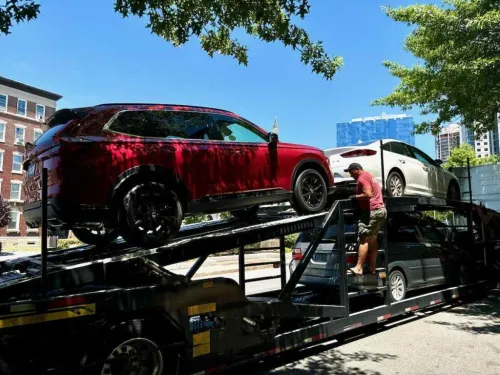

People need auto transport from New York to California due to job relocations, remote car purchases, or because they are heading toward the setting sun for an extended stay. Whatever the reason, the New York to California car shipping is among the auto transport industry’s most frequently traveled routes.
At about 2,800 miles, it's a cross-country haul; it has a few quirks around urban logistics, seasonal pricing, and transit time. Here's everything you need to know to get your car there without surprises.
How the Process Works
The two major groups in the auto transport NY to CA industry are carriers and brokers. Carriers own and drive the trucks. Brokers are matchmakers who connect your vehicle and its timing and routing requirements with a qualified carrier from their network.
You can book with a carrier directly, but most book through a broker to simplify the process. Brokers offer one point of contact, competitive pricing, and they coordinate with the carrier throughout the journey. Brokers include their fee in your quote and do not bill separately.
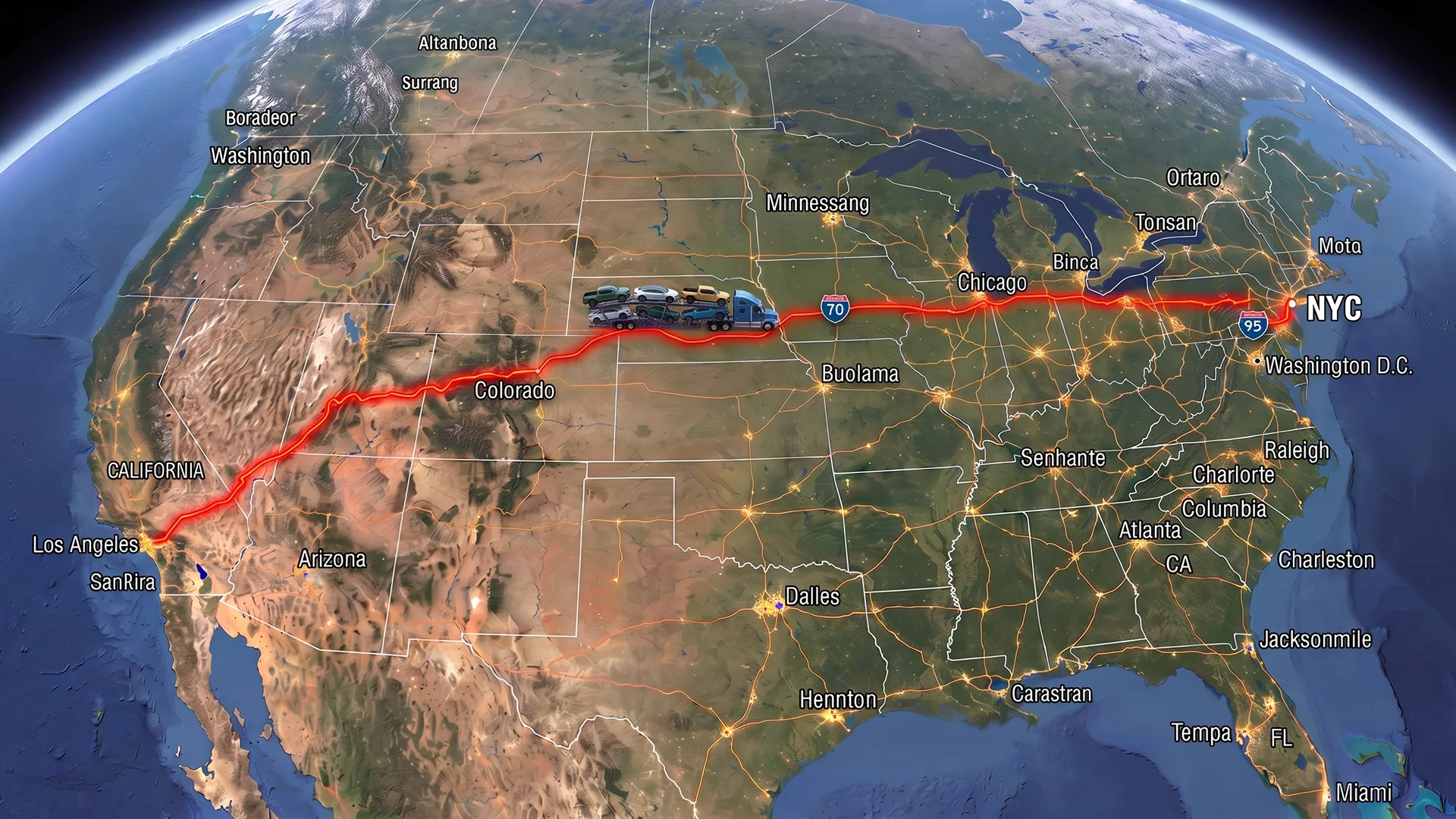
The New York–California corridor is well-traveled and carrier-rich, which works in your favor. High volume means competition among carriers and generally faster pickup windows than you'd get on a route to or from a remote location. Carriers running west out of the New York metro typically pass through major freight corridors (I-80, I-40, or I-10) before fanning out across California's major delivery points: Los Angeles, San Francisco, San Diego, and Sacramento.
Open vs. Enclosed: Choosing Your Transport Type
When transporting a vehicle coast-to-coast, the first decision is the type of trailer your car will travel on.
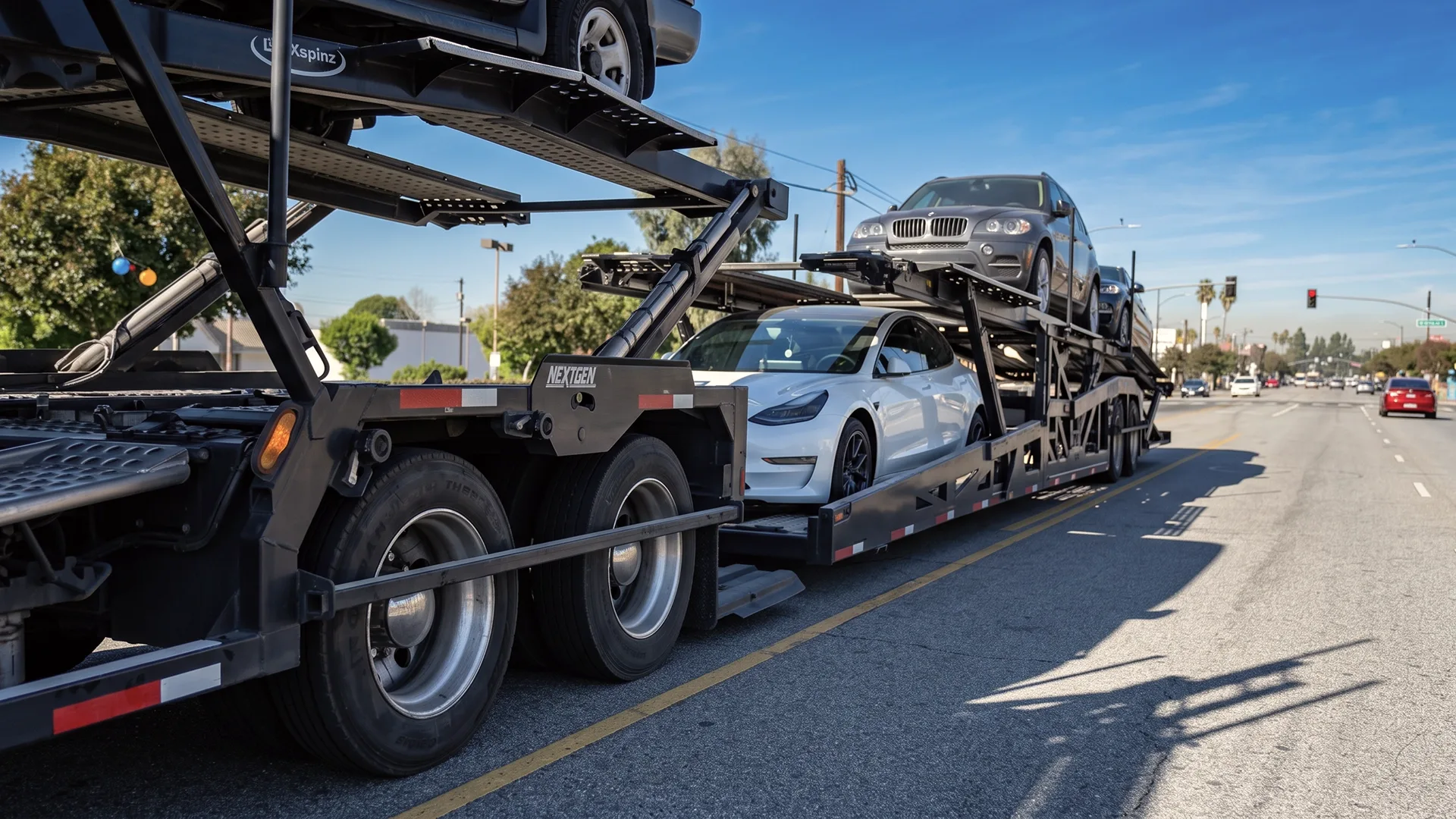
- Open transport is the industry standard. These are the double-deck trailers hauling eight to ten vehicles that you see on any interstate. Your car is exposed to weather and road debris, but the risk to a standard vehicle is low in practice. Open is widely available, competitively priced, and the right choice for most everyday cars to save ship car New York to California cost.
- Enclosed transport puts your vehicle inside a sealed trailer, so it’s protected from weather, debris, and road grime. It's the right choice for high-value vehicles such as collector cars, luxury models, and exotics. There is less enclosed capacity, so the booking windows are tighter, especially during peak season.
Open transport is the practical choice for your standard sedan or SUV. If you're moving a BMW M4, a classic Mustang, or a vehicle you especially value, go for the enclosed carrier.
What It Costs in 2026
The New York–to–California route typically costs $1,100 to $1,800 for open transport and $1,800 to $2,800 for enclosed, depending on your exact pickup and delivery cities, vehicle size, season, and how quickly you need the car picked up.
A few variables push prices up or down:
- Vehicle size and weight matter. Pickup trucks, large SUVs, EVs, and vehicles that weigh more or take up additional space cost $150 to $300 above the sedan rate.
- Time of the year. Spring through late summer is the peak shipping season. Families moving between school years, college students leaving or returning home, and snowbirds migrating west increase demand on the route and push prices up.
- Pickup and delivery location. Door-to-door service, in which the carrier picks up and delivers to your desired address, is the standard offering and the most convenient. However, the dense urban environments in the New York metro area can complicate pickup, since car carriers are unable to navigate narrow streets or parking garages. Many New Yorkers meet their carriers on a nearby wide street or at a nearby parking lot. Delivery in California is generally more straightforward, though similar challenges can occur in the cities.
- Terminal-to-terminal shipping is an alternative that can save $50 to $150. Rather than door-to-door service, you drop your car at a regional depot and pick it up at a destination depot, reducing your cost to ship a car from New York to California.
How Long Does It Take?
Auto transport from NY to CA is roughly 40 hours of driving under ideal conditions. However, the carriers, who operate under federal Hours of Service regulations, make multiple stops along the route. You can expect the New York–California trip to take seven to ten days from pickup to delivery.
Some shipments arrive in six days, while others take eleven or twelve if the carrier has delivery stops in Denver or Phoenix along the way. Exact delivery dates are rarely guaranteed. Instead, the carrier provides a delivery window, which narrows as you get closer to your actual delivery date. If you need your vehicle delivered by a specific date, you can pay extra for an expedited delivery.
Key Steps Before Your Car Leaves
- Get at least three quotes. Prices can vary on identical routes, so taking a few minutes to compare prices can save $150 to $300.
- Verify the broker and carrier. Verify the carrier and broker's credentials at safer.fmcsa.dot.gov before booking. Legitimate carriers have active MC (Motor Carrier) numbers, FMCSA registrations, and verifiable cargo insurance.
- Book two to three weeks ahead. This is most important during peak season. Last-minute bookings are available, but they cost more, and you may wait longer for your vehicle pickup.
- Document the car's condition. Take timestamped photos of your vehicle when it is picked up. Take close-ups of existing scratches, chips, or dents. Repeat the process at delivery. The Bill of Lading, which is the official condition report your driver fills out at pickup and delivery, is your legal record. Note any new damage before you sign it. Once you sign without documenting damage, a claim becomes significantly harder to pursue.
- Keep the gas tank at a quarter full or less. This is a standard carrier requirement. Fuel adds weight, and a full tank can be a fire risk.
- Remove your toll transponder from the windshield before shipping. Transponders left in the car can trigger charges on toll roads and tunnels the carrier passes through.
- Your car isn't a moving truck. Carriers generally prohibit leaving personal items in the vehicle. Their cargo insurance covers the car, not your belongings. Some drivers will overlook 100 pounds of items stored in the trunk, but nothing of value should travel in a shipped vehicle.
When You Need New York to California Car Shipping
The New York–California corridor is one of the busiest auto transport lanes in the country, and Nexus Auto Transport is ready to work with its nationwide network of vetted carriers to deliver your vehicle safe and sound in California. Contact us for a quote. Our 3-step process makes it easy for you from start to finish.
Instant Quote: https://nexusautotransport.com/car-shipping-calculator/
Estimated Cost and Transit Time for New York to California Car Shipping
Vehicle Type |
Open Transport Cost |
Enclosed Transport Cost |
Estimated Delivery Days |
|---|---|---|---|
Compact Sedan |
$1,100 to $1,400 |
$1,800 to $2,200 |
7 to 10 days |
Midsize SUV |
$1,200 to $1,600 |
$2,000 to $2,500 |
7 to 10 days |
Classic Vehicle |
$1,300 to $1,700 |
$2,000 to $2,800 |
7 to 10 days |
Large Pickup |
$1,300 to $1,700 |
$2,100 to $2,700 |
7 to 10 days |
FAQs
What paperwork must be prepared before the carrier arrives for pickup?
For the typical shipment, like a New York to California run, you will need:
- Government-issued photo ID, such as a driver's license
- Vehicle title/registration
- Proof of insurance
- Bill of Lading, which the carrier generates at pickup
Are personal items allowed to be stored inside the vehicle during transport?
Personal effects left in the vehicle are generally not covered by the carrier's cargo insurance. Most auto transporters will ask you to remove personal items from your vehicle, both for insurance purposes and to keep the weight down.
What insurance coverage options are available for high-value vehicles?
The carrier’s cargo insurance policy and available supplemental insurance are often not sufficient to fully cover high-value vehicles in the case of a serious accident involving multiple vehicles. Also, your personal car insurance does not typically cover damage that occurs in transit because the policies exclude vehicles in transport that are under the "care, custody, and control" of another company.
Instead, owners of high-value or classic vehicles work with specialty insurers, such as Hagerty or Grundy. They will insure your vehicle for an agreed-upon value based on an appraisal, and their coverage includes the vehicle being transported or otherwise cared for by others, such as mechanics.
Does the vehicle owner need to be present during delivery?
The auto transport carrier is required to perform a visual inspection and to document apparent damage at pickup in the Bill of Lading. You must sign the Bill of Lading as well, and you should note any other damage or issues you believe the driver misses. The same process occurs at delivery, which helps establish whether the vehicle incurred damage in transit.
You should be present at pickup and delivery. However, if you are unable, someone else will need to sign on your behalf. Some carriers often require a notarized authorization letter from you to accept the other person as your representative.