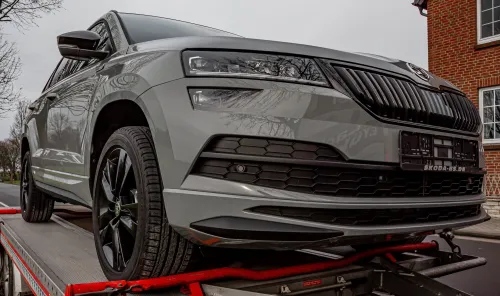

For owners of low-clearance, luxury, exotic and collector vehicles, one of the most stressful parts of auto transport isn't the trip itself. It's getting the vehicle onto the trailer.
Driving onto the loading ramps of a traditional car carrier can be challenging for vehicles with limited ground clearance or specialized requirements. In these situations, a hydraulic liftgate is typically the preferred loading solution.
This guide explains how hydraulic liftgates work, when they're recommended and whether they're the right choice for your vehicle. If you're considering auto transport with liftgate service, understanding when it's appropriate can help you make a more informed shipping decision.
Do You Need a Liftgate?
Your vehicle may benefit from a hydraulic liftgate if it falls into one of these categories:
- Exotic, luxury, classic or collector vehicles
- Lowered or modified vehicles
- Vehicles with exceptionally low ground clearance or low hanging body components, such as front splitters, side skirts or rear diffusers
If you need to ship low clearance car models, discussing your vehicle's ride height and modifications before booking helps ensure your transport coordinator can recommend the appropriate loading method.
What Is a Liftgate on a Car Carrier?
A liftgate is a hydraulic platform mounted to the rear of certain enclosed car carriers. Instead of requiring a vehicle to drive up steep loading ramps, it raises the vehicle to the trailer floor before the vehicle is driven into the trailer.
By reducing the loading angle, a liftgate helps accommodate vehicles that might otherwise be difficult to load using traditional ramps. Liftgates are most commonly found on enclosed auto transport trailers used to move luxury, exotic, collector and specialty vehicles, making them well suited to vehicles with unique loading requirements.
An enclosed transport liftgate isn't necessary for every shipment, but it can make loading easier for vehicles with limited ground clearance or specialized loading requirements.
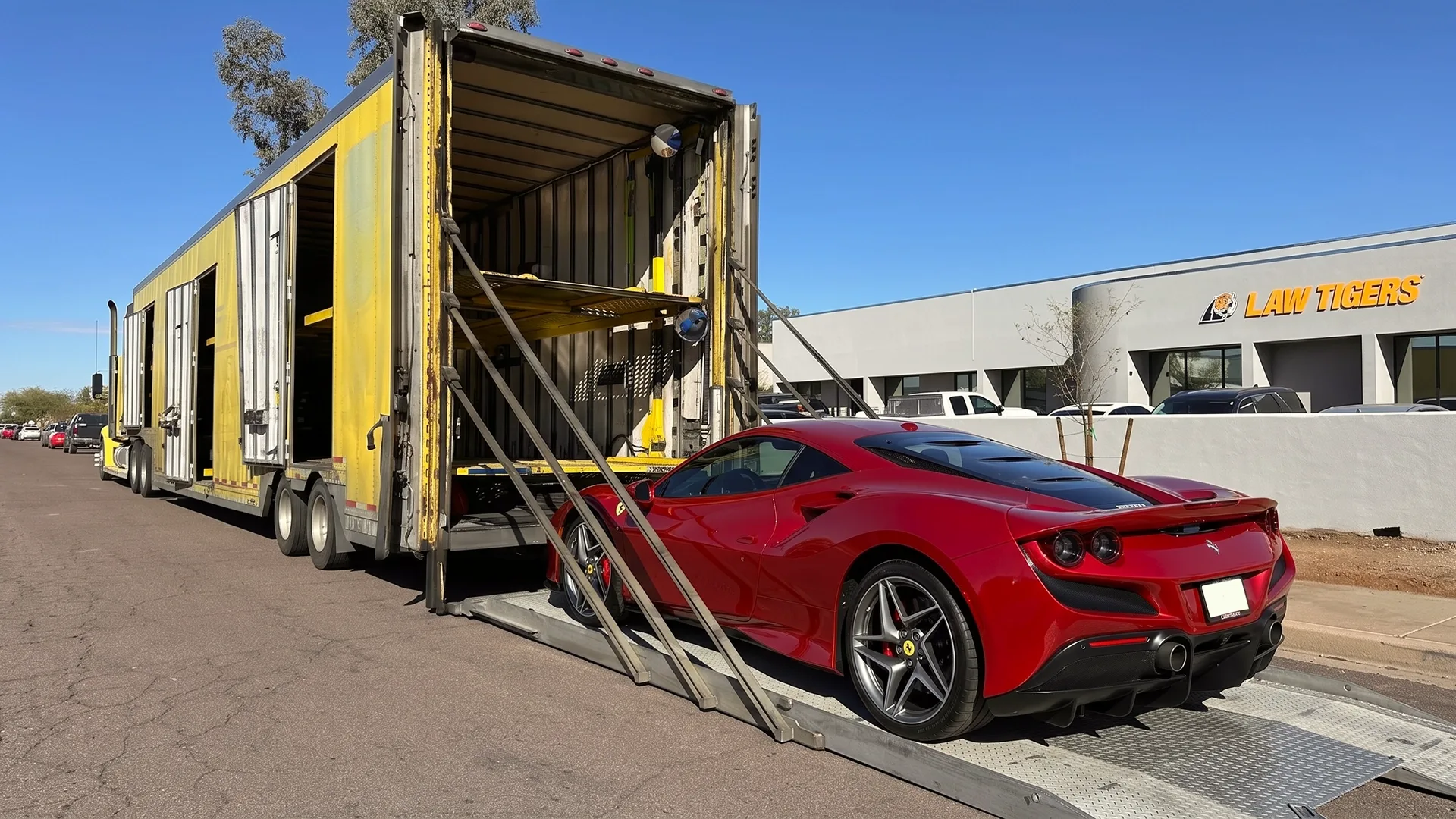
How Does Liftgate Loading Work?
Although the equipment is sophisticated, the loading process is straightforward. While the exact procedure may vary, the process typically follows these steps:
- The driver inspects the vehicle before loading.
- The hydraulic platform is lowered to ground level.
- The vehicle is slowly driven onto the liftgate.
- The platform rises until it's level with the trailer floor.
- The vehicle is carefully positioned inside the enclosed trailer.
- Wheel straps or wheel nets secure the vehicle before transport.
Keeping the vehicle level throughout the loading process helps reduce the risk of accidental contact before the journey begins. For many owners, liftgate car shipping provides additional confidence when transporting restored classics, luxury vehicles and other specialty automobiles.
Why Do Some Vehicles Benefit More Than Others?
Ground clearance is often the deciding factor, but vehicle dimensions, body design and aftermarket modifications also influence how a vehicle is loaded.
For example, a lowered suspension, long front overhang, front splitter or other low-hanging body component may reduce the clearance available when driving onto traditional loading ramps.
Whether you're shipping a lowered performance vehicle or a meticulously restored classic, choosing the appropriate loading method helps reduce the risk of accidental contact during loading.
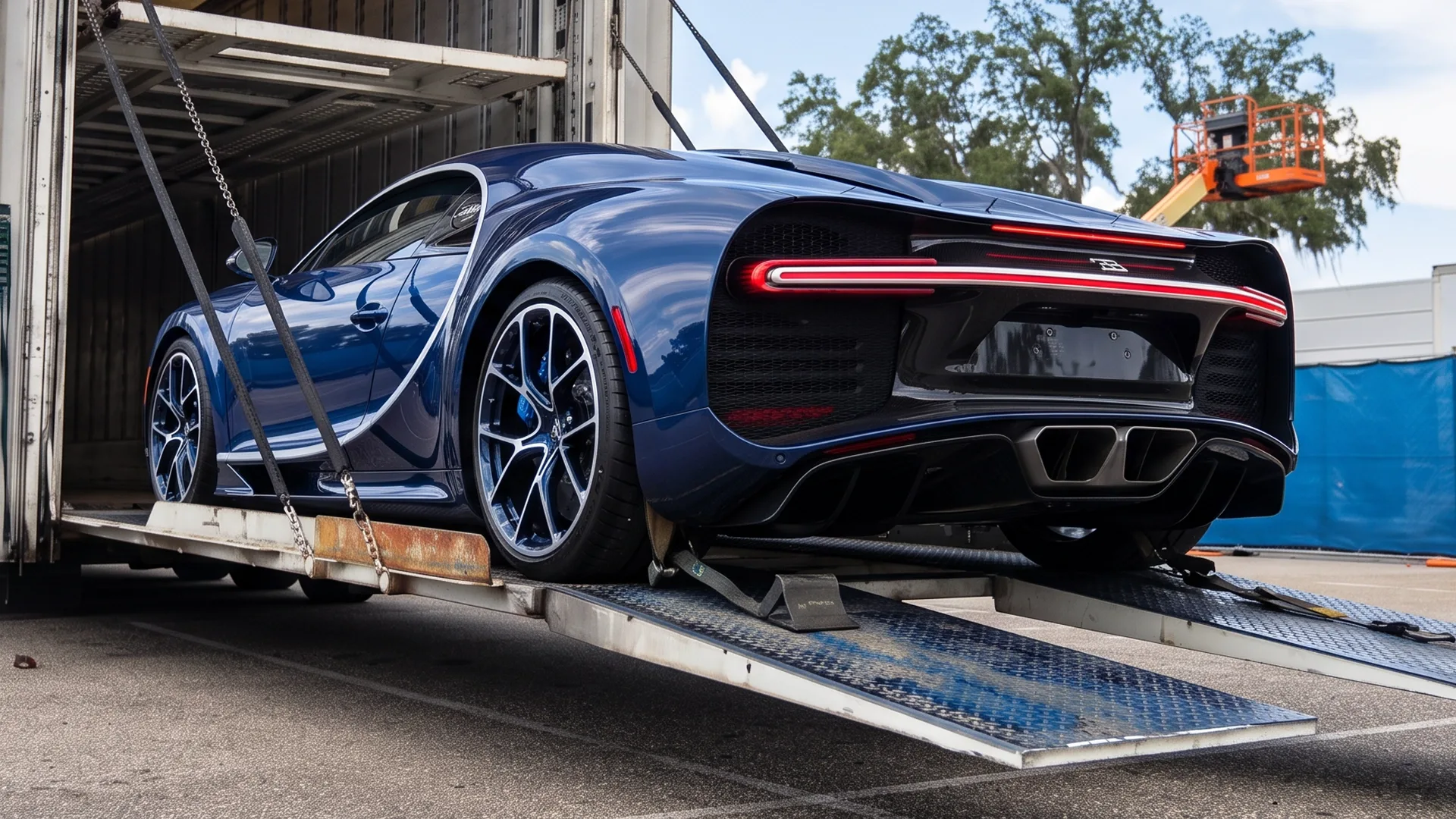
Hydraulic Liftgates vs. Traditional Loading Ramps
If you're deciding whether to request a hydraulic liftgate, comparing it with traditional loading ramps can help put the differences into perspective.
Comparison Criteria |
Hydraulic Liftgate |
Standard Ramps |
|---|---|---|
Maximum Incline Angle |
Minimal |
Depends on the trailer design |
Recommended Ground Clearance |
Excellent for low clearance vehicles |
Suitable for most passenger vehicles |
Underbody Damage Risk |
Lower for specialty vehicles |
Higher for vehicles with limited clearance |
Extra Cost Implication |
May increase shipping cost |
Typically included |
Typical Carrier Availability |
Limited |
Widely available |

Do All Enclosed Carriers Have Liftgates?
No. Hydraulic liftgates are specialized equipment that's not available on every enclosed car carrier. Availability depends on the carrier, trailer configuration and the route being serviced.
If you think your vehicle may benefit from a hydraulic liftgate, mention it when requesting a quote so your transport coordinator can confirm availability before scheduling your shipment.
If a liftgate equipped trailer isn't immediately available, your coordinator can discuss alternative loading methods or scheduling options that best fit your vehicle's requirements.
Is a Liftgate Worth the Additional Cost?
Whether auto transport with liftgate service is worth the additional cost depends on your vehicle and your comfort with the loading method. However, if even minor cosmetic damage would be costly or difficult to repair, the additional cost of a liftgate may be a worthwhile investment.
If you're unsure whether your vehicle would benefit from liftgate loading, discuss its ride height, modifications and overall condition with your transport coordinator before booking.
What If a Liftgate Isn't Available?
Experienced carriers can often load specialty vehicles safely using other approved methods when appropriate. Whether those alternatives are suitable depends on your vehicle's dimensions, ride height and modifications.
Providing accurate information before booking allows your transport coordinator to determine the most appropriate loading method and carrier for your vehicle.
How to Request a Liftgate
When you need to ship low clearance car models, here are a few things you can do before booking:
- Tell your transport coordinator about your vehicle's ground clearance.
- Mention any suspension, body or aftermarket modifications, including front splitters, side skirts or other low hanging body components.
- Provide photos if ground clearance is unusually limited.
- Request a liftgate equipped enclosed carrier when scheduling your shipment.
Choosing the Right Auto Transport Company
If your vehicle has limited ground clearance, aftermarket modifications or other specialized requirements, choose an auto transport company that takes the time to understand your vehicle before recommending a shipping solution.
Look for a company that offers:
- Experience transporting specialty, luxury and collector vehicles
- Honest guidance on whether liftgate car shipping is appropriate for your vehicle
- FMCSA licensing and insurance
- Access to a nationwide network of enclosed carriers
- Door-to-door shipping
- Clear communication throughout the shipping process
If you're unsure whether your vehicle would benefit from liftgate loading, request a free quote using the car shipping calculator or speak with a Nexus Auto Transport coordinator. By reviewing your vehicle's specifications before booking, we can recommend the most appropriate loading method and carrier for your shipment.
Frequently Asked Questions
Does requesting a liftgate increase the overall shipping cost?
Sometimes. Because liftgate equipped enclosed carriers are less common, requesting one may increase the cost of your shipment. The exact amount depends on the route, carrier availability and your vehicle's requirements. Your transport coordinator can explain any additional costs before you book.
Are there weight restrictions for heavy vehicles using a liftgate?
Yes. Hydraulic liftgates have operating weight limits that vary by trailer and manufacturer. Most passenger vehicles fall well within those limits, but unusually heavy vehicles should be discussed with your transport coordinator before scheduling transport.
Does booking a truck with a liftgate increase the wait time for pickup?
It can. Because liftgate equipped enclosed carriers aren't available on every route, scheduling may take longer than standard enclosed transport. If your shipment is time sensitive, mention that when requesting your quote so your coordinator can discuss available options.
Can liftgates safely accommodate custom wide body modifications?
Often, yes. Hydraulic liftgates can make loading easier for vehicles with wide body kits, lowered suspensions or other modifications. However, every vehicle is different, so it's important to describe any modifications and provide photos when requesting a quote. That allows your transport coordinator to determine whether a liftgate equipped carrier is the best option.
Is liftgate loading guaranteed automatically with every enclosed transport booking?
No. An enclosed transport liftgate isn't available with every enclosed transport shipment. If you think your vehicle may benefit from a hydraulic liftgate, request one during the booking process so availability can be confirmed before your shipment is scheduled.
Final Takeaway
Hydraulic liftgates aren't necessary for every vehicle, but they can make a meaningful difference for vehicles with limited ground clearance or specialized requirements. Understanding when they're appropriate helps you make informed decisions before your shipment begins.
At Nexus Auto Transport, we take the time to understand your vehicle's unique requirements and develop the right transportation plan before matching it with an appropriately equipped carrier. Our goal is to help ensure a smooth loading process and a successful shipment from pickup through delivery.