
Shipping a car from Boston to California is one of the longest domestic auto transport lanes in the country, at roughly 3,000 miles to Los Angeles and closer to 3,100 to the Bay Area. It is a well-traveled corridor and the mechanics are routine, but distance magnifies every variable.
A thin pickup window on the Boston end, two mountain ranges in the middle, and the strictest vehicle compliance regime in the nation waiting at the other end conspire to turn a simple freight movement into a scheduling problem. Here is what matters.
You Buy a Window, Not an Appointment
Consumers generally don't speak to the company that drives their car until the driver arrives to pick up the vehicle. Brokers run the auto transport industry. They post your shipment on a national load board, where carriers traveling that route bid on it. How quickly a carrier picks up your vehicle depends on:
- The attractiveness of your quote, as determined by the fee, your vehicle, and your origin and destination
- The number and location of other vehicles they need to pick up
- Traffic, weather, and other issues.
Since some of those are uncontrollable, you will receive a multi-day window for pickup, and they'll provide more detailed estimates about 24 hours before pickup. So, book two to three weeks ahead on this route.
Before you commit to a carrier, verify their MC or USDOT number, and their cargo insurance status on the FMCSA SAFER site.
Once your vehicle is loaded, federal hours-of-service rules limit drivers to:
- 11 driving hours in a 14-hour window
- 70 hours over eight days
- All tracked by electronic logging devices.
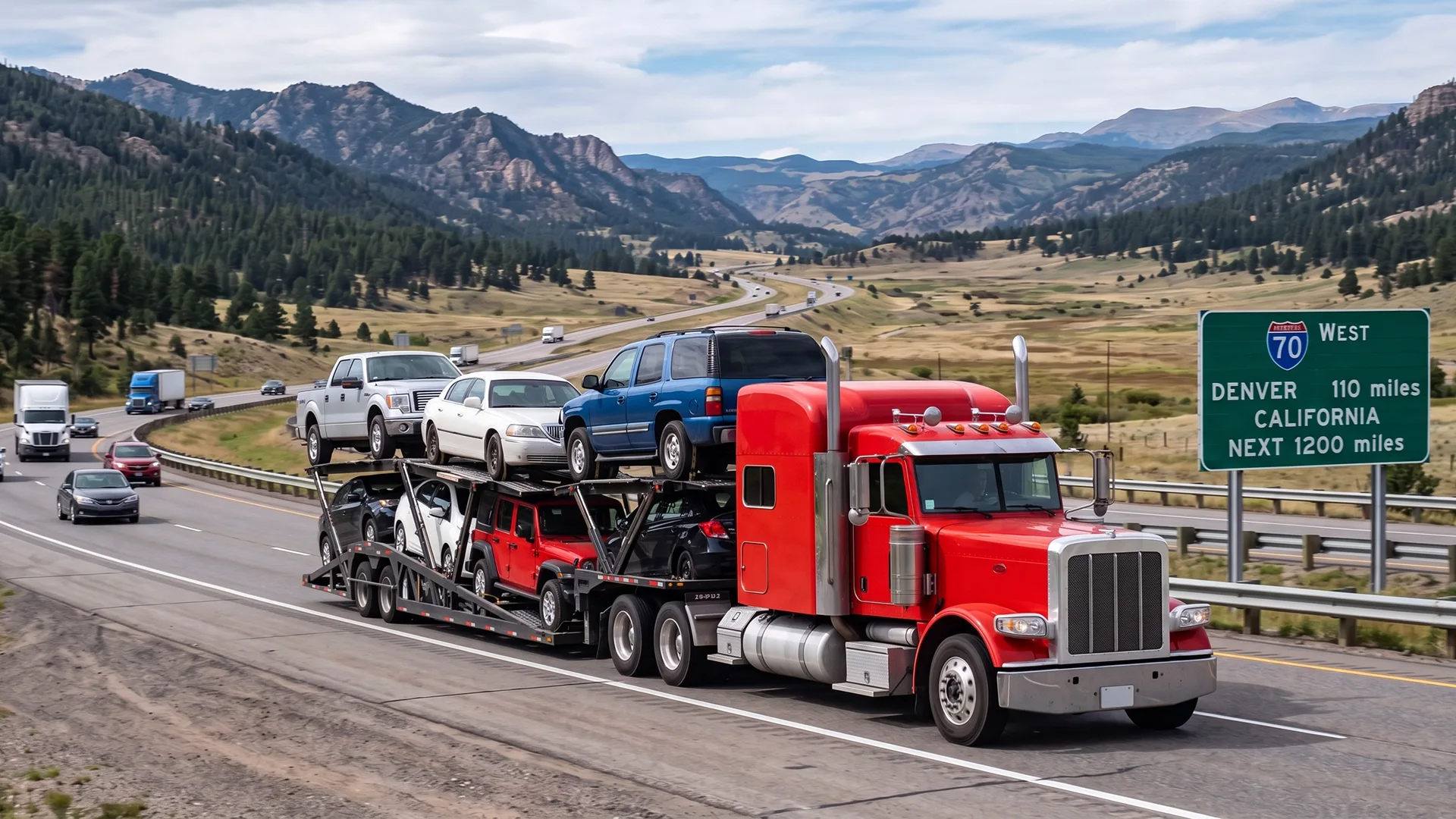
As a result, a typical carrier covers 400 to 500 miles per day, so a Boston-to-California run takes seven to ten days after pickup.
What Actually Drives the Price
Traveling from Boston to Los Angeles on an open carrier:
- Costs $1,500 to $2,100, higher in peak season.
- Enclosed carriers adds 30 to 60 percent
- Large SUVs and pickups add $50 to $400 over sedan rates because carriers must work under an 80,000-pound gross limit
- A non-running vehicle needing a winch: add $150 to $300.
- Summer is the peak and costs 20 to 30 percent more than winter
Boston’s student calendar makes late August and early September particularly tight.
Getting the Car Out of Boston
Boston presents substantial challenges for auto transport because a loaded car hauler is 75 to 80 feet long and 13½ feet tall. They cannot:
- Navigate Beacon Hill, the North End, Charlestown, or the older residential streets, many of which are posted no-truck.
- Storrow Drive, Memorial Drive, and Soldiers Field Road have clearances as low as 9 to 10 feet.
- The Sumner and Callahan tunnels cap at 12 feet 6 inches, which pushes commercial traffic to the Tobin Bridge, I-90, and I-93.
Door-to-door pickup often does not apply in Boston, so the driver will arrange to meet you in a large retail or park-and-ride lot with highway access.
If you must load on a city street, check whether you need a street occupancy permit. And in winter, remember that a declared snow emergency and its parking ban can cancel a scheduled pickup with no notice.
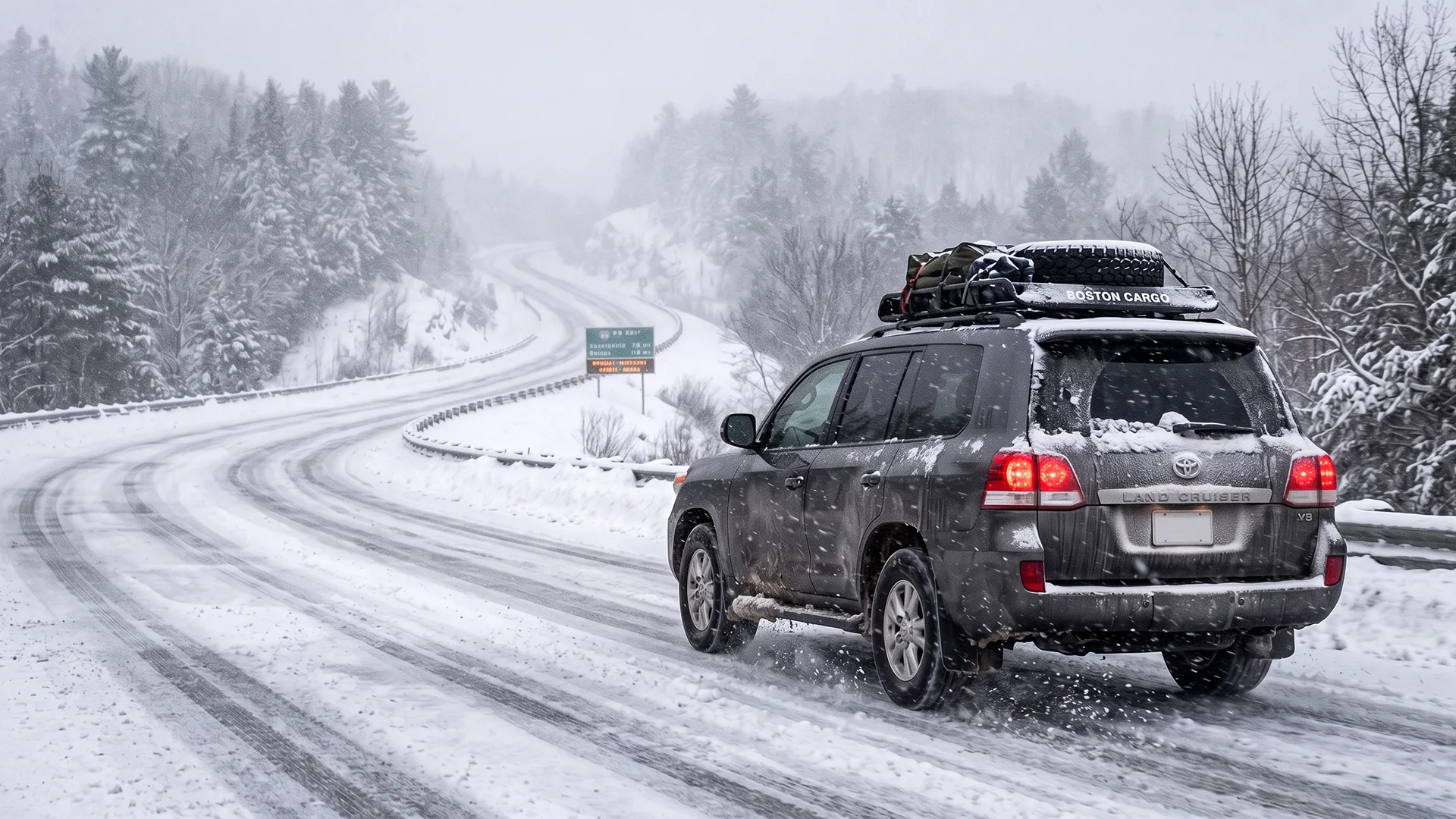
Weather is a Schedule Risk, at Both Ends
Shipping a car from Boston to California in January means dealing with nor’easter season and the Rockies in chain-control season. Storms can delay pickup on the front and back ends. When facing road closures, carriers will stop and wait it out rather than enter the mountains. That is the right, safe call, and it’s why your delivery window can slip.
There is also a cosmetic issue: a car loaded in February on an open trailer leaves Boston covered in road salt and arrives that way, so budget for a wash and an undercarriage rinse on arrival.
The Last Two Miles
California's delivery problems are geographic, not regulatory. The Los Angeles freeways are drivable for 75-foot rigs but not the streets of Santa Monica, West Hollywood, or the canyon neighborhoods, where street width, permit parking, and low garage clearances rule out a curbside unload.
San Francisco is worse than LA due to its hills, one-way grids, and truck-restricted routes. Most Bay Area deliveries happen in a shopping-center parking lot rather than at your address. Gated communities and HOA rules that bar commercial trucks make it even harder, so it's the same as in Boston. It's best to agree in advance on a wide, flat, well-lit meeting point.
California Does Not Wait
- New residents have 20 days to register a vehicle in California. You will need:
- Form REG 343
- The out-of-state title
- A VIN verification (Form REG 31) completed by an authorized verifier
- A California smog certificate (out-of-state certificates are not accepted) for gasoline vehicles from 1976 forward and diesel vehicles from 1998 forward.
The DMV’s own guidance is to submit the application and fees on time even if a document is still missing, because penalties attach to the deadline, not to the paperwork.
Protect Yourself at the Handoffs
The Bill of Lading (BOL) is the legal condition report and your primary leverage if you need to make a claim. Photograph the car from every angle before pickup, using timestamps, and take close-ups of existing chips and scratches. Do the same at delivery.
New damage at pickup must be noted on the Bill of Lading before you sign. Signing a clean document and calling the next morning to make a claim makes it much harder to win.
How We Help Get You There
When moving to a different state, especially across the country, you may need help moving a vehicle to your new home. Managing that process is our core business. Nexus Auto Transport is a leading broker with a nationwide network of vetted carriers experienced in all aspects of vehicle transfers. Contact us for a quote and see how our 3-step process makes it easy for you from start to finish.
Use our car shipping calculator for a free quote: https://nexusautotransport.com/car-shipping-calculator/
Comparison of Boston to California Vehicle Transport Options
Shipping Method |
Average Cost |
Estimated Transit Time |
Best Suited For |
|---|---|---|---|
Open Carrier |
$1,500 to $2,100 typical; $2,400+ in peak summer season |
7 to 10 days on the road; 7 to 15 days door to door once dispatch is included |
Standard sedans, SUVs, and daily drivers; exposed to weather, road salt, and debris. |
Enclosed Carrier |
$2,000 to $3,000 (roughly 30 – 60% above open) |
8 to 12 days on the road; add 2 to 5 days for dispatch, as capacity is thinner |
Collector, classic, luxury, exotic, and low-clearance vehicles; any car where paint and undercarriage condition is a financial issue, not a cosmetic one. |
Expedited Transport |
$2,000 to $2,900 open; $2,800 to $3,800 enclosed (30 to 40% premium) |
4 to 7 days on the road; pickup often within 24; 48 hours of booking |
Hard deadlines; a lease turn-in, a closing date, a job start, or a dealer sale |
FAQs
What documents must I provide when shipping a vehicle from Massachusetts to California?
For the shipment itself, you need:
- A government-issued photo ID at pickup
- The Bill of Lading, provided by the driver
- A lienholder authorization letter, if the vehicle is financed or leased
- A written third-party authorization if someone else will release or receive the car
- Recently purchased vehicles whose title has not yet transferred need a bill of sale
How does winter weather in the Northeast affect the shipping timeline?
Winter weather in the Northeast affects pickup more than transit. A nor’easter can shut down loading in the Boston metro for a day or two at a time, and declared snow emergencies trigger parking bans that make a curbside handoff impossible. If this happens, the pickup gets rescheduled, not delayed by an hour.
Once the truck is moving, the western mountain passes become the key variable since interstate closures routinely add one to three days on the trip.
Plan for the delays rather than around them. Give the broker a three-to-five-day pickup window instead of a fixed date, book at least three weeks out, and don't schedule time-sensitive lease turn-ins, flights, or job starts based on the early end of your delivery estimate.
Can I leave personal belongings inside my car during a cross-country transport?
Technically, no, though many carriers allow up to 100 pounds stored in the trunk or cargo area as a carrier courtesy, but it is not your right. Auto transporters are licensed to haul vehicles, not household goods, and they are held to weight limits, so adding weight to the vehicles on the trailer can put them over their limits.
Also, your personal items aren’t covered by cargo insurance. If a box in your trunk is stolen or destroyed, the carrier owes you nothing, and if a loose item shifts and damages the interior, that damage may be excluded too.
Is my vehicle insured against road debris damage during transit?
Generally, no. Federal law requires carriers to hold cargo insurance, which covers damage for events under the carrier’s control, such as collision damage, damage from ramps, chains, or tie-downs, equipment failure, and driver negligence.
Rock chips and road debris on an open carrier are treated as unavoidable hazards and excluded, as are acts of God such as hail.