
It takes work to transport a vehicle a long distance. If you're relocating, moving for business, buying a car from another state, or just trying to avoid a long road trip, you'll need to find a safe, reliable, and cost-effective car-transport method. At times, it can make sense to tow a car yourself, though most people opt for a professional auto transport company for reliable, secure service.
Understanding Your Long-Distance Vehicle Towing Options
Each car towing method has unique benefits and costs. It pays to understand your options and make informed decisions aligned with your needs and budget. The more you know about car towing techniques, the better off you'll be.
Tow Dollies
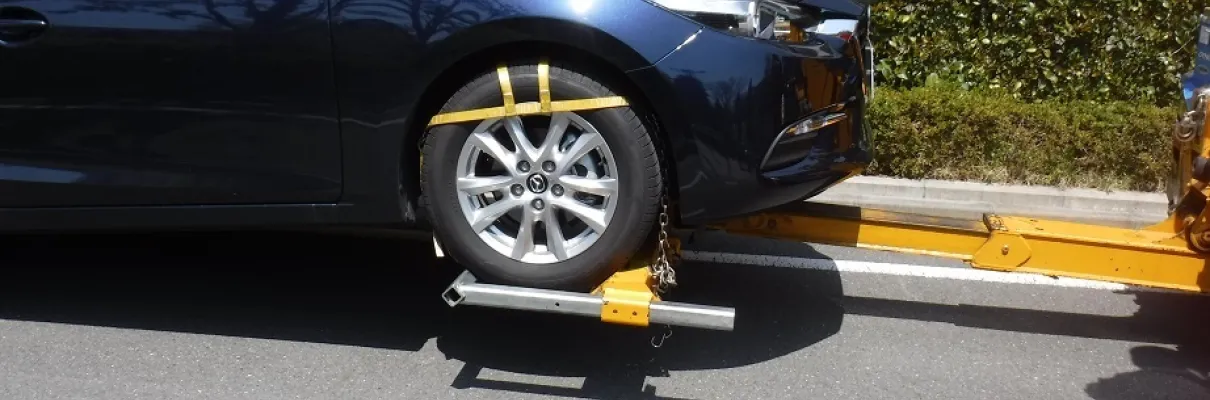
A tow dolly is a two-wheel trailer that lifts the front wheels of your car off the ground, leaving the rear wheels to roll along the road. You can rent a tow dolly for a few hours for less than $100, or buy one for several thousand dollars, making it the cheapest way to tow a car long distances.
Pros:
Often has the lowest upfront price, especially for shorter-haul trips.
Simple to rent from companies like U-Haul.
If owned, the dolly is compact and simple to store when not in use.
Cons:
Works best on front-wheel drive (FWD) vehicles. Does not work well for RWD, AWD, and EVs.
Requires a suitable towing vehicle with the correct hitch setup.
Results in wear and tear on the towed car’s rear tires, the towing vehicle, and requires fuel for the towing vehicle.
Not recommended for drivers without experience towing trailers
Click here to see illustrations of Tow Dollies versus Flatbed Trailers.
Flatbed Trailers
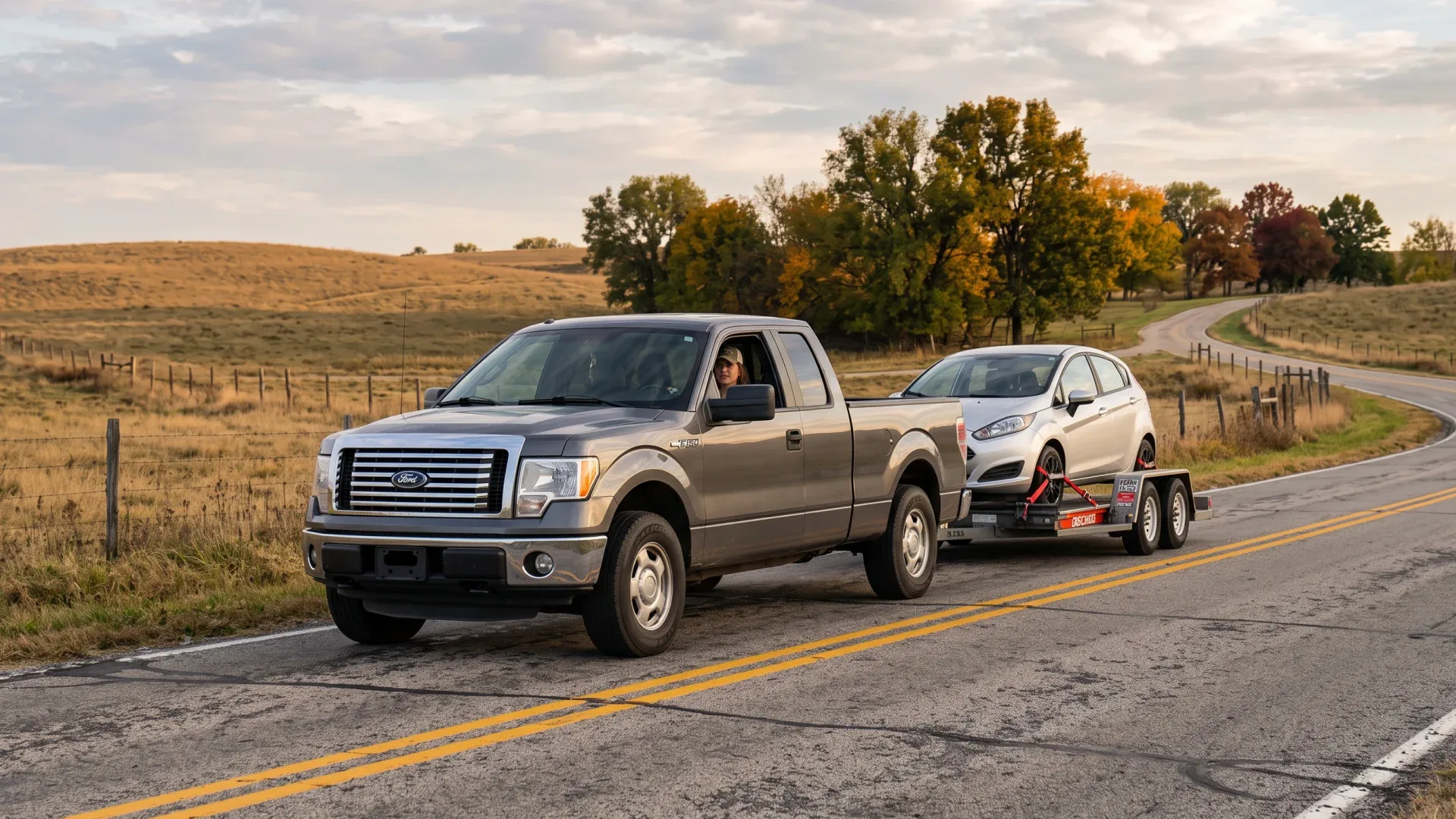
A flatbed trailer allows your car to be carried as dead weight with the car fully off the ground. A flatbed also increases stability during car transport, making it an effective method of long-distance vehicle towing.
Pros:
Eliminates wear and tear on the towed vehicle’s tires and drivetrain.
Suitable for all vehicle types, including RWD, AWD, EVs, and luxury and classic vehicles.
Less potential damage than a tow dolly, especially over long distances.
Cons:
Rental costs can be quite high, especially for longer distances.
The towing vehicle’s horsepower and frame must support the weight of your car and the flatbed trailer.
Added fuel costs for the towing vehicle due to increased weight.
Not recommended for drivers without experience towing trailers
Here’s information on safely towing a vehicle.
Professional Auto Transport Services
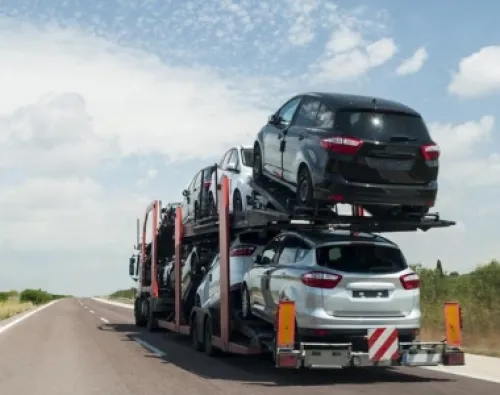
A professional auto transport company loads your car onto a carrier and transports it with other vehicles along your route. Open car hauling is the most affordable option, while enclosed transport adds protection from weather and road hazards.
Pros:
Saves time and headaches of shipping a car yourself.
No wear and tear on your car
Per-mile costs can be quite affordable.
Personalized service tailored to your needs and preferences.
Cons:
Upfront costs are often higher than renting a tow dolly or flatbed trailer.
You need to be careful when comparing costs across the different DIY and professional car towing methods. The initial costs of tow dollies and flatbed trailers can be lower than professional shipping, but it’s important to consider all costs when shipping a car cross-country.
For example, you might rent a tow dolly for $250. That price seems low, but it doesn't include fuel costs for the towing vehicle. There may also be mileage and drop-off fees if you are not returning the dolly to the pickup location.
If you're long-distance towing, you'll need to consider fuel, tolls, food, and hotel costs, plus the wear and tear of towing a car yourself.
Flatbed trailers cost more upfront than tow dollies and incur higher fuel and other on-road expenses, plus you’ll have your food and hotel expenses as well.
A professional car transport company bundles the fuel and driver costs into a single upfront fee. You also minimize the risk of damage to your vehicle compared to DIY towing.
The option that works best for you depends on your vehicle(s), the shipping distance, the value of your time, and other circumstances. However, since it is easy to obtain an auto transport quote, it makes sense to obtain one as a price check.
Prepare Your Car for Long-Distance Towing
If you decide to go with DIY towing, preparing your vehicle for the journey is essential to ensure safety and prevent damage.
Check Towing Vehicle Compatibility
Before towing, confirm that your car and towing setup are compatible. Key factors to consider include:
Towing Capacity: The maximum weight your towing vehicle can safely pull, including the trailer and car.
Gross Vehicle Weight Rating (GVWR): The maximum weight the vehicle or trailer can safely carry.
Tongue Weight Capacity: The maximum weight the trailer hitch can bear.
Trailer Hitch Class: Ensure your hitch matches the weight requirements of both the trailer and the car.
Essential Pre-Towing Preparations
Inspect Tires: Ensure all tires have proper tread and are inflated to the correct pressure.
Reduce Fuel Levels: Keep the towed vehicle’s fuel level at about one-quarter of a tank for transport. A full gas tank adds unnecessary weight.
Remove Personal Items: Clear out your belongings and remove aftermarket accessories to reduce weight and minimize potential damage.
Properly Secure the Vehicle: Use safety chains, straps, and wheel blocks to stabilize your car on the trailer or dolly.
Cost-Saving Tips for Long-Distance Car Towing and Auto Transport
Whether you choose DIY towing or professional auto transport, these tips can help you save money:
1. Compare Car Shipping Quotes
Using online tools that provide instant price estimates allows you to compare quotes from multiple vehicle transportation companies, helping you make the right choice.
2. Choose Open Transport
Unless you're shipping a luxury, classic, or other high-value vehicle, open car carriers are generally the best option for state-to-state car shipping. The overwhelming majority of customers choose open over enclosed since it's the most efficient and cost-effective way to move a car professionally.
3. Book Early
Booking your vehicle transport far in advance secures lower rates and provides more options for dates and services.
4. Rent Your DIY Towing Accessories
When towing DIY, renting straps, safety chains, and other accessories is better than buying them, especially for one-time movers.
Cheapest Ways to Tow a Car Long Distance (Comparison)
Method | Cost Level | Effort Required | Best For |
Tow dolly rental | Low, if own dolly or return to agency | High | FWD cars with experienced drivers |
Car trailer rental | Higher, especially longer and one way | High | All cars with experienced drivers |
Professional towing service | Higher, especially longer and one way | Low | Unique and specialty vehicles |
Hiring a driver | Higher, varies with driver fees | High | Driver is friend or family |
Auto transport | Medium to high | Low | Almost any |
Professional Transport: Often the Smart Choice
Towing a car yourself makes sense for short-distance moves, but the math gets more difficult for long-distance car towing. Towing your car can be the best solution if the numbers work out for you, you have experience towing a trailer, and you are willing to spend the time to move your car across the country. For many, a trusted auto transportation company like Nexus Auto Transport will arrange door-to-door car transport services that take the load off your shoulders.
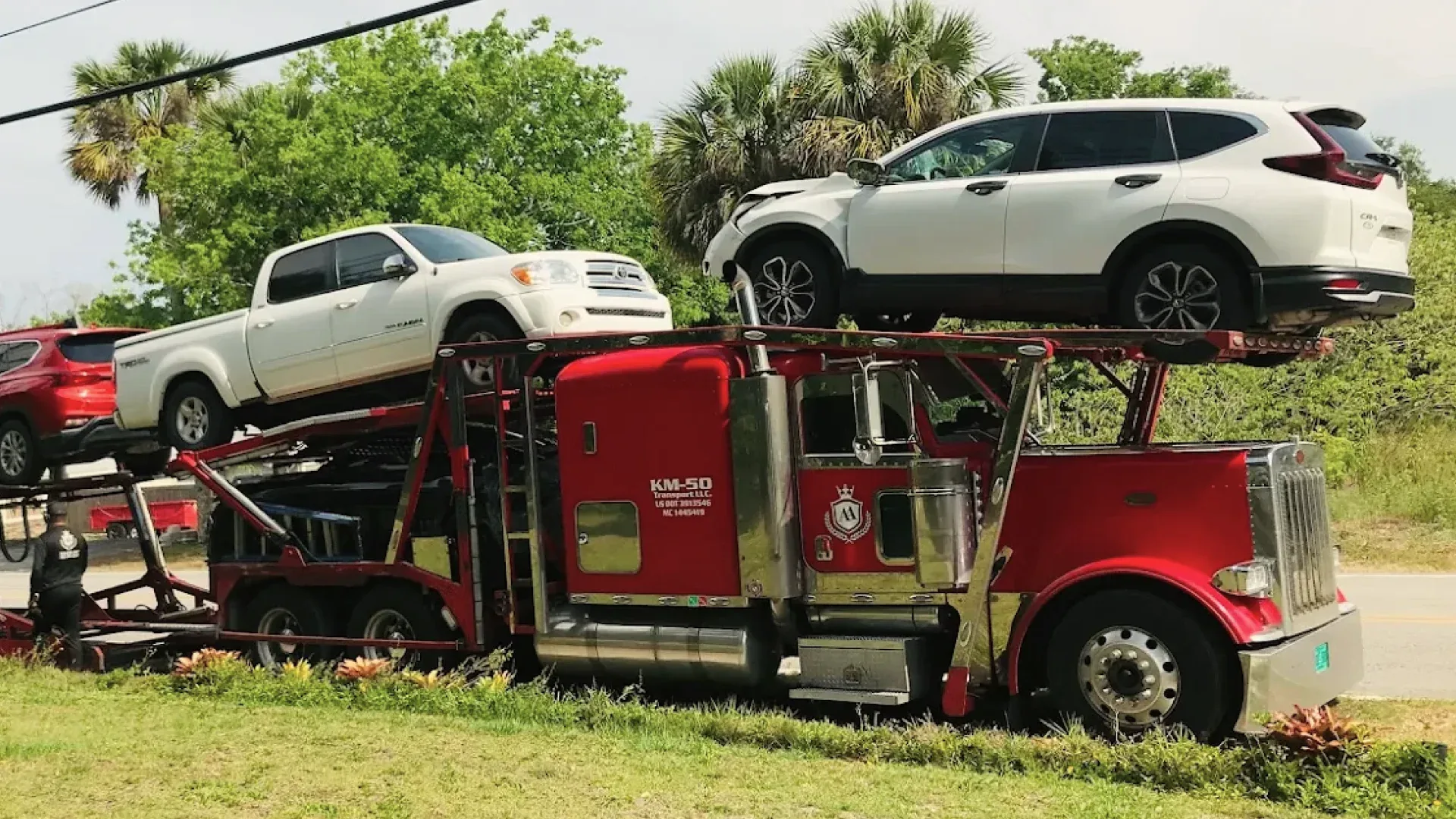
The best auto transport companies vet their trucking partners to ensure your vehicle is transported safely and securely. Nexus offers car shipping solutions to all 50 states, regardless of the type of vehicle you're shipping or the complexity of the move.
Towing vs Shipping Cost Factors
Cost Factor | Towing Impact | Shipping Impact | |
Fuel cost | Out of pocket, paid en route | High and variable; fuel economy drops when towing | Included in carrier price |
Equipment rental | One time, at pickup | Dolly, wiring, straps unless owned | None |
Vehicle wear & tear | Depreciation, possible breakdown | Significant for towing vehicle and car towed on dolly | None |
Time investment | Personal time | 4 to 6 days driving time | Zero |
Insurance coverage | Existing or out of pocket | You bear risk | Carrier’s cargo insurance |
FAQS
Is my vehicle fully insured during professional transport?
Carriers generally have cargo insurance (Nexus requires carriers to maintain $100,000 in cargo insurance). Still, the coverage may not fully cover all vehicles being shipped in the event of a serious accident. However, carriers often offer supplemental insurance that you pay for, and some personal policies also cover damage to your car during transport.
Your best practice is to confirm the complimentary and supplemental insurance options through the auto transporter and review them with your insurance agent to determine your best course of action.
How long does cross-country car shipping take?
There are two parts to this answer. From the moment you book a cross-country car shipment with a broker, it takes 1 to 5 days to schedule your and arrange your pickup. Once your car is on the truck, it often takes another 5 to 7 days to reach its destination across the country.
Can I track my car's location while it is in transit?
Brokers have systems in place to communicate with customers by text, email, and other electronic methods. Brokers also have customer support staff to answer customer phone calls, so while they keep you up to date regarding your vehicle’s status, they do not offer mile-by-mile tracking.
Are there any hidden fees in your final shipping quote?
You should be wary of price quotes that are substantially lower than others. Brokers who book your shipment based on optimistic pricing sometimes cannot find a car carrier to take the job at that price, so they come back to you later with a price increase.
The best practice is to require an all-inclusive, written quote that confirms all fuel surcharges, residential delivery charges, seasonal charges, or other potential surcharges.
Do you offer true door-to-door delivery?
Door-to-door service is the norm, but it may not be feasible given your pickup and delivery locations. It works in rural and more open suburban areas, but becomes difficult in urban areas where the truck and trailer may face legal or physical challenges. In those cases, you work with the driver to meet at a nearby shopping mall or other open area for the pickup or delivery.
Can you transport an inoperable or damaged vehicle?
Yes. If your vehicle rolls without problem and steers properly, a non-operational vehicle generally incurs a modest surcharge, such as $150 for the trip. Of course, you must be honest about the vehicle's condition at the time of booking, as it could affect carrier selection and the order in which vehicles are loaded onto the trailer.