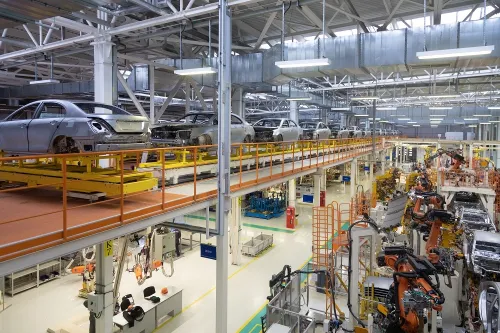
Well over 52 million vehicles are made, sold, and shipped throughout the United States each year. These are not just stock to sit on the shelf like a piece of gum or a tin of peanut butter. They are high-value assets that have to be carefully managed due to space constraints and consumer demand. A wrong shipment here or there can mean months of lost profits for manufacturers, dealers, and private collectors.
Modern warehouse management in the automotive industry is not simple. Even a single Ford Bronco sold across state lines with globally sourced parts has to pass through numerous checkpoints, secure the “right” shipping support, and navigate logistics that ensure timely delivery and full communication at each stage. Without that support, money goes down the drain.
The trick is to turn those shipping challenges or inventory management troubles into strategic advantages so that there are no bottlenecks.
Why is Automotive Inventory Management So Important to Businesses and Collectors
The entire automotive industry runs on tracking, organizing, and optimizing vehicles and parts. Someone in Boston who needs 20 Honda Accords before college move-in month needs to talk with manufacturers in Michigan and importers along the docks of NYC. In many cases, these parts and vehicles end up in regional warehouses waiting for a business or collector to place an order.
That warehousing is the problem. When there is an inventory mistake with toilet paper in a grocery store, it doesn’t take more than a few minutes to move things around and make room. When there is a similar mistake with a line of new Audi SUVs, the room is much more limited.
Overstocked vehicles tie up a ton of capital and increase storage expenses. If there is understock, dealers and collectors lose sales and end up with frustrated down-channel customers. Smarter auto inventory management is all about creating clarity and balance. You want a structured system from purchasing to final delivery to avoid extra costs and operational problems.
The Role of Warehouse Management in Automotive Operations
Warehouse management is all about unifying receiving, storing, organizing, and shipping inventory. Over 65% of these warehouse management crews use predictive analytics to better optimize space, which is crucial when you’re dealing with something larger, like an RV or a row of freshly made Toyota trucks.
The difference is that warehouse management in automotive industry is more complex than the standard storage space you use for seasonal furniture or old kids' clothing. The bulkier the parts and items, the more handling, storage, and turnover requirements. The most effective solutions include storing parts without causing additional damage, using modern SKUs for inventory retrieval, enabling movement with real-time tracking, and reducing delays through automation.
Vehicles have to be part of that inventory flow. For example, a leading auction of antique cars might use advanced warehousing to decide what cars to feature, how to get them out of storage, arrange fast shipping, and then get them cleaned and prepped for sale. Without that system, those cars can get stuck in the warehouse, taking up valuable space.
What Components Make a Strong Inventory System
Proper warehouse management in the automotive industry must be efficient. Even without modern tech tools, these spaces need to be set up so a nationwide shipping carrier like Nexus Auto Transport can easily show up, pick up the car(s) being moved, and make a delivery within a designated timeframe. The most efficient warehouses have:
Tracking Systems: Real-time tracking using RFID/SKU technology that makes it easier to store, ship, and maintain accurate records of all vehicles and parts within a warehouse.
Data Analytics: AI-infused software to uncover trends and optimize inventory levels. This is extremely useful for decision-making and for removing the emotional “instincts” that may not be based on data.
Automated Processes: It’s not uncommon to see lifts, arms, and travel beds in modern automotive warehouses, all run with automated systems. Automation also reduces human error and helps a warehouse scale up or down based on demand.
Centralized Dashboard: A quality system will have a single member dashboard to track everything relevant, eliminating the need to flip between programs for communication and logistics.
It’s also pretty normal for auto inventory management to include better staff training and regular inventory audits. Managers want reassurance that all the products stored inside match records and orders. A local dealer running a promotion on convertibles just in time for spring weather needs verification that those cars will be available at the warehouse where they’re stored.
Automotive Inventory Management Workflow
Process | Operational Impact |
|---|---|
Storage | Properly organizing all cars and parts to reduce the risk of damage, maximize space, and ensure faster movement for sale or distribution. |
Tracking | Real-time visibility into inventory levels improves accuracy, reduces errors, and allows teams to make faster decisions. |
Fulfillment | Efficient order processing and coordination ensure vehicles and parts are delivered on time, improving customer satisfaction. |
Replenishment | Smart restocking based on demand forecasting prevents overstock and shortages. |
Strategies That Actually Improve Inventory Performance
Having the right tools and management components in place is helpful, but strong relationships and strategic auto inventory management are better. Different trends will impact one set of products more than another.
Take a look at the tariffs from 2025 to 2026. Those directly impacted what types of vehicles consumers choose. Anything with lower tariff obligations and better gas mileage saw greater demand than larger trucks and SUVs, known as “gas guzzlers.” EVs are another example. The more consumers want eco-friendly, sustainable vehicles, the more they look for Toyota Prius models, hybrids, and full EV options.
To anticipate these needs, smart management looks at market trends and inventory turnover. They want to ensure all products are moving efficiently and converting into strong revenue. Any slow-moving stock only takes up space and complicates customer relationships.
A good way to alleviate these pressures is through modern tracking, IoT-enabled monitoring, AI-infused video cameras, and enterprise resource planning (ERP) systems. That way, warehouse teams can better manage last-minute orders, monitor current inventory, and efficiently ship vehicles using a trusted provider like Nexus. The right partner will offer everything from open auto transport for multiple cars to expedited vehicle delivery when customer demand means getting more inventory at the last minute.
The Benefits of Getting Smart Auto Inventory Management Right
With Nexus Auto Transport, a dealer, collector, or warehouse team has a trusted provider that offers smooth logistics from pickup at a central location to delivery to customers' driveways. There is clear pricing, delivery options, shipping insurance, and a massive network of flexible carriers able to provide single-vehicle delivery for high-end vehicles to multi-car shipping using an 18-wheeler.
Coordinating these transport activities is a part of running an efficient auto inventory. Having someone with direct industry experience and the logistics framework to alleviate some of those details improves workflows. Cost control is easier as slow-moving stock is reduced and everything becomes more predictable as orders are fulfilled faster and errors decrease.
Learn more about how Nexus Auto Transport works for dealers and large inventory collectors. One partnership can be the competitive edge needed to ensure future profitability for any location. Not only does this improve operations, but it also increases customer satisfaction as more people get the cars and parts they want instead of waiting weeks for them from an inefficient warehouse.
Building a More Resilient Automotive Operation
The automotive industry is not slowing down. It is adapting to the times, markets, and consumer shifts that fluctuate every single day. Right now, that means prices will remain high and foreign vehicle imports will grow. Tomorrow, that could mean a new American-made truck with a full bed to fit a sheet of plywood, but at a fraction of the price, could change everything.
The way to ensure auto inventory keeps up is to properly manage it at every step and at each location along the way. That includes ensuring warehouses from coast to coast. Any lack of coordination, communication, or tracking will only make that harder.
Auto inventory management is not a back-end function. It is central to any business strategy. Having real-time tracking, data-driven forecasting and insights, and integrated systems with efficient vehicle shipping and delivery boosts profits. When these pieces align, it builds a more resilient system, no matter what trend or market pressure is just around the corner.
FAQs
What challenges can poor automotive inventory management cause?
When customers and dealers cannot get a hold of inventory, it reduces profits and lowers customer satisfaction ratings. That would hurt any industry, but it is much more challenging considering how much space vehicles take up.
How can businesses improve accuracy in automotive inventory tracking?
RFID, IoT, real-time tracking, and automated systems. These tech tools ensure managers know where all cars and parts are at any location, enabling efficient management and shipping.
What role does automation play in automotive warehouse management?
It reduces human errors. Machines can scan thousands of documents and siloed data points without forgetting information or overlooking a digit here and there. That accuracy improves all workflows.
How often should automotive inventory be audited?
For a dealership, it should be done at least quarterly. For a warehouse, probably every month. Not only will this reduce errors, but it will also allow products to be moved to better use space and timing.
What factors should be considered when choosing an automotive inventory management system?
Communication and centralized data analytics. Having a unified dashboard that quickly displays key metrics such as the number of cars, locations “online,” and any vendor needs improves operations.
How does poor automotive inventory management affect vehicle transport and shipping logistics?
If a warehouse cannot locate a car to ship, the delivery team cannot complete their duties. Proper tracking and efficient systems help everyone along the vehicle supply chain.