

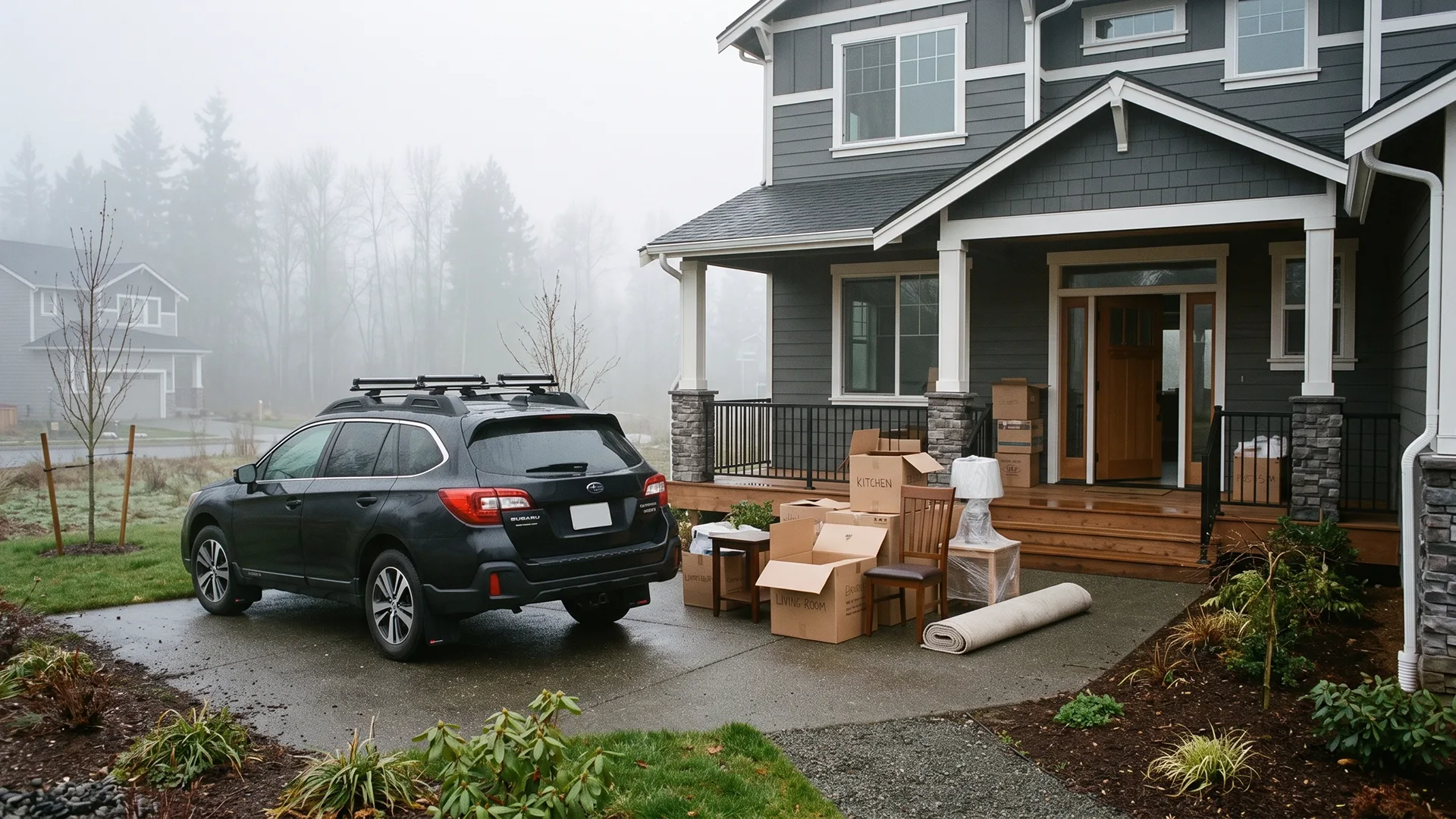
You used a moving checklist while preparing to move, and now it is done. The boxes have arrived, the moving truck has left, and you're standing in your new home with lots of work to do. Before you hang your first picture or start decorating, there are also important things to do after moving into a new house, from legal obligations to insurance updates to practical logistics.
We've prepared an After Moving Checklist that identifies what deserves your attention right away.

Safety and Security First
Before you unpack a single box, walk your property and assess your security. Other key things to do after moving into a new house include:
- Changing the lock on each exterior door because even the most conscientious previous owners may have distributed keys to neighbors, dog walkers, housecleaners, or relatives. This is inexpensive to do yourself, or you can have a locksmith do it for $50–$150 per lock.
- Locating the main water shutoff, the electrical panel, and the gas shutoff. Know where they are before an emergency makes you scramble.
- Test the smoke detectors and carbon monoxide alarms. Replace the batteries and check the alarms' age. The National Fire Protection Association recommends replacing smoke alarms every 10 years, but a fun trick is to replace the batteries each holiday (such as Thanksgiving or during the New Year).
Utilities and Practical Setup
If you haven't already, put your electricity, gas, water, internet, and trash collection in your name. Call the providers to confirm the transfer happened. In some municipalities, a local authority handles water service, and missing a billing cycle can result in a lapsed account.
Set up your internet service immediately if it wasn't transferred in advance. In the work-from-home era, this is often mission-critical on day one, making it one of the first things to do after you move.
The Legal and Government Side: Don't Procrastinate
Legal requirements with deadlines are among the things to do after you move. Some carry penalties if you ignore them.
- Driver's license and vehicle registration. Most states give you 10 to 60 days to update your driver's license and vehicle registration to your new address after establishing residency. Some states are strict about this and can use it against you in traffic stops. Check your new state's DMV website on day one (or before) and schedule an appointment. If you moved across state lines, you'll typically need to pass a vision test and surrender your old license.
- Voter registration. Some states have voter registration deadlines that fall weeks before an election. If it is an election year, updating your registration immediately ensures you can vote in your new jurisdiction and removes you from the rolls in your old one. Most states allow you to register at vote.gov.
- USPS mail forwarding. If you haven't already, file a change of address with the U.S. Postal Service. It takes about a week to process and lasts up to 12 months, buying you time to update your address everywhere else without missing important mail.
- Homeowner's or renter's insurance. If you bought a home, you almost certainly obtained homeowner's insurance at closing, but verify the policy is active. Now is also the time to confirm that your coverage limits accurately reflect the value of your belongings. If you're renting, don't skip renter's insurance; a basic policy typically costs $15 to $30 a month and covers personal property losses from theft, fire, and water damage.
- Auto insurance. Your garaging address partly determines your auto insurance premium. Notify your insurer within the first few days. Rates may go up or down depending on your new location and the length of your new commute, though failing to disclose a move gives an insurer ground to deny a claim.
- Health insurance. If your health plan is employer-sponsored, notify your human resources department. Many plans are network-based, and a new address could change your network. If you're on a marketplace plan, you have 60 days to choose a new plan when your situation changes. To change your address, log into your account at HealthCare.gov and select "Report a Life Change."
- Life insurance and financial accounts. Update your address with your bank, brokerage, retirement, and life insurance providers through their online portals to ensure important statements don’t go to your old address.
Introduce Yourself to the Neighborhood
Introduce yourself to immediate neighbors within the first few days, especially if you have children. Neighbors who know you are more likely to flag suspicious activity, notice when something is wrong, and even accept a package for you.
Completing Your Things To Do After Moving
Moving week is exhausting. While the tasks that require prompt action are mostly administrative, they offer legal and financial protection. Block out a few hours during your first week to work through the After Moving Checklist. Take care of these issues, and the rest of the unpacking can happen at a civilized pace.
Moving can be exhausting, but it gets easier when you use a reliable auto transporter to move a vehicle to your new home. If you're still planning your move, consider working with Nexus Auto Transport, a leading broker with a nationwide network of vetted carriers experienced in all aspects of transferring vehicles tied to relocations. Contact us for a quote and see how our 3-step process makes it easy for you from start to finish.
Vehicle and Admin Checklist by State Deadline
Milestone |
Recommended Timeframe |
Primary Action |
Transport Logistics Alignment |
|---|---|---|---|
Vehicle Registration Update |
Within 30 to 60 days of establishing residency (10 days in some state) |
Visit state DMV with vehicle title, proof of residency, current registration, and payment for new plates and registration |
Wait until shipped vehicle is delivered and inspected before initiating registration. Keep the Bill of Lading as documentation |
Driver’s License Transfer |
State deadlines range from 10 to 90 days |
Appear in person at DMV with passport or birth certificate, Social Security card, and two proofs of new address. Surrender old license. |
Schedule DMV appointment around vehicle's expected delivery window |
Car Insurance Update |
Immediately upon move; Delay can void coverage or provide grounds to deny a claim |
Notify your insurer of the new address; Request updated declarations page; Compare local carrier rates if your premium increases |
Update personal auto policy to new address on or before delivery day |
Carrier Delivery Coordination |
Confirm 1 to 5 days before the estimated delivery window |
Verify delivery window; have payment ready (balance due in cash or certified check); Designate authorized recipient if you cannot be present |
Conduct a thorough Bill of Lading inspection at delivery; Photograph all damage before signing; Note discrepancies and file damage claims within 24–72 hours per carrier policy |
FAQs
How many days do I have to update my driver's license and vehicle registration after moving to a new state?
Timing varies widely by state. It ranges from 10 to 90 days, though the most common window is 30 to 60 days. You get 10 days in California and 90 in Texas. Check your new state's DMV website on or before moving day, because the failure to transfer can complicate a routine traffic stop in some states.
What should I do if my transported vehicle arrives before I officially move into my new home?
If you cannot be there to take delivery, designate a trusted person to receive it at the delivery address or staging location. Check with the broker or carrier to determine whether you need to provide your designee with a notarized permission letter.
Have your designee thoroughly inspect the Bill of Lading and photograph everything before signing. Their signature on the Bill of Lading becomes your legal record of the vehicle's condition at delivery. If you need to make a claim, do so immediately, since most carriers require damage claims within 24 to 72 hours of delivery, regardless of your move-in status.
Who should I notify first regarding my address change to prevent vehicle insurance lapses?
This is a high priority among things to do after you move. Call your auto insurer first, not the DMV, since your new address affects your coverage. Car insurance policies often include a clause allowing the insurer to deny a claim if your registered address doesn't match where you keep the car. A call or online update takes only a few minutes and gives you immediate protection.
What essential items should I keep in my personal car rather than shipping it on an auto carrier?
First, most auto carriers do not allow personal items in the car being transported. Even if they allow a few items in the trunk, the carrier's cargo insurance policy won't cover them.
Keep with your key items you'll need to access during the move, such as:
- Prescription medications
- Important documents (passports, Social Security cards, recent financial records)
- Jewelry or family heirlooms
- Laptops