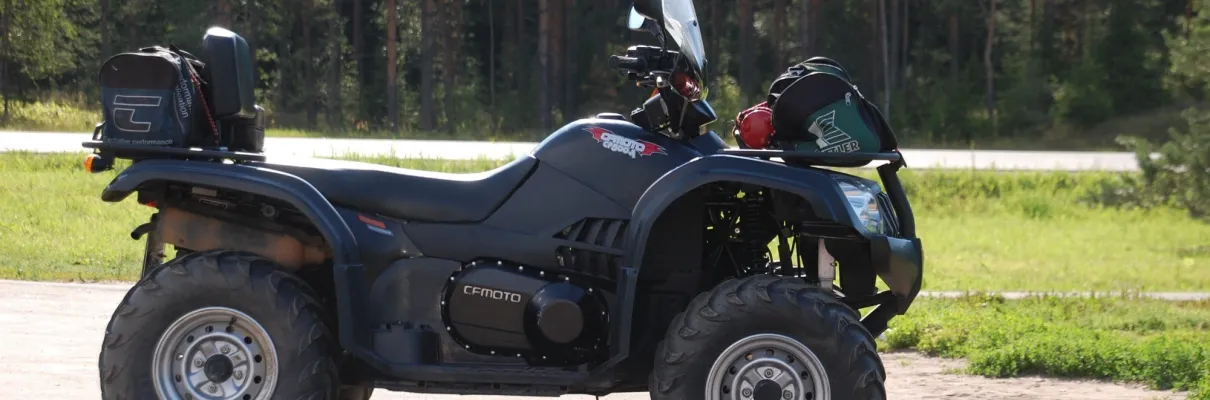

An ATV (all-terrain vehicle) is placed on a truck and transported to another state in two main situations. One is a household move, where the machine is a line item on a relocation budget. The other is an out-of-state purchase, where the cost to ship an ATV cross-country helps determine whether the deal is worth it.
The logistics are identical. The math is not. In a move, you compare shipping with renting a trailer and towing it yourself. In a purchase, transport is a toll on a price advantage, and you must net it out before you bid.
Is ATV Transport Filler Freight or a Vehicle?
The biggest cost lever is physical. A typical ATV is about four feet wide, six to seven feet long, and 400 to 800 pounds. That fits crosswise on an auto carrier in space a car cannot use, making it filler freight and among the cheapest things on the trailer. A side-by-side or UTV is five to six feet wide, ten to fourteen feet long, and 1,200 to 2,500 pounds. It occupies a full car slot and is priced accordingly.
Measure before you request quotes. Knowing your dimensions also helps you avoid a broker who quotes you as an ATV and re-quotes you as a UTV (utility task vehicle) once the driver looks at it.
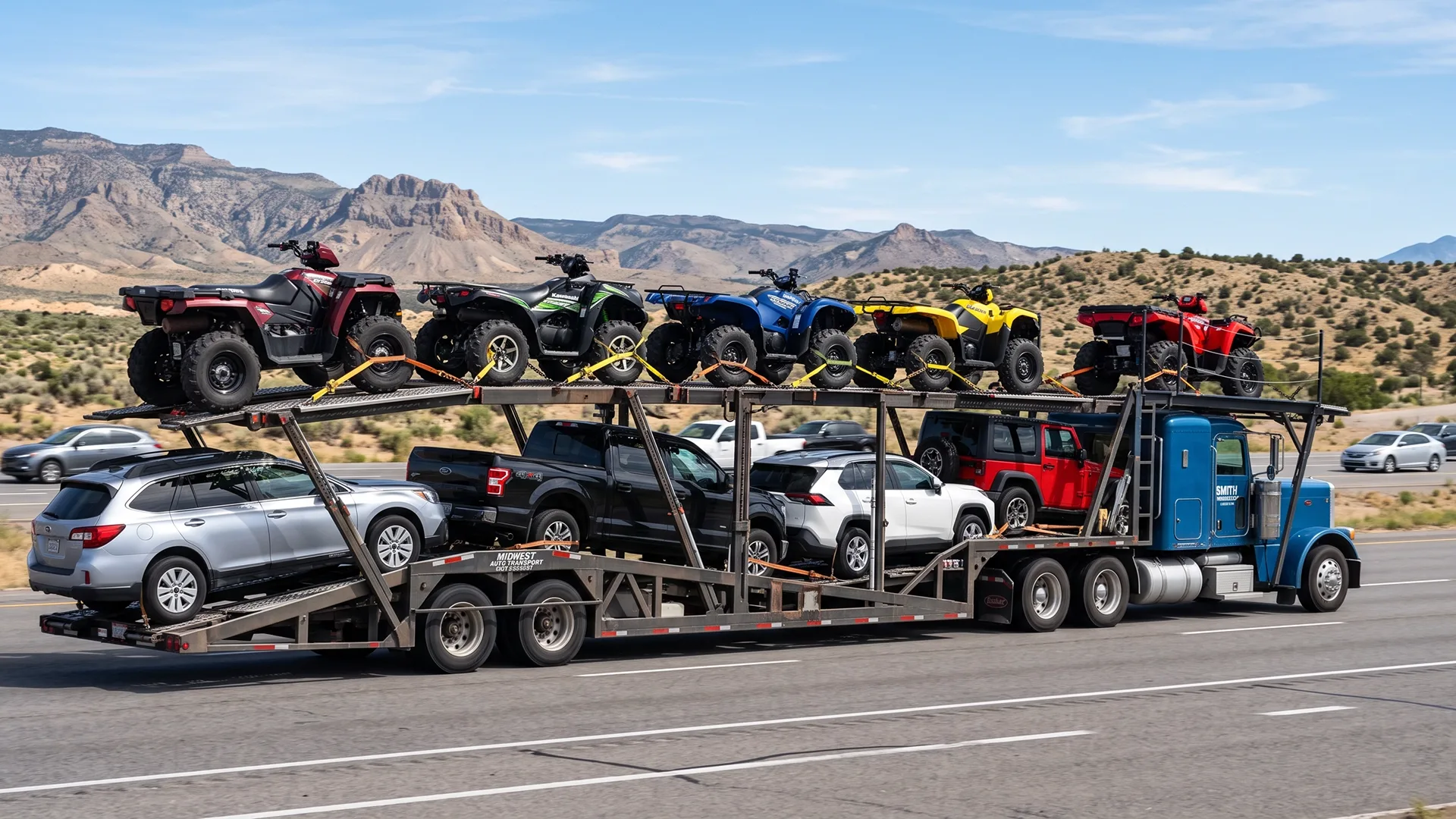
Three Channels, Three Price Structures
- Open auto carrier. The default and the cheapest. The machine rides exposed alongside cars. Appropriate for a used working ATV.
- Enclosed or powersports-specialist transport. Weather protection, hydraulic-lift loading, door-to-door service. It costs 30 to 50 percent more; one carrier’s published medians put enclosed near $1,200 versus $860 for open. The price may be worth it for a new machine, a custom build, or a winter haul.
- Crated or palletized LTL freight. The machine is strapped to a pallet or crated and moves terminal-to-terminal on a freight network. Viable for a single small ATV on a long haul, and it normally requires full fluid drainage and battery disconnection. You collect it at a freight terminal, not your driveway.
Published ATV Shipping Cost
No government or independent body audits powersports transport pricing. The prices shown below come from transport company websites, and they vary widely. Treat the table as a negotiation range, not a fixed price.
Estimated ATV Shipping Costs by Distance
Distance |
ATV, open carrier |
UTV / side-by-side, open |
All machines (median) |
|---|---|---|---|
< 500 miles |
$200 to $350 |
$400 to $600 |
≈ $500 |
500 to 1,500 miles |
$350 to $550 |
$600 to $900 |
≈ $960 to $1,100 |
>1,500 miles |
$550 to $800 |
$900 to $1,400+ |
≈ $1,800 |
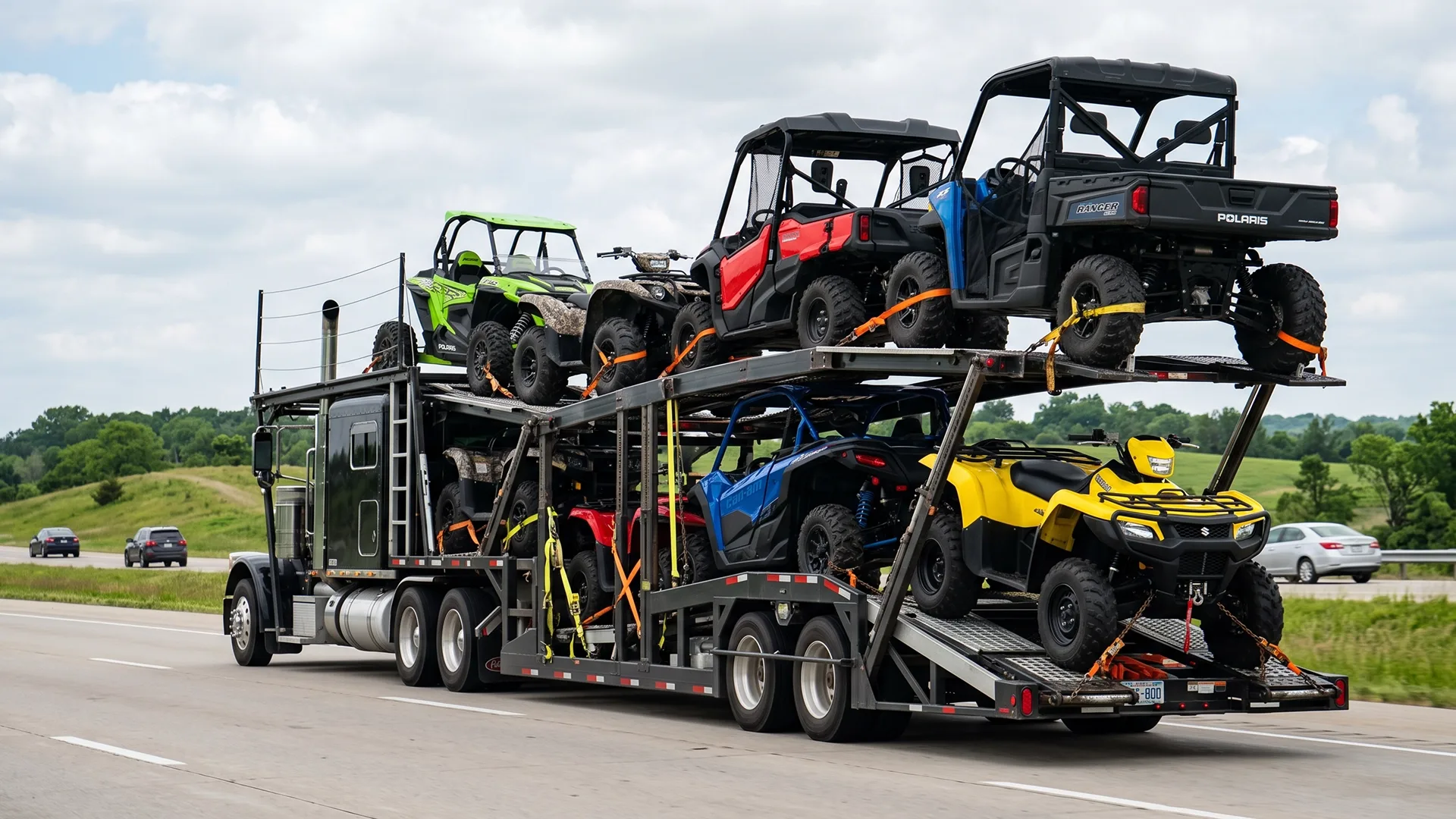
How to Pay Less for ATV Transport
Here are strategies to reduce your ATV shipping costs.
- Give a pickup window, not a date. Two or three flexible days let a broker match you to a truck already running your lane. You pay more for a guaranteed pickup date.
- Meet the truck. Recommend a large commercial lot near an interstate exit as the pickup point, not your home. Driving fifteen miles routinely beats a rural-access surcharge and shortens the pickup window.
- Combine machines. Two ATVs on one booking beat two bookings, often by $100 to $200 apiece.
- Skip enclosed unless the machine justifies it. A 40 percent premium on a $4,000 used utility quad is hard to defend.
- Describe condition precisely. “Won’t start but rolls, steers, and brakes” gets a lower price than an ATC described as “inoperable.”
- Book two to three weeks out and price a broker quote against a marketplace bid, so you can see what carriers will accept rather than what a sales desk hopes you will pay.
- Net transport against the price difference. A $900 haul erases a $700 price advantage from buying an out-of-state ATV.
Prep and paperwork
Preparation is channel-specific to ship ATV cross country, so ask rather than assume, but common requirements are:
- Secure or remove loose accessories
- Check tire pressure
- Wash the machine so scratches are visible
- Photograph it from every angle with timestamps before the driver writes the condition report.
- Drain the fuel and remove the battery if using crated LTL
The Bill of Lading is the document that matters. It is the condition record at pickup and delivery and is the foundation of any damage claim. Read it, note every existing mark in a specific language, and get the driver’s acknowledgement before you sign at either end.
Before booking, verify the operating authority and insurance in FMCSA’s SAFER system. Brokers and carriers are different entities carrying different liability, and the quote you received does not tell you which one you are hiring.
How Nexus Helps Get You Where You're Going
When shipping an ATV to a different state, working with a trusted broker helps keep the process smooth and efficient. Nexus Auto Transport is a leading broker with a nationwide network of vetted carriers experienced in all types of vehicle transfers. Contact us for a quote and see how our 3-step process makes it easy for you from start to finish.
Use our car shipping calculator for a free quote: https://nexusautotransport.com/car-shipping-calculator/
FAQs
Can I ship a non-running ATV?
Yes, but say so at booking, not when the driver arrives. A non-running machine may need to be winched or lifted rather than driven onto the deck, which narrows the pool of available trucks and adds a surcharge generally quoted at $100 to $250.
Accurately describe the vehicle’s condition. A quad that will not start but still rolls, steers, and brakes is straightforward to winch and prices near the low end. Seized brakes, missing wheels, or a bent frame require different equipment and should be disclosed in exactly those terms. A driver who shows up expecting a machine that rolls and finds one that does not can refuse the load, and you will pay a penalty.
Can I ship an ATV without a title or registration?
For the shipping itself, generally yes. Transport is a freight transaction governed by the Bill of Lading, and carriers typically ask for identification and a signed condition report, not a certificate of title. Registration is irrelevant for a machine riding on a trailer. Most ATVs aren't road-legal anyway.
The real question is whether you can title the ATV after shipping it cross-country, and the answer depends on the state. Nebraska requires titles for ATVs sold new after January 1, 2004, and UTVs sold new after January 1, 2011, an out-of-state purchase triggers a mandatory vehicle inspection, and you must submit the application to the county treasurer within 30 days. Virginia requires titling only for new ATVs and off-road motorcycles over 50cc, so titling is optional for used machines. Michigan makes it unlawful to transfer an off-road vehicle without transferring the title, gives residents 15 days to apply, and requires no registration.
The practical rule: settle the paperwork before the machine ships. A quad sitting in your garage with nothing but a handwritten receipt is a harder problem than one you have not yet paid for. If the seller has no title, confirm how to handle the situation with your own state agency before you pay for the machine.
Can multiple ATVs be shipped together?
Yes, and it is the single most effective way to cut your per-unit ATV shipping cost. Carriers regularly accommodate multiple machines on one trailer because ATVs load crosswise as filler freight; two or three can occupy the deck space a single car would take. Combining shipments often saves $100 to $200.
Two details are worth insisting on. Confirm the combined footprint against the carrier’s standard envelope. Three machines that individually fit the cheap tier can collectively trip an oversize charge. And confirm each unit gets its own line on the Bill of Lading with its own condition notes and photographs. A single BOL entry reading “3 ATVs” is nearly useless if one arrives with a cracked fender.
Can an ATV be picked up or delivered in a remote rural area?
Yes, with a caveat and a surcharge. Door-to-door service is available, but rural pickups cost more because adding a stop far off a major highway costs the driver fuel and time. Carriers are candid that remote campsites, trailheads, and back-road addresses may require a nearby meet point when a rig cannot safely reach the final address.
Treat that as an opportunity rather than a problem. Propose a meeting point yourself. A large retail or truck-stop lot near a highway exit usually costs less and offers a tighter pickup window than making the carrier solve the access problem. Before booking, assess the site honestly: an auto carrier can run up to roughly 75 feet, needs turning room and overhead clearance, and will not commit to soft ground, a steep unpaved grade, a low bridge, or a posted weight limit.