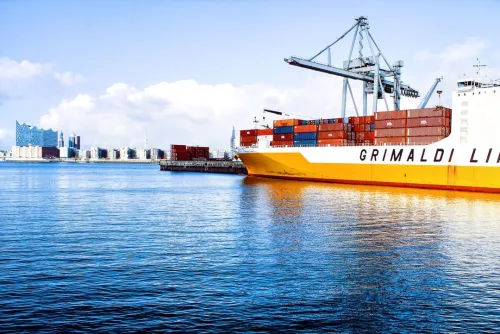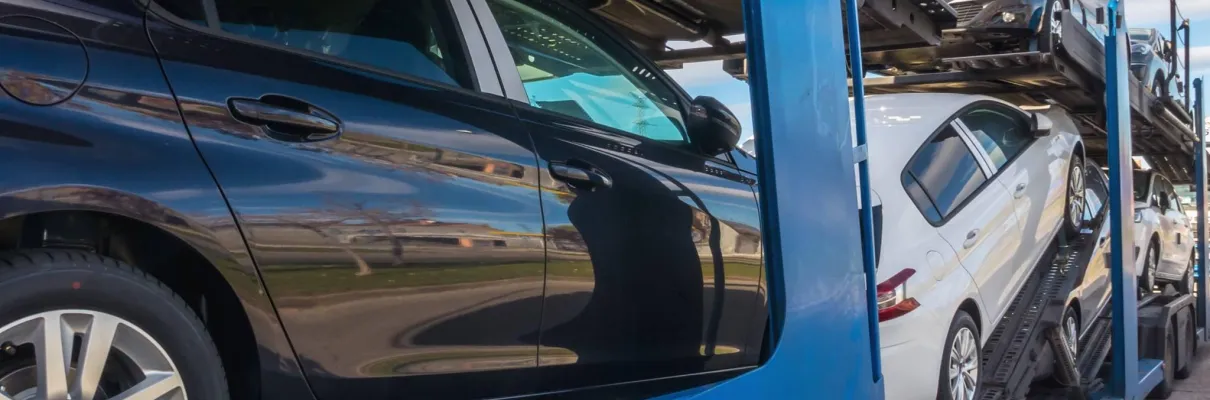

Traveling around the Hawaiian Islands can be exciting, but it can be more complex if you want to drive your own vehicle on multiple islands. Shipping your vehicle to Hawaii, or in this case, shipping cars between Hawaiian Islands, differs from driving across state lines in the continental US, or if you’re relocating from the mainland or going on an extended vacation.
Fortunately, there are convenient and affordable options, whether you choose to send your car from one inter-island port to another or have it delivered to your door. If you're looking to ship a car from Maui to Oahu, Honolulu, Hilo, or anywhere else in the state, here's everything you need to know about inter-island car shipping Hawaii.

Understanding Hawaii Inter-island Car Shipping
Inter-island car shipping in Hawaii means shipping your car between islands. Since the car never leaves the state, the process is not subject to the many federal regulations governing interstate car shipment. Instead, Hawaii’s Public Utilities Commission oversees the industry.
While the distance between the Hawaiian Islands is relatively short, the logistical challenges and high cost of transporting vehicles across the Pacific Ocean make inter-island shipping in Hawaii different from mainland shipping.
There is only one company, Young Brothers, authorized by the State of Hawaii to ship vehicles among the islands. Still, they offer only port-to-port or terminal-to-terminal services. If you need or want your vehicle picked up and dropped off at your preferred location on each island, you will need to hire a third-party auto transporter. The auto transporter will, for instance, pick up the car at your home and load it onto a trailer for transport to the terminal. The car transporter then transfers the vehicle to Young Brothers. At the destination port, the auto transporter loads it onto a trailer and takes it to your desired location. They also handle all communication with Young Brothers. (Brokers also play an important role when shipping vehicles from the mainland.)
Popular Routes for Inter-island Car Shipping
There are multiple shipping ports in the Hawaiian Islands, including:
Honolulu on Oahu
Kahului on Maui
Nawiliwili on Kauai
Kaunakakai on Molokai
Hilo and Kawaihae on the Big Island
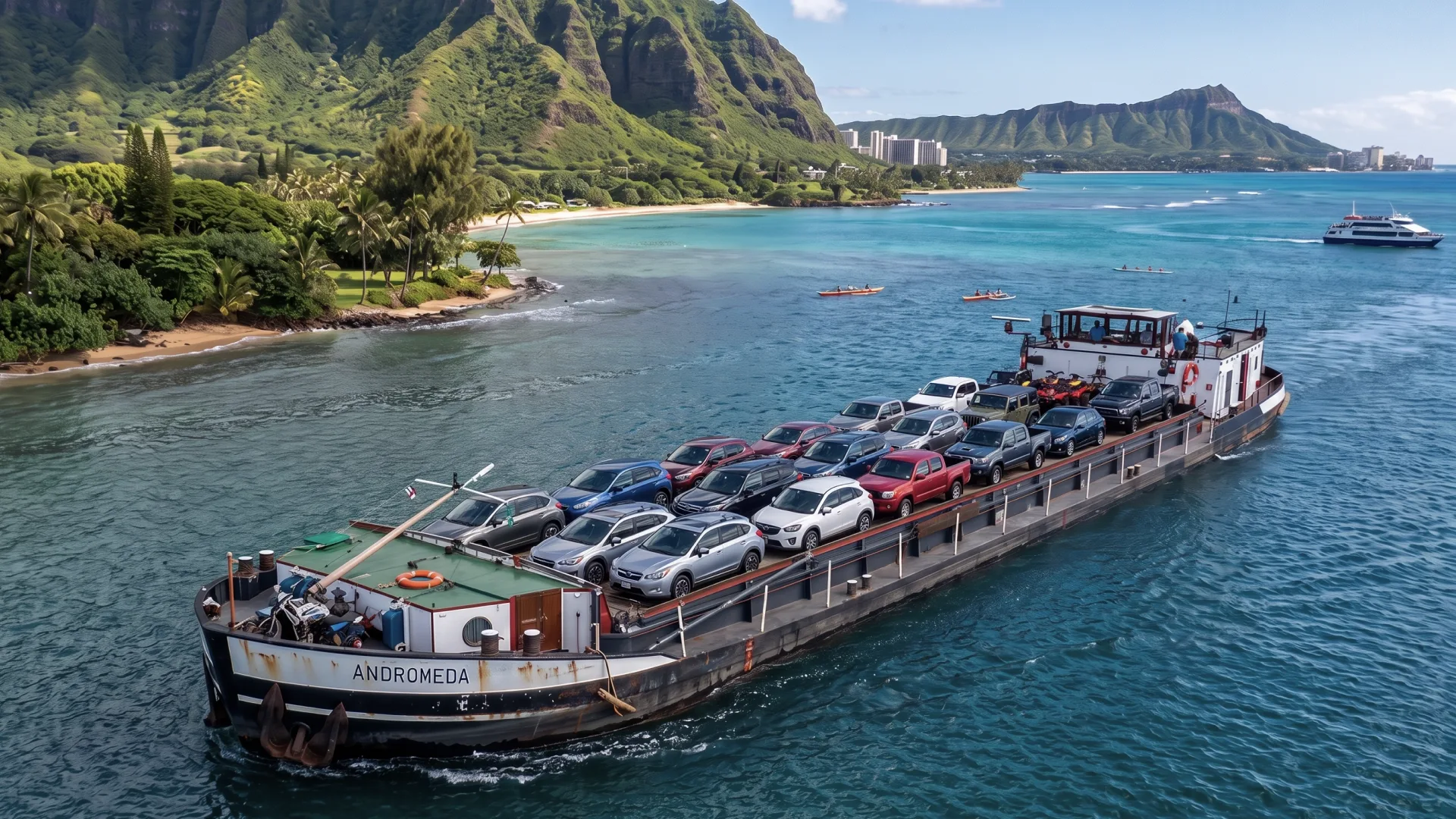
Oahu is the state’s most populous island, so there is greater demand to ship cars there than to the other Hawaiian ports. A few of the most popular routes go between:
Oahu and Maui
Oahu and Hilo (the Big Island)
Oahu and Kauai
How to Prepare for Inter-island Car Shipping
Hawaii inter-island auto shipping is convenient, and the shipper handles most of the work for you, but you still must prepare your vehicle for shipment. Here’s how:
Gather Your Documents
Shipping your vehicle inter-island in Hawaii requires more paperwork than shipping a vehicle on the mainland. Among the documents you will need are:
Personal ID
Current registration or Certificate of Ownership
Proof of insurance
If you’re not the legal or registered owner of the vehicle, you need the three documents above, plus an original notarized letter from the registered owner, legal owner, or lien holder authorizing the shipment. The letter must include the:
Vehicle make
Model and year
Vehicle Identification Number (VIN)
Weight
Name of the person authorized to ship the vehicle.
Remove Any Personal Items
Personal belongings can’t be included when shipping cars between Hawaiian islands. Be sure to remove loose items from your car, such as phone chargers, loose change, documents, tools, air fresheners, and dash ornaments.
Your vehicle should also be free of mud, insects, and plant life to avoid transferring invasive species from island to island.
Don’t Fill the Tank
Your car should have no more than one-quarter tank of fuel, per US Coast Guard requirements. You only need fuel to drive your vehicle on and off the ship.
Take Pictures and Videos
Take photos and video documentation of your vehicle when you hand it over to the transport company. Visual documentation can be extremely helpful if damage occurs and you need to file a claim. Take photos and videos of the interior and exterior from multiple angles. You can never have too many photos.
Get the Bill of Lading
You and the driver or another employee of the transport company sign the Bill of Lading when the vehicle is picked up or dropped off, and the driver or another employee must provide you with a copy.
The Bill of Lading serves as a contract between you and the carrier and acts as a receipt for your vehicle. It should include the:
Auto transport company name
Type of vehicle being shipped
Pickup and delivery locations
Price for the service
Condition of the vehicle when turned over to the shipping company
Vehicle Identification Number (VIN)
Choosing the Right Inter-island Shipping Partner
Your experience with inter-island shipping depends on selecting a reliable auto transporter specializing in inter-island car shipping Hawaii.
Here are some things to look for:
Do your research. Look into the company’s history and customer track record. Check for reviews on third-party sites like TrustRadius and the Better Business Bureau. Check for negative views and see how the company responded to complaints. No one is perfect, but how they handle problems tells you a lot about their commitment to customer service.
Review their policies: Investigate the company’s cancellation and payment policies. Everything should be clear and transparent with no hidden fees.
Inter-island Car Shipping Costs
Hawaiian inter-island car shipping costs fluctuate based on many factors, including:
Season: The summer months and holiday season tend to have the highest car shipping demand and the most expensive rates.
Shipping distance: Generally, shipping distance is the biggest factor in the total cost to ship a car. However, shipping between island ports can be more complex, so that it may be more expensive per mile than equivalent mainland shipping.
Delivery method: Port-to-port shipping is cheaper than services that pick up and deliver to home or other addresses.
Transport type: Shipping in an enclosed trailer better protects your vehicle, but it’s also more expensive than shipping open air.
Vehicle size and weight: Small cars and motorcycles are lighter and cheaper to ship between islands than EVs, large SUVs, and trucks.
Vehicle condition: If your vehicle is inoperable, it requires more equipment and effort to load it onto a trailer, which may increase costs.
For example, the inter-island car shipping cost for a passenger car is about half that of a heavy-duty truck.
Consider Inter-island Shipping for Car Shipping in Hawaii
Whether you're relocating to a different Hawaiian Island or you need to ship multiple vehicles to a business in Hawaii, inter-island shipping is a convenient option.
While inter-island shipping can be complex and expensive, choosing a reliable, professional shipper makes the process smooth and stress-free. Working with an auto shipping broker specializing in Hawaiian inter-island car shipping ensures your car will arrive quickly and safely.
Looking to ship your car between the Hawaiian Islands? Get in touch for more information, to request a quote, or to schedule your inter-island car shipping service today!
Hawaii Inter-island Car Shipping Routes and Transit Times
Route (Island to Island) | Estimated Transit Time | Service Frequency | Typical Cost Range |
Oahu → Maui | Overnight | 3x/week | $350 to $650 |
Oahu → Big Island | 1.5 days | 2x/week | $400 to $700 |
Oahu → Kauai | Overnight | 2x/week | $350 to $650 |
Maui → Big Island* | 3 to 7 days | 2x/week | $600 to $1,050 |
Kauai → Big Island* | 3 to 7 days | 2x/week | $600 to $1,050 |
The Maui-to-Big Island and Kauai-to-Big Island routes are not direct. Both go through Oahu, thereby lengthening the transit time.
FAQs
Can I authorize someone else to pick up my vehicle at the destination port?
Yes. At the destination, the vehicle can be released to the named consignee or an alternate consignee identified at booking. The consignee information can be updated after booking, but the vehicle will only be released to an identified person with proper ID.
Are there any hidden port fees or taxes due upon arrival?
There should be no hidden fees or taxes upon arrival. A public commission sets the rate structures for port-to-port shipments, which are not negotiable. Those rates include cargo insurance.
You should also avoid incurring additional fees when you work with an auto transporter that takes your vehicle to and from the terminal. However, their fees are not subject to the same state regulations, so shop around, find a reputable auto transporter, and confirm that you are getting an all-inclusive price.
Does standard shipping insurance cover my car while it is on the ocean?
The cargo insurance on inter-island transfers is $5,000 per vehicle and excludes saltwater/moisture damage. You can increase the insurance to the full value of your vehicle for an additional fee.
Are there special requirements for shipping electric vehicles (EVs)?
There are no special requirements for EVs, other than they must have sufficient charge to be driven on and off the ship. However, the world of EVs changes rapidly, so confirm this issue in advance.
Also, due to the weight of the battery packs, shipping an EV can be relatively expensive.
Will I be able to track my vehicle during the inter-island transit?
No. Under normal weather conditions, inter-island shipments operate on a scheduled, overnight schedule, so there is no minute-by-minute tracking. Typically, your vehicle is available for pick up the day after it arrives at port.