
Packing gets harder when you're making hundreds of small decisions at the same time. What goes first? Which box should hold the dishes? What needs to stay with you? And if you're moving across the country, what are you going to do with the car?
The best way to pack efficiently for a move is to make those decisions in a sensible order. Start by getting rid of things you don't want to move, gather the right supplies and pack the least-used rooms first. If you're relocating long distance, plan vehicle transportation early enough that it doesn't become another last-minute problem.
Here's how to organize the job.
Step 1: Declutter Before You Pack
Don't pay to move things you're going to throw away after you arrive.
Go room by room and separate belongings into four groups: keep, sell, donate and discard. Be more selective with bulky or inexpensive items that could cost nearly as much to move as they would to replace.
Start several weeks before moving day so you're not trying to sell furniture or make donation runs while the moving truck is waiting outside.
Decluttering also gives you a more accurate picture of how much you're actually moving. That's useful when comparing moving estimates and determining how many boxes and packing supplies you'll need.
Step 2: Gather the Right Packing Supplies
A stack of random boxes and a couple of rolls of tape will get you started, but having the right materials makes packing faster and reduces the chance of damage.
Use the Nexus Moving Supplies Checklist to build your supply list before packing begins.
For a typical household move, consider:
- Small, medium and large corrugated moving boxes
- Heavy-duty boxes for books and other dense items
- Wardrobe boxes
- Dish or glass-pack boxes with dividers
- Packing paper
- Bubble cushioning
- Stretch wrap
- Packing tape
- Mattress bags
- Furniture pads or blankets
- Resealable plastic bags for hardware and small parts
- Permanent markers and colored labels
Avoid putting heavy items into oversized boxes simply because they'll fit. A large box filled with books becomes difficult to carry and more likely to fail at the bottom.
Recommended Packing Box Sizes and Best Uses
Box Size |
Best Suited For |
Weight Guidelines |
Packing Tip |
|---|---|---|---|
Small Box |
Books, canned goods, tools, small appliances |
Keep manageable, especially with dense items |
Use for heavier belongings so the finished box stays easy to lift |
Medium Box |
Kitchenware, toys, decor, small electronics |
Moderate loads |
This is the most versatile size for general household packing |
Large Box |
Pillows, comforters, towels and lightweight bulky items |
Keep relatively light |
Don't fill large boxes with books or other dense belongings |
Wardrobe Box |
Coats, dresses, suits and hanging clothes |
Avoid overloading the hanging bar |
Move clothes directly from the closet to the box and keep them on hangers |
Step 3: Pack Room by Room
Trying to pack the whole house at once creates half-filled boxes everywhere and makes it harder to know what's finished. Instead, work through one room at a time.
- Start with rooms you use least. Guest rooms, storage spaces and seasonal items can usually be packed first.
- Pack nonessential items before daily necessities. Artwork, books and decorative pieces can go well before cookware, toiletries and everyday clothing.
- Label every box on more than one side. Write the destination room and a short description of the contents so the label remains visible when boxes are stacked.
- Use a simple color system. A different label or tape color for each room can make unloading much faster.
- Number important boxes. A simple "Kitchen 1 of 8" system helps you notice quickly if something is missing.
- Keep immediate necessities separate. Medications, identification, chargers, toiletries, a change of clothes and other essentials should travel with you rather than disappear into the moving truck.

The Federal Motor Carrier Safety Administration (FMCSA) recommends keeping important moving documents and carefully reviewing the mover's inventory during an interstate household move. Its Moving Checklist is a useful companion to your own packing list.
Step 4: Protect Fragile Kitchenware and Other Breakables
The kitchen usually takes longer to pack than expected. Plates, stemware, appliances and oddly shaped cookware need more attention than clothes or bedding.
- Use smaller, sturdy boxes for dishes. Reinforce the bottom with packing tape before loading.
- Create a cushioned base. Put crumpled packing paper or another suitable cushioning material at the bottom of the box.
- Wrap plates individually and pack them vertically. Plates generally tolerate movement better on edge than when stacked flat.
- Wrap glasses separately. Use packing paper or bubble cushioning around each piece. Divided glass-pack boxes can keep individual glasses from striking each other.
- Fill empty spaces. A loosely packed box allows items to move. Add packing paper or cushioning to gaps before sealing it.
- Put heavier pieces on the bottom. Keep lighter and more delicate items toward the top.
- Label fragile boxes clearly. Mark both "FRAGILE" and the destination room on multiple sides.
Original packaging is usually the best choice for televisions, computers and other electronics when you still have it. Otherwise, use a properly sized box with enough cushioning to prevent the device from shifting.
Also understand what protection applies to your belongings before moving day. The FMCSA explains that interstate movers must offer Full Value Protection and also provide a lower-cost Released Value option. Review your mover's coverage and any separate Moving Insurance you may be considering before deciding how to protect valuable belongings.
Step 5: Use the Space You Already Have
Efficient packing doesn't mean squeezing as much weight as possible into every container. It means avoiding wasted space without making boxes unsafe to lift.
Put clothing or linens in suitcases. Pack smaller kitchen items inside large pots. Use sturdy storage bins as moving containers instead of transporting them empty.
Soft belongings can also help protect other items. Towels and linens work well around sturdy, nonfragile objects, although valuable breakables deserve proper packing materials rather than improvised protection.
Keep weight distribution in mind. If a box becomes difficult for one person to lift safely, redistribute some of its contents.
Why Driving Your Car Can Work Against a Cross-Country Move
A long-distance household move already has a schedule. You may be coordinating movers, closing or lease dates, travel arrangements, children, pets and the first day at a new job. Adding a multi-day drive can make that schedule harder.
Driving also adds mileage, fuel expenses, hotel stays, meals on the road and wear to the vehicle. More importantly, those hours behind the wheel are hours you can't spend handling the rest of the relocation.
Door-to-door auto transport offers another option. A carrier picks up the vehicle as close as safely and legally possible to your specified location and delivers it near your destination. If a large transport truck can't access either address because of narrow streets, low bridges or other restrictions, the driver can coordinate a nearby safe meeting location.
Shipping doesn't eliminate the need for planning. Pickup and delivery dates are estimates, and carrier availability, traffic, weather and route conditions can affect timing. But it can remove the cross-country drive from your personal moving checklist and keep unnecessary mileage off the car.
If you're comparing the two choices, look beyond the transport quote. Consider the total cost of driving, the time involved and how either option fits the rest of your move.
Step 6: Build a Realistic Moving Timeline
For a major move, start planning roughly six to eight weeks ahead when your circumstances allow. You don't need to pack everything on day one.
During the first couple of weeks, declutter, collect estimates, order supplies and identify anything that requires special handling. Then begin packing seasonal belongings and rooms you rarely use. Save everyday kitchenware, clothing and toiletries for the final stretch.
For an interstate move, the Federal Motor Carrier Safety Administration (FMCSA) recommends obtaining estimates from at least three movers or brokers and checking whether the company is registered with FMCSA and has a U.S. Department of Transportation number.
Once you've chosen a mover, work backward from moving day. Set deadlines for decluttering, packing less-used rooms, changing utilities and preparing the essentials you'll keep with you. If you're shipping a vehicle, add its pickup window to the same calendar rather than treating auto transport as a separate last-minute task.
Build some flexibility into the final week. Closing dates can change, movers may provide arrival windows rather than exact times and vehicle pickup schedules can shift with carrier availability. Having a few days of breathing room makes those changes easier to manage.
Your budget deserves the same early attention. A Cost Calculator for Moving Estimates can help you put household moving expenses into perspective before the final weeks get busy.
Step 7: Pack for the First Week, Not Just Moving Day
Some boxes should be packed specifically so you can find them first.
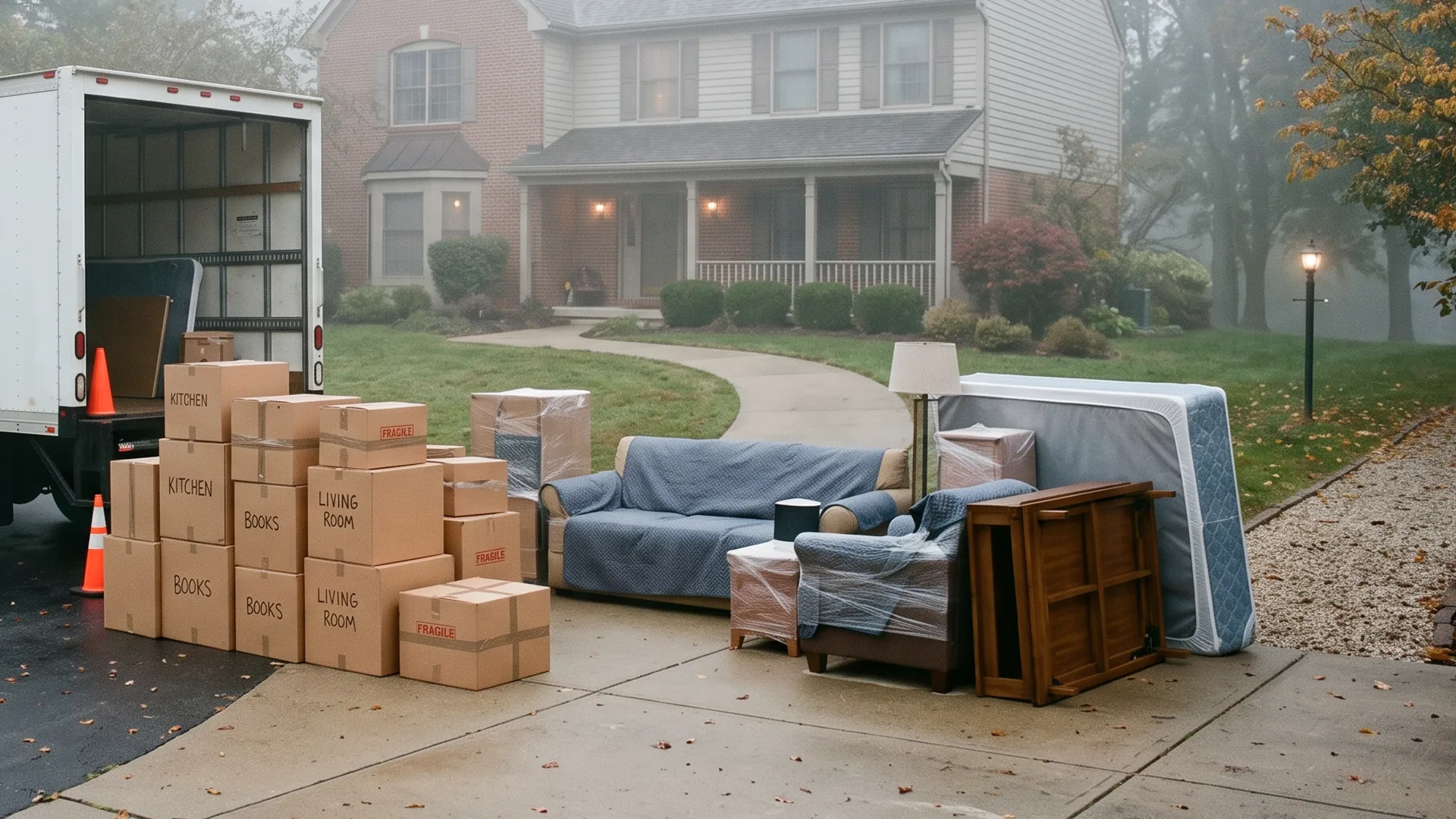
Put together a clearly marked first-week box with the things you'll want before the house is fully unpacked. Include basic cookware, towels, bedding, cleaning products, toilet paper, trash bags and a few simple tools.
Keep truly essential items with you. Identification, medications, financial documents, keys, phones, laptops and chargers shouldn't be buried in the moving truck.
Think through your first week after moving to a new home before sealing the last boxes. A little planning here prevents the classic first-night problem of knowing you packed something but having no idea which box it's in.
Step 8: Keep the Move Organized
Use one master checklist for deadlines, reservations, utility changes and tasks that can't be handled simply by labeling a box. Keep moving contracts, inventories and other important documents together where you can reach them.
That basic organization makes it easier to plan a stress-free move to a new home without turning packing itself into a complicated system.
FAQs
How Do I Prepare My Personal Vehicle for Transport During a Household Move?
Remove personal belongings, clean the vehicle so its condition can be inspected and leave roughly a quarter tank of fuel. Remove or secure loose accessories and deactivate toll passes or electronic tags.
At pickup, you or a designated adult should inspect the vehicle with the driver and make sure its existing condition is recorded on the bill of lading before signing it.
Can I Pack Household Items Inside My Car When It Is Being Shipped?
Plan on removing personal items unless the assigned third-party carrier has approved them beforehand. Extra belongings add weight and may result in additional charges or refusal to transport the vehicle.
Personal property left in a vehicle may also fall outside the carrier's cargo insurance coverage. Don't use the car as an extra moving box without discussing it with the transport company first.
How Far in Advance Should I Book My Vehicle Transport Relative to My Household Moving Date?
For most standard shipments, booking one to two weeks before your first available pickup date gives more flexibility for matching the vehicle with a third-party carrier. If you already know your household moving date, start discussing vehicle transport earlier rather than waiting until packing is nearly finished.
What Documents Do I Need to Prepare for Interstate Car Shipping?
For a standard domestic vehicle shipment, the key transport document is the bill of lading. It records the vehicle's condition at pickup and again at delivery and serves as an important shipping document.
Have your identification and vehicle information readily available as well. You or a designated adult must be available to release the vehicle and sign the bill of lading at pickup, and someone must be available to accept it at delivery.
Pack Smarter and Make the Whole Move Easier
Learning how to pack for a big move isn't about finding one clever packing trick. The real advantage comes from doing the work in the right sequence: get rid of what you don't need, use appropriate boxes, protect fragile belongings, label everything clearly and keep necessities within reach.
For a cross-country relocation, think beyond the boxes, too. Deciding how to pack a car for moving is only part of the vehicle question. In many cases, the better move is to keep household belongings with the household shipment and transport the car separately rather than loading it up for a long drive.
Once you know what you're taking and how you plan to move it, use Estimate Moving Cost to start putting real numbers behind your relocation plan.