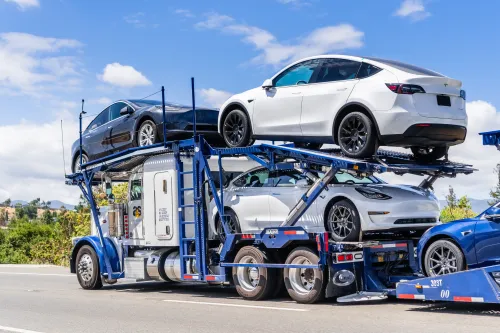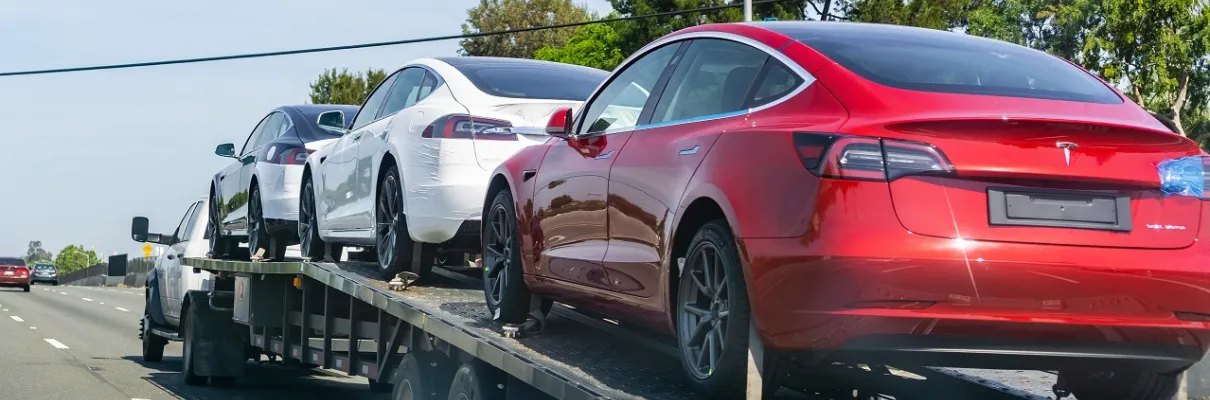

Winning a salvage auction is the easy part. Getting a wrecked or non-running vehicle from the auction yard to your driveway or repair shop takes more planning.
The key question isn't simply whether the car runs. Does it roll, steer and brake? Does it have locked wheels or suspension damage? Can it be winched onto a trailer, or will it need a forklift?
Those details determine the equipment required for damaged vehicle transport and can affect what you'll pay. Give the transport company an accurate description before a carrier is assigned, and most problems can be addressed before the truck reaches the auction.
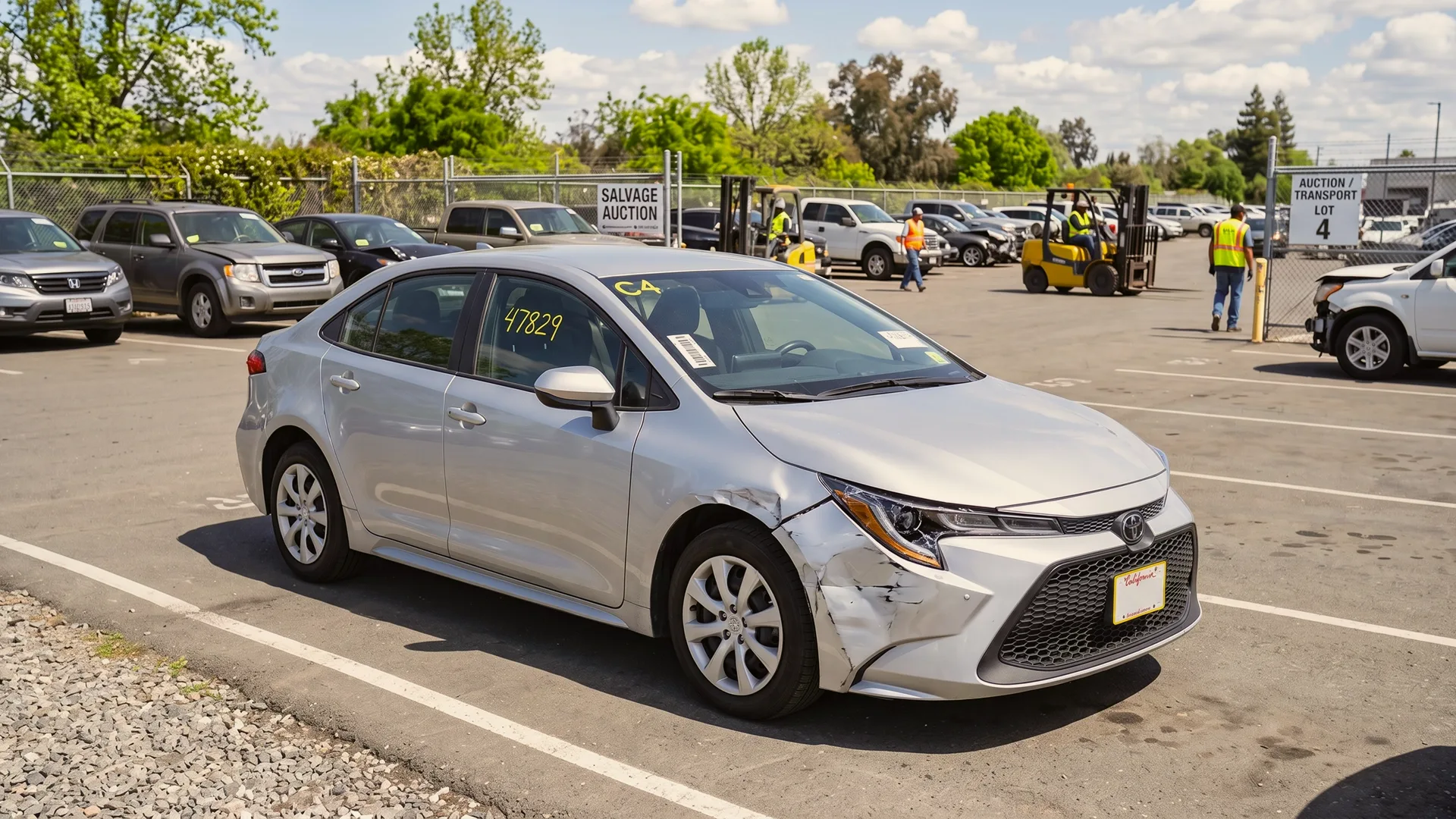
What Makes Salvage Car Transport Different?
A salvage vehicle may have collision, flood, theft or other damage serious enough to affect how it can be loaded and transported. Some cars start and drive. Others won't run but still roll freely. Heavily damaged vehicles may not roll, steer or brake at all.
Before arranging for salvage car transport, determine:
- Whether the engine starts and the car can move under its own power
- Whether all four wheels roll freely
- Whether the steering works
- Whether the brakes function
- Whether any wheels, axles or suspension components are damaged
- Whether loose body panels or other parts need to be secured
- Whether the vehicle has fluid leaks
Don't describe a vehicle as simply "inoperable" if you know more. A car that doesn't start but rolls freely is a very different transport job from one with two locked wheels and a broken axle.
If you're still evaluating a salvage purchase, the National Highway Traffic Safety Administration (NHTSA) offers useful information about identifying flood-damaged vehicles, including hidden signs of water exposure and title concerns.
What Equipment Is Used to Ship a Damaged Car?
The equipment depends on the vehicle's condition. Not every inoperable car needs a forklift or flatbed.
Winch-Equipped Car Carriers
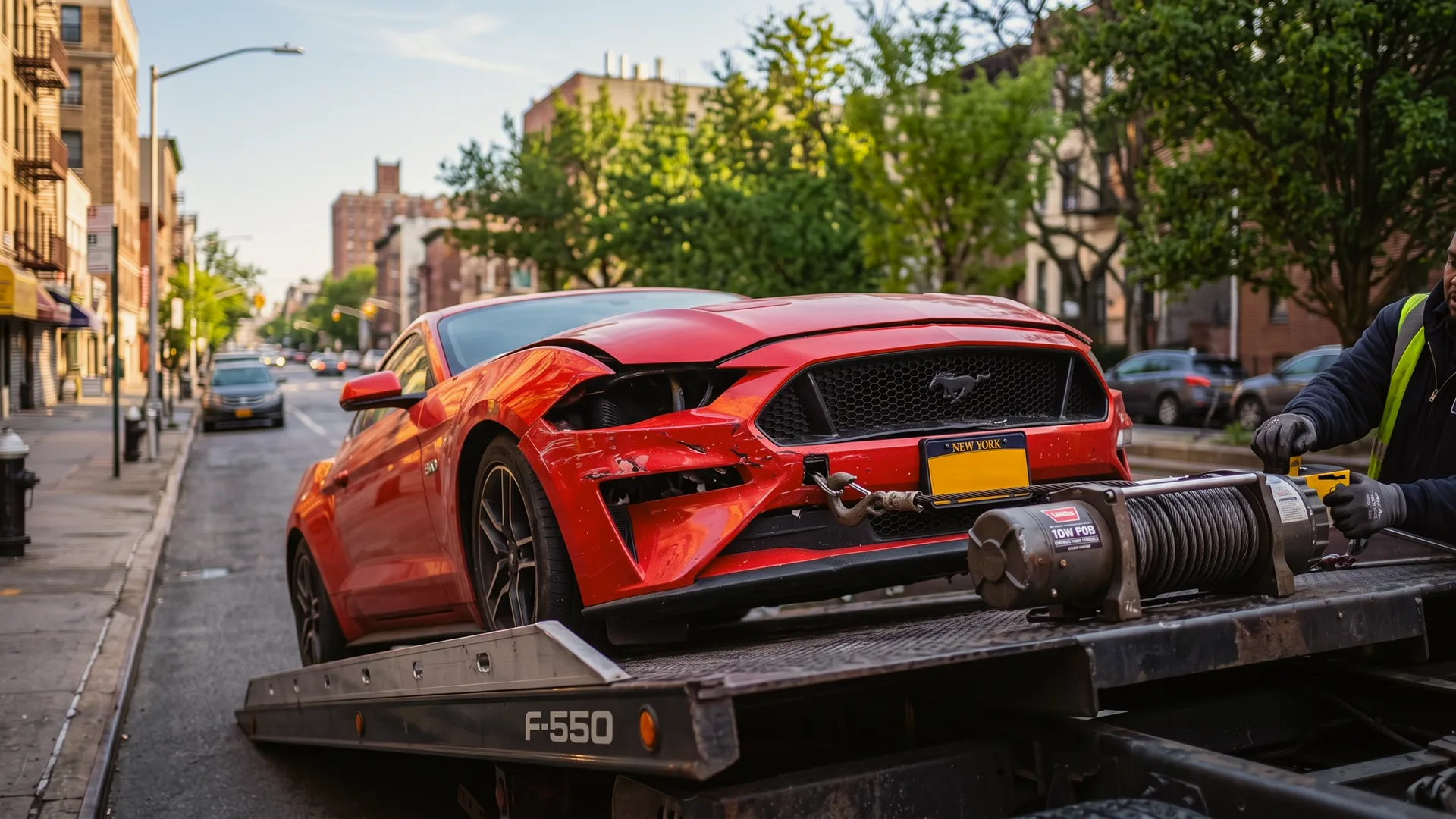
A winch is often the simplest solution for a non-running car that still rolls and steers. The carrier can pull the vehicle onto the trailer rather than driving it aboard.
This is why accurate condition information matters when arranging car shipping for damaged vehicles. A carrier arriving without a winch can't load a car that won't move under its own power.
Forklifts
A badly damaged vehicle with locked wheels, a broken axle or collapsed suspension may need a forklift at the pickup location. Salvage auction yards commonly have equipment for loading severely damaged vehicles, but unloading is a separate issue.
If the destination is your home, don't assume a forklift will be available when the carrier arrives.
Flatbeds and Wreckers
Some damaged vehicles require a flatbed or wrecker to move them between the auction lot, repair facility or another location where they can be loaded or unloaded safely.
The important part isn't choosing the equipment yourself. It's describing the vehicle accurately enough for Nexus and the third-party carrier to determine what's needed.
How to Arrange Salvage Car Transport from an Auction
Salvage auctions handle damaged vehicles every day, but the buyer still needs to coordinate release, transportation and delivery.
1. Confirm the Vehicle's Actual Condition
Start with the auction listing and photos, but look beyond "run and drive" or "non-runner" labels. Confirm whether the car rolls, steers and brakes and look closely for wheel, suspension and structural damage.
Ask for additional information or photos when the listing doesn't make the condition clear.
2. Get the Auction Release Information
Find out what the auction requires before releasing the vehicle to a carrier. Depending on the facility, that may include:
- Buyer or lot number
- Vehicle identification number (VIN)
- Gate pass
- Release authorization
- Carrier or driver information
Provide the required information before pickup rather than leaving the driver to sort it out at the gate.
If you're new to auction purchases, Nexus' resource provides additional information about transporting vehicles purchased through automotive auctions.
3. Book the Vehicle as Inoperable
Don't book a damaged car as an ordinary running vehicle just because it looks capable of rolling.
When using the Nexus car shipping calculator, select the inoperable vehicle option and accurately describe the car's condition. That helps Nexus identify a third-party carrier with the appropriate equipment, including a winch when needed.
A winch-equipped carrier can often handle a non-running car that rolls and steers without requiring more complicated loading arrangements.
4. Plan the Delivery Before Pickup
Loading at a salvage auction may be straightforward because the facility has forklifts and other equipment. Your driveway probably doesn't.
Decide where the vehicle is going and how it will come off the trailer before pickup. A repair or body shop may already have suitable equipment. Residential delivery of a severely damaged vehicle may require separate unloading arrangements.
For accessible destinations, door-to-door shipping can minimize additional vehicle handling. If a large carrier can't safely reach the exact address, a nearby accessible meeting location may be necessary.
Salvage Vehicle Condition and Transport Requirements
Vehicle Condition |
Required Equipment |
Price Impact |
Preparation Action |
|---|---|---|---|
Rolls, Steers and Brakes |
Winch-equipped carrier if it doesn't run |
Usually higher than running transport |
Confirm tires hold air and steering and brakes work |
Rolls but Does Not Start |
Winch-equipped carrier |
Additional handling cost may apply |
Book as inoperable and disclose condition |
Does Not Roll, Steer or Brake |
Specialized equipment, potentially forklift assistance |
Higher due to equipment and handling |
Describe locked wheels, axle and suspension damage |
Severe Structural Damage or Loose Parts |
Specialized carrier and possibly forklift assistance |
Depends on condition and equipment |
Secure loose parts, address leaks and provide photos |
Prepare a Damaged Vehicle for Shipping
A salvage car doesn't need to look pretty before transport, but it does need to be safe to load.
Before pickup:
- Secure or remove loose bumpers, trim and body panels.
- Check for fuel, oil, coolant or other fluid leaks.
- Remove loose debris from the interior and trunk.
- Make sure the tires are inflated when possible.
- Provide keys if they're available.
- Photograph the vehicle from multiple angles before transport.
- Tell Nexus about anything that could complicate loading or unloading.
Photos are particularly useful with heavily damaged cars. They give the transport company a better idea of what the carrier will encounter at pickup.
For additional guidance on standard vehicle preparation, see how it works.
Check the Salvage Title Before You Ship
Transporting a salvage vehicle and legally putting it back on the road are separate issues. Salvage and rebuilt-title requirements vary by state, so check the rules where you intend to title and register the vehicle.
For example, the New York State Department of Motor Vehicles (DMV) requires qualifying rebuilt salvage vehicles to undergo a salvage examination before a new title or registration is issued. Its salvage vehicle examination requirements also explain acceptable ways to transport a vehicle to the examination, including towing or using a flatbed truck.
That doesn't mean every salvage vehicle follows New York's process. Check your own state's requirements before investing in repairs, especially when buying a vehicle with an out-of-state salvage title.
Open or Enclosed Transport for a Damaged Vehicle?
Open transport is suitable for many salvage vehicles, particularly project cars headed directly to a shop or home garage. The bigger concern is whether the vehicle can be safely loaded and secured.
An open auto transport carrier equipped to handle an inoperable vehicle may be all you need.
Enclosed transport can make sense for valuable collector vehicles with repairable damage or projects where additional protection is important. Equipment varies among trailers, so disclose the vehicle's condition and dimensions rather than assuming an enclosed carrier can accommodate it.
FAQs
How Much Extra Does It Cost to Transport an Inoperable Salvage Car Compared to a Running One?
There's no standard surcharge. The added cost depends on the vehicle's condition and equipment needed to load it. A car that rolls, steers and brakes is generally easier and less expensive to handle than one with locked wheels or a broken axle.
What Specific Paperwork Must Be Provided to the Driver at the Auction Pickup Yard?
Requirements vary by auction, but the driver may need a buyer or lot number, VIN, gate pass or release authorization. Give Nexus the auction's pickup instructions before transport so the carrier can access the vehicle.
Can a Salvage Vehicle Be Transported if It Has Completely Locked Wheels or a Broken Axle?
Yes, but disclose the damage before booking. Locked wheels, broken axles or severe suspension damage may require equipment beyond a standard winch, including forklift assistance.
Who Is Responsible for Providing the Forklift at a Residential Delivery Location?
Confirm that before booking. Don't assume the carrier provides a forklift. If the vehicle can't roll off the trailer, tell Nexus in advance so unloading equipment and responsibility for providing it can be arranged.
Get the Right Carrier for Your Salvage Vehicle
Shipping a damaged vehicle comes down to knowing its condition before the truck arrives. Confirm whether it rolls, steers and brakes, disclose serious suspension or structural damage and make sure both pickup and delivery locations can handle the vehicle.
Nexus can then match the shipment with a third-party carrier equipped for the job. Select the inoperable vehicle option with an Instant Quote so the vehicle's condition is accounted for from the start.