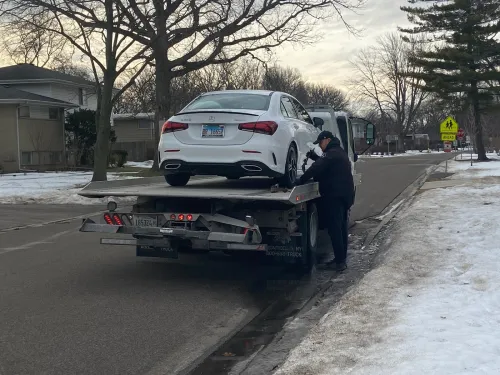

Although Florida to Colorado auto transport doesn’t cross the country entirely, they are priced at that level because of weather challenges and because the originating state is part of one of the industry's busiest seasonal migrations. Here is how the car shipping process works, what it costs, and what makes this route different than most.
Car Shipping Basics
The car shipping industry has two primary types of providers: brokers and carriers. Most consumers work with brokers, who take your order and post the load to a dispatch board. A licensed carrier heading along your route will accept the bid and, if they meet the broker's qualifications, the broker will assign your vehicle.
Carriers own the trucks and handle the physical movement, while brokers act as middlemen, assign loads to qualified carriers, and coordinate the transfer.
When seeking a quote for auto transport services, you'll make three main decisions:
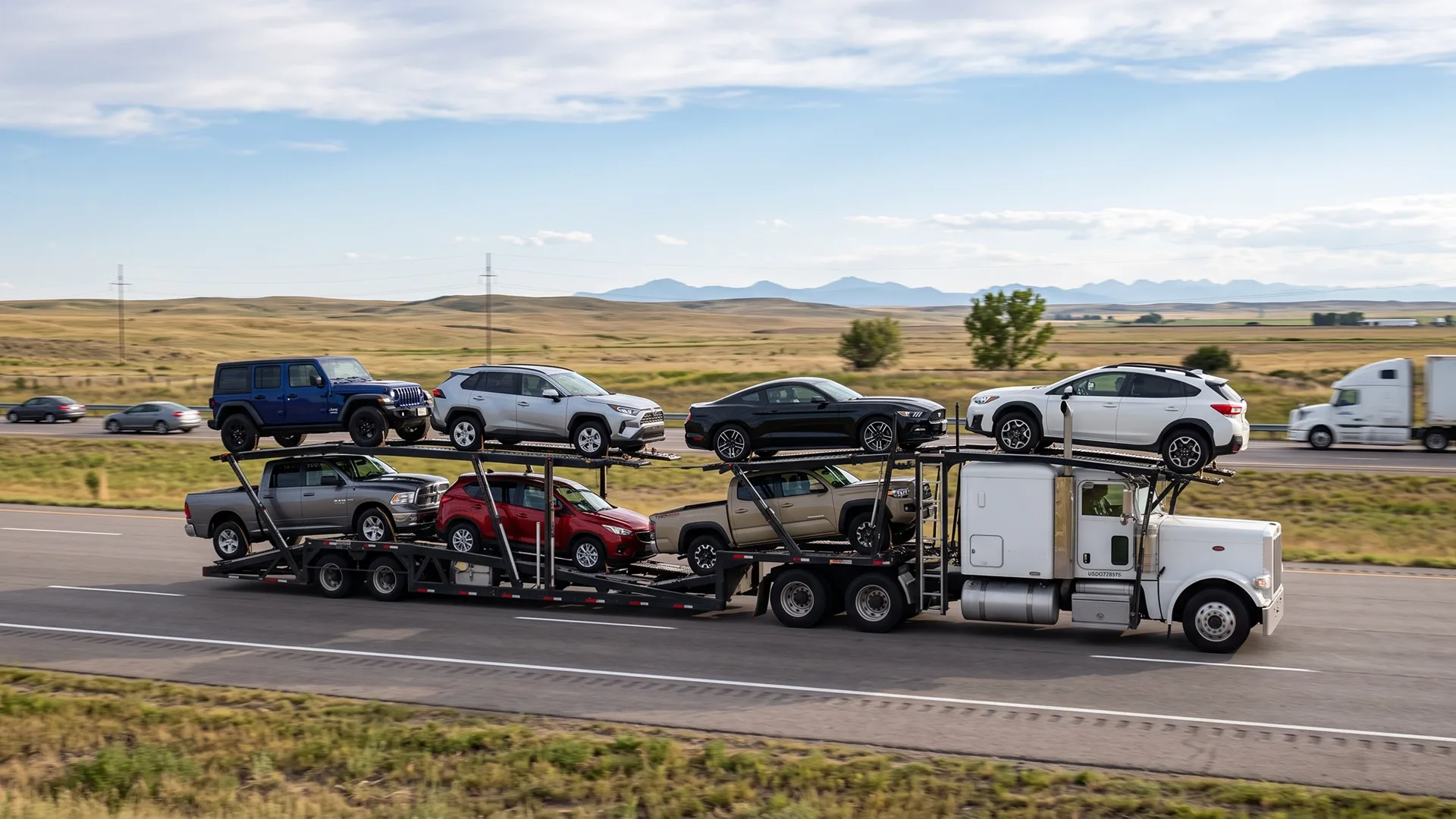
- Open versus enclosed. Open trailers haul seven to ten cars at a time and carry 90 percent of the industry traffic. Enclosed trailers, which offer more protection for the vehicle hauled, carry one to six cars and cost 30 to 75 percent more. Enclosed trailers are mostly used for high-value and collector vehicles.
- Door-to-door versus terminal-to-terminal. Door service means the driver will get as close as possible to your origin and destination addresses with an 80-foot rig legally, while terminal service saves $50 to $150 and adds a terminal visit at each end.
- Your pickup window. The more flexible you are with your vehicle's pickup date, the less you will be charged.
Key steps to follow when using auto transport are to:
- Ask for the carrier MC or USDOT numbers and verify the carrier’s operating authority, safety record, and insurance using the FMCSA’s SAFER system.
- Leave a quarter tank of fuel, disable toll transponders and alarms, and keep personal items to the roughly 100-pound industry ceiling. Some carriers refuse to allow any personal items in the vehicle.
The auto transport industry has limited paperwork, and the Bill of Lading is the central document. At pickup, the driver inspects your car and notes any existing damage on the Bill of Lading (BOL). You and the driver sign the BOL to confirm agreement. The same happens at delivery.
At both ends, inspect the vehicle and take timestamped images, and sign the Bill of Lading only if you agree with the driver's notes or have added your own comments.
Pricing for Florida to Colorado Auto Transport
Depending on your pickup and drop-off locations, shipping a car from Florida to Colorado covers 1,750 to 2,250 miles, and published pricing ranges from $1,075 to $2,700. The wide range reflects seasonal pricing, your vehicle size, your choice of open or enclosed transport, and how much of the trip runs through less-traveled freight territory.
Most carriers log 400 to 500 miles a day, which puts realistic transit at three to eight days after pickup, with pickup typically coming one to five business days after booking.
Complications on Florida to Colorado Car Shipping
Nearly every long route has unique elements, but the Florida-to-Colorado journey has several.
Shipping Against the Snowbirds
Florida is the most directionally imbalanced auto transport market in the country. From October through December, carriers pour south loaded with snowbird vehicles and search for northbound freight to avoid deadheading. Late fall is a great period to ship a car out of Florida, and March through May see the flow reverse.
In general, you can get a deal when shipping a car from Florida in the fall, but Colorado is complicated because it sits well off the I-95 and I-75 return corridors. So, you benefit from the cheap backhaul, but the truck needs to cut northwest across a lot of territory.
No Single Interstate
A car leaving South Florida either runs on I-75 to I-10 and turns north through Texas and New Mexico or heads up through Atlanta and St. Louis to pick up I-70 across Kansas.
Both routes have long stretches of low-density freight country where carriers have limited chances to pick up other paying vehicles, which can drive your price higher.
Two Weather Seasons
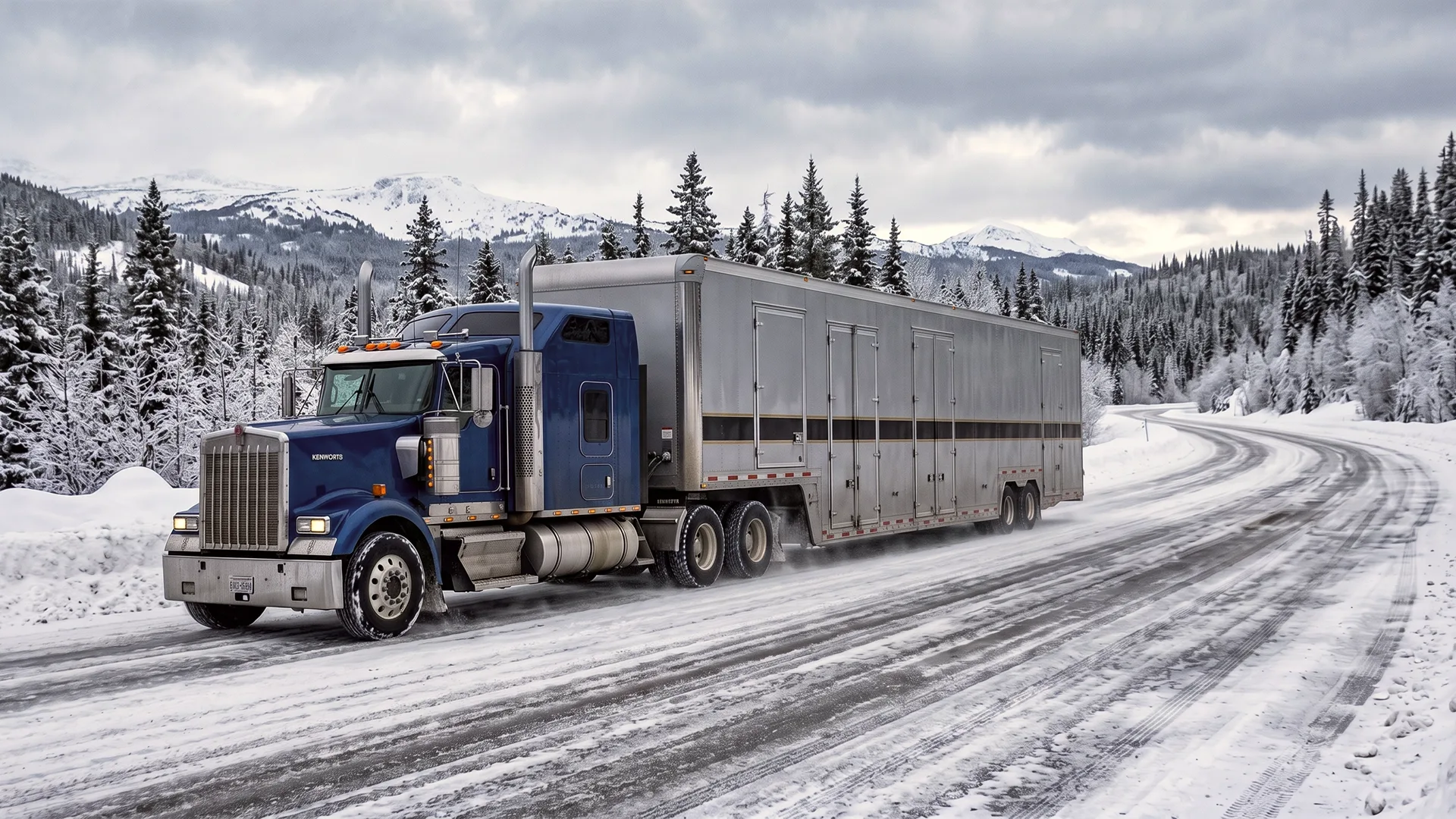
Weather threats at both ends create uncertainty and cause delays. A hurricane can keep carriers from picking up a vehicle in Florida for multiple days.
In Colorado, they face snow and icy weather, reflected by Colorado law requiring commercial vehicles traveling the mountain corridors to carry chains or approved traction devices from September 1 through May 31.
The Front Range vs. Mountains
Denver, Colorado Springs, Fort Collins, Boulder, and Pueblo sit along the I-25 corridor, which has steady carrier traffic. Mountain destinations, including many ski areas, are a separate market, and many carriers refuse to take their rigs there in winter.
Instead, you should expect to meet the driver at a lot in the nearest valley town, or to pay a premium for a smaller truck to deliver your vehicle.
Changing Atmospheres
A vehicle can leave Florida and be unloaded at 5,280 feet in freezing weather. Engines can lose horsepower at higher elevations, cooling systems work less efficiently, and tire pressures fall. While none of those issues affect transport, consider making a service appointment soon after arrival.
The advice for this route is like many, only more stringent.
- Get three quotes
- Verify the carrier through SAFER
- Book three to four weeks out
- Give the broker a wide pickup window rather than a date.
On the long, seasonal Florida-to-Colorado car shipping run, flexibility in pickup dates can help you get a discount.
How We Help Get You Where You're Going
When making a long-distance vehicle transfer, like Florida to Colorado car shipping, you need a trusted auto transporter. Moving your vehicle to a new location and managing that process is our core business. Nexus Auto Transport is a leading broker with a nationwide network of vetted carriers experienced in all aspects of vehicle transfers. Contact us for a quote and see how our 3-step process makes it easy for you from start to finish.
Use our car shipping calculator for a free quote.
Car Shipping Costs and Times from Florida to Colorado
Route |
Open Transport Cost Range |
Enclosed Transport Cost Range |
Average Transit Time |
|---|---|---|---|
Miami to Denver |
$1,125 to $2,700 |
$1,900 to $3,400 |
4 to 12 days |
Orlando to Colorado Springs |
$1,075 to $2,200 |
$1,800 to $3,000 |
3 to 8 days |
Tampa to Boulder |
$1,100 to $2,300 |
$1,850 to $3,100 |
4 to 8 days |
Jacksonville to Fort Collins |
$1,050 to $2,150 |
$1,775 to $2,950 |
3 to 7 days |
FAQs
Can I ship personal belongings inside my vehicle when transporting it from Florida to Colorado?
Not really. Auto transporters hold FMCSA authority to haul vehicles, not household freight. Plus, personal belongings add weight, which can result in problems for car carriers limited to the 80,000-pound GVW limit.
How does the winter snowbird season affect carrier availability and rates on this route?
Snowbird season affects the Florida end more than the Colorado end, and it cuts in your favor for part of the year. From October through December, carriers stream into Florida loaded with snowbird vehicles from the Northeast and Midwest. Those trucks then need northbound or westbound freight to avoid running empty, so late fall is one of the better windows to move a car out of Florida.
The pattern reverses from March through May. As the northbound migration starts, outbound Florida demand spikes and pickup windows stretch. You can expect a swing of several hundred dollars for the same trip between the soft and peak stretches.
Do I need to prepare my vehicle differently for Colorado high altitude and cold climates?
Not for the shipment itself. Your transport prep is the same everywhere in the continental U.S.:
- No more than a quarter tank of fuel
- No personal items beyond the ceiling above
- Toll transponders and alarms disabled
- Clean the car and photograph it in daylight before loading.
What changes is how you deal with your vehicle upon arrival since altitude can affect your engine power or cooling systems are less effective in thin air. Look at your tire pressure readings as they may fall due to air density and temperature changes. You'll need winter or all-weather tires for some locations. Also, a battery that has spent its life in Florida heat may fail during a Colorado freeze.
What happens if severe weather delays my shipment through the Rocky Mountains?
Your delivery window will move, and the carrier will not offer a refund for an act of God. Auto transport quotes are estimated windows, not guaranteed dates.
Build extra time into your plans, and don't plan around your car arriving on a particular day. If your destination is a mountain town, consider arranging a Front Range or valley-town delivery point in advance. That step alone can save money at booking and avoid most winter delays.