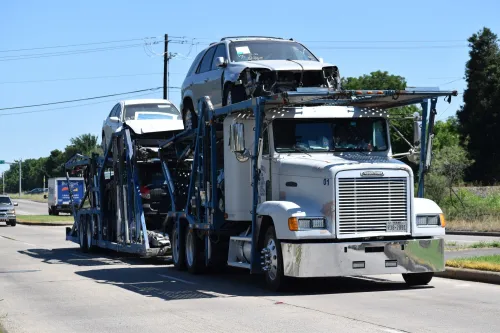

Shipping a car can make a long-distance New York move considerably easier, especially when driving the vehicle yourself would add hundreds or thousands of miles to an already complicated relocation.
The basic choices are straightforward: open transport costs less and works well for most vehicles, while enclosed transport provides additional protection for valuable, classic or specialty cars. The New York part of the trip is where planning gets more interesting.
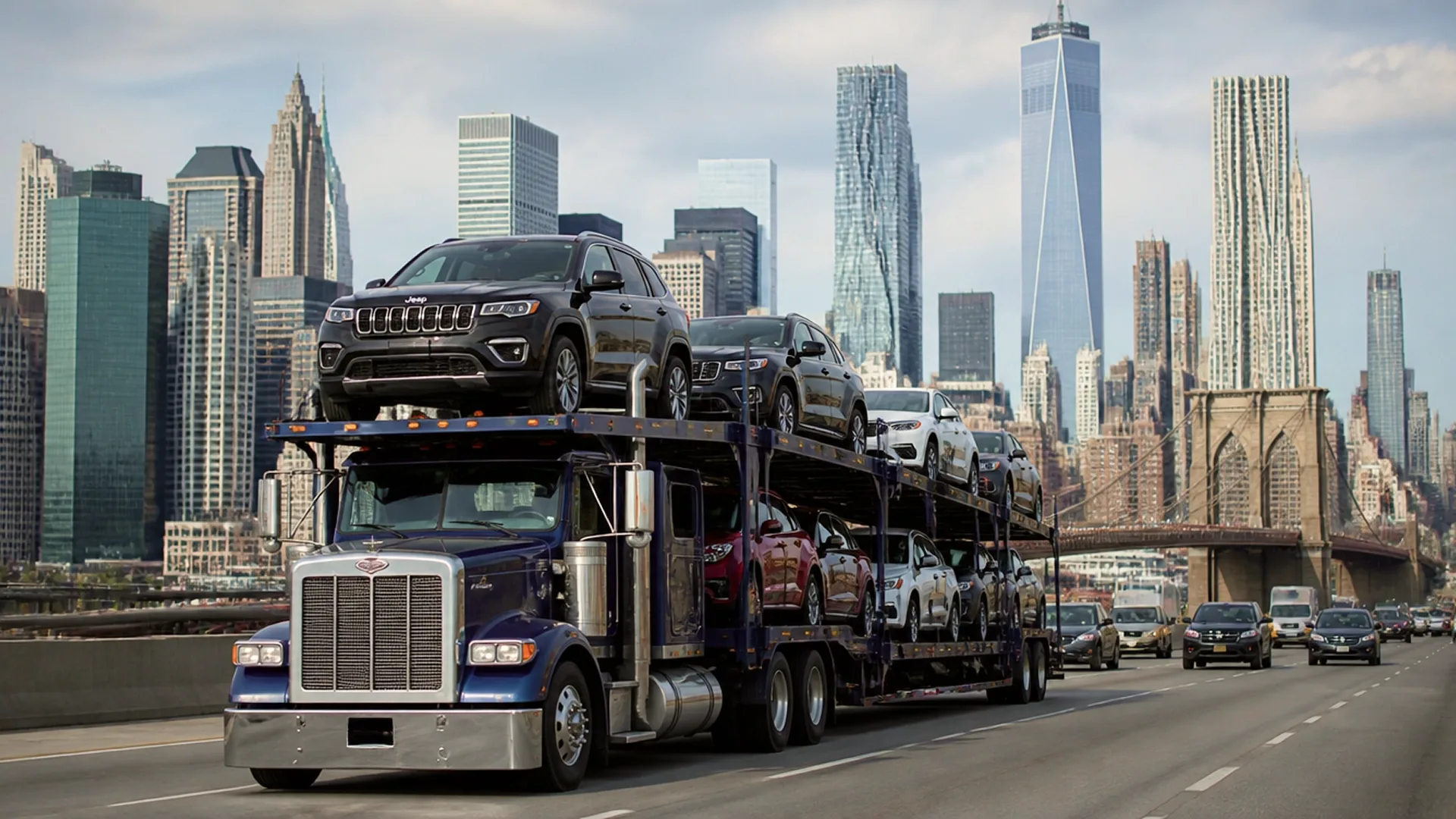
A carrier headed into Manhattan has to deal with commercial-vehicle routes and parkway restrictions. Brooklyn and older neighborhoods can present narrow streets and tight turns. In Buffalo, Rochester, Syracuse, Watertown and other parts of Upstate New York, winter weather can interfere with even a carefully planned schedule.
Knowing those issues beforehand helps you choose the right shipping method and set realistic expectations for pickup and delivery.
What Makes Car Shipping in New York Different?
A trip across New York can involve environments that look nothing alike. Picking up a vehicle in suburban Rochester is different from meeting a transporter in Lower Manhattan.
New York City regulates where large commercial vehicles can travel. The New York City Department of Transportation requires qualifying trucks to use designated Local and Through Truck Routes. Trucks and commercial vehicles are also prohibited from most city parkways, including the FDR Drive, Belt Parkway and portions of several other major roads.
That can affect where a car carrier can safely meet you.
A transporter may be able to reach a wide commercial street but not a narrow residential block a few turns away. Low clearances, parked cars, overhead branches and limited turning space can create additional problems.
Door-to-door auto transport therefore means getting the carrier as close to your address as safely and legally practical, not forcing a tractor-trailer down every street.
Which Long-Distance Car Shipping Method Works Best?
For most people moving from state to state, the decision comes down to three practical choices.
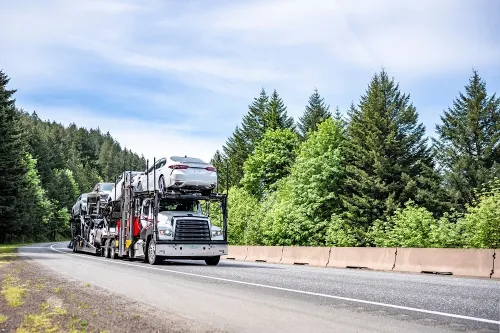
- Open transport works for most daily drivers. Your car travels on the type of open multi-vehicle trailer commonly seen on interstate highways. It offers the widest carrier availability and generally the lowest price.
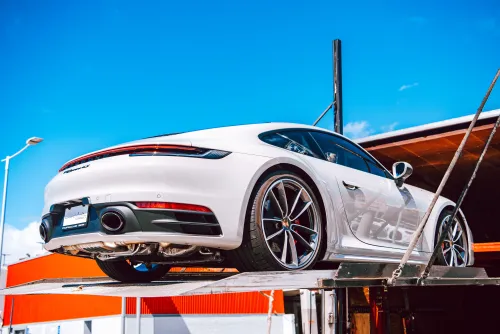
- Enclosed transport adds protection. An enclosed trailer shields the vehicle from rain, snow and road debris. It usually costs more, making it most attractive for classics, exotics, high-value vehicles or cars with delicate finishes.
- Driving the car yourself avoids a shipping bill but creates other costs. Fuel, hotels, meals, tolls and time away from work can add up. The vehicle also accumulates mileage and normal highway wear.
There is no single right choice for every New York long distance car shipping move. A family relocating a three-year-old crossover has very different needs from someone moving a restored Porsche or newly purchased collector car.
For an ordinary vehicle, open auto transport is generally the logical starting point.
Average Cost of New York Car Shipping by Distance
Distance is one of the largest pricing factors, although it is not the only one. Vehicle size, carrier type, route, season, fuel prices and pickup accessibility can all change the final quote.
Current Nexus planning averages provide a useful starting point:
Transport Distance | Average Open Carrier Cost | Average Enclosed Carrier Cost |
|---|---|---|
Less than 500 miles | $630 | $930 |
500 to 2,500 miles | $1,135 | $1,550 |
More than 2,500 miles | $1,350 | $1,830 |
These are averages, not guaranteed New York prices. A 1,300-mile shipment on a busy New York-to-Florida route may price differently from a trip of similar length to a remote destination.
Enclosed shipping also carries a meaningful premium. If your vehicle does not need the extra protection, choosing enclosed auto transport simply because it sounds more secure may add cost without providing much practical benefit.
Why New York City Pickup Can Require a Meeting Point
A full-size car carrier needs room to turn, stop and load a vehicle safely. That becomes difficult on some Manhattan and Brooklyn streets.
New York City adds another complication: trucks cannot simply use whichever road looks quickest on a navigation app. NYC DOT maintains a designated truck-route network, and commercial vehicles are banned from most parkways.
That creates several possibilities:
- Your carrier may reach your address directly if the street is legal and accessible.
- The driver may suggest a nearby avenue, large parking area or other location with better truck access.
- A pickup or delivery in a particularly constrained neighborhood may require a short drive on your part to meet the truck.
That is normal city logistics, not a downgrade in service.
The same issue can arise outside New York City. Historic village streets, low bridges, dead ends and heavily wooded residential roads can all make a nearby meeting point safer.
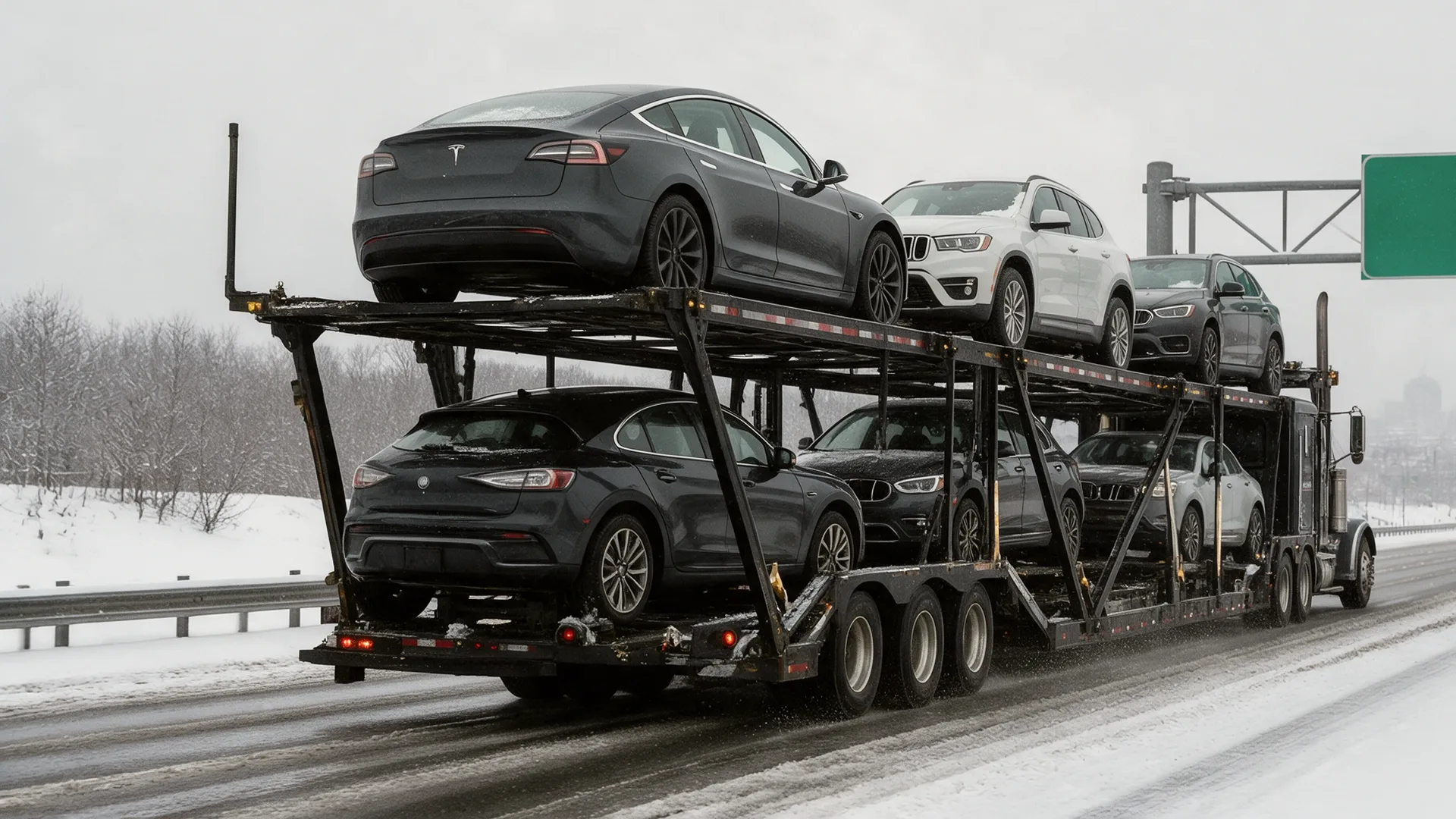
Upstate Winter Weather Can Change the Schedule
Winter is the other major New York-specific variable.
Lake-effect snow can be intense around Buffalo and Watertown, especially along the I-81 corridor in the Tug Hill region east of Lake Ontario. Tug Hill routinely receives some of New York's heaviest snowfall, and lake-effect storms can quickly drop several feet of snow. Major storms can slow traffic, close roads, and occasionally trigger restrictions on commercial vehicles.
The New York State Department of Transportation maintains a Winter Travel Advisory showing reported winter conditions on major highways. During severe storms, New York has also temporarily restricted certain tractor-trailers and commercial vehicles on portions of the Thruway and interstate system.
That is why a winter delivery estimate should be treated as an estimate.
A carrier that waits for a lake-effect band to move or for a road restriction to lift is making a safety decision. Building some flexibility into your arrival plans is smarter than scheduling an important appointment around the exact hour your vehicle is expected.
How to Make a New York Car Shipment Easier
A little planning eliminates many of the problems that create last-minute stress.
Start by giving the transport company accurate pickup and delivery addresses. If either location is in a dense neighborhood, mention access concerns before the truck arrives.
Keep your schedule reasonably flexible as well. Drivers are balancing several vehicles, traffic conditions and legal driving-hour limits. New York City congestion or an Upstate snowstorm can change an estimated arrival time.
Finally, choose the transport method according to the car rather than automatically paying for the most expensive option. Nexus offers additional long-distance car transportation tips that can help you prepare before pickup.
FAQs
Do I need a special permit to ship a car into New York City boroughs?
Usually not as the vehicle owner. Commercial carriers are responsible for following New York City truck-route, size and permit requirements that apply to their equipment.
How does winter weather in Upstate New York affect delivery timelines?
Heavy snow, ice and road restrictions can delay pickup or delivery. Lake-effect storms around Western and Northern New York can be especially disruptive, so winter delivery dates should allow some flexibility.
Can an open car carrier navigate the narrow streets of Brooklyn or Manhattan?
Sometimes, but not every street is suitable for a large carrier. Truck-route rules, parked cars, tight turns and limited loading space may require you to meet the driver on a nearby larger street.
What should I do if my new New York neighborhood restricts oversized commercial vehicles?
Coordinate a nearby meeting point with the carrier. A wide street or accessible commercial area a short drive away is often safer and easier than trying to bring the transporter directly to your address.
Ready to Plan Your New York Car Shipment?
Once you know your pickup location, destination and approximate moving date, the next useful step is finding out what the trip may cost.
Get an Instant Quote from Nexus Auto Transport and compare the shipping cost with the time, mileage and expenses of driving the vehicle yourself.