
Every interstate move has the same basic tasks: sort, pack, hire a truck, and change your address, but moving to Hawaii brings unique elements. An ocean sits in the middle of the journey, a century-old federal shipping statute governs the passage, a state agriculture department that inspects everything arriving from the outside, and the rabies-free island chain will not let your dog off the plane without having the correct paperwork filed weeks in advance.
None of it is difficult, but you need to get it right and start early.
How Moving to Hawaii Differs from a Mainland Move
The first difference from a mainland move is the freight process. Because Hawaii is a U.S. state, cargo moving from a mainland port to Honolulu falls under the Merchant Marine Act of 1920 (the Jones Act), must sail on American-built, American-flagged, American-crewed vessels. In practice, that means your goods sail on one of two carriers, Matson and Pasha. Both operate fixed sailing schedules, so if you miss a sailing, you have to wait for the next ship.
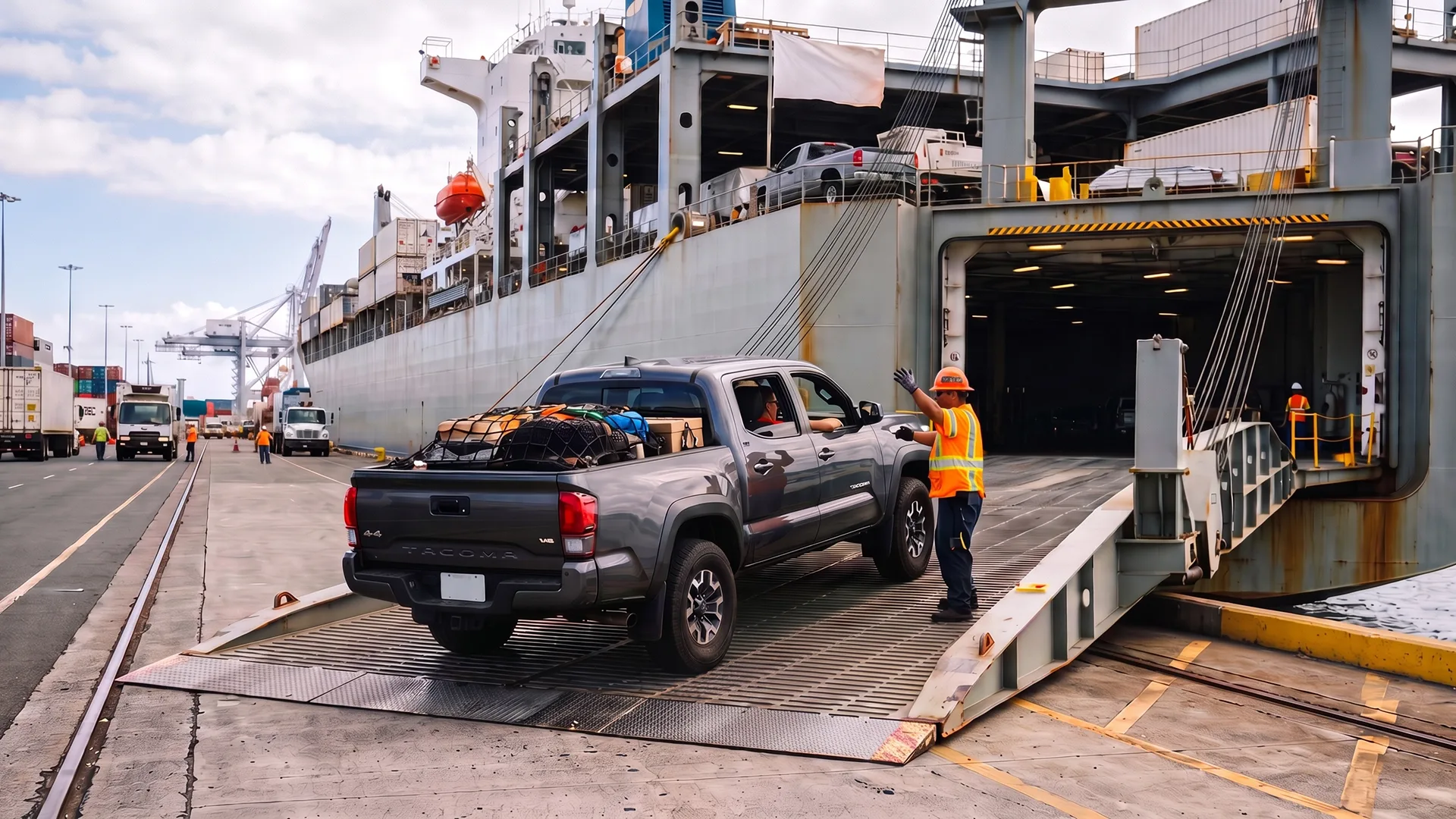
Vehicle shipments to Hawaii cost $1,400 to $2,500, depending on your originating port, destination island, and method, and take five to ten days at sea. You will need interisland vehicle shipping if your destination is not Oahu.
Household goods usually travel in a 20-foot storage container, which is enough for a typical three-bedroom home.
The second difference concerns biosecurity.
- Hawaii lacks natural predators for most mainland pests, so the state screens everything arriving by sea or air.
- Inspectors check arriving vehicles for soil, seeds, insects, and plant debris. A dirty car can be quarantined, fumigated, or refused.
- Whole categories of plants are restricted or barred, and every arriving passenger fills out a plants and animals declaration.
The third is the household budget.
- Nearly 90 percent of Hawaii's food is imported.
- The state has the highest energy prices in the country. Residential electricity averaged 52.72 cents per kilowatt-hour in June 2026, compared with a national average of 18.34 cents.
- Gasoline runs well above five dollars a gallon.
A salary that was generous in Ohio can feel limited on the Islands, which sends most disappointed transplants home within two years.

Choosing an Island
A key decision when investigating how to relocate to Hawaii is choosing which island to live on. The four main islands are genuinely different places, and the choice often comes down to a trade between economy and cost.
- Oahu has jobs, hospitals, schools, airport connections, and 70 percent of the state population. Those bring traffic and a single-family home median value of $1,262,500, while condos are near $530,000.
- Maui is scenic and expensive, with a median home value of $1.4 million and a housing market still absorbing the aftermath of the 2023 Lahaina fire.
- Kauai is the smallest and quietest of the four and the priciest by median home value.
- Hawaii, the Big Island, has more land than the others, and a median home value of $600,000. The trade-off is fewer jobs, longer travel to specialty medical care, and lava-zone ratings that complicate insurance and lending.
Within each island, the weather can change dramatically. Windward sides are green and wet; leeward sides are dry, hot, and sunnier, and elevation matters too. You need to wear a sweater at higher elevations, and a little extra at lower.
Ideally, rent before you buy. A six-to-twelve-month lease in the district you think you want costs far less than discovering in year two that the commute or the rain is intolerable. Watch for leasehold rather than fee-simple title on some Oahu condos, high HOA dues, catchment water systems and cesspools on the Big Island. The state's cesspool conversion mandate can attach a five-figure obligation to an otherwise cheap property.
The Order of Things When Relocating to Hawaii
Learning how to move to Hawaii is all about sequencing your steps asn getting started on time. Failing to sequence properly is why some moves to Hawaii become frustrating and expensive. The move will require you to manage three important clocks running at different speeds.
Pet Clock
The pet clock takes the most time since your pet needs:
- A microchip
- Two rabies vaccinations and a mandatory 30-day wait after the rabies blood test, with documents filed at least 10 days ahead
- A passing OIE-FAVN antibody test
Start the pet clock five months in advance.
Freight Clock
The freight clock comes next:
- Book the vessel at least three to four weeks ahead, and earlier for a summer sailing.
Household Clock
The household clock is the only one you set, but it includes the most steps, such as:
- Inventory and purge early. You pay moving costs by volume, and it is often cheaper to replace a particleboard dresser than to ship one to Hawaii.
- Settle on housing and schools three to four months out.
- Two to three weeks prior, take care of paperwork such as the pet filing, and gather your original vehicle title, registration, lienholder letter if the car is financed, and medical records.
- Moving week is for cleaning and loading: wash the car underneath, empty it, and run the tank to a quarter or less.
- On arrival, collect the vehicle during the port's one-to-three-day release window before storage fees kick in; inspect it before you sign anything,
- Spend your first 30 days becoming a resident: vehicle safety check, registration, license, doctor, and vet.
Take care of business in that order and a Hawaii move becomes a mainland move with a longer runway. Do it out of order, and you will spend your first month in a hotel, paying storage fees, and waiting on a lab result for a dog that remains in California.
How Nexus Can Help You Relocate to Hawaii
When moving to Hawaii, you may need help moving a vehicle to your departure port for transfer to Hawaii and to your new home, and managing that process is our core business. Nexus Auto Transport is a leading broker with a nationwide network of vetted carriers experienced in all aspects of vehicle transfers. Contact us for a quote and see how our 3-step process makes it easy for you from start to finish.
Use our car shipping calculator for a free quote: https://nexusautotransport.com/car-shipping-calculator/
Moving to Hawaii Checklist
Moving Stage |
Key Tasks |
Recommended Timing |
Important Considerations |
|---|---|---|---|
Decide and research |
|
6–4 months out |
|
Start the pet clock |
|
5–4 months out |
|
Housing and schools |
|
4–3 months out |
|
Purge the household |
|
3–2 months out |
|
Book the ocean freight |
|
6–4 weeks out |
|
Paperwork and pet filing |
|
3–2 weeks out |
|
Clean, load, and ship |
|
Moving week |
|
Close out the mainland |
|
Final days |
|
Arrive and take delivery |
|
Arrival week |
|
Become a resident |
|
First 30 days |
|
FAQs
How long does it usually take to prepare for a move to Hawaii?
Plan on four to six months and treat three months as the compressed minimum. The constraint is rarely packing; instead, it is the fixed waiting periods stacked into the process, so review the moving to hawaii checklist in detail.
- Pet rabies test and mandatory 30-day wait before arrival
- Ocean freight needs three to four weeks of lead time and more during the June-through-October peak.
- Add a scouting trip, a rental search conducted largely at a distance, and the weeks it takes to sell or donate what you are not shipping, and the calendar fills quickly.
If you are moving without pets and without shipping a vehicle, you can complete the process in six to eight weeks, and moves with both cannot be completed that quickly.
What items are better not to move to Hawaii?
You pay by volume when moving, so the test for every item is whether shipping it costs less than replacing it there. Things that usually fail the test:
- Inexpensive particleboard and flat-pack furniture
- Cold-weather coats, boots, snow equipment, and winter sports gear
- Anything hazardous or flammable
- Live plants, soil, seeds, cuttings, firewood, and most produce
- Bulk pantry staples and cleaning supplies
- Items you have in storage on the mainland, since they'll likely be stored in Hawaii
Items that are worth shipping include:
- Quality solid-wood or metal furniture,
- Tools, bicycles, and surfboards,
- High-end appliances in good condition
- Items with sentimental value.
How do I move a pet to Hawaii?
Hawaii is the only rabies-free state, and it protects that status with the strictest animal import rules in the country. The 5-Day-Or-Less program requires the steps noted in the article. Meet all the requirements, and your pet clears the airport instead of sitting in quarantine.
Each step in the process is subject to fees costing $165 to $244, so budget accordingly. Also note that if you miss a requirement, your animal goes into quarantine for up to 120 days, which is why the pet timeline, not the moving truck, should set your departure date.
Do I need to register my vehicle again after moving to Hawaii?
Yes. Registration is handled county by county, and the clock starts when the vehicle arrives. In Hawaii County, for example, you must obtain an out-of-state vehicle permit within 30 days of the car's arrival. That application requires:
- Your vehicle registration from your current state
- The Bill of Lading or shipping receipt listing the vehicle's arrival date in Hawaii
- A Hawaii Certificate of Safety Check Inspection
- A $5 fee.
Out-of-state plates remain valid until they expire or for 12 months, whichever comes first, and you need two plates on the vehicle to get a safety check, which catches drivers from single-plate states off guard. You can skip the permit and go straight to Hawaii plates if the car is staying permanently.
Either way, the safety inspection is first, and modified vehicles or those built for a different emissions regime can fail it, so check your vehicle's compliance before shipping the car.